
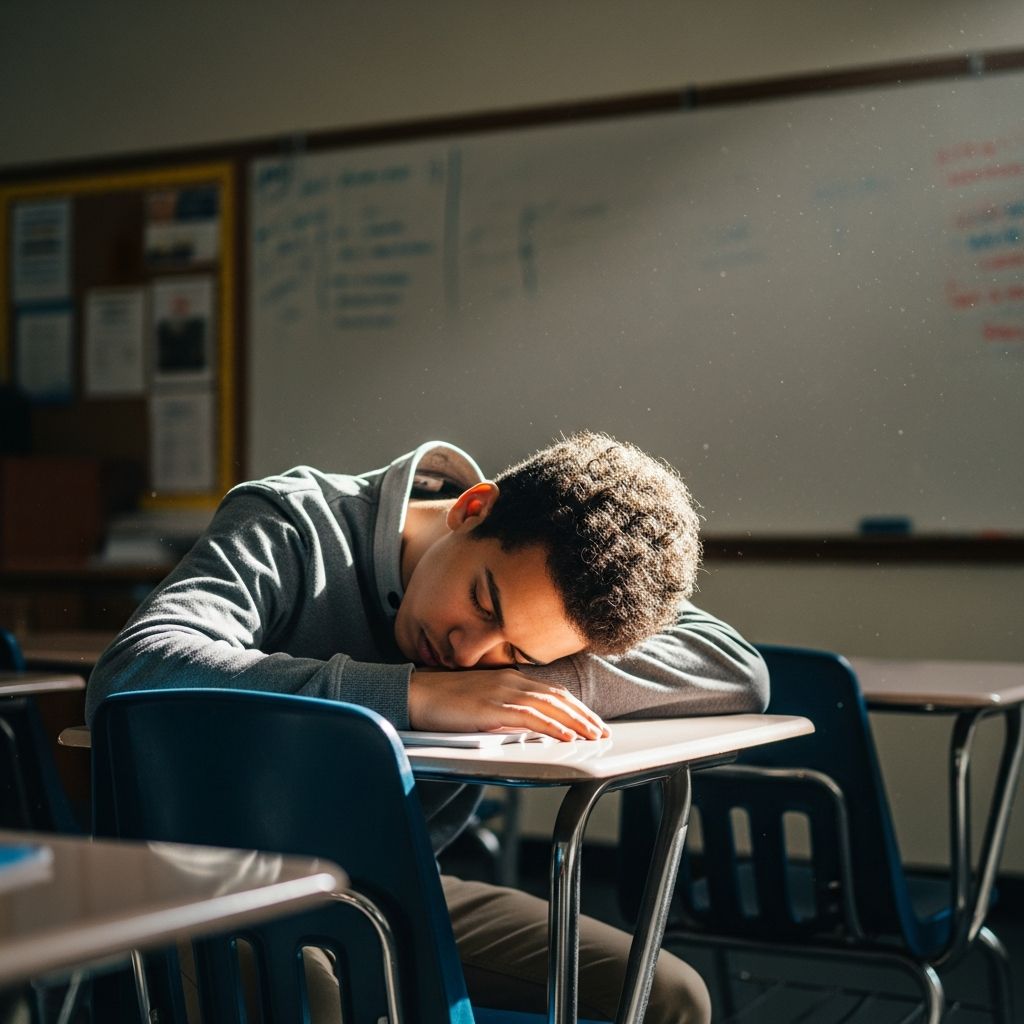
Students occasionally dozing off during lessons is a common classroom occurrence, often viewed as disrespect or laziness. However, scientific evidence reveals it as a symptom of deeper issues like chronic sleep deprivation, exacerbated by early school schedules and adolescent biology. Addressing this requires understanding sleep’s role in cognition and health rather than punitive measures.
The Science Behind Student Sleepiness
Adolescents experience a natural shift in circadian rhythms during puberty, delaying their natural sleep phase by up to two hours. This biological change means teens naturally fall asleep later and wake later, clashing with typical early school starts around 7-8 AM. As a result, most high school students average 6-7 hours of sleep per night, far below the recommended 8-10 hours from the American Academy of Sleep Medicine.
Sleep deprivation impairs key brain functions essential for school success. It hinders memory consolidation, where the hippocampus processes daily learning into long-term storage during deep sleep stages. Without adequate rest, students struggle with attention, problem-solving, and retaining information, leading to lower grades and reduced productivity.
- Attention deficits: Sleepy students show reduced focus, missing up to 20-30% more instructional content.
- Memory issues: Lack of sleep disrupts consolidation, lowering recall by 40% in some studies.
- Cognitive slowdown: Reaction times slow equivalently to alcohol intoxication levels.
Health Risks of Ignoring Classroom Drowsiness
Dismissing sleepiness as mere laziness overlooks severe health consequences. Chronic sleep loss in teens links to obesity, diabetes, cardiovascular issues, weakened immunity, and mental health disorders like depression and anxiety. The CDC reports sleep-deficient students face higher risks of mood swings, behavioral problems, and even suicidal ideation.
Physical tolls include weight gain from hormonal disruptions—increased ghrelin (hunger hormone) and decreased leptin (satiety hormone). Mentally, sleep loss heightens substance abuse risks and drowsy driving accidents, which cause 35% of teen deaths.
Academic Consequences of Sleep Deprivation
Sleep directly fuels academic success. Well-rested students demonstrate higher engagement, better test scores, and fewer absences. A review of 38 studies found delaying school starts by just 30 minutes boosts nightly sleep, reducing tardiness, in-class sleeping, and improving grades and attendance.
For instance, schools shifting to 8:30 AM or later saw average sleep rise from 7.5 to 8.2 hours, with corresponding drops in Epworth Sleepiness Scale scores and crash rates. Attendance improved, disciplinary actions fell, and standardized test scores rose.
The American Psychological Association notes consistent positives: increased GPAs, college test scores, attention spans, and family interactions, alongside fewer car accidents and daytime sleepiness.
School Start Times: A Key Factor in Sleep Quality
Early school bells force teens into mismatched schedules. Studies across states like Minnesota and Colorado show later starts (8:00-8:55 AM) yield longer sleep durations, earlier bedtimes in some cases, greater sleep satisfaction, and less depression. One longitudinal study reported fewer health center visits for fatigue and reduced absences.
- Sleep gains: +34 minutes average with 30-60 minute delays.
- Behavioral wins: Less tardiness, higher engagement.
- Safety boosts: Fewer crashes among novice drivers.
Even small adjustments matter; a UK study on teens confirmed one-hour delays enhance sleep duration and performance without excessive weekend catch-up sleep.
Should Teachers Wake Sleeping Students?
Waking a dozing student might seem intuitive for maintaining order, but it risks escalating fatigue. Gentle nudges preserve dignity but don’t address root causes. Evidence suggests allowing brief rest can refresh attention without full sleep cycles, though prolonged napping may disrupt nighttime sleep.
Balanced policies prioritize prevention: educate on sleep hygiene, monitor for disorders like sleep apnea, and advocate for systemic changes. Punitive approaches increase stress, worsening cycles.
Practical Strategies for Educators and Schools
Teachers can foster better rest without compromising lessons:
- Incorporate movement: Short activity breaks boost alertness.
- Optimize environment: Natural light, cooler temps promote wakefulness.
- Sleep education: Teach hygiene—consistent schedules, no screens pre-bed.
- Flexible seating: Standing desks or yoga balls reduce drowsiness.
- Parent partnerships: Share sleep tips for home routines.
Schools should consider policy shifts: pilot later starts, dim lights for power naps, or adjust calendars for circadian alignment. Evidence supports these yielding measurable gains in health and achievement.
Case Studies: Schools That Adjusted Successfully
In Minnesota and Colorado high schools, start time delays from 7:30-7:50 to 8:00-8:55 AM led to longer sleep (p<0.001), less sleepiness, better moods, and fewer absences. Crash rates dropped significantly (p<0.01).
Another study post-delay saw average school-night sleep increase from 7.5h to 8.2h, weekend catch-up decrease, and lower daytime sleepiness scores. These align with APA findings on broad benefits.
Common Myths About Sleep and Learning
- Myth: All nappers are lazy. Fact: Often biological mismatch.
- Myth: More sleep always better. Fact: Optimal 8-10 hours; extremes harm.
- Myth: Teens outgrow needs. Fact: Puberty shifts persist.
FAQs
What causes students to sleep in class?
Primarily sleep debt from early starts and late chronotypes. Teens need 8-10 hours but get less.
Does allowing sleep improve learning?
Brief rests can refresh; systemic fixes like later starts yield better attendance and grades.
Can schools change start times easily?
Challenges exist (transport, sports), but evidence supports benefits outweighing cons.
How much sleep do teens need?
8-10 hours nightly per sleep experts.
What if a student sleeps chronically?
Check for disorders; involve counselors for underlying issues.
References
- How Later School Times Affect Sleep Quality & CPAP Usage — Everything CPAP. 2023. https://www.everythingcpap.com/how-later-school-times-affect-sleep-quality-cpap-usage/
- School Start Times, Sleep, Behavioral, Health, and Academic Outcomes: a Review of the Literature — PMC (National Library of Medicine). 2016-05-01. https://pmc.ncbi.nlm.nih.gov/articles/PMC4824552/
- Well-rested children do better at school — Educational Neuroscience. 2023. https://www.educationalneuroscience.org.uk/resources/neuromyth-or-neurofact/well-rested-children-do-better-at-school/
- The Role of Sleep in Student Success — Bureau of Indian Education. 2023. https://www.bie.edu/news-article/role-sleep-student-success
- Delaying Middle School and High School Start Times Promotes Student Health and Performance — Journal of Clinical Sleep Medicine (AASM). 2016-10-16. https://jcsm.aasm.org/doi/10.5664/jcsm.6558
- Schools shift as evidence mounts that later start times improve teens’ sleep, performance — American Psychological Association. 2023. https://www.apa.org/topics/children/school-start-times

Medha Deb is an editor with a master's degree in Applied Linguistics from the University of Hyderabad. She believes that her qualification has helped her develop a deep understanding of language and its application in various contexts. Medha specializes in the areas of beauty, health, sports, and wellness and is committed to ensuring that the content on the website is…