
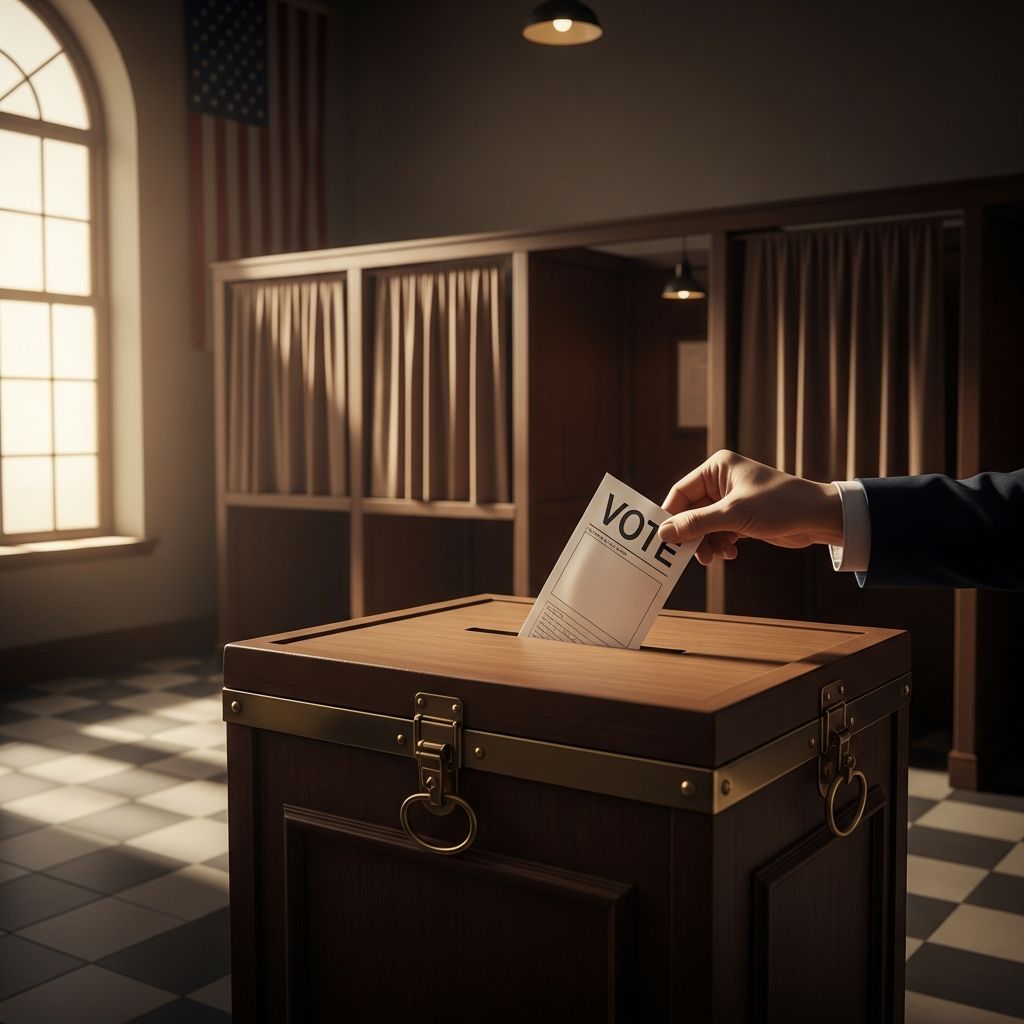
The Historical Foundation of Tuesday Voting in America
When millions of Americans participate in federal elections, they follow a tradition established nearly 180 years ago that may seem arbitrary in modern times. The practice of voting on a Tuesday in November, specifically the first Tuesday following the first Monday of the month, represents far more than administrative convenience—it reflects the economic realities and social structures of 19th-century America. Understanding why this schedule persists requires examining the deliberate legislative choices made by Congress in 1845 and the circumstances that influenced those decisions.
The Legislative Act That Standardized Election Day
Prior to 1845, the American electoral system operated without a uniform national election day. Individual states retained the authority to schedule their federal elections independently, provided they occurred within a designated 34-day window that concluded before the Electoral College convened. This decentralized approach created significant administrative and political complications. States voting earlier in the cycle could influence voter behavior and turnout in states conducting elections later, essentially creating a cascading effect where early results shaped late outcomes.
Congress recognized these inefficiencies and passed a federal statute on January 23rd, 1845, formally establishing a uniform election day throughout the nation. The legislation designated “the Tuesday next after the first Monday in the month of November” as the official date for electing presidential electors in all states. This Act to Establish a Uniform Time for Holding Elections represented the first standardization of American voting procedures at the federal level.
Originally, this law applied exclusively to presidential elections, but later legislative extensions incorporated congressional elections into the same schedule. The statute’s specification that Election Day must follow the first Monday—rather than potentially falling on November 1st—reflected additional concerns rooted in religious observance and commercial practice. Some Christian denominations recognized All Saints’ Day on November 1st as significant, and merchants traditionally used the first day of each month for account reconciliation, making this date unsuitable for conducting elections.
Agricultural Life and the Selection of November
The choice of November as the election month stemmed directly from America’s predominantly agrarian economy. During the early 19th century, agricultural production dominated the nation’s economic structure, and farming operations followed seasonal patterns that left limited windows for civic participation.
Spring and early summer presented obstacles because these months coincided with critical planting seasons when farmers devoted their time and labor to sowing crops. Late summer and early autumn proved equally problematic, as this period encompassed the intense harvest season requiring farmers’ full attention and effort. Early November emerged as the optimal timeframe—the harvest had concluded, allowing farmers to leave their fields and properties temporarily, yet winter weather remained mild enough to permit travel and gathering.
This seasonal consideration addressed not merely the availability of farmers themselves but also the broader logistics of election administration. Poll workers, election judges, and other officials involved in conducting elections often came from farming communities, and they too needed to be accessible during periods when agricultural demands were minimal.
Transportation Limitations and the Tuesday Compromise
The selection of Tuesday as the specific day of the week reflects practical transportation realities of the era. In the early 19th century, most Americans relied on horse-drawn wagons, horseback riding, or personal travel on foot to reach polling locations. Rural voters sometimes faced journeys spanning multiple miles to their nearest voting site, making travel time a genuine constraint.
The day chosen needed to provide citizens sufficient time to journey to polling places without disrupting religious observances or interfering with established commercial practices. Sunday could not serve as an election day because the vast majority of the American population observed Christian religious services, and traveling on Sunday to vote would conflict with this cultural and spiritual commitment.
Wednesday presented its own complications. Farmers conducted significant business activities on Wednesdays, which traditionally served as market days when agricultural goods were bought, sold, and traded. Scheduling elections on Wednesday would have disrupted these essential commercial transactions. Monday similarly proved unsuitable because allowing election day on Monday would have required travelers to begin journeys on Sunday, again conflicting with religious practices.
Thursday faced the inverse problem—if citizens were permitted a full day’s travel after voting on Thursday, it would consume Friday, and travel on Saturday before Sunday church services would be problematic. Tuesday emerged as the optimal compromise, providing one full day of travel time before polling day and another full day of travel time afterward, while avoiding interference with Sunday worship, Wednesday business activities, and the concentration of travel on days adjacent to these important community functions.
Key Reasons Behind the Tuesday-November Schedule
The decision to hold elections on Tuesday in November resulted from multiple overlapping considerations that are worth examining systematically:
- Standardization of Results: Establishing a uniform election day prevented states voting early from influencing outcomes in states voting later, ensuring fair national elections.
- Religious Accommodation: Tuesday voting avoided Sunday conflict with Christian church attendance, a central social institution.
- Agricultural Accessibility: November timing occurred after harvest completion but before harsh winter weather, maximizing farmer participation.
- Commercial Considerations: Tuesday avoided Wednesday market days essential to agrarian commerce.
- Travel Feasibility: The day provided bookend travel periods—Monday for arriving and Wednesday for departing—suitable for pre-automobile era transportation.
- Electoral College Timing: The original 34-day window ensured sufficient time for states to conduct elections and certify results before Electoral College meetings.
Comparing American Elections to Global Voting Practices
The United States maintains a distinctive position among democracies in its election timing. Most international democracies conduct major elections on Sundays, viewing this as optimal for voter participation since citizens need not navigate work-day constraints. This European convention reflects different historical circumstances—many nations developed electoral systems in periods when religious practices differed from American traditions, or when Sunday voting posed fewer practical obstacles.
The United Kingdom presents an interesting exception, maintaining Thursday elections rather than adopting the continental European Sunday practice. This variation illustrates how historical circumstances specific to each nation shaped voting schedules that persist despite changed circumstances.
Modern Relevance and Contemporary Debates
The original justifications for Tuesday elections have substantially eroded. Modern transportation eliminates the travel time constraints that justified the midweek schedule. Few Americans work primarily in agriculture, reducing seasonal planting and harvest conflicts. Yet despite these changed circumstances, Election Day remains fixed on Tuesday in November.
Proposals to modify the election schedule have emerged periodically. Some reformers advocate relocating elections to weekends to improve accessibility for working Americans and reduce scheduling conflicts with employment. Others suggest designating Election Day as a federal holiday, reducing barriers for voters balancing work and civic participation. These suggestions acknowledge that the original rationale—accommodating agricultural populations with limited transportation options—no longer applies to contemporary American society.
Demographic and technological changes have partially addressed traditional obstacles without formally changing Election Day. The expansion of mail-in voting and early voting provisions, now available in most states, provide flexibility that reduces dependence on participating on the specific Tuesday designated as Election Day. Voters can cast ballots before or after the official date, mitigating some accessibility challenges.
The Electoral College Connection
Understanding the complete context requires recognizing how Election Day connects to Electoral College procedures. When Americans vote on Election Day, they technically cast ballots for a slate of electors pledged to their preferred presidential candidate, rather than directly voting for the president. These electors subsequently meet on the second Monday in January to cast their formal electoral votes.
The original 1845 statute ensured that Election Day occurred sufficiently early in November to allow states adequate time for vote counting, certification, and preparation before the Electoral College convened. Although the Electoral College meeting date shifted to January in 1887, the November election timing remained unchanged, demonstrating how institutional modifications can become disconnected from their original justifying circumstances.
Why Change Remains Limited Despite Outdated Rationales
The persistence of Tuesday elections despite transformed circumstances warrants explanation. Federal election changes require congressional action, establishing a high threshold for modification. Institutional inertia creates resistance to altering established procedures, particularly when current arrangements function adequately without creating crisis-level problems. Additionally, the expansion of early voting and mail-in voting has partially addressed accessibility concerns that might otherwise intensify pressure for comprehensive reform.
Political considerations also influence continuity. Any proposed change to election procedures becomes subject to partisan analysis regarding which party might benefit from modified voting arrangements, introducing political obstacles to ostensibly administrative reforms.
Examining Election Day Regulations and the 34-Day Window
Historical regulations establishing the 34-day window for elections reflected careful consideration of practical constraints. The founding generation recognized that conducting simultaneous national elections posed logistical challenges, yet coordinating elections entirely sequentially would allow early results to distort later voting. The 34-day window represented a compromise—it provided a structured timeframe while theoretically preventing any single state’s results from determining the national outcome. This concept reflected 19th-century thinking about information flow, before telecommunications made result propagation instantaneous.
Frequently Asked Questions
Q: Could Election Day be moved to a weekend or made a federal holiday?
A: Yes, Congress could legislatively change Election Day to a weekend or designate it as a federal holiday. However, such changes require congressional action and would face political analysis regarding impacts on different voter populations and party representation.
Q: Why doesn’t the United States follow the international standard of Sunday elections?
A: The Tuesday schedule reflects 19th-century American circumstances emphasizing religious accommodation and agricultural practices. Sunday elections would have conflicted with Christian worship, the central community institution of that era.
Q: Has the original reason for November elections changed?
A: Yes. The original November timing accommodated agricultural harvest schedules in an agrarian society. Modern America has a service and technology-based economy where seasonal farming concerns no longer significantly impact workforce availability.
Q: Do all states follow the federal Election Day schedule?
A: Federal elections occur on the federally mandated Tuesday in November. States conduct state and local elections according to their own schedules, though many align them with federal Election Day for administrative efficiency.
Q: What prevents early voting states from influencing later voting states?
A: Modern media and polling provide extensive information before Election Day, making the original concern about early results swaying late voters less relevant. Early voting and mail-in voting occur simultaneously with reduced sequential influence.
References
- Why is Election Day in the United States of America on Tuesday? — Overseas Vote Foundation. 2024. https://www.overseasvotefoundation.org/post/why-election-day-united-states-america-tuesday
- Why Are U.S. Elections Held on Tuesdays? — Britannica. 2024. https://www.britannica.com/story/why-are-us-elections-held-on-tuesdays
- Why is the US Presidential Election Held on a Tuesday in November? — Northeastern University News. October 21, 2024. https://news.northeastern.edu/2024/10/21/why-us-election-day-tuesday/
- Why is Election Day on Tuesday After the First Monday in November? — America Comes Alive. 2024. https://americacomesalive.com/why-is-election-day-on-the-tuesday-after-the-first-monday-in-november/
- Election Day History — Ninth Judicial Circuit Historical Society. 2024. https://www.njchs.org/election-day-history/
- Election Day (United States) — U.S. House of Representatives. 2024. https://history.house.gov/

Medha Deb is an editor with a master's degree in Applied Linguistics from the University of Hyderabad. She believes that her qualification has helped her develop a deep understanding of language and its application in various contexts. Medha specializes in the areas of beauty, health, sports, and wellness and is committed to ensuring that the content on the website is…