
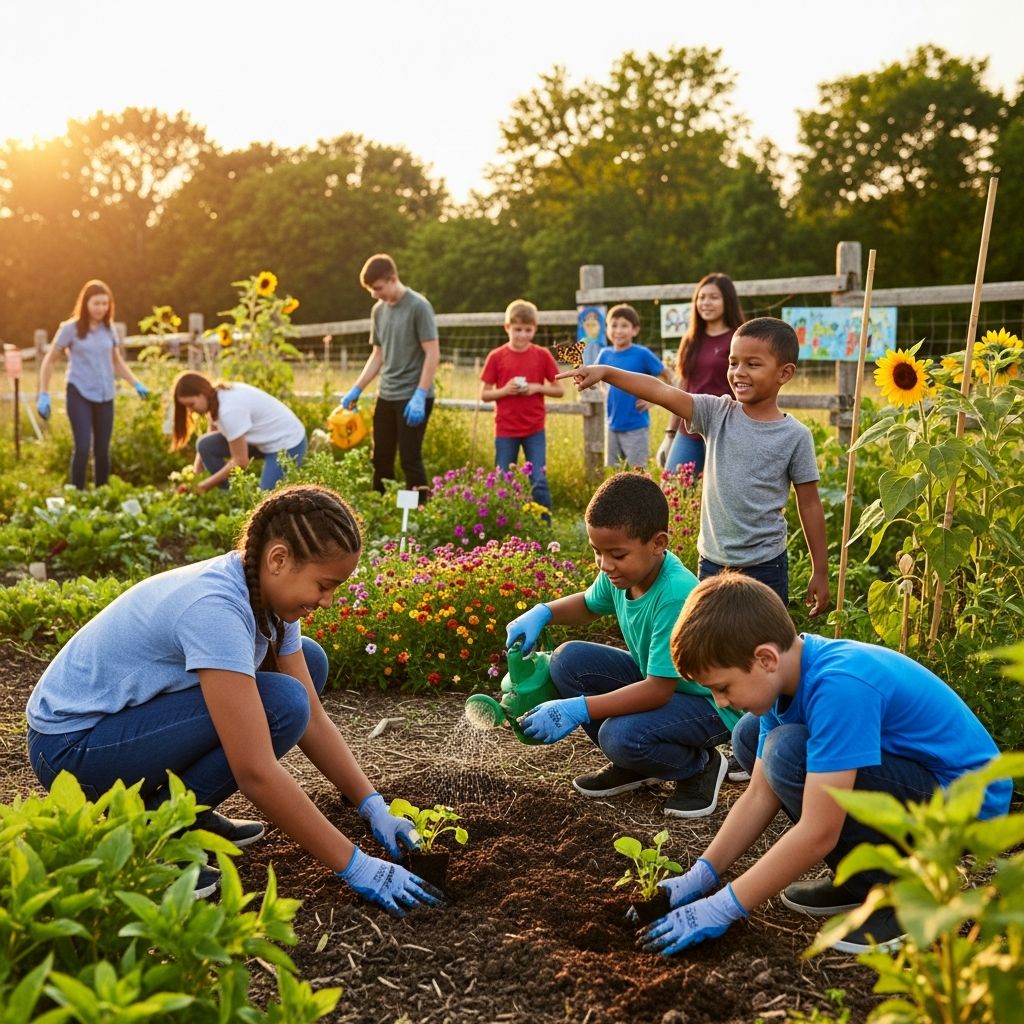
Volunteering offers elementary and middle school students a unique pathway to personal growth, skill development, and stronger community connections. By participating in service activities, young people not only contribute to their surroundings but also gain invaluable experiences that shape their character and future prospects.
Building Essential Life Skills Through Service
Engaging in volunteer work helps children develop core competencies like **empathy**, **teamwork**, and **leadership** at a formative age. These skills emerge naturally as kids collaborate on projects, interact with diverse groups, and tackle real-world challenges.
- Empathy grows when students assist others, such as reading to seniors or organizing food drives, fostering a deeper understanding of different perspectives.
- Teamwork strengthens through group efforts, like school clean-ups or event planning, where children learn to cooperate regardless of background.
- Leadership opportunities arise as kids take initiative, such as leading a recycling campaign, building confidence and decision-making abilities.
Research from the University of Minnesota highlights how such activities correlate with higher grade point averages and greater academic confidence, linking service directly to cognitive growth.
Boosting Academic Performance and Critical Thinking
Service learning integrates volunteering with education, turning abstract lessons into practical applications. For instance, science students might monitor local water quality, applying classroom knowledge while honing problem-solving skills.
| Academic Area | Volunteering Impact | Example Activity |
|---|---|---|
| Literacy | Improves reading and communication | Storytelling at shelters |
| Math | Enhances calculation and data analysis | Inventory for food banks |
| Science | Promotes experimentation | Environmental monitoring |
| Critical Thinking | Encourages application to real issues | Community surveys |
Volunteers providing one-on-one tutoring further personalize learning, helping students catch up and build perseverance, especially in under-resourced schools. A University of New Hampshire study confirms parental involvement via volunteering leads to better attendance, higher graduation rates, and continued education.
Enhancing Emotional and Physical Well-Being
Regular volunteering correlates with improved mental health, reducing anxiety and depression while increasing life satisfaction. Harvard Medical School studies link it to greater happiness and well-being.
- **Mental Health Gains**: A sense of purpose combats isolation, with volunteers reporting higher self-esteem and emotional resilience.
- **Physical Health Benefits**: Activities often involve movement, like park clean-ups, promoting fitness and reducing screen time.
- **Family Bonding**: Parent-child volunteering strengthens relationships, creating shared memories and modeling compassion.
Recent data shows youth volunteers exhibit better physical health and positive outlooks, with fewer behavioral issues.
Strengthening School and Community Ties
Student involvement bridges home, school, and neighborhood, fostering a supportive ecosystem. Parents volunteering gain insights into their child’s world, enhancing home-school communication.
In schools, volunteers enrich curricula with unique talents—art demos, cultural stories, or tech workshops—exposing kids to new ideas. This is vital for resource-limited institutions, where volunteers provide low-cost, high-impact support.
Communities benefit as students interact with adults, valuing education and improving attendance. Programs like tutoring boost test scores and school interest.
Practical Ways for Young Students to Get Involved
Age-appropriate opportunities abound, from simple tasks to structured programs, often family-inclusive.
- Local Food Pantries: Sorting donations or packing bags teaches organization and gratitude.
- Animal Shelters: Walking dogs or making toys builds responsibility and care.
- School Gardens: Planting and maintaining veggies promotes science and healthy eating.
- Library Reading Programs: Assisting younger kids with books advances literacy skills.
- Neighborhood Clean-Ups: Picking up litter instills environmental stewardship.
Many initiatives require minimal time, fitting busy schedules while maximizing impact. Schools and organizations often train volunteers, ensuring safe, rewarding experiences.
Long-Term Advantages for Future Success
Beyond immediate gains, volunteering builds resumes and networks. It showcases initiative to colleges and employers, with experiences like project leadership standing out.
Students expand circles, meeting mentors who offer references or opportunities. This network proves invaluable for internships or jobs, while skills like time management transfer seamlessly.
For families, it’s a shared value-building exercise, modeling service that kids carry forward.
Overcoming Common Barriers to Participation
Time constraints worry many, but micro-volunteering—short, flexible commitments—makes it accessible. Virtual options, like online tutoring, suit remote families.
Safety concerns are addressed through vetted programs with background checks. Start small: school clubs or one-off events ease entry.
FAQs
What age is best to start volunteering?
Elementary school (ages 5-11) suits simple tasks; middle schoolers (11-14) handle more responsibility. Parental guidance ensures suitability.
Does volunteering really improve grades?
Yes, studies link it to higher GPAs and confidence via service learning.
How much time should kids commit?
1-2 hours weekly suffices for benefits without overload.
Can virtual volunteering count?
Absolutely—online reading or virtual clean-up coordination builds skills effectively.
What if my child is shy?
Pair with family or start in familiar settings to build comfort gradually.
Encouraging Lasting Habits
Make volunteering routine by tying it to interests—sports fans at youth leagues, animal lovers at rescues. Celebrate efforts with reflections on impact, reinforcing value.
Schools can integrate via clubs, boosting participation. Ultimately, these experiences cultivate compassionate, capable individuals ready for life’s challenges.
References
- The Power of Volunteering: Making a Difference in Schools and Beyond — Sparkwheel. 2023-01-15. https://www.sparkwheel.org/post/the-power-of-volunteering-making-a-difference-in-schools-and-beyond
- Eight Great Ways Kids Benefit From Volunteer Work — International School of Minnesota. 2022-05-10. https://internationalschoolmn.com/school-news/eight-great-ways-kids-benefit-from-volunteer-work
- Why Should Students Volunteer? — CCA Educate. 2024-03-20. https://ccaeducate.me/blog/benefits-of-volunteering-as-a-student/
- Why Volunteering is Important to a School’s Success — Williamsburg Montessori. 2023-08-12. https://www.williamsburgmontessori.org/why-volunteering-is-important-to-a-schools-success/
- Students, Teachers—and the Community—Benefit from School Volunteers — Oakland Education Fund. 2023-02-22. https://www.oaklandedfund.org/2023/02/22/students-teachers-and-the-community-benefit-from-school-volunteers/
- 5 Benefits of Volunteering at Your Children’s School — FACTS Management. 2023-11-05. https://factsmgt.com/blog/5-benefits-of-volunteering-at-your-childrens-school/
- Volunteering Ideas for Middle School and Elementary Students — Connections Academy. 2024-06-18. https://www.connectionsacademy.com/support/resources/article/volunteering-for-elementary-and-middle-school-students/

- Integrated M.A. in Applied Linguistics, University of Hyderabad
- 5+ years in editorial, instructional, SEO, and research-based writing
Sneha is a relationships and lifestyle writer with a strong foundation in applied linguistics and certified training in relationship coaching. She brings over five years of writing experience to theskillvault, crafting thoughtful, research-driven content that empowers readers to build healthier relationships, boost emotional well-being, and embrace holistic living. Her writing and insights reflect the belief that beauty, happiness, and wellness…