
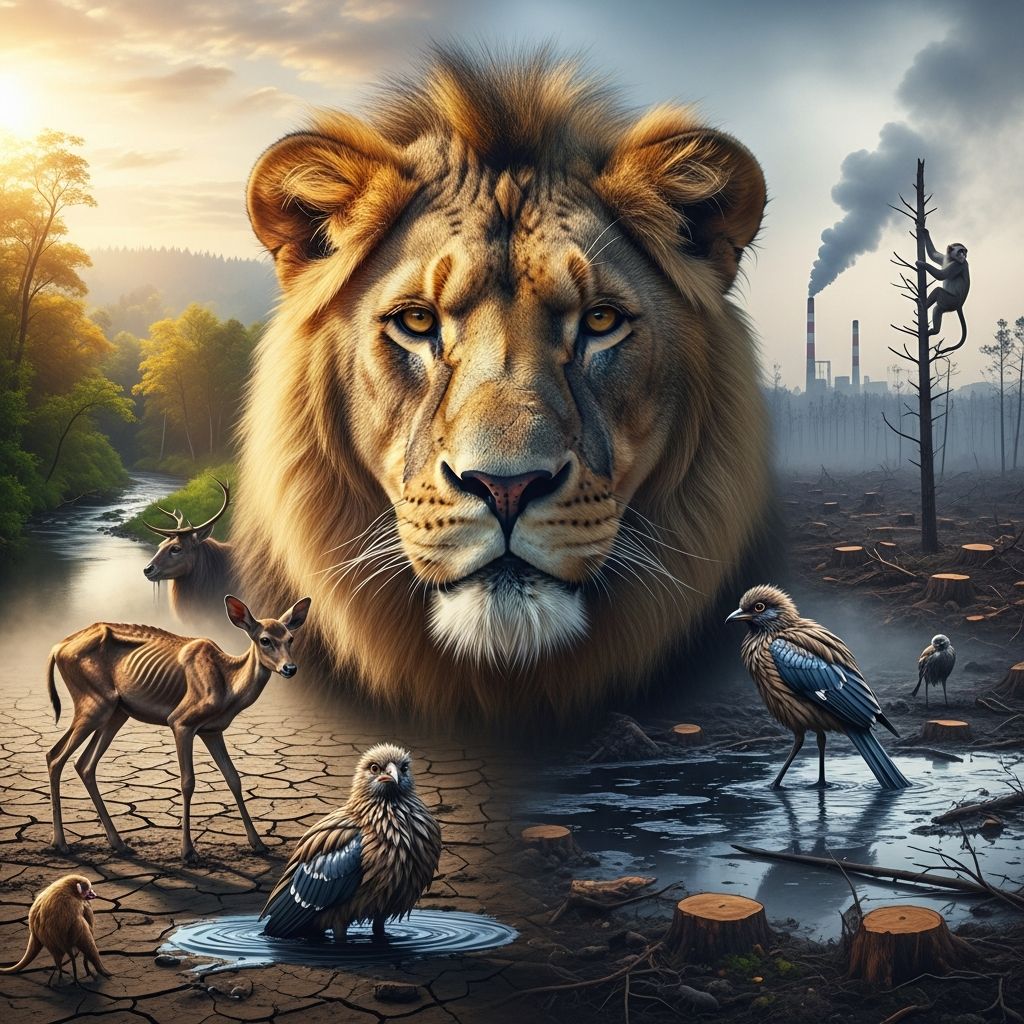
Across the surface of the Earth, trillions of wild animals live, struggle, reproduce, and die, mostly without human notice. For people concerned with ethics and the future of life, this raises challenging questions: Are their lives, on balance, good or bad? Should humans try to reduce wild animal suffering, even if that means interfering with ecosystems? And how do debates about consciousness, death, and emerging technologies reshape what we owe to other creatures?
This article draws inspiration from discussions with philosopher of science Peter Godfrey-Smith, known for his work on animal minds and the evolution of complex life. It weaves together ethics, biology, and long-term thinking to map the main questions and arguments, while remaining entirely original in structure and presentation.
1. Why Wild Animal Suffering Is an Ethical Frontier
For most of human history, moral concern focused on nearby people and domesticated animals. As moral circles expanded, philosophers and scientists began to take seriously the welfare of all sentient beings. Modern effective altruism and animal ethics have pushed this further, asking whether we should worry not only about farmed animals but also about suffering in the wild.
Concerns about wild animal suffering typically arise from three observations:
- Huge numbers: The global population of wild animals is vast, especially small vertebrates and invertebrates. Many live short, harsh lives.
- Intense harms: Predation, starvation, disease, parasitism, and exposure can cause prolonged or extreme suffering.
- Lack of compensation: Unlike humans, many animals do not have narrative lives filled with projects, meaning, and long-term plans that might “redeem” episodes of hardship.
Yet some philosophers, including Godfrey-Smith, emphasize that we must also recognize the positive side of wild lives: play, exploration, social bonds, and the satisfaction of successful foraging or reproduction. How we weigh these experiences is central to judging whether nature is mostly a tragedy or a complex mixture of goods and bads.
2. Are Wild Animals’ Lives Worth Living?
One core disagreement in the literature is about the overall value of typical wild animal lives. Do negative experiences dominate, making existence worse than non-existence, or do positive moments and successful efforts compensate for the bad?
2.1 Two contrasting pictures of nature
- Bleak picture: Some writers argue that most wild animals die young, often painfully, and that the few pleasures they experience cannot outweigh intense harms. They point to high infant mortality, constant predation risk, and chronic hunger in many ecosystems.
- Mixed-value picture: Others, including Godfrey-Smith, highlight that many animals, especially long-lived, behaviorally complex ones, appear to have rich and varied experiences. Cool mornings of foraging, resting in the sun, social grooming, exploration, and problem-solving might be deeply positive rather than trivial.
From this perspective, a simple tally of “hours of pain” versus “hours of pleasure” is too crude. What matters may also include the structure of a life: the pursuit of goals, overcoming of challenges, and distinctive achievements, such as successfully raising offspring or defending territory.
2.2 Redemption, achievement, and narrative
Humans often see the value of their lives through a narrative lens: a difficult but meaningful project can make years of hardship seem worthwhile. Something similar may hold, to a limited degree, for some nonhuman animals, especially social mammals and birds whose brains support learning, planning, and flexible problem-solving.
When we ask whether a life is “worth living,” we may need to consider:
- Intensity: How severe are the worst experiences?
- Duration: How long do positive versus negative states last?
- Structure: Are negative episodes parts of coherent, goal-directed activity (such as parenting) that might be valuable as a whole?
- Perspective: If an animal could evaluate its life, would it “prefer” that it occurred, all things considered?
None of these questions are easy to answer, especially given limited empirical data on animal experiences. But they show why a simple, pessimistic picture of nature may be incomplete.
3. Animal Consciousness and Which Lives Matter Morally
Underlying debates about wild animal suffering is another, more foundational issue: which animals are conscious, and to what degree? Many ethical theories assign moral status to beings with subjective experiences, such as pain, pleasure, or emotional distress. Understanding which creatures have such experiences is therefore crucial.
3.1 A spectrum of minds, not a sharp line
Philosophers and neuroscientists increasingly argue that consciousness likely exists along a continuum rather than as an all-or-nothing feature. Godfrey-Smith, for example, has emphasized gradations in sensory complexity, learning capacity, and behavioral flexibility across animals. Octopuses, many fish, birds, and mammals show robust evidence of flexible learning and problem-solving, suggesting at least some form of subjective experience.
Major scientific bodies have echoed this cautious expansion of moral concern. The UK government, after reviewing scientific evidence, has formally recognized many cephalopods and decapod crustaceans as sentient for legal purposes, acknowledging their capacity for pain and suffering. This shift implies that a much wider range of wild animals may deserve ethical consideration than once assumed.
3.2 Consciousness and ethical priority
If consciousness comes in degrees, ethical theorists face a non-binary landscape:
- Some animals may have rich, multi-modal experiences, including emotions, social bonds, and complex learning (e.g., corvids, primates, cetaceans).
- Others may have simpler forms of experience, such as basic pain and sensory enjoyment, with limited capacity for planning or reflection.
- Some very simple organisms might have no experience at all, acting purely via reflex-like mechanisms.
Ethically, this suggests we might assign different weights to different animals when considering interventions. However, the evidence is incomplete, and many philosophers argue for a precautionary approach: when in doubt, avoid causing serious risk of suffering to beings that might be sentient.
| Animal Group | Evidence of Complex Consciousness | Ethical Implications |
|---|---|---|
| Primates, cetaceans, corvids | Advanced problem-solving, social cognition, memory | Very strong reasons to treat as richly sentient |
| Other mammals, many birds, some fish | Learning, play, emotional behavior, stress responses | Robust reasons to consider their welfare seriously |
| Cephalopods, decapod crustaceans | Tool use, avoidance learning, complex behavior | Growing legal recognition and moral concern |
| Insects, other invertebrates | Highly variable, evidence still emerging | Unclear; precautionary approaches debated |
4. Should Humans Interfere with Wild Nature?
Once we acknowledge that many wild animals are sentient and that suffering is widespread, the next question is whether humans should actively intervene in nature to reduce harms. Here, Godfrey-Smith’s view is cautious: he resists broad-brush proposals to radically redesign ecosystems but accepts that certain limited interventions may be justifiable.
4.1 Reasons in favor of intervention
Proponents of intervention-focused ethics argue that if suffering is bad, its location—urban or wild—does not change its moral significance. From this standpoint, we might have reasons to:
- Control or treat diseases that cause mass suffering in wild animals, when feasible and safe.
- Mitigate extreme harms caused or amplified by humans, such as pollution, climate change, or anthropogenic habitat fragmentation.
- Pilot small, carefully studied interventions that might improve welfare without destabilizing ecosystems, such as targeted vaccinations or humane contraception for overabundant populations.
Researchers in conservation biology have already explored examples like oral rabies vaccination in wild carnivores, which both protects human health and reduces disease-driven suffering in target species. However, these cases are typically motivated by human interests; a fully animal-focused ethic would need to evaluate them under different priorities.
4.2 Reasons against large-scale interference
Opponents of strong interventionist proposals raise several concerns, many of which Godfrey-Smith shares:
- Epistemic humility: Ecosystems are complex and non-linear. Large-scale meddling risks unintended consequences, including increasing total suffering.
- Value of wildness: Some environmental ethicists argue that there is intrinsic value in relatively autonomous, self-willed nature. Heavy-handed engineering could undermine this value even if some suffering is reduced.
- Priority of human-caused harms: Many philosophers suggest we first address harms we directly cause—climate change, habitat destruction, industrial fishing—before redesigning nature itself.
- Political realism: Grand plans to restructure ecosystems are unlikely to be executed carefully or justly in real-world political systems.
Godfrey-Smith has argued that while modest interventions, especially around disease control, may be acceptable in principle, we should be skeptical of sweeping attempts to refashion predation or reproductive strategies across entire biomes.
5. Climate Change, Conservation, and Animal Lives
Debates about wild animal welfare now intersect with the planetary crisis of climate change. Rising temperatures, shifting precipitation patterns, and ocean acidification are transforming habitats and reshaping the distribution of species worldwide. These changes have profound implications for both biodiversity and suffering.
5.1 Climate risks to wild animals
- Heat stress and mortality: More frequent heatwaves increase direct physiological stress and mortality in many species.
- Habitat loss: Coral bleaching, melting ice, and desertification destroy or degrade habitats, disrupting food webs.
- Extreme events: Wildfires, floods, and storms cause acute suffering and displacement.
- Mismatch and starvation: Phenological shifts (e.g., earlier springs) can misalign breeding and food availability, undermining reproductive success.
From a purely welfare-based standpoint, climate mitigation is arguably one of the most important levers we have to reduce future wild animal suffering, even if the relationships are complex and sometimes ambiguous.
5.2 Conservation, rewilding, and welfare
Conservation and rewilding are often justified by appeals to biodiversity and ecosystem health. Yet these projects also shape the lived experiences of animals. Reintroducing predators, for example, can restore ecological functions but also increases predation-related fear and death.
Philosophers like Godfrey-Smith suggest that we need a multi-value framework that recognizes:
- Ecological values (biodiversity, stability, evolutionary potential).
- Experiential values (suffering, enjoyment, flourishing of individual animals).
- Human-centered values (cultural identity, aesthetic appreciation, ecosystem services).
Balancing these dimensions does not admit a simple formula. However, it pushes conservationists to at least consider welfare consequences explicitly, rather than assuming that ecosystem health automatically maximizes animal wellbeing.
6. Death, Immortality, and the Shape of Future Minds
Another theme in Godfrey-Smith’s work is the nature of death and whether it should be seen as an intrinsic evil or a structural feature of life. As technologies like mind uploading, radical life extension, and digital consciousness are explored in speculative discussions, our attitudes toward death could shift in ways that also affect how we view animal lives.
6.1 Is death always bad?
In human ethics, many people regard premature death as a major harm, while being more ambivalent about death at the end of a long, rich life. Some philosophers argue that mortality is partly constitutive of meaningful projects, giving them urgency and narrative structure.
Applied to animals, this raises questions like:
- Is a short but mostly positive life better than never existing at all?
- Does a natural death after a reasonably long life differ morally from violent predation or disease-driven collapse?
- Should we focus more on reducing premature or especially painful deaths than eliminating death altogether?
These questions become even more pressing if future technologies might allow for radically extended or digitally preserved consciousness in humans, opening new gaps between human and animal prospects.
6.2 Mind uploading and the moral landscape
Speculative proposals like mind uploading—the idea of transferring the functional structure of a mind into a digital or artificial substrate—force us to think carefully about what we value in consciousness. If it became possible for humans to exist indefinitely as digital minds, while animals remained bound to short, biological lives full of risk, our sense of moral urgency about nonhuman suffering might increase.
Even if such technologies remain far-fetched, they highlight how deeply assumptions about life, death, and embodiment structure our ethical priorities. Godfrey-Smith has expressed skepticism about simplistic technological salvation narratives, suggesting instead that we should attend seriously to the fragile, embodied minds that already exist in oceans, forests, and skies.
7. Emerging Research, Open Questions, and Practical Steps
Research on animal minds and welfare is advancing quickly. Fields such as comparative cognition, affective neuroscience, and animal welfare science offer tools for grounding philosophical debates in empirical data. Meanwhile, conservation science and climate research reveal the scale of human influence on ecosystems.
7.1 Key open questions
Some of the most important unresolved issues include:
- Measuring welfare in the wild: How can we develop indicators that capture both suffering and positive experiences at scale?
- Understanding invertebrate minds: What forms of consciousness, if any, exist in insects and other small animals, and how should this affect policy?
- Designing cautious interventions: Can we test small-scale, welfare-improving interventions (e.g., targeted vaccination, habitat design) while robustly monitoring unintended effects?
- Integrating values: How do we systematically balance biodiversity, autonomy of nature, and individual welfare in conservation and land-use decisions?
7.2 What individuals and institutions can do now
While much remains uncertain, some practical steps are relatively clear:
- Support high-quality research on animal consciousness and welfare, particularly in under-studied taxa like fish and invertebrates.
- Back effective climate mitigation measures, which are likely to reduce extreme environmental stresses on wild animals in the long term.
- Prioritize reducing human-caused harms such as habitat destruction, overfishing, and pollution, which often cause both biodiversity loss and intense suffering.
- Experiment with cautious, welfare-aware policies in conservation, such as humane population management and disease control, paired with rigorous monitoring.
Frequently Asked Questions (FAQs)
Q1: If wild animals suffer so much, does that mean nature is bad overall?
Not necessarily. While wild animal suffering is real and often severe, many animals, especially behaviorally complex ones, appear to experience a wide range of positive states—exploration, social bonding, play, and successful parenting. Whether lives are “worth living” depends on how we weigh intense harms against meaningful or enjoyable experiences, and current evidence does not support a simple, universally negative verdict.
Q2: Should we try to stop predators from killing their prey?
Most philosophers and conservationists are wary of large-scale efforts to eliminate predation. Predators play essential ecological roles, and interfering with them could destabilize ecosystems or even increase total suffering. Some targeted interventions—such as disease control—may be less risky, but radical redesign of food webs is currently considered both dangerous and ethically contentious.
Q3: How do scientists study animal consciousness?
Researchers combine behavioral experiments, neuroanatomy, neurophysiology, and comparative studies across species. They look for markers like flexible learning, problem-solving, tool use, and complex emotional behavior. Because we cannot directly access animal experiences, scientists use converging evidence rather than a single decisive test.
Q4: Is focusing on wild animal suffering a distraction from human problems?
Many ethicists argue that caring about wild animals does not preclude caring about humans. Instead, it reflects a broader concern for sentient life. In practice, most proposals emphasize first reducing human-caused harms—such as climate change and habitat destruction—before considering more ambitious interventions in nature.
Q5: What role do laws and public policy play in this area?
Laws can recognize certain animals as sentient, regulate harmful practices, and shape conservation and climate policy. Recent legal recognition of sentience in cephalopods and decapod crustaceans shows how empirical research on consciousness can inform regulation. Over time, similar developments may lead to more welfare-conscious environmental policies.
References
- The Welfare of Cephalopods and Decapod Crustaceans — UK Department for Environment, Food & Rural Affairs. 2021-11-19. https://www.gov.uk/government/publications/animal-welfare-sentience-bill-supported-by-government-commissioned-research
- LEAP Hosts Talk with Peter Godfrey-Smith on Animal Consciousness — Yale Law School. 2022-02-23. https://law.yale.edu/yls-today/news/leap-hosts-talk-peter-godfrey-smith-animal-consciousness
- Interventions to Manage Wildlife Diseases: When and Why? — U.S. Geological Survey. 2020-06-15. https://www.usgs.gov/media/images/interventions-manage-wildlife-diseases-when-and-why
- Climate Change 2023: Synthesis Report — Intergovernmental Panel on Climate Change. 2023-03-20. https://www.ipcc.ch/report/sixth-assessment-report-cycle/
- Living on Earth: Forests, Corals, Consciousness, and the Making of the World (Book Review) — Chicago Journals / The Quarterly Review of Biology. 2023-12-01. https://www.journals.uchicago.edu/doi/10.1086/735994

- Integrated M.A. in Applied Linguistics, University of Hyderabad
- 5+ years in editorial, instructional, SEO, and research-based writing
Sneha is a relationships and lifestyle writer with a strong foundation in applied linguistics and certified training in relationship coaching. She brings over five years of writing experience to theskillvault, crafting thoughtful, research-driven content that empowers readers to build healthier relationships, boost emotional well-being, and embrace holistic living. Her writing and insights reflect the belief that beauty, happiness, and wellness…