
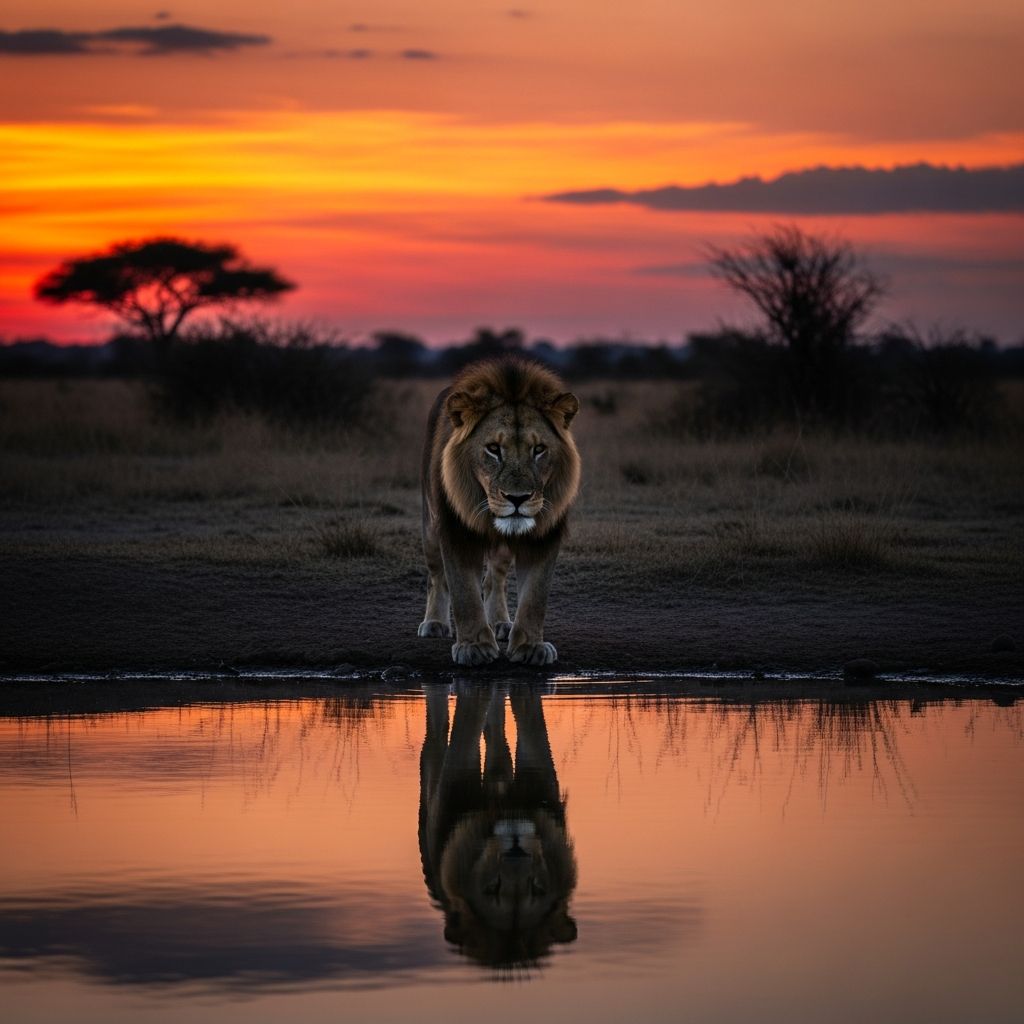
Discussions about animal welfare have historically focused on pets, farmed animals, and animals in laboratories, yet the vast majority of sentient creatures live in the wild. Their lives are shaped by hunger, disease, injury, and predation far more than by human compassion. This article explores why wild animal welfare may be a crucial yet neglected cause, how to think about suffering in nature, and what practical steps researchers, advocates, and donors can take.
1. Why Look Beyond Conservation to Welfare?
Environmental movements have traditionally centered on species and ecosystems rather than the day-to-day experience of individual animals. Conservation policy typically asks whether a population is stable or a habitat is intact, not whether animals are suffering from starvation, disease, or stress.
At the same time, public concern for animals is widespread. A 2025 nationally representative US survey found that 81% of adults are concerned about the environment, the welfare of animals, and conserving nature, and large majorities support science-based policies to safeguard wildlife and biodiversity. Yet the implications of caring about individual wild animals are rarely drawn out in detail.
- Conservation focuses on keeping species and ecosystems functioning.
- Welfare focuses on the quality of life experienced by each animal.
- Policies can benefit biodiversity while still allowing immense suffering for individuals.
A wild animal welfare perspective asks: if we take seriously that wild animals are sentient, what follows for research, policy, and personal priorities?
2. How Much Suffering Exists in the Wild?
Estimating total wild animal suffering is difficult, but several features of ecology suggest it could be vast:
- Many species produce huge numbers of offspring, most of whom die shortly after birth from hunger, predation, or disease.
- Injuries, parasites, and infections are common and can cause prolonged pain.
- Extreme weather events and habitat fluctuations can lead to starvation or mass mortality.
Actual data on specific harms illustrate the magnitude of the problems. For instance, a cost-effectiveness analysis of rabies control in raccoons estimated that before oral rabies vaccination programs, roughly 35% of raccoon deaths in Texas were due to rabies. Assuming a stable population of 3 million raccoons with an average lifespan of 2.5 years (meaning about 40% die annually), that implies approximately 420,000 raccoons dying of rabies per year in that state alone. Rabies is only one disease among many, and raccoons are only one species among billions.
These facts suggest that suffering in nature is not limited to rare, dramatic footage of predation; it is a pervasive background condition for many animals.
3. Ethical Perspectives on Wild Animal Suffering
Reasonable people disagree about what morality requires in relation to wild animals. Some common viewpoints include:
| Ethical view | Key idea | Implication for wild animals |
|---|---|---|
| Utilitarian / suffering-focused | What matters morally is overall well-being and suffering. | Mass suffering in nature is a major moral concern; we should explore ways to reduce it. |
| Rights-based | Beings with certain capacities have moral rights. | If wild animals have rights not to be harmed, human activity may violate these; we might also owe them aid. |
| Environmental holism | Species and ecosystems have value as wholes. | Maintaining ecological processes can be valued even if individuals suffer. |
| Non-interventionism | Nature should be left alone unless humans caused the problem. | We should focus on reducing direct human harms, not natural suffering. |
Wild animal welfare research does not require consensus on a single moral theory. Instead, it aims to better understand what wild animals experience and identify changes that are ethically acceptable across a wide range of views, such as reducing human-caused harms or preventing especially painful diseases.
4. Tractable Interventions: Early Examples
Many people worry that trying to improve wild animal welfare is hopelessly intractable, but some existing programs suggest that targeted interventions can help at scale. The best-studied examples tend to come from disease control, where human public health goals and animal welfare can align.
4.1 Disease control as a case study
Oral rabies vaccination (ORV) campaigns distribute vaccine baits to wild carnivores. These programs are often justified by the need to protect humans and domestic animals, but they also plausibly prevent large numbers of extremely painful deaths in wildlife.
- In North America and Europe, ORV has dramatically reduced rabies incidence in some wild species.
- Even rough calculations suggest hundreds of thousands of animal deaths per year may be averted in a single region.
- The marginal cost per animal spared from rabies appears relatively low compared to many domestic animal interventions.
This does not mean that all disease control is automatically beneficial—culling programs can cause considerable suffering, and vaccinating some species might have complex ecological effects. However, it demonstrates that large-scale, targeted welfare improvements are technically and economically feasible in principle.
4.2 Other potential intervention areas
Beyond rabies control, researchers and policymakers are beginning to consider other ways in which human actions already shape wild lives:
- Wildlife contraception and fertility management to reduce large seasonal booms of offspring with extremely low survival rates.
- Humane approaches to urban wildlife management such as non-lethal deterrence, habitat design, and safe crossings to reduce roadkill and conflict.
- Disaster response during floods, fires, and extreme heat waves, where feasible, to relieve acute suffering for at least some affected animals.
Most of these areas are under-researched. We currently know far more about how to protect species from extinction than about how to improve their welfare while they are alive.
5. Scale, Neglectedness, and Cost-Effectiveness
Effective altruist organizations often evaluate causes based on three criteria: the scale of the problem, how neglected it is, and whether there are tractable ways to make progress. Wild animal welfare appears promising on all three dimensions.
- Scale: Wild animals vastly outnumber humans and domesticated animals. Even small average welfare improvements, if achievable, would affect huge numbers of beings.
- Neglectedness: Conservation biology and animal welfare science rarely focus explicitly on wild individuals’ subjective experiences.
- Tractability: Existing interventions like ORV show that cost-effective, large-scale changes are possible, and researchers expect better options as wild animal welfare science matures.
A case study by Wild Animal Initiative argues that as empirical work accelerates, we may discover interventions that are orders of magnitude more cost-effective than current ones, particularly if they can be integrated into existing conservation or public health programs.
6. Public Attitudes and Political Opportunities
Any large-scale change in how societies treat wild animals must contend with public opinion and political feasibility. Available data suggest that support for stronger protections is already high, even if the specific idea of wild animal welfare is not yet widely known.
- A 2025 poll found that 81% of Americans are concerned about animal welfare and the environment, and 70% support incorporating these considerations into policy-making.
- Research on attitudes toward animal protection indicates that large majorities endorse stronger legal protections for animals than currently exist, including for wildlife.[10]
These findings imply that there may be fertile ground for policies that jointly advance conservation and welfare, such as improved standards for wildlife management, restrictions on especially cruel practices, and funding for humane research into population and disease control.
7. Key Uncertainties and Risks
Despite its promise, wild animal welfare is an intellectually and practically challenging field. Several important uncertainties remain:
- Subjective experience: Which animals are conscious, and how do their experiences compare across species and life stages?
- Net balance of lives: Are typical lives in nature, on balance, positive or negative, and how does this vary with ecological conditions?
- Ecological side effects: Interventions targeting one species or disease can ripple through food webs, with unclear net effects.
- Value disagreements: Some people prioritize non-interference or ecosystem integrity over direct welfare gains.
Because of these uncertainties, many experts recommend a cautious research agenda aimed at:
- Understanding the status quo in more detail before attempting large-scale changes.
- Prioritizing interventions that clearly reduce severe suffering and align with existing public health or conservation goals.
- Developing robust ethical frameworks that can accommodate diverse values and long-term ecological feedbacks.
8. Promising Research Directions
Progress in wild animal welfare will likely depend on a blend of empirical science, philosophy, and policy analysis. Some particularly high-leverage research areas include:
8.1 Welfare biology and ecological modeling
Welfare biology aims to integrate animal welfare concepts into population ecology. Useful projects include:
- Developing quantitative models of how different life-history strategies (e.g., many small offspring vs. few large ones) affect lifetime experiences.
- Mapping the main sources of suffering—disease, predation, starvation, environmental stress—across species and ecosystems.
- Simulating the effects of proposed interventions on both population dynamics and welfare.
8.2 Measuring animal welfare in the wild
Assessing wild welfare requires new methodologies that are both scientifically sound and ethically acceptable. Potential approaches include:
- Physiological indicators such as stress hormones combined with behavioral observations.
- Remote monitoring technologies that minimize disturbance.
- Standardized welfare assessment frameworks adapted from farm and zoo animals but modified for wild contexts.
8.3 Policy design and governance
Another under-explored area is how institutions could incorporate wild animal welfare into decision-making. Research questions include:
- How existing wildlife laws and regulations could be updated to reflect welfare considerations.
- What governance structures (e.g., advisory panels, ethics committees) are needed to oversee interventions.
- Which international agreements might eventually recognize wild animal welfare alongside conservation goals.
9. Career and Funding Opportunities
Because wild animal welfare is so neglected, new researchers and advocates can have an outsized influence. Potential career paths include:
- Academic research in ecology, animal behavior, veterinary science, or ethics with a focus on wild welfare questions.
- Nonprofit work at organizations developing and testing humane wildlife management or advocating for policy change.
- Government and intergovernmental roles in agencies responsible for wildlife, public health, or environmental protection, where welfare can be integrated into existing programs.
Donors can support foundational research, pilot interventions, and capacity-building in organizations working at the intersection of conservation and welfare. Because the field is young, seed funding can significantly shift the trajectory of research agendas and institutional priorities.
10. Practical Steps for Interested Individuals
For readers who find wild animal welfare compelling, there are several practical ways to engage:
- Stay informed about emerging research in welfare biology, animal ethics, and wildlife management.
- Encourage conservation and animal organizations to consider wild welfare explicitly in their strategies.
- Support humane, evidence-based wildlife policies in your region, such as non-lethal conflict mitigation and disease prevention.
- Consider careers or advanced study that will position you to shape this emerging field.
While our scientific understanding is incomplete, the combination of enormous scale, clear neglectedness, and early signs of tractability suggests that wild animal welfare could become one of the most important frontiers for people who want to use their time, talent, and resources to help others as much as possible.
Frequently Asked Questions (FAQs)
Q: Does caring about wild animal welfare mean we should constantly intervene in nature?
Not necessarily. Many scholars argue for a cautious, research-first approach that focuses on understanding current conditions, avoiding obvious harms, and prioritizing interventions that are robustly beneficial under multiple ethical views. In practice, this often means improving existing human activities—such as disease control or wildlife management—rather than attempting to redesign entire ecosystems.
Q: How is wild animal welfare different from traditional conservation?
Conservation primarily aims to preserve species, genetic diversity, and ecosystems. Wild animal welfare, in contrast, focuses on the subjective well-being of individual animals. In many cases, the two goals align, but there can be trade-offs—for example, when predator reintroductions improve ecosystem health but increase suffering for prey animals.
Q: Is there public support for policies that help wild animals?
Survey evidence indicates that large majorities of the public are concerned about animal welfare and the environment, and favor strong wildlife protections and nature-based policies.[10] However, most people have not yet been exposed to the specific idea of wild animal welfare, so effective communication and careful framing will be essential.
Q: Could helping wild animals backfire ecologically?
Yes, poorly designed interventions can have unintended consequences. That is why most experts emphasize incremental, well-monitored trials, ecological modeling, and interdisciplinary oversight. The goal is to identify interventions that reliably reduce severe suffering without causing greater harms elsewhere, and to adjust policies as new evidence emerges.
Q: What kinds of data are available to study animal welfare more broadly?
Global databases now track a range of animal welfare indicators, from numbers of animals slaughtered to the prevalence of specific practices. For wildlife specifically, researchers increasingly combine population monitoring, remote sensing, and welfare indicators to understand how different policies and environmental changes affect animals’ lives.
References
- Is wild animal welfare management cost-effective? — Wild Animal Initiative. 2023-03-21. https://www.wildanimalinitiative.org/blog/cost-effectiveness-case-study
- Americans favor wildlife protections & nature-based policymaking — International Fund for Animal Welfare (IFAW). 2025-07-24. https://www.ifaw.org/press-releases/national-poll-overwhelming-support-americans-wildlife-protections-nature-based-policymaking
- Survey Shows Overwhelming Support For Wildlife Protections Among Americans — National Parks Traveler. 2025-11-05. https://www.nationalparkstraveler.org/2025/11/survey-shows-overwhelming-support-wildlife-protections-among-americans
- Public Support For Animal Protection In The United States — Faunalytics. 2019-10-01. https://faunalytics.org/public-support-for-animal-protection-in-the-united-states/
- Animal Welfare — Our World in Data. 2023-08-01. https://ourworldindata.org/animal-welfare

Medha Deb is an editor with a master's degree in Applied Linguistics from the University of Hyderabad. She believes that her qualification has helped her develop a deep understanding of language and its application in various contexts. Medha specializes in the areas of beauty, health, sports, and wellness and is committed to ensuring that the content on the website is…