
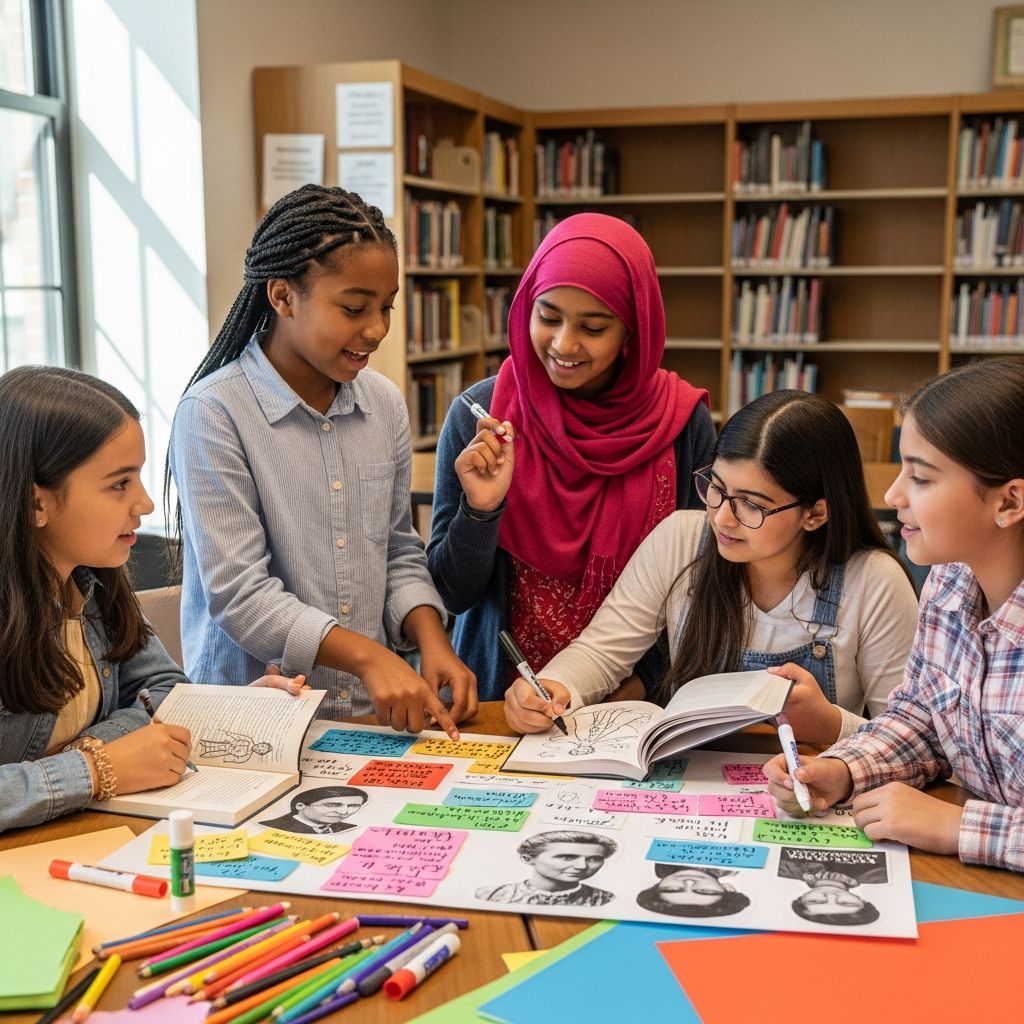
Women’s History Month provides an invaluable opportunity for middle school educators to introduce students to the profound impacts of women across various fields. These activities foster critical thinking, creativity, and empathy while aligning with core curriculum standards in history, language arts, and social studies. By focusing on diverse figures from politics, science, arts, and activism, teachers can create immersive learning experiences that resonate with today’s students.
Building Foundations: Introductory Research Challenges
Start the month with activities that encourage students to explore lesser-known women’s stories. Research projects build foundational knowledge and research skills essential for middle schoolers.
- Biography Trading Cards: Assign each student a woman from history, such as Katherine Johnson or Sacagawea. Students design trading cards with key facts, achievements, and a fun stat, like ‘First woman to…’ They trade cards in class to ‘collect’ a diverse set, promoting discussion on shared themes of perseverance.
- Timeline Weaving: In groups, students construct classroom timelines highlighting women’s milestones alongside major historical events. This visual aid helps contextualize contributions, such as Marie Curie’s radioactivity discoveries amid World War I.
These exercises not only teach historical facts but also develop digital literacy through vetted online resources from official sites.
Creative Expression: Art and Design Projects
Art-based activities allow students to visualize women’s legacies, blending creativity with historical analysis. Middle schoolers thrive when given freedom to interpret through visual mediums.
- Portrait Gallery Walk: Students select a woman and create stylized portraits using mixed media—collage, paint, or digital tools. Include quote bubbles with empowering statements. Mount them for a gallery walk where peers vote on ‘Most Inspirational’ with justifications.
- Symbolism Murals: Collaboratively design murals where each woman is represented by symbols of her work, like a ballot for suffragists or a rocket for Sally Ride. Discuss how symbols convey complex narratives.
Such projects enhance fine arts skills and retention, as visual storytelling reinforces memory.
Writing Workshops: Voices from the Past and Present
Writing activities deepen emotional connections by having students channel women’s perspectives or reflect personally.
- Historical Letters: Students write persuasive letters as figures like Susan B. Anthony arguing for suffrage. Use primary source excerpts to inform authentic voice.
- Modern Mentors: Prompt students to pen thank-you notes to influential women in their lives, mirroring personal inspirations like family or teachers. Share anonymously for a ‘Wall of Gratitude.’
These promote narrative writing and empathy, key Common Core standards.
Interactive Debates and Role-Plays
Dynamic discussions bring history alive, encouraging public speaking and critical analysis.
- Suffrage Showdown: Divide class into pro/anti-suffrage teams for a mock debate using era-appropriate arguments. Students research tactics from flyers and speeches.
- Innovation Pitch: Role-play as women inventors like Madam C.J. Walker pitching ideas to ‘investors.’ Evaluate based on clarity and impact.
Debates sharpen argumentative skills and highlight strategic advocacy.
Multimedia Productions: Films and Podcasts
Leverage technology for modern storytelling, appealing to digital-native students.
| Activity | Tools Needed | Learning Outcomes |
|---|---|---|
| Short Bio-Films | Smartphone, editing apps | Scripting, editing, public speaking |
| Community Podcasts | Recording software, mics | Interview skills, audio production |
For films, groups script 3-minute tributes to ‘Firsts’ like Sandra Day O’Connor, using storyboards. Podcasts feature local women leaders, teaching ethical interviewing. These align with media literacy goals.
Community and Service Learning
Extend learning beyond the classroom with real-world applications.
- Local Legends Interviews: Students interview community women—veterans, entrepreneurs—and compile into a digital archive.
- Awareness Drives: Organize school-wide events like assemblies or drives supporting women’s causes, tying back to historical activism.
Service projects build civic responsibility.
Vocabulary and Word Play
Strengthen language skills with fun linguistic activities.
- Empowerment Word Clouds: Generate clouds from speeches by figures like Sojourner Truth, analyzing recurring themes.
- Acrostic Poems: Create poems using names like ‘RUTH BADER GINSBURG,’ embedding traits and facts.
These boost vocabulary and poetic devices.
STEM Spotlights: Women in Science and Tech
Highlight women breaking barriers in male-dominated fields.
- Experiment Recreations: Replicate simple demos from Ada Lovelace’s algorithms or Grace Hopper’s tech innovations.
- Career Panels: Virtual guest speakers from STEM fields share journeys.
Encourages girls in STEM.
Integrating Across Curriculum
Weave activities into math (statistical analysis of suffrage votes), science (Curie labs), and PE (athletes like Billie Jean King).
Holistic integration maximizes impact.
Frequently Asked Questions (FAQs)
What age group are these activities best for?
Designed for grades 6-8, adaptable for 5-9 with scaffolding.
How long do these activities take?
Most span 1-2 class periods; projects extend to a week.
Do I need special materials?
Basic supplies; free digital tools suffice for most.
How to assess student work?
Use rubrics for research depth, creativity, and presentation.
Can these fit remote learning?
Yes, via Google Slides, Flipgrid for videos.
What if students lack diverse role models?
Provide curated lists from reliable sources.
These FAQs address common teacher concerns for seamless implementation.
Assessment Strategies and Extensions
Track growth with pre/post quizzes, reflection journals, and peer reviews. Extend with field trips to museums or guest authors. Parental involvement via shared digital portfolios amplifies reach.
In total, these 12+ ideas offer variety, ensuring every student finds resonance. By celebrating women’s histories, educators cultivate future leaders who value equity and innovation.
References
- 10 National Women’s History Month Activities for Students — HMH Co. 2023-03-01. https://www.hmhco.com/blog/womens-history-month-activities-lesson-plans-for-students
- Women’s History Month for the Classroom — National Education Association (NEA). 2024-02-15. https://www.nea.org/professional-excellence/student-engagement/tools-tips/womens-history-month-classroom
- Women’s History Month K-12 Teaching Resources — iCivics. 2024-01-10. https://vision.icivics.org/womens-history-month/
- Digital Classroom Resources — National Women’s History Museum. 2023-11-20. https://www.womenshistory.org/students-educators/digital-classroom-resources
- Women’s History Month Resources and Activities — SAIS. 2023-02-28. https://sais.org/resource/womens-history-month/

- Integrated M.A. in Applied Linguistics, University of Hyderabad
- 5+ years in editorial, instructional, SEO, and research-based writing
Sneha is a relationships and lifestyle writer with a strong foundation in applied linguistics and certified training in relationship coaching. She brings over five years of writing experience to theskillvault, crafting thoughtful, research-driven content that empowers readers to build healthier relationships, boost emotional well-being, and embrace holistic living. Her writing and insights reflect the belief that beauty, happiness, and wellness…