
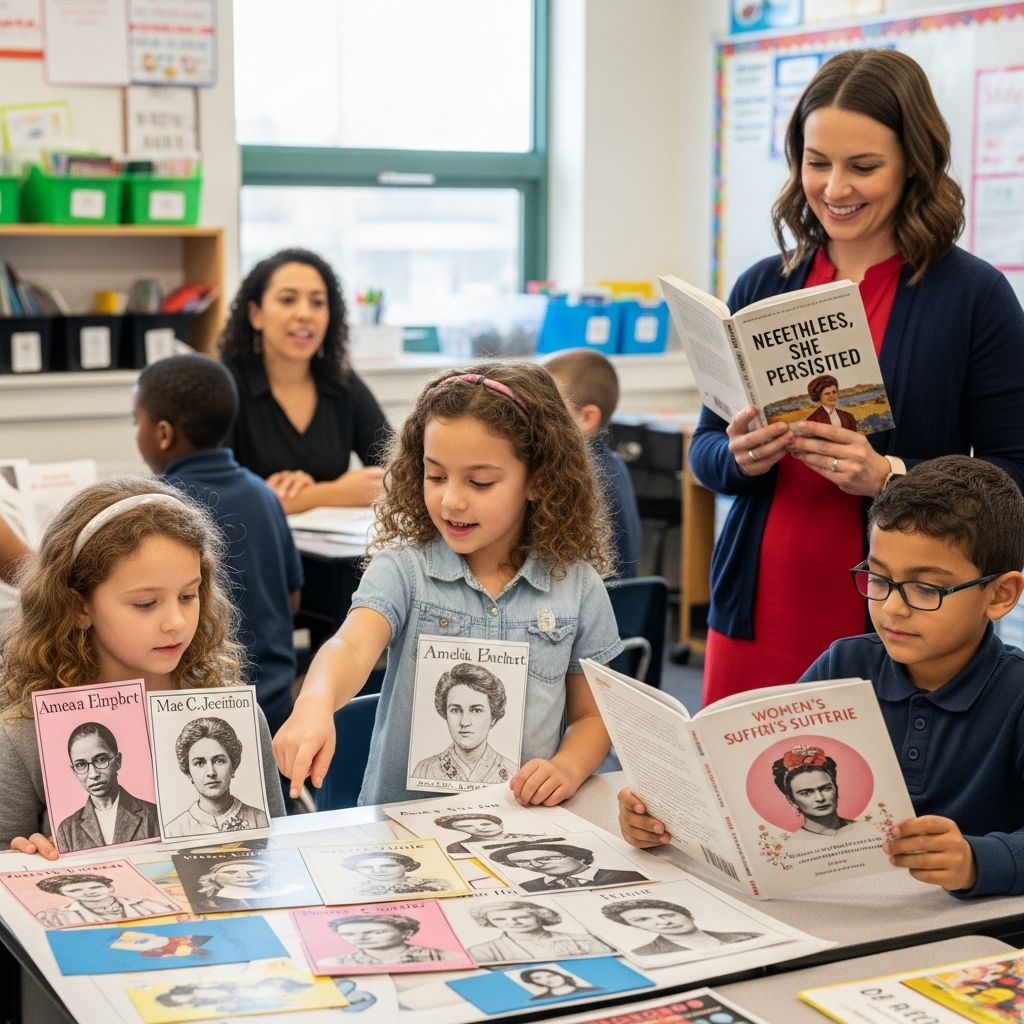
Women’s History Month, observed annually in March, provides educators with a vital opportunity to spotlight the contributions of women who have driven progress in fields like science, politics, arts, and civil rights. By integrating targeted activities into daily lessons, teachers can cultivate empathy, critical thinking, and a deeper understanding of gender equity among students. This article presents original, adaptable ideas drawn from proven educational practices, ensuring every classroom becomes a space of inspiration and learning.
Understanding the Importance of Women’s History Education
Teaching about women’s historical roles counters traditional narratives that often overlook their impact. For instance, women like Rosa Parks catalyzed civil rights advancements, while figures such as Marie Curie revolutionized science. These stories not only diversify history curricula but also model resilience and innovation for young learners. Research from the National Women’s History Museum emphasizes that such education promotes civic engagement and reduces gender biases in students.
Incorporating these topics aligns with core standards in social studies and language arts, helping students develop research skills, persuasive writing, and public speaking. Moreover, it encourages personal connections, prompting children to recognize influential women in their own lives, from family members to community leaders.
Interactive Research and Biography Projects
Hands-on research projects immerse students in the lives of remarkable women, transforming abstract history into relatable narratives. Assign pairs or small groups to investigate figures like Susan B. Anthony or Amelia Earhart, using provided biographies or library resources.
- Trading Cards Creation: Students design collectible cards featuring a woman’s portrait, key dates, and one major achievement on the front, with a detailed backstory on the back. Display these in a classroom “hall of fame” for peer review.
- Timeline Murals: Collaboratively build large-scale timelines tracing a woman’s journey, incorporating drawings, quotes, and artifacts. This visual aid reinforces chronological understanding.
These activities, adaptable for grades 3-8, build vocabulary and research proficiency. The National Education Association recommends similar scrapbook projects to highlight U.S. women’s accomplishments.
Creative Writing and Personal Reflection Exercises
Writing tasks allow students to express admiration and draw parallels between historical figures and modern role models. Begin with brainstorming sessions where learners list women who inspire them, such as teachers or athletes.
- Inspirational Letters: Guide students to compose heartfelt letters to a significant woman, detailing admired qualities and accomplishments. Encourage delivery for real-world impact.
- Diary Entries: Have students imagine a day in the life of a historical woman, capturing challenges and triumphs through first-person narratives.
Such exercises enhance empathy and narrative skills. For younger learners, pair with read-alouds of biographical picture books to spark ideas.
Artistic Expressions and Visual Displays
Art projects make history tangible and classroom walls vibrant testaments to women’s legacies. Theme-based bulletin boards focusing on areas like STEM or suffrage movements encourage collective creativity.
- Portrait Galleries: Students sketch or collage portraits of chosen women, adding speech bubbles with famous quotes. Hang as an evolving exhibit.
- Filmstrip Stories: Using template organizers, create sequential “filmstrips” depicting life milestones, optionally narrated as short videos.
These visuals reinforce memory retention and pride in shared learning. Incorporate word searches or puzzles to build thematic vocabulary beforehand.
Civic Engagement and Suffrage Simulations
Bring history to life through role-playing that explores pivotal moments like the fight for voting rights. Students in grades 3-12 can analyze primary sources from suffragists and craft modern advocacy materials.
| Activity | Grade Level | Skills Developed |
|---|---|---|
| Editorial Cartoon Creation | 4-8 | Persuasion, Art, History Analysis |
| Suffrage Debate | 6-12 | Public Speaking, Critical Thinking |
| Voter Pledge Drive | K-5 | Civic Responsibility, Writing |
iCivics offers complementary resources using primary sources to strengthen critical thinking. These simulations foster active citizenship.
Multimedia and Technology Integrations
Leverage digital tools for dynamic exploration. Curate podcasts on figures like Mary Shelley or nonprofits led by women, such as the Malala Fund.
- Virtual Interviews: Students record questions for local women leaders, editing into class podcasts.
- Interactive Maps: Plot global impacts of women like Malala Yousafzai on digital maps.
For congressional representation, discuss current women serving, using official data to highlight diversity. The National Women’s History Museum provides free digital lesson plans and posters.
Age-Appropriate Adaptations for All Learners
Elementary Strategies (K-5)
Focus on storytelling and play. Read-alouds of Rosa Parks’ story or simple worksheets test comprehension while building excitement. Create word clouds from speeches for visual learners.
Middle School Extensions (6-8)
Introduce debates on women’s roles in history versus today. Research projects evolve into persuasive essays or group presentations.
High School Challenges (9-12)
Dive into complex topics like intersectionality in women’s rights. Analyze primary documents from the Women’s History Museum and develop policy proposals.
Differentiation ensures inclusivity: provide scaffolds for English learners and extensions for advanced students.
Building Community Connections
Extend learning beyond classroom walls by inviting guest speakers—local historians or activists. Organize letter-writing campaigns to nonprofits advancing gender equity. Partner with parents for “women who inspire” showcases, where families share stories.
These ties reinforce that history is ongoing, with students as next contributors. Share outcomes on school newsletters to amplify impact.
Frequently Asked Questions (FAQs)
What is Women’s History Month?
Observed in March since 1987, it honors women’s contributions to U.S. history, proclaimed by Congress to recognize their roles in events shaping the nation.
How can I source materials for these activities?
Use free resources from the National Women’s History Museum, NEA, and iCivics for lesson plans, primaries, and printables.
Are these ideas suitable for virtual classrooms?
Yes—adapt to Google Slides for timelines, Flipgrid for interviews, and Padlet for collaborative boards.
How do I assess student learning?
Rubrics evaluating research depth, creativity, and presentation skills work well; self-reflections gauge personal growth.
Can these extend beyond March?
Absolutely—integrate into year-long diversity units for sustained impact.
Sustaining Momentum Year-Round
While March spotlights women, weave their stories throughout the curriculum. Update displays with contemporary achievers like NASA astronauts or Nobel laureates. Track progress with student journals reflecting evolving views on gender roles.
By prioritizing these activities, educators not only commemorate the past but empower students to author the future. The result: classrooms alive with curiosity, respect, and ambition.
References
- 10 National Women’s History Month Activities for Students — HMH Co. 2023. https://www.hmhco.com/blog/womens-history-month-activities-lesson-plans-for-students
- Activities to Celebrate Women’s History Month — Waterford.org. 2023. https://www.waterford.org/resources/womens-history-month-for-kids/
- Women’s History Month for the Classroom — National Education Association (NEA). 2024. https://www.nea.org/professional-excellence/student-engagement/tools-tips/womens-history-month-classroom
- Digital Classroom Resources — National Women’s History Museum. 2024. https://www.womenshistory.org/students-educators/digital-classroom-resources
- Women’s History Month K-12 Teaching Resources — iCivics. 2023. https://vision.icivics.org/womens-history-month/

Medha Deb is an editor with a master's degree in Applied Linguistics from the University of Hyderabad. She believes that her qualification has helped her develop a deep understanding of language and its application in various contexts. Medha specializes in the areas of beauty, health, sports, and wellness and is committed to ensuring that the content on the website is…