
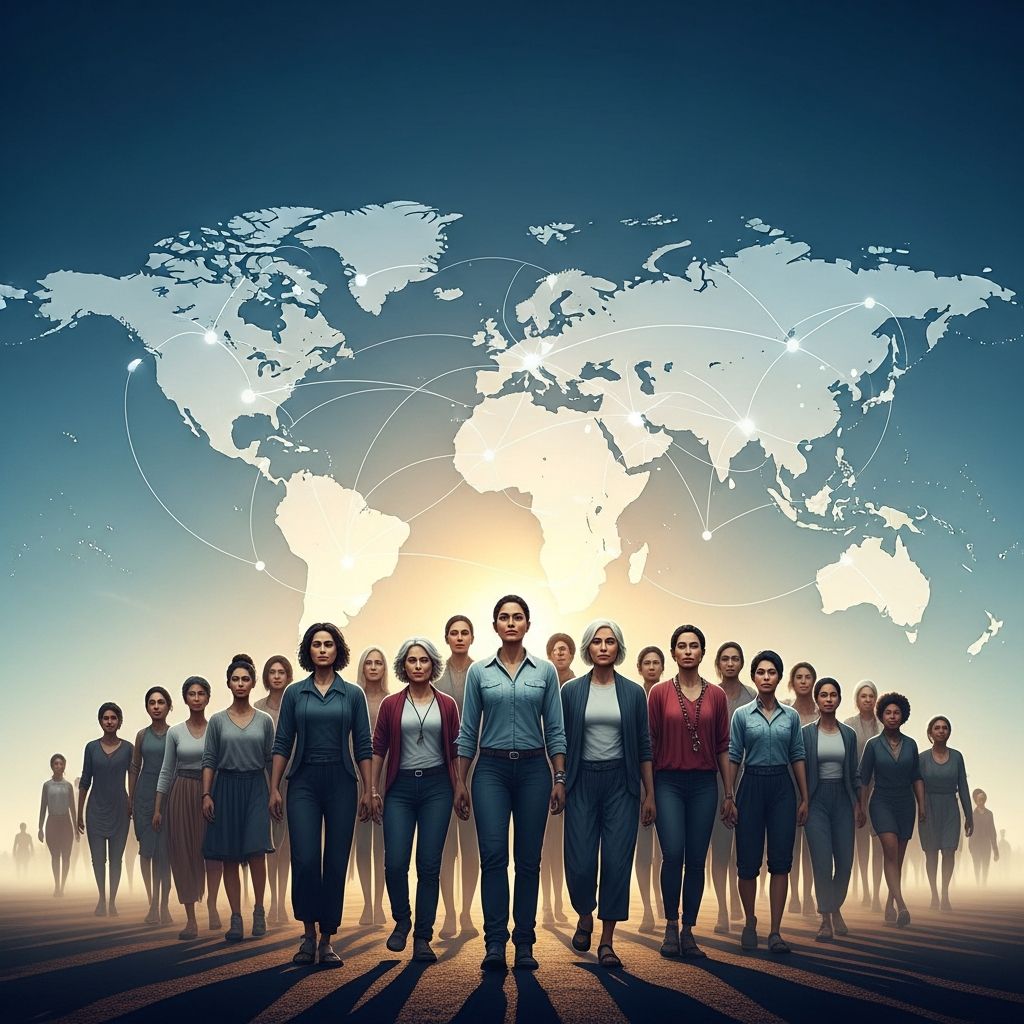
Women’s rights encompass the fundamental entitlements that allow women to live with dignity, autonomy, and equality alongside men. These rights have evolved through centuries of activism, legal battles, and societal shifts, addressing issues from voting access to bodily autonomy and economic fairness.
Roots of the Struggle: Pre-Modern Constraints on Women
Before the 19th century, women in most societies faced severe legal and social restrictions. They often lacked control over property, children, or even their own marriages. Divorce was nearly impossible, and economic dependence on men was the norm. The Industrial Revolution began to alter this dynamic by drawing women into factories, where they endured grueling hours and lower wages but gained a taste of financial independence.
This period sparked early reform efforts. Women joined movements against slavery and alcohol abuse, honing organizational skills that later fueled demands for their own liberation. In Europe and America, these changes laid groundwork for broader calls for equality, challenging the notion that women’s roles were confined to the home.
The Dawn of Organized Advocacy: 19th-Century Milestones
The modern women’s rights movement ignited in 1848 at a gathering in Seneca Falls, New York. Elizabeth Cady Stanton and others drafted a declaration mirroring the Declaration of Independence, demanding voting rights, education, and fair legal treatment. This event marked July 13, 1848, as the symbolic start, born from a casual tea conversation that exposed deep frustrations with democratic exclusions.
Key demands included ending property laws that favored husbands and securing custody rights for mothers. Activists like Susan B. Anthony and Lucy Stone toured the nation, facing ridicule but building momentum. The suffrage battle became central, as voting was seen as the key to other reforms. Despite opposition, this era set the stage for constitutional changes.
- Seneca Falls Declaration highlights: Full citizenship rights, equal education opportunities, and abolition of discriminatory laws.
- Early leaders: Stanton, Anthony, Sojourner Truth—representing diverse backgrounds and intersecting oppressions.
Victory at the Ballot Box: The Suffrage Triumph
After 72 years of campaigning, the 19th Amendment in 1920 granted American women the vote. Globally, New Zealand led in 1893, followed by waves across nations. Yet, barriers persisted; Black women in the U.S. waited until the 1965 Voting Rights Act for full access.
Suffragists employed marches, arrests, and illegal voting protests—like 172 women in 1868—to spotlight injustices. This hard-won right symbolized political agency but didn’t erase workplace or domestic inequalities.
| Country | Year of Women’s Suffrage | Key Milestone |
|---|---|---|
| New Zealand | 1893 | First national suffrage |
| United States | 1920 | 19th Amendment |
| Egypt | 1956 | Post-parliament storming |
| Saudi Arabia | 2015 | Local elections |
Expanding the Agenda: Mid-20th Century Reforms
Post-suffrage, focus shifted to economic and reproductive justice. World Wars accelerated change, as women filled male-dominated jobs, proving their versatility. The 1963 Equal Pay Act targeted wage gaps, while Title VII of the 1964 Civil Rights Act banned employment discrimination.
Reproductive rights advanced dramatically. Margaret Sanger’s campaigns defied obscenity laws, culminating in the 1965 Supreme Court ruling allowing married couples contraceptive access. Roe v. Wade in 1973 affirmed abortion rights, though later overturned, underscoring ongoing volatility.
Organizations like the National Organization for Women (NOW) pushed the Equal Rights Amendment (ERA), sparking debates over labor protections. Divorce laws liberalized, and Title IX ensured educational equity, opening doors in sports and academia.
Waves of Feminism: From Second to Fourth
Feminism unfolded in waves. The second wave (1960s-1980s) tackled sexuality, harassment, and family roles, defining consent and shared chores. The third wave (1990s) embraced diversity, intersectionality, and individualism.
Today’s fourth wave leverages digital activism against street harassment and body shaming. The UN’s 1979 Convention on the Elimination of All Forms of Discrimination Against Women (CEDAW), ratified by 189 states, sets global standards.
- Second Wave: Equal pay, abortion access, workplace protections.
- Third Wave: Inclusivity for LGBTQ+ women, global solidarity.
- Fourth Wave: #MeToo, online mobilization, anti-violence laws.
Global Perspectives: Progress and Regional Variations
Women’s rights vary worldwide. In Egypt, Doria Shafik’s 1951 parliament storm with 1,500 women secured voting by 1956. Yet, challenges endure: over 800 daily maternal deaths, mostly in developing nations.
By 2000, women in 25% of countries couldn’t easily get passports; night work bans affected 30%. Marital rape and domestic violence laws have improved since the 1970s, but enforcement lags.
Current Challenges: Closing the Gaps
Despite strides, the gender pay gap persists, alongside harassment and underrepresentation in leadership. The COVID-19 pandemic exacerbated inequalities, pushing women out of workforces for caregiving.
Climate change disproportionately impacts women in vulnerable regions, limiting resource access. Digital divides hinder online advocacy in some areas.
| Issue | Global Statistic | Source Insight |
|---|---|---|
| Pay Gap | Women earn ~82% of men’s wages (U.S.) | Ongoing despite laws |
| Violence | 1 in 3 women experience it | Underpins many rights issues |
| Maternal Mortality | 800 daily deaths | 99% in developing countries |
Future Directions: Pathways to Full Equality
Achieving parity requires policy pushes: closing pay gaps, mandating paid leave, and ratifying CEDAW universally. Education and allyship from men are crucial. Tech offers tools for monitoring abuses via apps and AI.
Sustained activism, like #MeToo’s global echo, signals momentum. True equality demands dismantling intersecting discriminations—race, class, sexuality.
Frequently Asked Questions (FAQs)
What sparked the women’s rights movement?
The 1848 Seneca Falls Convention, where women declared grievances akin to the U.S. Declaration of Independence.
When did women first get the vote globally?
New Zealand in 1893, with the U.S. following in 1920 via the 19th Amendment.
What is CEDAW?
The UN’s 1979 treaty against gender discrimination, ratified by most nations, promoting suffrage and equality.
Has the gender pay gap closed?
No, significant disparities remain despite laws like the 1963 Equal Pay Act.
What are modern women’s rights battles?
Pay equity, ending violence, reproductive access, and leadership representation.
References
- History of the Women’s Rights Movement — National Women’s History Alliance. Accessed 2026. https://nationalwomenshistoryalliance.org/history-of-the-womens-rights-movement/
- How Women’s Rights Have Evolved from Medieval Times to Present Day — Unearth Women. Accessed 2026. https://www.unearthwomen.com/how-womens-rights-have-evolved-from-medieval-times-to-present-day/
- Then and Now: Goals of the Women’s Rights Movements — Population Media Center. Accessed 2026. https://www.populationmedia.org/the-latest/history-of-womens-suffrage
- Women’s Rights Movement — Encyclopædia Britannica. Accessed 2026. https://www.britannica.com/event/womens-movement
- Women’s Power in the Struggle for Freedom and Equal Rights — Facing History and Ourselves. Accessed 2026. https://www.facinghistory.org/ideas-week/womens-power-struggle-freedom-equal-rights
- The Origins of Women’s Rights — Centre for Economic Policy Research (CEPR). Accessed 2026. https://cepr.org/voxeu/columns/origins-womens-rights
- Timeline: Women’s Footprint in History — UN Women. Accessed 2026. https://interactive.unwomen.org/multimedia/timeline/womensfootprintinhistory/en/index.html
- Women’s Rights — Amnesty International. Accessed 2026. https://www.amnesty.org/en/what-we-do/discrimination/womens-rights/

- Integrated M.A. in Applied Linguistics, University of Hyderabad
- 5+ years in editorial, instructional, SEO, and research-based writing
Sneha is a relationships and lifestyle writer with a strong foundation in applied linguistics and certified training in relationship coaching. She brings over five years of writing experience to theskillvault, crafting thoughtful, research-driven content that empowers readers to build healthier relationships, boost emotional well-being, and embrace holistic living. Her writing and insights reflect the belief that beauty, happiness, and wellness…