
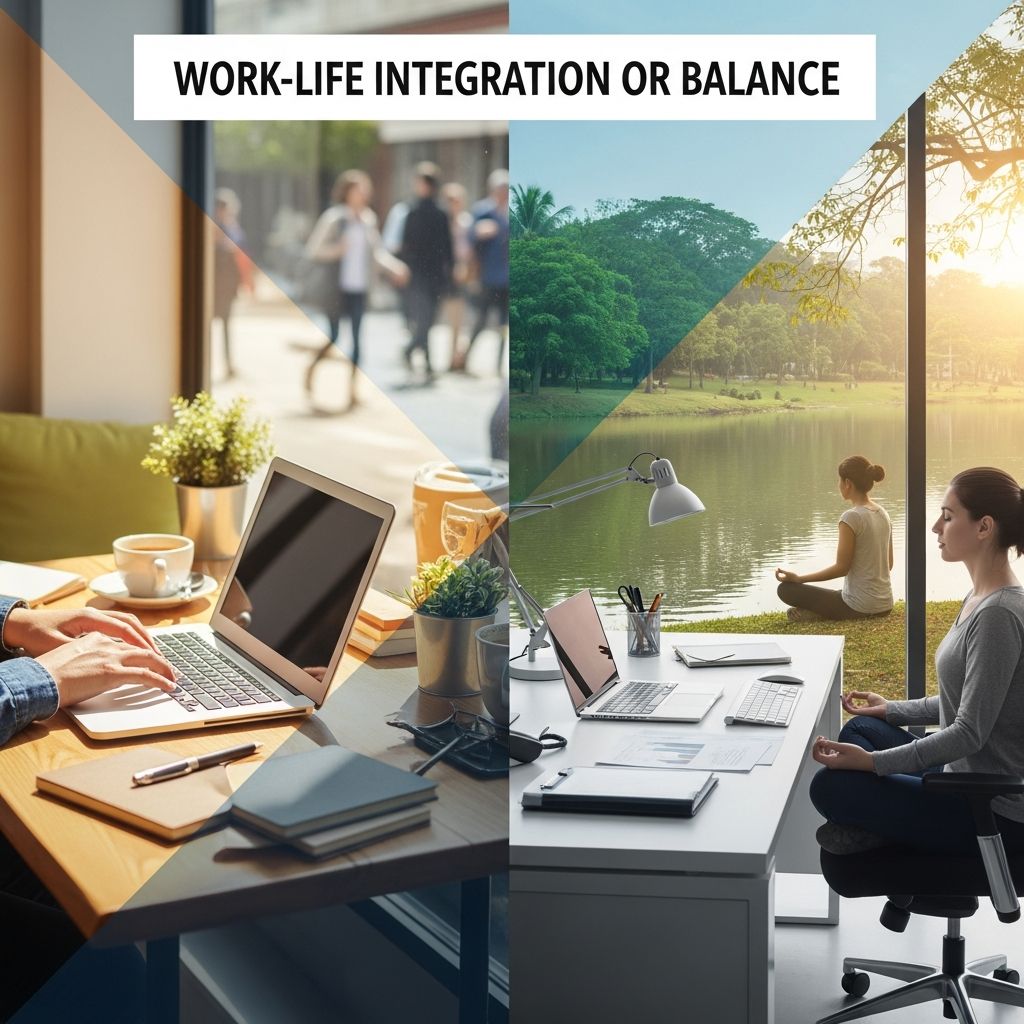
Modern professionals face mounting pressures from demanding careers, family obligations, and personal aspirations. Two dominant philosophies guide how individuals manage these demands: **work-life balance** and **work-life integration**. Balance emphasizes strict separation of professional and personal time, while integration promotes a fluid blending of responsibilities. This article delves into their definitions, advantages, challenges, and strategies to help you choose or combine approaches for greater fulfillment.
Defining Work-Life Balance
Work-life balance revolves around creating clear divisions between career duties and personal pursuits. This traditional model allocates specific hours for work, typically 9-to-5, followed by dedicated time for family, hobbies, and rest. The core principle is preventing one sphere from overshadowing the other, ensuring each receives undivided attention during its designated period.
For example, an employee might log off at 5 PM sharp, switch off work notifications, and focus solely on evening activities like cooking dinner or exercising. This structure fosters predictability and mental recovery, particularly valuable in high-stress roles.
Core Principles of Balance
- Fixed Schedules: Adhering to set work hours to maintain routine.
- Physical Separation: Using distinct workspaces, such as an office desk versus a home relaxation area.
- Boundary Enforcement: No emails or calls outside work time to protect personal hours.
- Regular Breaks: Scheduled pauses to recharge and sustain focus.
Defining Work-Life Integration
In contrast, work-life integration treats professional and personal elements as interconnected, allowing tasks from both to intermingle based on convenience and energy levels. Rather than rigid blocks, individuals weave responsibilities throughout the day—answering emails during a child’s school pickup or handling chores amid meetings.
This approach suits dynamic lifestyles, especially remote work, where flexibility trumps structure. A parent might attend a virtual team huddle while folding laundry, optimizing time without sacrificing output.
Core Principles of Integration
- Flexible Timing: Shifting tasks to match peak productivity or urgent needs.
- Multitasking Harmony: Combining low-conflict activities, like listening to a podcast during commutes.
- Adaptable Boundaries: Allowing overlap while setting limits to avoid burnout.
- Personalized Flow: Aligning work with life rhythms for sustained energy.
Key Differences: A Side-by-Side Analysis
Understanding distinctions helps tailor your method. The table below highlights contrasts across critical aspects:
| Aspect | Work-Life Balance | Work-Life Integration |
|---|---|---|
| Structure | Rigid schedules with clear start/end times | Fluid, needs-based task shifting |
| Boundaries | Strict separations enforced daily | Permeable, with intentional limits |
| Flexibility | Limited; prioritizes consistency | High; adapts to real-time changes |
| Focus | Full immersion in one activity at a time | Seamless transitions between roles |
| Best For | Structured environments, boundary-focused people | Remote/dynamic jobs, multitaskers |
Advantages of Work-Life Balance
This model excels in promoting recovery and presence. By compartmentalizing, individuals avoid work creeping into evenings, reducing stress and enhancing relationships. Studies show structured boundaries correlate with higher job satisfaction, as employees feel in control.
- Mental Recharge: Designated downtime prevents exhaustion.
- Enhanced Presence: Full attention to family or hobbies deepens experiences.
- Productivity Peaks: Focused blocks yield efficient output without distractions.
Organizations supporting balance, like those with strict no-overtime policies, report lower turnover—up to 59% improvement in remote settings.
Drawbacks of Work-Life Balance
Despite benefits, rigidity can falter amid unpredictability. Fixed hours ignore varying energy levels or emergencies, leading to frustration. In fast-paced industries, this may hinder collaboration or quick responses.
- Lack of Adaptability: Sudden family needs disrupt plans.
- Perceived Inflexibility: Feels outdated in gig economies.
- Underutilized Time: Off-peak personal hours go wasted.
Advantages of Work-Life Integration
Integration shines in versatility, enabling alignment with natural rhythms. Professionals report boosted morale from customizing schedules, fostering agility in teams. Flexible parents, for instance, handle school runs without productivity dips.
- Ultimate Flexibility: Tasks fit life’s ebbs and flows.
- Higher Satisfaction: Blending reduces compartmental stress.
- Team Agility: Supports collaborative, responsive cultures.
Drawbacks of Work-Life Integration
Without discipline, boundaries blur, inviting overwork. Work emails at midnight erode rest, heightening burnout risk. Integration demands self-awareness to prevent personal neglect.
- Boundary Erosion: Work invades rest, causing fatigue.
- Guilt Cycles: Partial attention dilutes quality.
- Overload Potential: Endless availability exhausts.
Finding the Right Fit: Personal and Organizational Factors
No approach suits everyone. Assess personality, job type, and life stage. Introverts or detail-oriented workers may prefer balance’s structure, while extroverted multitaskers thrive in integration.
Remote jobs amplify integration’s appeal, with 83% of workers valuing flexibility for well-being. Companies should offer policies like asynchronous communication to support either model.
Practical Strategies for Balance
- Set non-negotiable end times and automate off-hours responses.
- Designate a work-only zone, physically separating spheres.
- Schedule personal priorities like calendar events.
- Practice digital detoxes post-work.
Practical Strategies for Integration
- Track energy patterns to slot high-focus tasks optimally.
- Use tools for seamless switching, like shared calendars.
- Define ‘no-go’ zones, e.g., family dinners device-free.
- Weekly reviews ensure equilibrium.
Hybrid Approaches: The Best of Both Worlds
Many blend elements—structured core hours with flexible extensions. This ‘structured flexibility’ maintains productivity while accommodating life. Regular check-ins gauge effectiveness, adjusting as needed.
- Core Hours: 10 AM-3 PM for deep work.
- Buffer Zones: Mornings/evenings for light tasks or personal.
- Weekly Audits: Measure satisfaction metrics.
Frequently Asked Questions (FAQs)
Which is better: integration or balance?
Neither is universally superior; balance suits structure-lovers, integration fits flexible lifestyles. Experiment to find your ideal.
Can integration lead to burnout?
Yes, without boundaries. Set clear limits and monitor workload to sustain health.
How does remote work affect these models?
Remote setups favor integration due to location freedom, but balance requires disciplined routines.
What if my employer doesn’t support flexibility?
Advocate via data on productivity gains or seek cultures aligning with your needs.
Is a hybrid model realistic?
Absolutely—many professionals use core hours plus flexible buffers for optimal results.
Conclusion: Empower Your Unique Path
Ultimately, thriving hinges on intentionality. Evaluate your needs, test approaches, and refine. Whether balancing scales or integrating streams, prioritize what energizes you for long-term success.
References
- Work-Life Balance vs. Work-Life Integration — Paperform. 2023-05-15. https://paperform.co/blog/work-life-integration-vs-work-life-balance/
- Work-Life Integration vs. Work-Life Balance — U.S. Chamber of Commerce. 2024-02-20. https://www.uschamber.com/co/grow/thrive/work-life-integration-vs-work-life-balance
- Work-Life Integration vs. Work-Life Balance: Key Differences — Indeed. 2024-08-10. https://www.indeed.com/career-advice/career-development/work-life-integration
- Work-Life Balance vs. Work-Life Integration in Remote Jobs — Upskillist. 2023-11-12. https://www.upskillist.com/blog/work-life-balance-vs-work-life-integration-in-remote-jobs/
- Will Work-Life Integration Be A Better Strategy Than Work-Life Balance — TRG International. 2023-07-05. https://blog.trginternational.com/work-life-integration-be-a-better-strategy-than-work-life-balance
- Prioritize Work-Life Integration Instead of Balance — Center for Creative Leadership. 2024-01-18. https://www.ccl.org/articles/leading-effectively-articles/balance-is-a-faulty-metaphor/

Medha Deb is an editor with a master's degree in Applied Linguistics from the University of Hyderabad. She believes that her qualification has helped her develop a deep understanding of language and its application in various contexts. Medha specializes in the areas of beauty, health, sports, and wellness and is committed to ensuring that the content on the website is…