
Why Work-Life Balance Feels Out of Reach
For many professionals, the idea of work-life balance sounds more like a myth than a reality. Despite years of discussion, surveys, and corporate initiatives, a significant number of employees still report feeling overwhelmed, overworked, and disconnected from their personal lives. The problem isn’t that people don’t want balance — it’s that the traditional model of balance often fails to match how modern work actually functions.
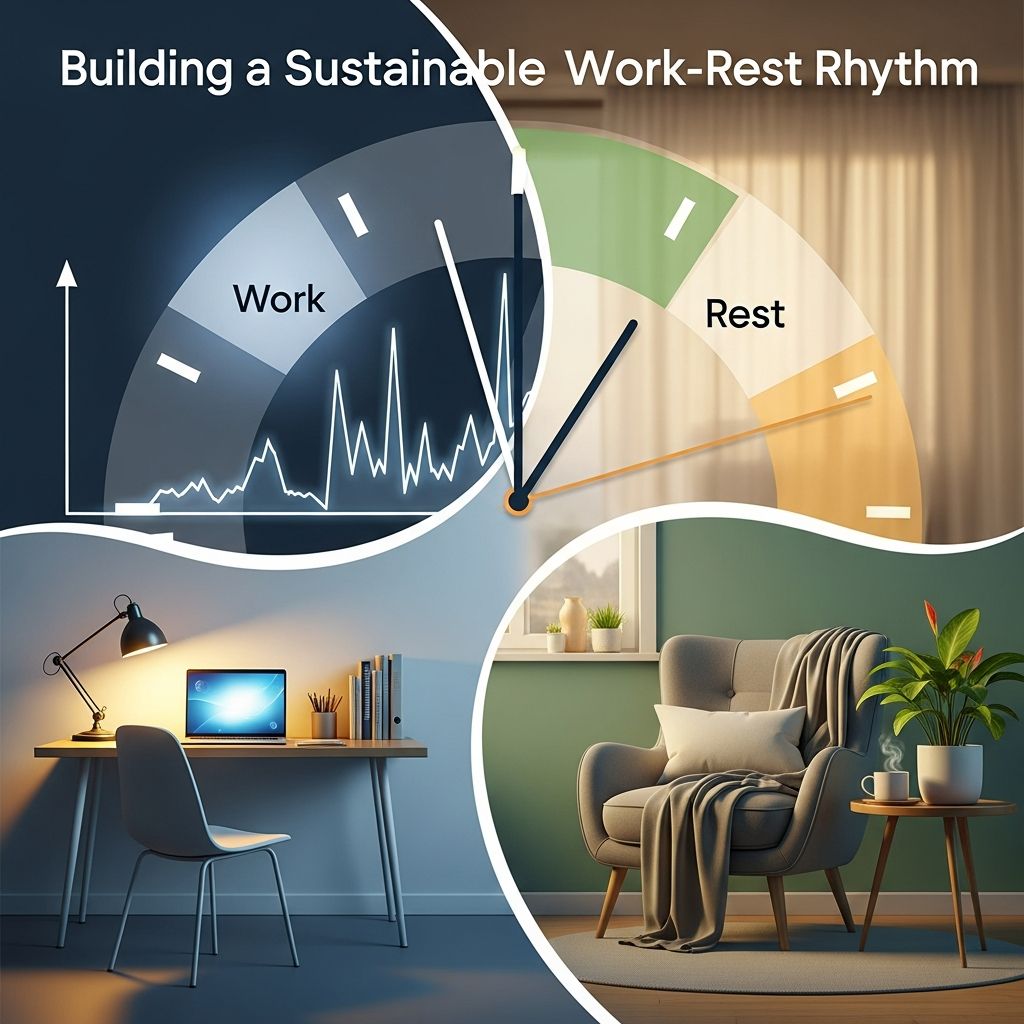
Instead of chasing an elusive 50/50 split between work and life, a more useful approach is to think in terms of rhythm. A work-rest rhythm acknowledges that some periods will naturally be more demanding than others, but it also ensures that rest, recovery, and personal time are not treated as luxuries — they are essential components of a sustainable professional life.
Shifting from Balance to Rhythm
The word “balance” implies a static, equal distribution of time and energy. In practice, that’s rarely possible or even desirable. Careers have seasons: busy project cycles, quieter periods, times of personal growth, and times of rest. A rhythm-based approach is more flexible and realistic.
A healthy work-rest rhythm means:
- Work is intense but not constant.
- Rest is intentional and protected, not just what’s left over.
- Boundaries are clear enough to allow mental and emotional disconnection.
- Energy is managed proactively, not just recovered after burnout.
This shift in mindset — from balance to rhythm — changes how we design our days, how organizations structure work, and how we evaluate success over time.
Designing a Sustainable Daily Structure
One of the most effective ways to build a sustainable rhythm is to design a daily structure that aligns with natural energy patterns and personal priorities. This doesn’t mean rigid schedules for everyone, but rather a framework that supports consistency without sacrificing flexibility.
Key elements of a sustainable daily structure include:
- Defined start and end times: Even in flexible or remote roles, having a clear beginning and end to the workday helps create psychological separation from work.
- Protected focus blocks: Scheduling uninterrupted time for deep work reduces the need to work late and improves output quality.
- Intentional breaks: Short, regular breaks throughout the day — including lunch away from the desk — help maintain focus and reduce mental fatigue.
- Transition rituals: Simple routines like a short walk, a few minutes of reflection, or shutting down the computer signal the end of work and support mental disengagement.
When these elements are in place, work becomes more efficient, and personal time becomes more restorative.
Creating Psychological Separation from Work
Physical separation is easier when working from an office, but psychological separation is critical regardless of where work happens. Many people report feeling “on” all the time, even when not actively working, because of constant notifications, after-hours messages, and the pressure to be available.
Strategies to strengthen psychological separation include:
- Setting clear communication expectations (e.g., no emails after 7 PM unless urgent).
- Using separate devices or profiles for work and personal use when possible.
- Practicing a daily “mental shutdown” routine to reflect on the day and let go of unfinished tasks.
- Designating a specific workspace at home and avoiding work in relaxation areas like the bedroom.
When employees can truly disconnect, they return to work more focused and less drained, which benefits both individual well-being and organizational performance.
Flexibility That Actually Works
Flexibility is often cited as a key to better work-life integration, but not all flexibility is equally helpful. Flexibility that increases control over time — such as choosing when to work, adjusting schedules for appointments or caregiving, or compressing workweeks — tends to have the strongest positive impact.
Effective flexibility is characterized by:
- Autonomy: Employees have meaningful input into their schedules and work patterns.
- Consistency: Flexible arrangements are stable enough to allow planning and predictability.
- Equity: Flexibility is available across roles and levels, not just for certain teams or seniority groups.
- Clarity: Expectations around availability, deliverables, and collaboration are clearly communicated.
When flexibility is well-designed, it supports both productivity and personal life, rather than creating confusion or pressure to be “always on.”
Managing Workload and Expectations
Even with great boundaries and flexibility, unsustainable workloads can undermine any rhythm. Chronic overwork, unrealistic deadlines, and constant context switching erode energy and increase the risk of burnout.
Organizations can support a healthier rhythm by:
- Regularly reviewing workloads and adjusting capacity when necessary.
- Setting realistic goals and deadlines that account for complexity and dependencies.
- Encouraging managers to model healthy work habits, such as taking time off and respecting boundaries.
- Providing tools and training to help employees prioritize tasks and manage competing demands.
At the individual level, being realistic about what can be accomplished each day, using prioritization frameworks, and learning to say no or renegotiate scope are essential skills for maintaining a sustainable pace.
Supporting Mental and Emotional Well-Being
Work-rest rhythm is not just about time — it’s also about mental and emotional energy. When stress accumulates and recovery is insufficient, even moderate workloads can feel overwhelming.
Effective support for well-being includes:
- Access to mental health resources, such as counseling through Employee Assistance Programs (EAPs) or mental health apps.
- Company-wide initiatives like wellness days, mental health training for managers, and open conversations about stress and burnout.
- Encouraging employees to use paid time off without guilt and to take breaks during the workday.
- Normalizing discussions about workload, energy levels, and personal challenges as part of regular check-ins.
When mental and emotional well-being is treated as a core part of performance, not a side issue, employees are more likely to sustain high engagement over time.
Integrating Personal Life into Professional Design
A sustainable work-rest rhythm requires that personal life is not treated as an afterthought. This means designing work in a way that accommodates caregiving, health needs, hobbies, and relationships, rather than expecting personal life to fit around work.
Practical ways to integrate personal life include:
- Offering flexible scheduling options that support caregiving responsibilities.
- Providing benefits that address real-life stressors, such as financial wellness programs, legal support, and childcare assistance.
- Encouraging employees to block time for personal appointments, exercise, or family commitments.
- Recognizing that personal fulfillment outside of work contributes to long-term engagement and resilience.
When organizations acknowledge the full context of employees’ lives, they build loyalty, reduce turnover, and create a culture where people can thrive over the long term.
What Different Generations Need
Work-rest rhythm looks different depending on life stage, responsibilities, and values. Understanding generational differences can help organizations tailor support in more meaningful ways.
| Generation | Key Priorities | Supportive Practices |
|---|---|---|
| Gen Z | Mental health, social connection, clear boundaries | Firm after-hours boundaries, mental health resources, inclusive culture |
| Millennials | Harmony between career and family, flexibility | Flexible scheduling, paid time off, parental support |
| Gen X | Structure, predictability, caregiving support | Clear working hours, caregiving benefits, workload management |
| Boomers | Productivity, purpose, energy preservation | Meaningful work, phased retirement options, wellness programs |
While there is overlap across generations, recognizing these nuances helps organizations move beyond one-size-fits-all policies and create more personalized, effective support.
Building a Culture That Sustains Rhythm
Individual strategies are important, but lasting change requires cultural and structural support. A culture that truly supports a healthy work-rest rhythm is one where:
- Leaders model healthy behaviors, such as taking time off and respecting boundaries.
- Performance is evaluated based on outcomes, not hours logged or constant availability.
- Employees feel safe discussing workload, stress, and personal needs without fear of negative consequences.
- Flexibility and well-being initiatives are embedded in policies, not treated as optional perks.
HR and leadership play a critical role in shaping this culture by aligning benefits, performance management, and communication practices with the goal of sustainable performance.
FAQs: Work-Rest Rhythm in Practice
What’s the difference between work-life balance and work-rest rhythm?
Work-life balance often implies an equal split between work and personal life, which can be unrealistic. Work-rest rhythm focuses on creating a sustainable pattern of work and recovery that varies over time but protects rest and well-being as non-negotiable elements.
How can I protect my personal time when my job is demanding?
Start by setting clear boundaries (e.g., no work emails after a certain hour), using calendar blocks for personal time, and communicating your limits to your manager. Small, consistent actions build stronger protection over time.
What should I do if my workload is consistently too high?
Document your tasks and time spent, then have a structured conversation with your manager about priorities, capacity, and possible adjustments. If needed, involve HR to explore longer-term solutions like role clarification or resource changes.
How can organizations support work-rest rhythm without losing productivity?
By focusing on outcomes rather than hours, managing workloads proactively, and investing in well-being, organizations often see higher engagement, lower turnover, and more consistent performance — not less productivity.
Is it realistic to expect a healthy rhythm in high-pressure industries?
Even in demanding fields, rhythm is possible with intentional design: protected recovery time, realistic expectations, strong support systems, and cultural norms that value sustainability over constant intensity.
References
- Work-Life Balance in 2025: What Employees Say Works — HR Daily Advisor. 2025-09-19. https://hrdailyadvisor.com/2025/09/19/work-life-balance-in-2025-what-employees-say-works/
- Work Life Balance — Mental Health America. https://mhanational.org/resources/work-life-balance/
- Rethinking Work-Life Balance: What You Need to Know — WorldatWork. https://worldatwork.org/publications/workspan-daily/rethinking-work-life-balance-what-you-need-to-know

Medha Deb is an editor with a master's degree in Applied Linguistics from the University of Hyderabad. She believes that her qualification has helped her develop a deep understanding of language and its application in various contexts. Medha specializes in the areas of beauty, health, sports, and wellness and is committed to ensuring that the content on the website is…