
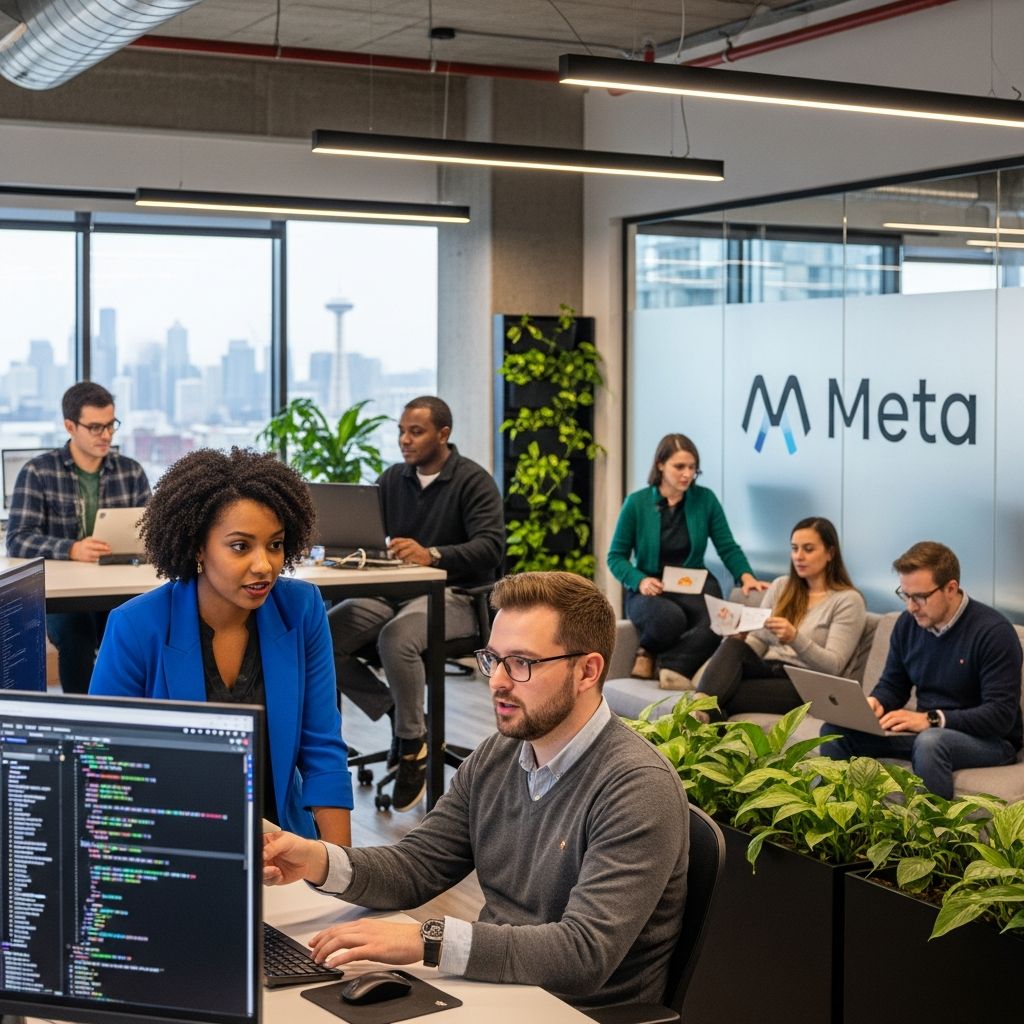
Seattle has evolved into one of the most important technology hubs in the United States, with major employers like Meta, Amazon, and Microsoft shaping the region’s economy and culture. For professionals drawn to product-building at global scale but who want the lifestyle and environment of the Pacific Northwest, Meta’s Seattle presence offers a compelling blend of impact and quality of life.
This guide walks through what it feels like to build products at Meta in Seattle: the types of teams based here, the workplace culture, how the city shapes day-to-day life, and what to consider if you are planning a move or a role change into this office.
Why Meta Chose Seattle as a Major Engineering Base
Meta’s decision to grow in Seattle aligns with the city’s development into a diversified tech and innovation center. The Seattle–Tacoma–Bellevue metro is one of the largest tech labor markets in the country, with a deep pool of software engineers, data scientists, and product leaders. Washington’s long-standing strength in information services and software has continued even as some sectors slowed, with the state recording thousands of new jobs in information and health-related fields in recent years.
For Meta, Seattle offers a combination of advantages:
- Rich technical talent with experience in large-scale distributed systems, cloud infrastructure, and AI.
- Existing big-tech ecosystem, making collaboration, recruiting, and knowledge sharing easier.
- Global connectivity via major airports and undersea cable connections that support Meta’s network footprint.
- High quality of life that helps attract and retain experienced professionals and their families.
Teams and Work You’ll Find in Seattle
While organizational charts change over time, Seattle has grown into a multi-disciplinary hub for Meta. Roles here often touch products that serve billions of people and businesses worldwide.
Core Product and Engineering Roles
Engineers and product teams in Seattle typically work on high-impact areas such as:
- Feed, Messaging, and Communities – improving ranking systems, notifications, and integrity for products like Facebook and Instagram.
- Infrastructure and Reliability – building low-latency services, storage systems, and developer platforms that power Meta’s global stack.
- Reality Labs and AR/VR – working on virtual reality, augmented reality, and mixed-reality interfaces that underpin the metaverse vision.
- Ads, Commerce, and Business Tools – optimizing performance ads, measurement, and commerce experiences that help businesses reach global audiences.
These teams rely heavily on skills that are also in high demand across the broader Seattle job market, such as software engineering, data science, and cloud infrastructure.
Cross-Functional and Business Roles
Beyond engineering, Meta’s Seattle hub also houses roles in:
- Data science and analytics – shaping product strategy through experimentation and user insights.
- Design and research – creating user experiences that function seamlessly across devices and geographies.
- Legal, policy, and operations – supporting responsible product deployment and compliance in a rapidly evolving regulatory environment.
- Recruiting and people operations – attracting, onboarding, and supporting the talent that drives Meta’s products.
Inside the Seattle Workplace Experience
Meta’s Seattle offices are designed to support high-collaboration work while allowing focused deep-work time. Office policies evolve with global and local conditions, but in recent years many large tech employers have revisited their hybrid policies, experimenting with more on-site collaboration after the post-pandemic remote era.
Work Environment and Collaboration Norms
- Open collaboration areas with neighborhoods for teams, whiteboard walls, and comfortable breakout spaces.
- High-quality meeting spaces with video conferencing designed to make cross-office collaboration feel natural.
- Focus rooms and quiet zones for deep work, interviews, or heads-down problem solving.
- Tech-forward tooling – internal communication platforms, code review systems, and experimentation tools are deeply integrated into everyday workflows.
Combined, these features support a culture that emphasizes fast iteration, data-driven decisions, and broad ownership of complex systems.
Wellness, Food, and Onsite Amenities
To support long-term performance, Meta invests in a range of perks that address physical, mental, and social well-being. This approach echoes a broader trend in competitive tech recruiting, where candidates increasingly prioritize expanded benefits and mental health support, beyond traditional medical coverage.
Typical offerings may include:
- Onsite meals and snacks to simplify logistics and encourage informal collaboration.
- Fitness support such as gym reimbursements, wellness stipends, or access to nearby fitness options.
- Mental health resources including counseling access, employee assistance programs, and mindfulness offerings.
- Parental and family benefits like paid leave, caregiving support, and family-friendly events.
Compensation, Benefits, and Growth
Seattle’s cost of living and local labor dynamics shape compensation strategies across employers. The broader region has seen both rapid tech expansion and, more recently, periods of hiring slowdowns and restructuring, especially in software and related fields. Within that context, Meta aims to stay competitive for top talent through a combination of pay, equity, and benefits.
Compensation Structure
Individual offers vary by role and level, but typical components include:
- Base salary adjusted for role, experience, and local market benchmarks.
- Equity grants designed to share in the company’s long-term growth.
- Annual performance bonuses tied to both company and individual impact.
For candidates comparing offers across cities, it is important to consider not just headline salary but also equity vesting schedules, bonus potential, and Seattle’s tax and cost-of-living profile relative to other hubs.
Career Development Pathways
Meta’s size and complexity create many distinct paths for growth. Common development themes include:
- Dual tracks for advancement – technical individual contributor paths in parallel with management paths.
- Internal mobility – opportunities to move between product areas, from core social apps to AR/VR or infrastructure.
- Mentorship and peer learning – formal mentor programs complemented by informal peer networks and code review culture.
- Education support – access to internal learning resources, technical talks, and in some cases, external training or conferences.
Seattle Lifestyle: Outside the Office
Employment data tells only part of the story. Seattle’s appeal for many Meta employees is rooted in the city’s natural setting, cultural scene, and day-to-day livability.
City and Neighborhoods
Seattle’s neighborhoods each have distinct character, and Meta employees typically cluster around areas with good transit links, walkability, and access to parks. Common considerations include:
- Commute options – light rail, buses, cycling routes, and walkable corridors.
- Housing availability – apartments and townhomes near urban cores as well as single-family options further out.
- Access to amenities – grocery stores, cafes, childcare, and fitness options within walking distance.
As with many tech-centric cities, shifts in remote work and corporate office attendance have affected downtown activity levels, office occupancy, and related service jobs in recent years. Still, for many residents, Seattle’s combination of urban vibrancy and outdoor access remains a central draw.
Outdoors, Culture, and Community
Employees often choose Seattle for the ability to pair intense work with rich off-hours experiences. Local advantages include:
- Outdoor recreation – hiking, skiing, climbing, and water sports within a short drive.
- Arts and culture – music, theater, museums, film, and independent venues across the metro area.
- Food and coffee – a dense network of restaurants, markets, roasteries, and breweries.
- Community involvement – opportunities to volunteer or engage with local nonprofits, schools, and civic initiatives.
Seattle’s Evolving Tech and Job Market Context
When evaluating a role at Meta in Seattle, it helps to understand the broader economic backdrop. Washington’s labor market has seen both growth and headwinds, with some sectors performing strongly and others contracting.
| Aspect | Recent Pattern (Washington / Seattle) | Relevance for Meta Candidates |
|---|---|---|
| Information & tech services | Net job gains overall, but layoffs and slowdowns within some large tech employers. | Competition remains high; stability and project fit matter when comparing offers. |
| Education & health services | One of the strongest growth sectors in Washington, adding over 16,000 jobs in a recent year. | Reflects broader regional resilience beyond pure tech. |
| Unemployment and openings | Unemployment rates have fluctuated; some analyses rank Washington among states with higher unemployment relative to openings. | Underscores the value of transferable skills and strong performance history. |
| Job posting trends | Tech-focused cities like Seattle have seen significant drops in online job postings compared with pre-pandemic periods. | Hiring is more selective; tailored applications and networking are increasingly important. |
How to Position Yourself for a Role at Meta Seattle
Because Seattle is a competitive tech hub, standing out in the hiring process requires more than baseline technical competence, especially during periods of slower overall job growth.
Skills and Experiences That Help You Stand Out
- Strong fundamentals – algorithms, systems design, and data structures for technical roles; clear product thinking and metrics fluency for PM and business roles.
- Experience with scale – familiarity with large datasets, distributed systems, or high-traffic products can be a differentiator.
- Cross-functional collaboration – evidence you can work with design, research, legal, and operations partners.
- Adaptability – examples of delivering results amid changing priorities or organizational shifts.
Interview Preparation Tips
Meta’s hiring processes evolve, but candidates can generally expect:
- Screening stages – recruiter conversations followed by technical or case-style screens.
- Onsite or virtual loops – multiple interviews assessing technical skill, collaboration style, and problem framing.
- Behavioral questions – scenarios exploring how you handle ambiguity, feedback, and conflict.
Given that many employers in Seattle report being more selective during slower growth phases, preparation that includes mock interviews, peer feedback, and targeted practice can meaningfully shift your odds.
Is Meta Seattle Right for You? Key Questions to Ask
Before accepting an offer or initiating a relocation, consider how Meta’s Seattle hub aligns with your goals, preferences, and personal circumstances. Reflect on questions like:
- Do you want to work on globally scaled products with complex technical and ethical challenges?
- How important is in-person collaboration compared with fully remote or asynchronous work?
- Are you excited about living in a city with variable weather but exceptional outdoor access?
- How does Seattle’s cost of living compare with your current location, once compensation and taxes are considered?
- What kind of career path do you envision over the next five years, and can Meta’s Seattle ecosystem support that?
Frequently Asked Questions About Meta’s Seattle Office
Q: What kinds of roles does Meta typically hire for in Seattle?
A: The Seattle hub is heavily weighted toward engineering, data, and product roles, but it also includes design, research, operations, and some business support functions. The exact mix shifts over time as company priorities evolve.
Q: How competitive is it to get a job at Meta in Seattle?
A: Seattle is one of the most competitive tech markets in the U.S., and larger employers have become more selective amid periods of slower job growth and restructuring. Demonstrating strong fundamentals, clear impact in past roles, and alignment with Meta’s mission can significantly improve your chances.
Q: Is the work mostly in-office, remote, or hybrid?
A: Policies change over time, but many large tech companies have shifted away from fully remote models toward structured hybrid attendance to support collaboration and culture. You should confirm current expectations with your recruiter and hiring manager, as they may vary by team and role.
Q: How does Meta Seattle compare to the Bay Area offices?
A: Bay Area locations tend to have a broader concentration of teams and leadership, while Seattle offers a strong focus on specific product and infrastructure areas, combined with a distinct regional lifestyle. Some employees find Seattle’s blend of urban living and outdoor access a better fit, while still contributing to global products.
Q: What should I consider if I am relocating to Seattle for Meta?
A: Consider housing costs, commute options, access to schools or childcare if relevant, and how the climate and culture align with your preferences. It is also wise to analyze total compensation—base, equity, bonuses—relative to your expected expenses in the region.
References
- Seattle-Tacoma-Bellevue, WA Economy at a Glance — U.S. Bureau of Labor Statistics. 2025-10-24. https://www.bls.gov/eag/eag.wa_seattle_msa.htm
- First Quarter 2025 Labor Market Briefing — Washington State Employment Security Department. 2025-06-26. https://esd.wa.gov/media/first-quarter-2025-labor-market-briefingpdf
- Seattle’s Job Market Decline — Washington Policy Center. 2025-05-20. https://www.washingtonpolicy.org/publications/detail/seattles-job-market-decline
- Cities with the Biggest Job Growth — Axios. 2025-11-29. https://www.axios.com/2025/11/29/cities-jobs-tech-chart
- Seattle-area tech jobs hit 8-year low as industry moves toward AI — Puget Sound Business Journal. 2025-10-19. https://www.bizjournals.com/seattle/news/2025/10/19/tech-job-losses-hiring-slowdown.html
- Seattle Jobs Market 2025: Where Opportunities Meet Talent — Seattle Search Group. 2025-02-10. https://seattlesearchgroup.com/seattle-jobs-market-2025-where-opportunities-meet-talent/
- 2025 Recruitment Trends that Seattle Headhunters Should Know — NW Recruiting Partners. 2024-11-15. https://nwrecruitingpartners.com/trends-that-seattle-headhunters-should-know/

Medha Deb is an editor with a master's degree in Applied Linguistics from the University of Hyderabad. She believes that her qualification has helped her develop a deep understanding of language and its application in various contexts. Medha specializes in the areas of beauty, health, sports, and wellness and is committed to ensuring that the content on the website is…