
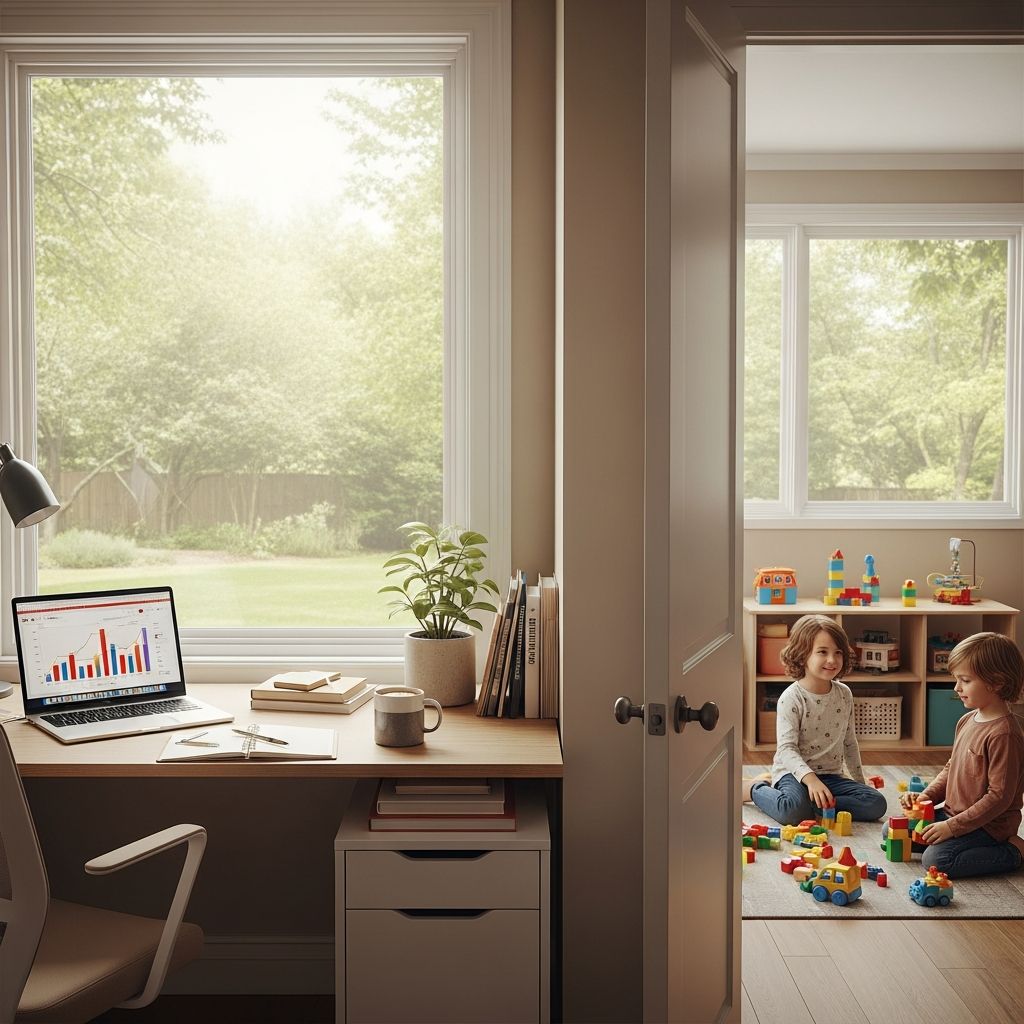
Establishing Your Professional Domain at Home
Working from home while managing children presents a unique challenge that requires thoughtful planning and intentional boundary-setting. The intersection of professional responsibilities and family needs demands a strategic approach that honors both commitments. One of the most effective ways to address this challenge is by creating a clear physical and psychological separation between your work environment and the rest of your home.
The foundation of this separation begins with designating a specific area exclusively for work activities. This space serves multiple purposes: it anchors your professional mindset, signals to children that you are engaged in work mode, and provides the physical distance necessary to minimize interruptions during critical tasks. Whether you have a dedicated home office or a simple corner desk, this workspace becomes your professional sanctuary.
The Power of Spatial Boundaries
Creating a distinct physical work zone is not merely about having a place to sit and work. It establishes a tangible boundary that your children can understand and respect. When kids see a parent sitting at a designated desk or in a specific room, they begin to grasp that something different is happening—work mode is active, and the dynamics of interaction change accordingly.
The ideal scenario involves a dedicated office space with a closable door, which provides acoustic and visual barriers that naturally discourage interruptions. However, not every household has the luxury of extra space. In these situations, consider alternatives such as:
- A partition or room divider that visually separates your workspace from the living area
- A designated desk positioned in a low-traffic area away from main family zones
- A corner of a bedroom or dining room that serves exclusively as your work station
- Strategic furniture arrangement that creates psychological distance from family activity centers
Beyond the physical setup, pay attention to environmental factors that influence focus. Position your workspace to minimize background visibility during video calls, angle your camera appropriately, and ensure adequate lighting that separates your work area visually from recreational spaces. These considerations demonstrate professionalism to colleagues while reinforcing to your children that this space functions differently from the rest of your home.
Developing Age-Appropriate Communication Strategies
Simply establishing a physical boundary proves insufficient without clear communication about your work expectations. Children of different ages comprehend boundaries differently, and your communication strategy should reflect these developmental differences.
For very young children and toddlers, abstract concepts about work mean little. Instead, use concrete, observable cues that signal your availability status. Create a simple visual system such as a door sign that displays different colors or symbols—green for “available for questions” and red for “do not disturb unless emergency.” Some families use a physical token system where children understand that when you’re holding a specific object, interruptions should be minimal.
With school-age children, you can have more sophisticated conversations about your work requirements. Explain specifically when you’ll be in meetings versus doing independent work, when you’ll be available for questions, and what constitutes an emergency that warrants interruption. This clarity helps children develop judgment about when their needs genuinely require your attention.
For teenagers, treat work boundaries similarly to how their teachers establish classroom expectations. Discuss your schedule, your availability, and how they can plan their own activities around your work hours. This approach respects their growing independence while maintaining necessary boundaries.
Strategic Scheduling as a Foundation
Your work schedule and your children’s routines should complement each other rather than collide. Build your professional schedule around your children’s natural rhythms and existing commitments, rather than fighting against them.
Consider your children’s peak energy times and their quietest periods. Many children experience natural dips in activity around midday or early afternoon. If possible, schedule your most focused, uninterrupted work for these windows. Conversely, reserve times when your children are typically more active and demanding for less cognitively demanding work tasks or activities that tolerate interruptions.
Create a master schedule that everyone in the household understands. This should include:
- Your work hours and when you’ll be unavailable
- Times designated for family interaction and breaks
- Children’s meal times, snack times, and nap schedules
- Any regular childcare support, whether from a partner, family member, or professional care
- Buffer times between work blocks for transitions and check-ins
This coordinated approach reduces conflict and helps everyone anticipate transitions, making the day flow more smoothly for all parties involved.
Preparing Children for Your Work Mode
Children handle transitions better when they know what to expect. Before you begin working from home, invest time in preparing your children for this new reality. This preparation looks different depending on your child’s age and cognitive abilities.
With younger children, you might create a practice game where you take turns pretending to work while the other waits patiently. Use consistent verbal cues like “Mommy is working now” or “Dad’s in work mode” so children develop recognition of what these phrases mean. Practice the behavior you expect, celebrate their cooperation, and reinforce the new routine through repetition.
Help children develop engaging activities that can occupy them independently during your work blocks. This doesn’t mean screen time exclusively, though that can be part of the mix. Instead, curate a collection of activities that hold attention without requiring parental involvement:
- Art projects with markers, coloring books, or craft supplies
- Building activities using blocks, LEGO, or construction sets
- Puzzle activities appropriate for their age and ability
- Audiobooks or podcasts designed for children
- Quiet dramatic play with dolls, action figures, or pretend play scenarios
- Educational applications or learning games
Rotate these activities periodically so novelty maintains engagement. When children have interesting things to do, they’re less likely to seek your attention for boredom-related reasons.
Managing Your Own Presence and Availability
Beyond physical boundaries and communication systems, your own behavior and demeanor significantly influence how well children respect your work time. When you’re physically present at home, maintaining psychological distance from family activities requires conscious effort and self-discipline.
Use environmental cues that signal your work mode to both your children and yourself. Some parents find that wearing headphones—even when not actively listening to anything—creates a barrier that children understand as “do not interrupt unless urgent.” Others change their clothing or sit in a specific posture when entering work mode. These behavioral cues work because children notice patterns and respond to consistency.
Guard against the tendency to multitask between work and parenting. While flexibility is important, constantly shifting between professional tasks and family needs actually reduces your effectiveness at both. Instead, structure your day so that you have dedicated blocks for work and separate blocks for family engagement. This boundaries-based approach typically yields better outcomes than attempting simultaneous divided attention.
During your work blocks, resist the urge to manage household tasks, respond to personal messages, or engage in extended conversations with family members. This consistency reinforces that your work time is genuinely work time, not a gray area where you’re sort of working while sort of available.
Creating Backup Plans and Contingency Strategies
Despite your best planning, disruptions will occur. Children become sick, babysitters cancel, and emergencies arise. Rather than viewing these situations as failures, prepare contingency strategies in advance.
Discuss with your employer or manager what happens when childcare falls through unexpectedly. Do you have flexibility to shift your schedule that day? Can you take a personal day? Will you need to explain reduced output or missed meetings? Having this conversation proactively prevents panic when situations arise.
Develop backup childcare options—perhaps a family member who can sometimes help, a reliable neighbor, or a backup childcare provider. Even part-time or occasional childcare can provide crucial relief during important work periods.
Create a list of emergency activities—special toys, projects, or experiences—that you reserve for times when you absolutely must have uninterrupted focus. Because these are special and infrequent, they maintain their power to capture children’s attention when needed most.
Leveraging Break Times Strategically
Working from home provides an advantage that traditional office workers lack: genuine flexibility in how you use breaks. Rather than eating lunch at your desk or stepping outside the building, you can actually engage with your children during these periods.
Build intentional breaks into your schedule that honor both your need for recovery and your children’s need for connection. A 15-minute break where you play a game with your child, help with homework, or share a snack creates positive interaction that often makes subsequent work blocks smoother. Children feel seen and attended to, reducing the desperate bid for attention that frequently disrupts focused work.
These breaks also provide opportunities to shift your own mental state. Stepping away from screens, moving your body, changing your physical location, or even just taking several deep breaths can refresh your cognitive resources for the next work session.
Communicating Your Needs to Your Professional Network
Transparency with your employer and colleagues prevents misunderstandings and builds realistic expectations about your availability and performance. When you begin working from home with children present, have explicit conversations about what this arrangement means for your work capacity and responsiveness.
Explain that occasional background noise may occur, that you might need to step away briefly during emergencies, and what your typical response time is for messages. By setting these expectations upfront, you prevent colleagues from misinterpreting delays or interruptions as lack of commitment.
Consider proposing specific working hours during which you’re fully available for synchronous communication and meetings, with other times available for asynchronous work. This clarity helps your team plan around your availability rather than always expecting immediate responses.
Addressing Common Challenges
The Early Morning Advantage
Many parents find that starting their workday early—before children wake—provides uninterrupted focus time that sets a positive tone for the entire day. This early work block can cover your most cognitively demanding tasks, leaving less critical work for times when interruptions are more likely. The trade-off involves sacrificing some personal morning time, but the professional and psychological benefits often justify this adjustment.
Managing Video Calls
Video meetings present unique challenges when children share your home. Position your camera to show only professional backgrounds, ensure good lighting, and consider using virtual backgrounds if your setup allows. Prepare children in advance about meeting times, enlist a partner or caregiver to supervise during important calls, and have a backup plan if a child requires your immediate attention during a meeting.
The Noise Question
Some background noise is inevitable. Rather than viewing this as failure, focus on minimizing disruptions during times when sound matters most—client calls, important meetings, presentations. For routine work tasks, modest household sounds typically pose no serious problem.
Frequently Asked Questions
Q: How long does it take children to adjust to parents working from home?
A: Adjustment typically takes 2-4 weeks as children adapt to new routines and boundaries. Consistency with your systems and expectations significantly accelerates this process. Some children adjust within days while others require several weeks of reinforcement.
Q: What’s the minimum age at which children can understand work boundaries?
A: Even toddlers as young as 18-24 months can begin recognizing visual cues and simple routines. However, they cannot reliably respect boundaries without supervision and redirection. School-age children typically understand and follow boundaries more consistently when they’re clearly communicated and consistently enforced.
Q: Should I feel guilty about limiting my children’s access to me during work hours?
A: No. Setting healthy boundaries teaches children important lessons about respecting others’ work and needs. The quality of your engagement during designated family time often improves when you’re not fragmenting your attention across work and parenting throughout the day.
Q: How do I handle unexpected emergencies that interrupt my work?
A: Have a predetermined response plan that acknowledges the emergency while minimizing impact on your work. Communicate with your manager about occasional emergencies, respond promptly to genuine urgent situations, and review these incidents to identify patterns that might require schedule adjustments.
Q: Can my partner’s work schedule complement mine to reduce childcare interruptions?
A: Yes, coordinating schedules so that one parent handles childcare while the other focuses on work can be highly effective. This might involve staggered work hours, split responsibility during different blocks of the day, or trading off specific days when each partner has primary childcare responsibility.
Q: What if my children resist my work boundaries?
A: Initial resistance is common and typically decreases with consistent reinforcement. Stay calm but firm, use positive reinforcement when boundaries are respected, redirect attention to engaging activities, and review your boundary-setting approach to ensure it’s age-appropriate and clearly communicated.
References
- 10 Expert Tips on Working from Home with Kids — BambooHR. 2024. https://www.bamboohr.com/blog/working-from-home-with-kids
- How To Manage Working From Home With Kids — Indeed Career Advice. 2024. https://www.indeed.com/career-advice/career-development/working-from-home-with-kids
- The Remote Working Parent’s Guide to Balancing Work and Young Children — North Shore Child Guidance Center. 2024. https://northshorechildguidance.org/the-remote-working-parents-guide-to-balancing-work-and-young-children-by-colleen-stewart-guest-blogger/
- Working From Home With Kids? 12 Practical Strategies That Work — Kids Eat in Color. 2024. https://kidseatincolor.com/work-from-home-with-kids/
- Eight Strategies for Working at Home While Caring for Kids — Lerner Child Development. 2024. https://www.lernerchilddevelopment.com/mainblog/eight-strategies-for-working-at-home-while-caring-for-kids

Medha Deb is an editor with a master's degree in Applied Linguistics from the University of Hyderabad. She believes that her qualification has helped her develop a deep understanding of language and its application in various contexts. Medha specializes in the areas of beauty, health, sports, and wellness and is committed to ensuring that the content on the website is…