
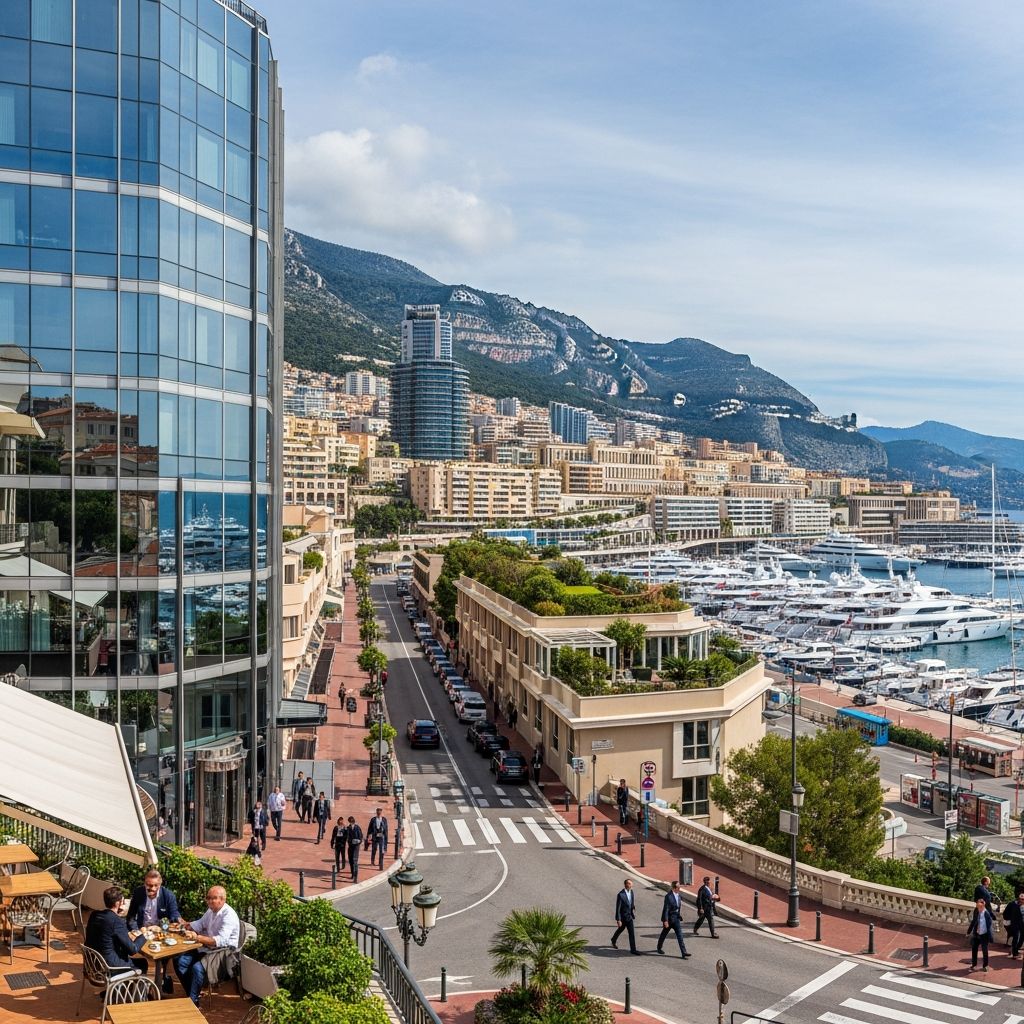
Monte Carlo is famous for its glamorous casinos and luxury lifestyle, but behind the postcard views lies a highly dynamic job market. As the economic engine of the Principality of Monaco, Monte Carlo concentrates finance, hospitality, luxury retail, yachting services, and high-end professional firms, all competing for a limited pool of skilled talent.
This guide offers an original, practical overview of how working and hiring function in Monte Carlo today. It is useful for both professionals considering a move and employers planning to attract or retain talent in this unique micro-state.
Why Monte Carlo Is a Unique Employment Hub
Although Monaco’s total number of job vacancies is modest compared with major European economies, its density of high-value roles per square kilometer is exceptional. The Principality has over 64,000 private-sector employees for a resident population of roughly 40,000, and more than 57,000 people commute into Monaco each workday, many of them to jobs in or around Monte Carlo.
- Compact territory: Almost every major employer is within a few minutes’ walk or a short bus ride.
- Cross-border workforce: The majority of workers live in France or Italy and commute daily.
- International orientation: English and French dominate, but you will frequently hear Italian, German, Russian, and other languages in offices and hotels.
- High salary baseline: Net take-home pay is typically 10–30% higher than in neighboring France for equivalent roles.
Key Sectors Driving Jobs in Monte Carlo
Monte Carlo’s employers span a broad mix of industries, but several sectors are particularly prominent in the local economy.
1. Finance, Banking, and Wealth Management
Private banking and asset management are central pillars of Monaco’s economic model. Monte Carlo hosts the headquarters or regional offices of banks, family offices, and financial institutions that serve high-net-worth individuals from around the world.
- Private bankers and relationship managers
- Portfolio and investment analysts
- Compliance and risk specialists
- Tax, legal, and fiduciary advisors
2. Luxury Hospitality, Restaurants, and Events
Monte Carlo’s hotels, beach clubs, Michelin-starred restaurants, and conference venues require large numbers of staff, especially during peak tourist season and major events such as the Monaco Grand Prix and international conferences.
- Hotel management and front-office roles
- Fine-dining chefs, sommeliers, and service staff
- Events, banqueting, and conference coordinators
- Sales and guest-experience specialists
3. Luxury Retail and Brand Flagships
High-end boutiques and flagship stores for major luxury brands line Monte Carlo’s streets. These stores often recruit multilingual staff with strong clienteling skills.
- Client advisors and sales associates
- Store and floor managers
- Visual merchandisers
- After-sales and VIP client relationship experts
4. Yachting, Marine, and Associated Services
Monaco’s port and the Monaco Yacht Show support a dense network of yachting companies, from brokerage and charter firms to crew agencies and technical service providers.
- Yacht brokers and charter managers
- Crew placement consultants
- Technical, engineering, and refit coordinators
- Marketing and event specialists for marine brands
5. Digital, Tech, and Business Services
Alongside traditional industries, Monte Carlo increasingly hosts digital agencies, tech vendors, and professional service firms (legal, accounting, HR consulting), many supporting the region’s broader business ecosystem.
- Software developers and IT support specialists
- Cybersecurity and data-protection experts
- Digital marketing and CRM professionals
- Corporate lawyers, auditors, and consultants
Working Conditions and Salary Advantages
For many professionals, the most compelling reason to work in Monte Carlo is the combination of high salaries, robust social protection, and an exceptional quality of life.
Net Pay Compared With France
Analyses comparing Monaco with neighboring France show that net monthly salaries are significantly higher for employees working under Monegasque contracts, even when gross pay is similar.
| Annual Gross Salary (Example) | Approx. Net per Month in Monaco | Approx. Net per Month in France | Indicative Monthly Gain |
|---|---|---|---|
| €60,000 | €4,300 | €3,750 | +€550 |
| €80,000 | Higher than France by about €733 | Baseline reference | +€733 |
| €120,000 | Higher than France by about €1,100 | Baseline reference | +€1,100 |
Across a wide range of salaries, workers can expect net income gains in the 10–30% range when compared with French contracts, depending on seniority and sector.
Social Protection and Pensions
Monaco’s social security and pension schemes are generally considered more favorable than those in neighboring countries.
- Pensions: Returns can be 35–110% better than in France depending on career trajectory, thanks to a generous points system.
- Retirement age: Standard retirement at 65, with early retirement from 60 without penalty and special provisions for certain profiles (for example, women with three children can retire at 55 in some cases).
- Extended work incentives: Working beyond 65 can yield a 1.5% increase per quarter, up to around 30% at age 70.
Work–Life Balance and Lifestyle
Monte Carlo’s environment makes it easier to maintain a healthy work–life balance despite the intensity of many roles.
- Short distances and reliable public transport reduce commuting time within Monaco.
- Access to beaches, coastal paths, and sports facilities supports an active lifestyle.
- Stable public finances and low crime rates contribute to a strong sense of security.
Commuting Into Monte Carlo
Most employees in Monte Carlo live in surrounding French or Italian towns, commuting daily by train, car, or bus. The government and regional authorities have invested heavily in transport infrastructure to support this cross-border workforce.
Transport Options
- Regional trains: Frequent services connect Monaco–Monte-Carlo station with Nice, Menton, and Italian border towns. New regional services such as enhanced coastal lines help reduce road congestion.
- Road access: Recent improvements include new motorway access ramps and expanded park-and-ride facilities at the entrance to Monaco, allowing commuters to leave their cars outside the most congested zones.
- Local buses and escalators: Within Monaco, a network of buses, lifts, and escalators helps people move easily between districts, including Monte Carlo’s business and leisure areas.
Emerging Mobility Solutions
Authorities are studying additional options, such as a possible metro link and boat shuttles between Nice and Monaco, to further ease congestion, though these remain at the project stage. Teleworking is also growing as a way to reduce peak-hour pressure.
Remote Work and Telecommuting Rules
Remote work is no longer rare in Monaco, especially in sectors such as finance, IT, and professional services. A formal legal framework now governs cross-border telework arrangements.
- French and Italian residents employed in Monaco can work remotely up to three days per week, provided they spend at least two days on-site.
- By 2022, more than 4,400 remote workers were officially registered, with potential for growth to 7,000–10,000 jobs, particularly in eligible white-collar sectors.
- Not all roles qualify; many hospitality, construction, and tourism-related jobs must be performed in person.
For employers in Monte Carlo, flexible hybrid policies can be an important differentiator for attracting skilled professionals who live further away.
Temporary Work and Seasonal Hiring
Temporary and seasonal jobs play a significant role in Monte Carlo’s labor market, especially in hospitality, events, and construction.
- By the end of 2023, temporary workers represented nearly 12% of Monaco’s private-sector workforce.
- Lawmakers are working on a clearer legislative framework for temporary work to improve flexibility while protecting workers.
- Seasonal workers are essential during the summer, yacht shows, and large events, leading to coordinated housing and transport initiatives.
Employers benefit from the ability to scale teams quickly, while workers gain exposure to high-end hospitality and events that can strengthen future career prospects.
Housing Challenges for Workers
High real-estate prices in Monaco mean that most employees live outside the Principality and commute daily. Securing affordable accommodation, especially for seasonal staff, is a persistent challenge.
- Many employers rely on housing partnerships or dedicated allocations in nearby cities like Nice.
- Recent charters between the Monegasque government, hotel associations, and student housing providers have created limited blocks of furnished studios for seasonal workers at controlled rents.
- Some large employers offer housing support or guidance as part of their recruitment package, a key competitive advantage in attracting talent.
How to Find a Job in Monte Carlo
Job seekers targeting Monte Carlo should combine online research, networking, and direct engagement with local institutions.
Practical Steps for Candidates
- Use official job portals: Check Monaco’s official employment services and reputable regional boards for postings.
- Attend employment forums: The Monaco Employment Forum and sector-specific fairs allow candidates to meet dozens of employers in one day and often lead to on-the-spot interviews.
- Connect with local recruiters: Specialized agencies in Monaco focus on finance, luxury, hospitality, and tech roles.
- Prepare a bilingual CV: French is essential in many roles, while English is increasingly important, especially in international companies.
- Highlight cross-cultural skills: Employers value experience with international clients, multilingual abilities, and high service standards.
Candidate Profile Tips
Monte Carlo employers typically look for:
- Strong technical or professional qualifications in the relevant field
- Proven reliability and discretion, particularly in finance and luxury services
- Excellent presentation and communication skills
- Flexibility to work evenings, weekends, and during major events in hospitality roles
Hiring Considerations for Employers
Companies operating in Monte Carlo must manage specific legal, administrative, and talent-market constraints when recruiting.
Core Hiring and Compliance Points
- Employment contracts: Contracts are typically governed by Monegasque labor law, with specific rules on probation, termination, and working hours.
- Social contributions: Employers must register with Monaco’s social security funds and make mandatory contributions for health, family benefits, and pensions.
- Work authorizations: Non-EU nationals generally need appropriate residence and work permits, while EU/EEA citizens benefit from more streamlined procedures.
- Cross-border compliance: For employees living in France or Italy and teleworking part-time, HR must ensure compliance with bilateral agreements and tax/social security rules.
Talent Strategy in a Small Market
Because Monaco’s territory and resident population are small, employers often need to reach talent across borders.
- Partner with regional schools and training centers in France and Italy.
- Use hybrid work options to widen the catchment area for specialists who cannot commute daily.
- Offer support with transport passes or car-pooling to ease commuting challenges.
- Invest in training and retention to reduce turnover, especially in roles where onboarding is costly.
Frequently Asked Questions (FAQs)
Q: Do I need to live in Monaco to work in Monte Carlo?
A: No. The majority of employees live in nearby French or Italian towns and commute daily. More than 57,000 people cross into Monaco each workday for employment.
Q: Are salaries really higher than in neighboring France?
A: Yes. For many profiles, net monthly pay is 10–30% higher on a Monegasque contract than for a similar job in France, due to different contribution structures and social systems.
Q: Is it easy to find entry-level work in Monte Carlo?
A: Entry-level opportunities exist, particularly in hospitality, retail, and seasonal roles, but competition is strong. Language skills and customer-service experience significantly improve your chances.
Q: Can I work remotely for a Monaco employer if I live in France or Italy?
A: In many white-collar roles, yes. Current rules generally allow up to three days of remote work per week for French and Italian residents, with a minimum of two days on-site, subject to employer approval and legal eligibility of the job.
Q: What are the main challenges of working in Monte Carlo?
A: The main issues are housing costs, peak-hour traffic at entry points, and intense competition for attractive roles. However, recent transport improvements, telework arrangements, and housing initiatives for seasonal staff are helping to ease some pressures.
References
- Monaco Employment Forum 2025: Stand reservations open — Government of Monaco (monentreprise.gouv.mc). 2025-01-15. https://monentreprise.gouv.mc/en/news/monaco-employment-forum-2025-stand-reservations-open
- Record turnout at 2025 Monaco Employment Forum — Monaco Life. 2025-02-26. https://monacolife.net/record-turnout-at-2025-monaco-employment-forum/
- Working in Monaco vs in France: The Complete 2025 Analysis — Nexus HR. 2025-03-10. https://nexus-hr.mc/en/news/work-monaco-vs-france-2025-analysis/
- From Luxury Brands to Yachting Jobs: Monaco’s Job Market Sets Sail — HelloMonaco. 2025-02-28. https://www.hellomonaco.com/news/latest-news/monaco-for-employment-2025-bigger-bolder-and-hiring-like-never-before/
- How to find a job in Monaco quickly and easily? — Monaco Tribune. 2025-08-15. https://www.monaco-tribune.com/en/2025/08/how-to-find-a-job-in-monaco-quickly-and-easily/
- Definitive guide to hiring in Monaco — Global Expansion. 2024-06-01. https://www.globalexpansion.com/countrypedia/monaco

- Integrated M.A. in Applied Linguistics, University of Hyderabad
- 5+ years in editorial, instructional, SEO, and research-based writing
Sneha is a relationships and lifestyle writer with a strong foundation in applied linguistics and certified training in relationship coaching. She brings over five years of writing experience to theskillvault, crafting thoughtful, research-driven content that empowers readers to build healthier relationships, boost emotional well-being, and embrace holistic living. Her writing and insights reflect the belief that beauty, happiness, and wellness…