
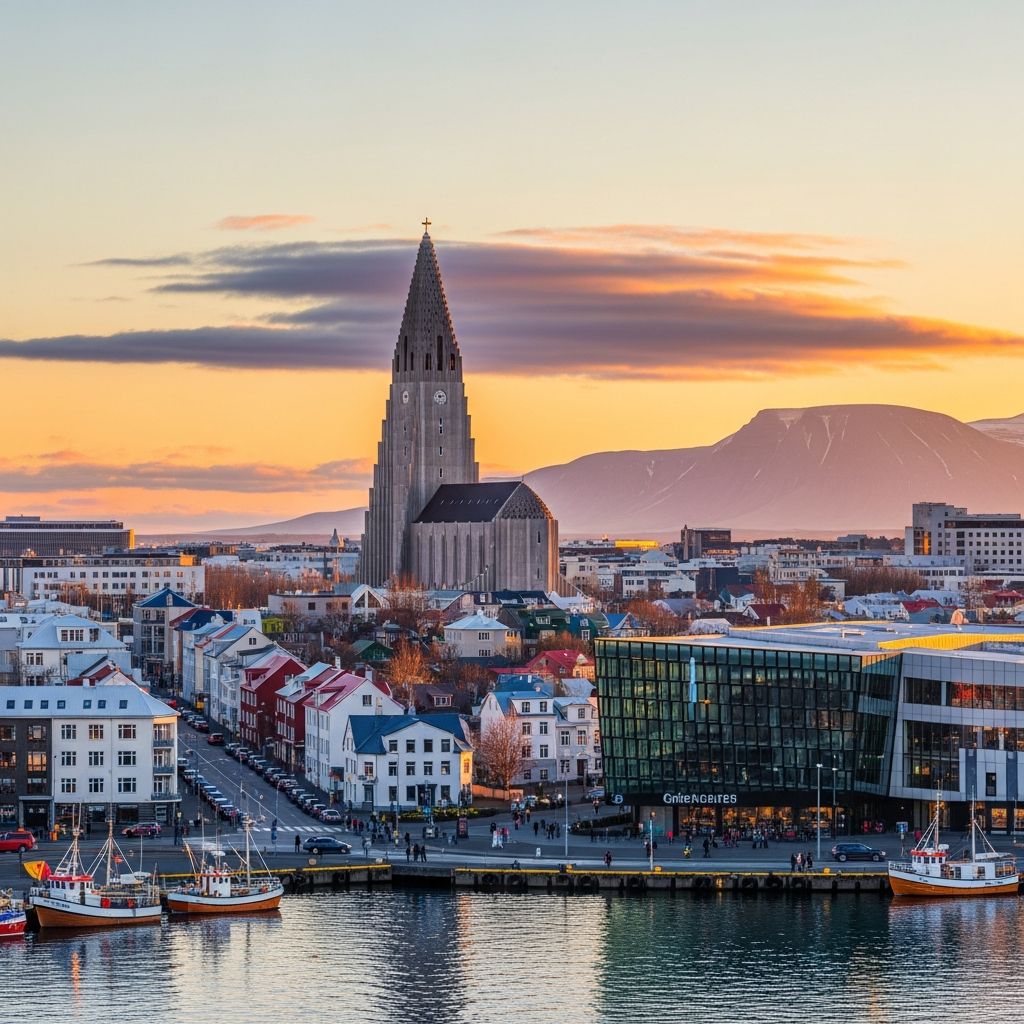
Reykjavik, Iceland’s compact and creative capital, has become a serious contender for professionals seeking rewarding work, strong social protections, and a distinctive quality of life. With a stable labour market, low unemployment, and growing demand for skilled workers, the city offers more than dramatic landscapes and northern lights—it offers real career prospects and a high standard of living.
Why Reykjavik Attracts Global Talent
Reykjavik combines the advantages of a modern European city with the social safety net and stability that Iceland is known for. The national unemployment rate has recently hovered around 3–4%, signalling a relatively tight labour market and solid employment prospects for qualified workers.
Several factors draw international professionals to Reykjavik:
- Stable economy and low unemployment supported by diversified sectors like tourism, IT, energy, and creative industries.
- Strong social systems, including public healthcare and robust employment protections.
- High employment rate—in recent statistics, nearly four out of five adults are employed.
- Safe, small-city feel with quick access to nature, from coastal paths to geothermal pools.
- Widespread English proficiency, especially in business and tourism, which helps newcomers integrate professionally.
Overview of Reykjavik’s Job Market
Reykjavik is Iceland’s economic hub and concentrates a large share of the country’s jobs, particularly in higher-skilled and knowledge-based roles. The city is especially important for sectors like information technology, finance, and professional services.
| Aspect | Reykjavik Labour Market Snapshot* |
|---|---|
| Unemployment rate (national, recent) | About 3.5–3.7% |
| Employment rate (national, recent) | Nearly 79% of people aged 16–64 employed |
| Key growth sectors | IT, renewable energy, tourism, healthcare, construction, skilled trades |
| Major urban hiring centres | Reykjavik, Kopavogur, Hafnarfjordur |
*Figures represent Iceland as a whole; Reykjavik accounts for a large share of these jobs.
In-Demand Industries and Roles in Reykjavik
Because Iceland’s population is small, employers often look beyond national borders to fill skills gaps. Reykjavik, as the capital, is where many of these opportunities cluster.
1. Technology and Digital Roles
Information technology and software-related roles are among the most sought-after in Iceland, with Reykjavik hosting most of the country’s tech companies and startups.
- Software developers and engineers
- Data analysts and data scientists
- Cloud and DevOps specialists
- Cybersecurity and infrastructure roles
Recent analysis highlights that IT and software are consistently listed among sectors with strong demand and competitive salaries in Iceland. Reykjavik also benefits from initiatives to support startups and digital innovation, making it attractive to tech professionals and entrepreneurs.
2. Renewable Energy and Engineering
Iceland is a global leader in geothermal and hydropower, and Reykjavik acts as the administrative and engineering centre for many energy projects.
- Energy engineers and project managers
- Environmental specialists and planners
- Technicians for geothermal and power infrastructure
As the country invests further in green energy and sustainable infrastructure, demand is expected to rise for engineers and technical experts.
3. Tourism, Hospitality, and Services
Tourism remains one of Iceland’s major economic pillars, and Reykjavik is often the starting point for visitors. This drives demand for multilingual and customer-facing roles.
- Hotel supervisors and front desk managers
- Tour coordinators, guides, and travel services staff
- Restaurant, café, and hospitality professionals
While some roles are seasonal, the steady flow of international visitors continues to generate job opportunities, especially for candidates comfortable working irregular hours.
4. Healthcare and Social Services
An ageing population and high standards of care are increasing the need for health and care professionals.
- Nurses and healthcare assistants
- Specialist doctors and allied health professionals
- Staff for elder care and home care services
Healthcare positions can offer stable employment and may sometimes come with assistance in navigating work permits and relocation.
5. Education and Early Childhood
Education is highly valued in Iceland, and demand has been noted for early childhood professionals.
- Kindergarten and early education teachers
- Support staff in childcare and pre-school settings
These roles are particularly relevant for qualified teachers willing to work in a system that emphasizes play-based and inclusive learning.
Work Culture and Everyday Professional Life
Reykjavik’s work culture reflects broader Nordic values, with an emphasis on equality, trust, and work-life balance.
- Flat hierarchies: Teams are often informal, and managers tend to be approachable, with an emphasis on collaboration rather than rigid rank.
- Work–life balance: While hours can be demanding in some industries, there is a cultural norm of respecting personal time and family commitments.
- Direct communication: People value honesty and clarity, but interactions are usually polite and reserved rather than overly expressive.
- Collective agreements: Many sectors are covered by labour agreements that shape pay, working hours, and benefits.
For international professionals, adapting to this culture often means learning to appreciate both autonomy and responsibility, as employers may expect employees to manage their tasks with relatively little micromanagement.
Language Considerations: English and Icelandic
English is widely used in the workplace, especially in technology, tourism, and multinational firms. Many Reykjavik-based companies conduct daily business in English when international staff are involved.
However, learning Icelandic offers distinct advantages:
- Access to public-sector and client-facing roles where local language is essential.
- Deeper integration into workplace culture and social life.
- Improved long-term career prospects and promotion opportunities.
For some professions—such as education or healthcare—functional Icelandic may be a formal requirement due to regulations or patient safety considerations.
Remote Work and Digital Nomads
Iceland has embraced remote work trends, and Reykjavik is central to this shift. Fast internet, a safe environment, and attractive surroundings have encouraged remote workers and digital nomads to spend extended periods in the country.
Key developments include:
- Remote work–friendly infrastructure: Co-working spaces, cafés with reliable Wi-Fi, and strong broadband coverage.
- Digital nomad and long-stay options: Iceland has introduced visa pathways allowing some foreign nationals to live in the country while working for employers abroad.
- Hybrid arrangements: More local companies are experimenting with flexible and partially remote work models, especially in knowledge-based sectors.
This trend also indirectly boosts demand for housing, local services, and tech support roles in Reykjavik.
How to Find a Job in Reykjavik
For many roles, the job search process mirrors that of other European countries, with an emphasis on online applications, networking, and targeted CVs.
Practical steps to start your search
- Use official portals: The national Work in Iceland platform provides information about job hunting and links to job listings.
- Prepare a tailored CV: Present your experience clearly and concisely; international-format CVs are generally accepted.
- Highlight language skills: Emphasize English fluency and any Nordic or European languages; note any Icelandic skills honestly.
- Leverage professional networks: Engage with industry groups, conferences, and online communities that have a presence in Reykjavik.
- Stay informed on permits: Check the current rules on work permits and residence, as these depend on your citizenship and job type.
Cost of Living and Housing Considerations
Reykjavik offers a high quality of life, but living costs—especially housing—are significant. Residential demand in the capital region has grown in parallel with economic expansion and increased migration.
Key points to keep in mind:
- Housing pressure: Rental markets in popular neighbourhoods can be competitive, and it is wise to begin searching well before relocation.
- Transport and commuting: Many residents rely on buses, walking, or cycling; the city’s compact size usually keeps commute times manageable.
- Public services: Access to healthcare, education, and social services is generally strong, reflecting Iceland’s social model.
- Daily expenses: Groceries, dining out, and imported goods can be more expensive than in larger European markets, but wages and social benefits help offset costs.
Before moving, it is sensible to compare your likely salary with living expenses to ensure that your budget is realistic for the lifestyle you expect.
Balancing Career and Lifestyle in Reykjavik
One of Reykjavik’s biggest draws is the possibility of combining a serious career with close proximity to nature and a slower pace of life than many large cities.
- Access to the outdoors: Within a short drive, you can reach hiking trails, geothermal pools, and coastal landscapes.
- Cultural life: Despite its small size, the city hosts festivals, live music, museums, and a thriving café culture.
- Family-friendly environment: Low crime rates and strong educational institutions make it appealing for families.
For many professionals, these lifestyle benefits are a central reason for choosing Reykjavik over larger—but possibly more stressful—urban centres.
Is Reykjavik Right for You? Key Questions to Ask
Before committing to a move, it is worth reflecting on whether the city fits your goals, personality, and financial situation.
- Does your profession align with sectors that are currently hiring in Iceland (IT, energy, healthcare, tourism, construction, or skilled trades)?
- Are you prepared for a higher cost of living than in many countries, especially in terms of housing?
- Would you enjoy a smaller, quieter city with close-knit communities instead of a major metropolis?
- Are you willing to learn at least basic Icelandic over time to deepen your career prospects and social life?
Frequently Asked Questions About Working in Reykjavik
Do I need to speak Icelandic to work in Reykjavik?
For many jobs in technology, tourism, and international companies, English is sufficient at the entry stage, particularly if you have in-demand technical skills. However, Icelandic may be required for roles in public services, education, and healthcare, and learning it will greatly improve your long-term prospects.
How competitive is the job market for foreigners?
The overall unemployment rate is relatively low, and there is a documented need for skilled workers in several sectors. Competition can be strong for popular roles, but employers often look abroad when local candidates are scarce, especially in IT, healthcare, renewable energy, and certain service positions.
Is it possible to work remotely from Reykjavik for a foreign employer?
Yes. Iceland has encouraged remote work and has introduced options for longer-term stays for remote workers under specific conditions. Many professionals live in Reykjavik while working for foreign companies, provided they comply with visa, tax, and social security rules.
What is the work–life balance like?
Work–life balance is generally considered good, with a cultural emphasis on family time, rest, and leisure. Collective agreements and labour regulations help define working hours and leave entitlements, supporting a healthy balance.
Where can I start looking for jobs?
Begin with official resources such as the national Work in Iceland job-hunting guidance, which links to job portals and explains expectations about applications. You can then expand to local job boards, company career pages, and professional networks in your field.
References
- The labour market in September 2025 — Statistics Iceland. 2025-10-30. https://www.statice.is/publications/news-archive/labour-market/the-labour-market-in-september-2025/
- The Icelandic labour market in September 2025 — Directorate of Labour (Vinnumálastofnun). 2025-10-18. https://island.is/en/o/directorate-of-labour/news/skrad-atvinnuleysi-i-september-var-3-5
- Job hunting — Work in Iceland / Government of Iceland. 2024-05-01. https://work.iceland.is/working/job-hunting/
- Work in Iceland: Requirements and opportunities — Holafly. 2024-06-10. https://esim.holafly.com/expats/work-iceland/
- Iceland Job Market 2025: Outlook, Skills & Top Careers — Y-Axis. 2025-01-05. https://www.y-axis.com/job-outlook/iceland/
- Getting a Job in Tech in Iceland in 2025: The Complete Guide — Nucamp. 2025-02-20. https://www.nucamp.co/blog/coding-bootcamp-iceland-isl-getting-a-job-in-tech-in-iceland-in-2025-the-complete-guide

Medha Deb is an editor with a master's degree in Applied Linguistics from the University of Hyderabad. She believes that her qualification has helped her develop a deep understanding of language and its application in various contexts. Medha specializes in the areas of beauty, health, sports, and wellness and is committed to ensuring that the content on the website is…