
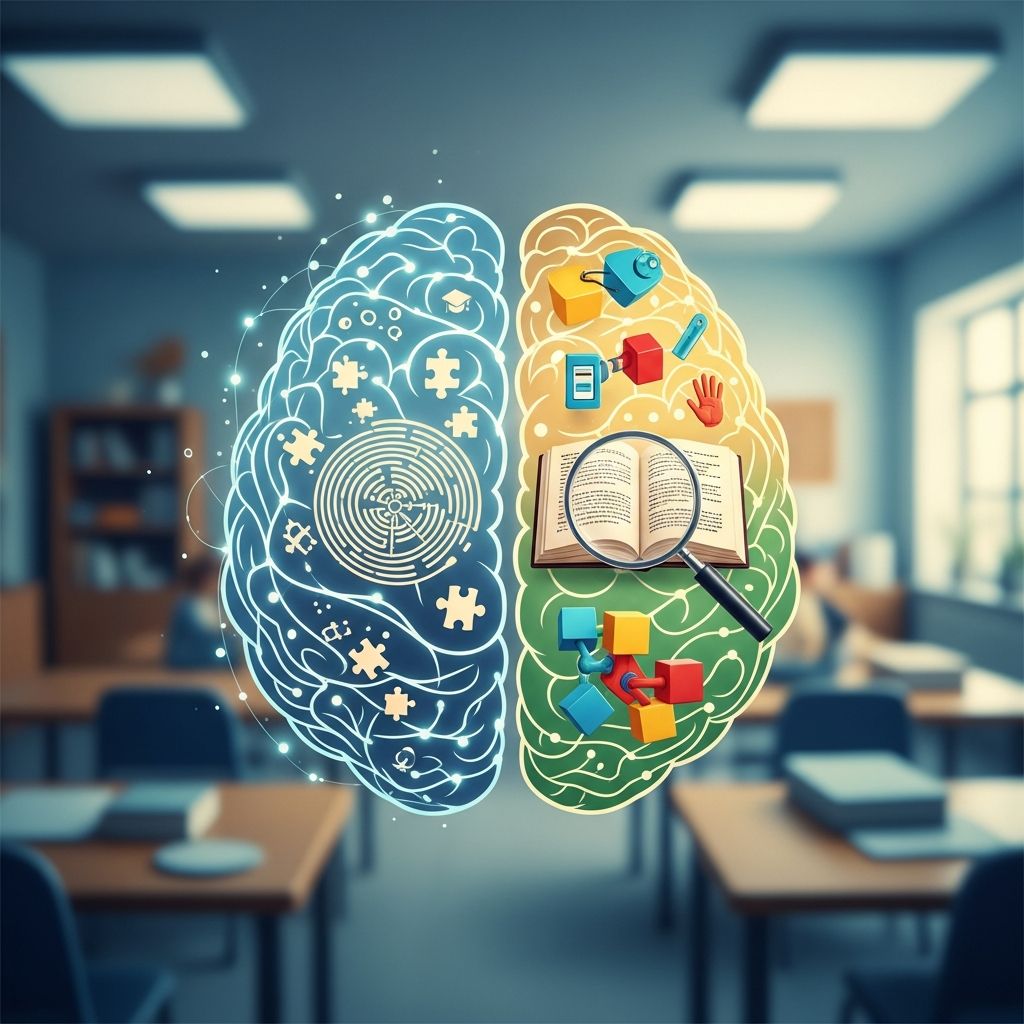
Students with special needs often face unique hurdles in retaining and processing information, particularly when working memory—the mental workspace for holding and manipulating data—is limited. These challenges can impact everything from following instructions to completing assignments. Fortunately, targeted approaches like structured routines, visual supports, and compensatory tools can significantly improve outcomes. This guide explores practical methods drawn from expert recommendations to help these learners thrive academically and daily.
Understanding Memory Challenges in Special Education
Working memory difficulties affect many students with conditions such as ADHD, dyslexia, or other learning differences. Unlike long-term memory, which stores knowledge over time, working memory juggles immediate information needed for tasks like solving math problems or writing essays. When it’s weak, learners may forget steps mid-task, struggle with multi-step directions, or lose track of what they’ve just read.
Research shows these issues manifest in classrooms as trouble starting assignments, retaining vocabulary, or making inferences. For instance, a student might excel at individual facts but falter when connecting ideas. Early identification through observation—such as noting frequent reminders needed or belongings often forgotten—allows for timely interventions.
Building Strong Daily Routines
Consistent routines automate actions, freeing up cognitive resources. By turning repetitive tasks into habits, students rely less on working memory, making school and home life smoother.
- Establish predictable schedules: Design daily timetables for homework, meals, and bedtime. Use charts with pictures for younger learners to visualize the flow.
- Incorporate verbal rehearsals: Guide students to narrate steps aloud, like “First, gather books; next, check the list.” This reinforces sequencing.
- Habituate transitions: Practice moving between activities with timers or songs to signal changes, reducing overwhelm.
Over time, these practices build independence. Parents and teachers report fewer prompts needed after weeks of consistency.
Visual and External Supports for Retention
Visual aids bypass verbal memory limits by providing constant, external references. They’re especially powerful for visual learners with special needs.
| Challenge | Visual Strategy | Example |
|---|---|---|
| Forgetting instructions | Graphic organizers | Flowcharts breaking essay writing into steps: plan, draft, edit |
| Losing items | Designated spots | Backpack hooks by the door with labels |
| Recalling vocabulary | Word walls/posters | Illustrated terms in the classroom |
| Task sequences | Checklists | Laminated morning routine cards |
Sticky notes on doors or desks draw attention to key reminders, like “Pack lunch.” Handwriting notes outperforms typing for better recall, as the physical act strengthens neural pathways.
Interactive Recall Techniques
Active recall methods train the brain to retrieve information, strengthening memory pathways. These are adaptable for special needs students.
- Modeling aloud: Teachers demonstrate processes verbally, then have students repeat. Follow with written summaries for reinforcement.
- Reflection prompts: After instructions, ask “What did I say first?” to fill gaps immediately.
- Games and reps: Use memory matching cards or apps for vocabulary; frequent, short reviews beat cramming.
For math or science, verbalize problem-solving: “Step 1: Identify variables.” This builds procedural memory.
Creative Visualization and Association Methods
Leveraging imagination creates sticky mental links. Bizarre images stick better due to their uniqueness.
- Association linking: Tie new info to familiar ones, e.g., remember “mitochondria” as “mighty power plants” in cells.
- Mental imagery: Picture concepts vividly—imagine a sad, drooping plant for photosynthesis needs.
- Location anchoring: Assign facts to classroom spots, like spelling rules on the chalkboard in your mind for tests.
These techniques suit ADHD brains, turning abstract info into engaging stories. Practice in low-stakes settings first.
Leveraging Technology and Tools
Digital aids reduce memory load, ideal for tech-savvy students.
- Speech-to-text apps dictate notes, freeing focus.
- Timers and apps like Todoist send reminders.
- Text-to-speech reads instructions aloud.
- Mind-mapping software like MindMeister visualizes connections.
Allow extra time for these in assessments to level the field.
Classroom Adaptations for Success
Educators play a pivotal role with targeted tweaks.
- Chunk lessons: Short bursts with reviews.
- Prioritize key exercises over volume.
- Multimodal delivery: Visuals, audio, hands-on.
- Pre-teach vocabulary with prior knowledge links.
For inferences, use think-alouds: “I see X, so Y follows because…”
Home and Lifestyle Supports
Memory thrives on holistic health. Encourage:
- Daily exercise to boost brain blood flow.
- Quality sleep for consolidation.
- Brain foods like berries, nuts, fish.
- Social interaction for verbal practice.
Consistent home routines mirror school ones for transfer.
Role of Professional Interventions
Speech therapists tailor memory training, blending exercises with daily strategies. They assess needs and customize plans, often yielding measurable gains in task completion.
Frequently Asked Questions
What are common signs of working memory issues?
Signs include forgetting recent instructions, losing items frequently, struggling with multi-step tasks, or difficulty following class discussions.
How long until routines help?
Noticeable improvements often appear in 2-4 weeks with daily practice.
Are apps better than paper tools?
Paper aids like handwritten lists often outperform digital for recall, but apps excel for reminders.
Can these strategies help beyond school?
Yes, they build lifelong skills for organization, work, and independence.
When to seek professional help?
If strategies don’t improve daily functioning after consistent trial, consult a specialist for assessment.
References
- How to Help Kids With Working Memory Issues — Child Mind Institute. Accessed 2026. https://childmind.org/article/how-to-help-kids-with-working-memory-issues/
- Working Memory Difficulties: Strategies for the Classroom — LDA@school. Accessed 2026. https://www.ldatschool.ca/working-memory-difficulties/
- 10 Strategies to Help with Memory Problems and Forgetfulness — Expressable. Accessed 2026. https://www.expressable.com/learning-center/adults/10-strategies-to-help-with-memory-problems-and-forgetfulness
- Top 10 Memory Strategies — ADDA. Accessed 2026. https://add.org/top-10-memory-strategies/
- Making Visual Cues and External Memory Aids — CICOA. 2023-04. https://cicoa.org/wp-content/uploads/2023/04/Memory-Aids_Dementia.pdf
- Strategies for Improving Working Memory — Stanford CTL. Accessed 2026. https://ctl.stanford.edu/students/strategies-improving-working-memory

Medha Deb is an editor with a master's degree in Applied Linguistics from the University of Hyderabad. She believes that her qualification has helped her develop a deep understanding of language and its application in various contexts. Medha specializes in the areas of beauty, health, sports, and wellness and is committed to ensuring that the content on the website is…