
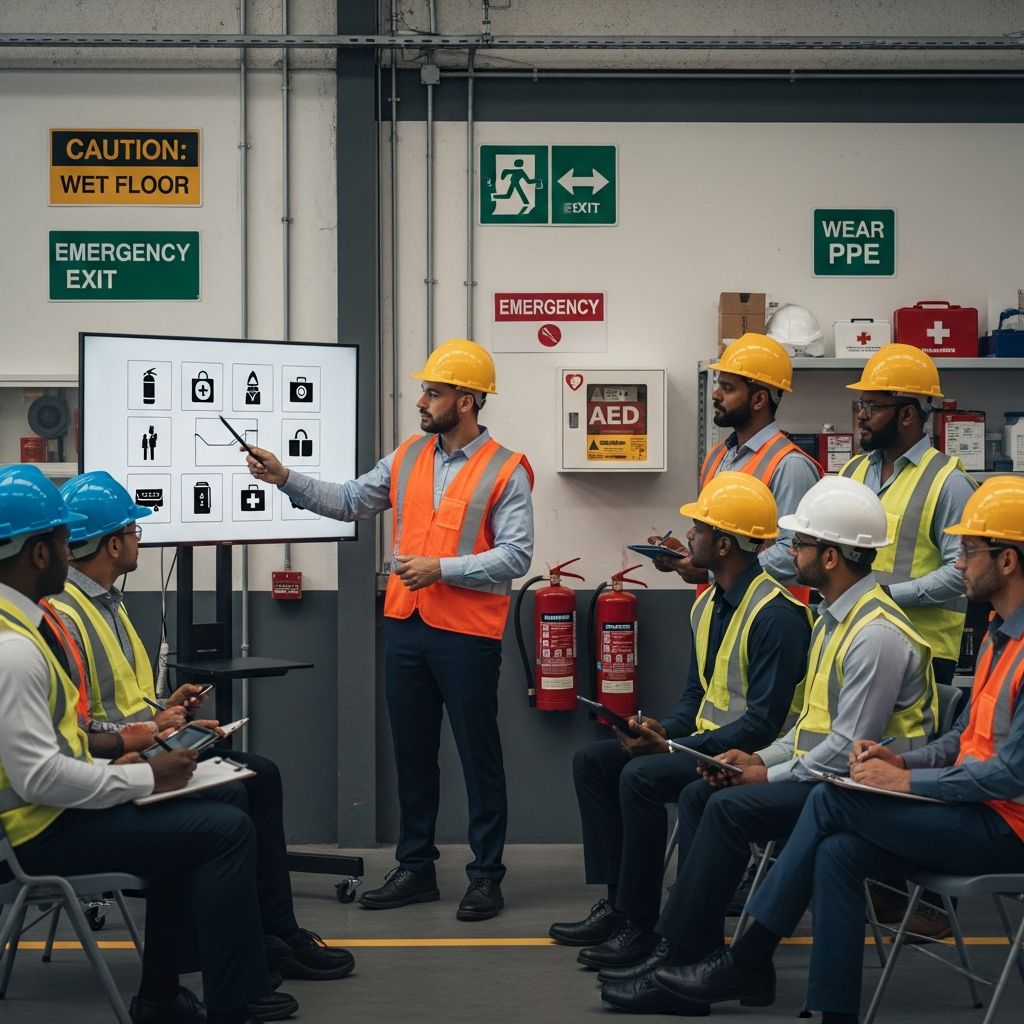
Creating and maintaining a safe workplace requires more than good intentions—it demands systematic training programs that equip employees with the knowledge and skills to recognize hazards, respond to emergencies, and protect themselves and their colleagues. Workplace safety training serves as the foundation of any effective occupational health and safety program, ensuring that workers understand their responsibilities and know how to perform their duties without exposing themselves or others to preventable harm.
Understanding Workplace Safety Training Fundamentals
Safety training in the workplace encompasses a broad spectrum of educational activities designed to develop employee competencies in hazard recognition, risk assessment, and safe work practices. Occupational health and safety (OHS) training is required by applicable laws and regulations and includes topics such as hazard communication, emergency procedures, personal protective equipment (PPE), and specific training related to job tasks. The overarching objective is to create a culture where safety is integrated into daily operations and decision-making at all organizational levels.
The legal framework governing workplace safety training varies by jurisdiction, but most developed nations have established minimum standards that employers must follow. In North America, the Occupational Safety and Health Administration (OSHA) sets mandatory requirements that apply across industries, though some standards are industry-specific or role-specific. Understanding these requirements is essential for employers seeking to maintain compliance while protecting their workforce.
Mandatory Training Topics for Most Work Environments
While specific training requirements depend on industry and job function, several core topics are universally recognized as essential across most workplace settings:
Emergency Response Procedures
Emergency response training is required by OSHA under regulations 1910.38 and 1926.35, and all employers must conduct this training. Employees need comprehensive instruction on how to respond to various emergency scenarios including fires, chemical releases, natural disasters, and workplace violence. This training ensures that workers know evacuation routes, assembly points, communication procedures, and their specific responsibilities during critical incidents.
Hazard Communication and Chemical Safety
Hazard communication (HAZCOM) training is required for any employee who works with a hazardous substance or chemical, and the purpose is for workers to understand how a chemical causes harm. This training typically covers understanding Safety Data Sheets (SDS), recognizing hazard symbols and labels, and following proper handling, storage, and disposal procedures. Employees must know the specific dangers associated with chemicals they encounter, whether those substances are toxic, corrosive, flammable, or present other health hazards.
Personal Protective Equipment (PPE)
Proper PPE selection, use, maintenance, and disposal are critical components of workplace safety. Employees must understand when PPE is required, how to inspect equipment for damage, how to properly don and doff protective gear, and when to request replacement. Training should address role-specific PPE needs and emphasize that equipment is only effective when used consistently and correctly.
Bloodborne Pathogen Protection
Bloodborne pathogens (BBP) training is required by OSHA under regulations 1910.1030 and 1915.1030 for workers with occupational exposure, which is defined as the reasonable anticipation of contact with blood or other potentially infectious materials as a result of performing one’s job duties. This training is particularly important in healthcare, emergency services, and certain laboratory settings where exposure risks are elevated.
First Aid and Medical Emergency Response
First aid training is required for workers directly involved with emergency response and most medical services, and is also required for any workforce where the working environment is outside the near proximity distance of an infirmary, clinic, or hospital. Current certification in first aid and cardiopulmonary resuscitation (CPR) can be lifesaving in critical situations and demonstrates organizational commitment to employee welfare.
Industry-Specific Safety Training Requirements
Beyond universal training topics, specific industries require specialized instruction tailored to their unique hazards:
- Laboratory Safety: Employees in medical clinics, hospitals, pharmacies, and manufacturing facilities with non-production labs require specialized laboratory safety training to address their particular workplace hazards
- Walking-Working Surfaces: Training on proper use of stairs, ladders, platforms, and other elevated work areas reduces slip, trip, and fall incidents, with retraining recommended every three years
- Respiratory Protection: Employees required to use respirators need training prior to assignment and annual refresher sessions, with additional retraining when equipment changes or performance concerns emerge
- Flammable Liquid Handling: Employees who move, store, or dispose of flammable liquids require specialized training on proper containment, separation, and emergency response procedures
- Electrical Safety: Workers in environments with electrical hazards need instruction on recognizing risks, maintaining safe distances from live electrical equipment, and proper lockout-tagout procedures
Training Frequency and Scheduling Guidelines
OSHA standards mandate annual employee training, which is re-evaluated every 12 months or 365 days, though certain circumstances may necessitate more frequent retraining. However, the specific frequency varies depending on the training topic and regulatory requirements:
| Training Topic | Initial Training | Refresher Frequency | Additional Triggers |
|---|---|---|---|
| Emergency Response | Before employee assignment | As determined by employer | After incidents or procedure changes |
| Hazard Communication | Before handling chemicals | When required by standard changes | New chemical introduction |
| Bloodborne Pathogens | Before occupational exposure | Annually | After exposure incidents |
| PPE | Before required use | When needed per policy | Equipment changes or performance issues |
| Walking-Working Surfaces | New hire training | Every three years | New hazards introduced |
| First Aid/CPR | Before assignment | Typically every 2 years | As determined by regulation |
Circumstances Requiring Additional Training
Workers should receive follow-up or refresher training if new workplace hazards arise, standards, policies, or procedures change in a way that impacts safety training, or individual performance implies that training was inadequate or misunderstood. Organizations should establish processes to monitor these triggering events and respond promptly with retraining when needed.
Common situations requiring immediate retraining include:
- Introduction of new equipment, machinery, or processes
- Changes in job responsibilities or work assignments
- Implementation of new safety procedures or policy updates
- After workplace incidents or near-misses
- When supervisors observe unsafe work practices suggesting knowledge gaps
- When regulatory standards are modified or clarified
- When employees change job classifications or departments
Creating an Effective Training Program
Developing a comprehensive safety training program requires systematic planning and coordination. Organizations should begin by conducting a thorough hazard assessment to identify all potential risks present in their work environment. All employees shall complete mandatory general safety training classes as determined by their job classification and associated tasks, so training needs must be tailored to specific roles rather than using a one-size-fits-all approach.
Documentation of training completion is essential for compliance verification and demonstrating due diligence. Training records should include the employee’s name, training topic, trainer name, training date, duration, and confirmation of understanding through testing or attestation. This documentation protects both the employee and the organization by creating an audit trail of compliance efforts.
Legal Foundation for Training Requirements
The Occupational Safety and Health Act requires employers to comply with safety and health standards and regulations promulgated by OSHA or by a state with an OSHA-approved state plan, and the Act’s General Duty Clause, Section 5(a)(1), requires employers to provide their employees with a workplace free from recognized hazards likely to cause death or serious physical harm. This legal requirement applies regardless of whether specific training standards exist for particular hazards.
When there is no specific standard, OSHA requires employee training under the General Duty Clause in Section 5(a)(1) of the Occupational Safety and Health Act of 1970, and examples of training topics that would fall under this clause are control of tuberculosis transmission and ergonomic safety. This means employers must exercise reasonable judgment in identifying hazards and providing appropriate training even when no explicit regulatory standard exists.
Frequently Asked Questions About Safety Training
Who is responsible for providing workplace safety training?
Employers bear primary responsibility for identifying training needs, delivering instruction, maintaining records, and ensuring employees receive required training before beginning work or whenever new hazards are introduced. OSHA’s official training compliance policy is that employers must train employees in everything they need to know to do their jobs safely.
What is the difference between initial and refresher training?
Initial training is provided when an employee first begins work, receives a new job assignment, or when new hazards are introduced to the workplace. Refresher training occurs at predetermined intervals established by regulation or employer policy to ensure knowledge retention and competency maintenance.
Can online training satisfy OSHA requirements?
Many OSHA standards permit online training delivery provided it includes interactive elements, allows for assessment of understanding, and includes opportunities for questions. However, some hands-on safety topics may require in-person instruction where practical demonstration and supervised practice are necessary for competency development.
What should happen after a workplace safety incident?
Following an incident, organizations should conduct a thorough investigation to understand contributing factors, implement corrective measures, and provide retraining to affected employees and supervisors. This retraining should address the specific hazards or behaviors that contributed to the incident.
How long are training records required to be retained?
Most jurisdictions require retention of training records for the duration of an employee’s tenure plus additional years. Specific retention periods vary by regulation and subject matter, so employers should consult applicable standards or legal counsel for guidance.
Best Practices for Training Implementation
Organizations seeking to maximize the effectiveness of their safety training programs should consider these evidence-based practices:
- Assess Learning Needs: Conduct periodic hazard assessments and job task analyses to ensure training content remains current and relevant
- Tailor Content: Customize training to specific job classifications and hazard exposures rather than providing generic instruction
- Verify Comprehension: Use testing, demonstrations, or discussions to confirm employees understand material rather than assuming passive attendance equals learning
- Create Visual Aids: Use charts, diagrams, videos, and infographics to reinforce concepts and accommodate different learning styles
- Provide Multilingual Training: Ensure training materials are available in employees’ primary languages for adequate comprehension
- Maintain Consistent Updates: Regularly review and update training content to reflect regulatory changes, new equipment, and lessons learned from incidents
- Engage Leadership: Ensure management and supervisors participate in and visibly support safety training initiatives
The Business Case for Investment in Safety Training
While employers must provide safety training to meet legal obligations, the investment also delivers substantial business benefits. Comprehensive training reduces workplace injuries and illnesses, decreasing workers’ compensation costs, absenteeism, and lost productivity. Employees who receive thorough safety training demonstrate higher engagement and retention, as they recognize that their organization prioritizes their wellbeing. Furthermore, organizations with strong safety records experience improved customer confidence, better insurance rates, and reduced regulatory scrutiny.
Safety training represents a strategic investment in organizational health and success. By systematically identifying training needs, providing high-quality instruction tailored to specific hazards and job roles, maintaining current documentation, and continuously evaluating and improving training programs, employers create workplaces where employees can perform their duties confidently and securely. This commitment to safety training protects employees from preventable harm while positioning organizations for sustainable success.
References
- OSHA’s Required Training Frequencies — HSI. Accessed January 2026. https://hsi.com/blog/oshas-required-training-frequencies
- Staff Training: How to Meet OSHA Requirements — National Center for Biotechnology Information (NIH). https://pmc.ncbi.nlm.nih.gov/articles/PMC2794563/
- Understanding Occupational Health and Safety Training Requirements — IntellaQuest. Accessed January 2026. https://intellaquest.com/understanding-occupational-health-and-safety-training-requirements/
- What Is OSHA Training? What You Should Know — OSHA.com. Accessed January 2026. https://www.osha.com/blog/what-is-osha-training
- Training Requirements in OSHA Standards — Occupational Safety and Health Administration (U.S. Department of Labor). https://www.osha.gov/sites/default/files/publications/osha2254.pdf
- Safety Training Policy — University of Chicago, Office of Research Safety. Accessed January 2026. https://safety.uchicago.edu/training/safety-training-policy/

Medha Deb is an editor with a master's degree in Applied Linguistics from the University of Hyderabad. She believes that her qualification has helped her develop a deep understanding of language and its application in various contexts. Medha specializes in the areas of beauty, health, sports, and wellness and is committed to ensuring that the content on the website is…