
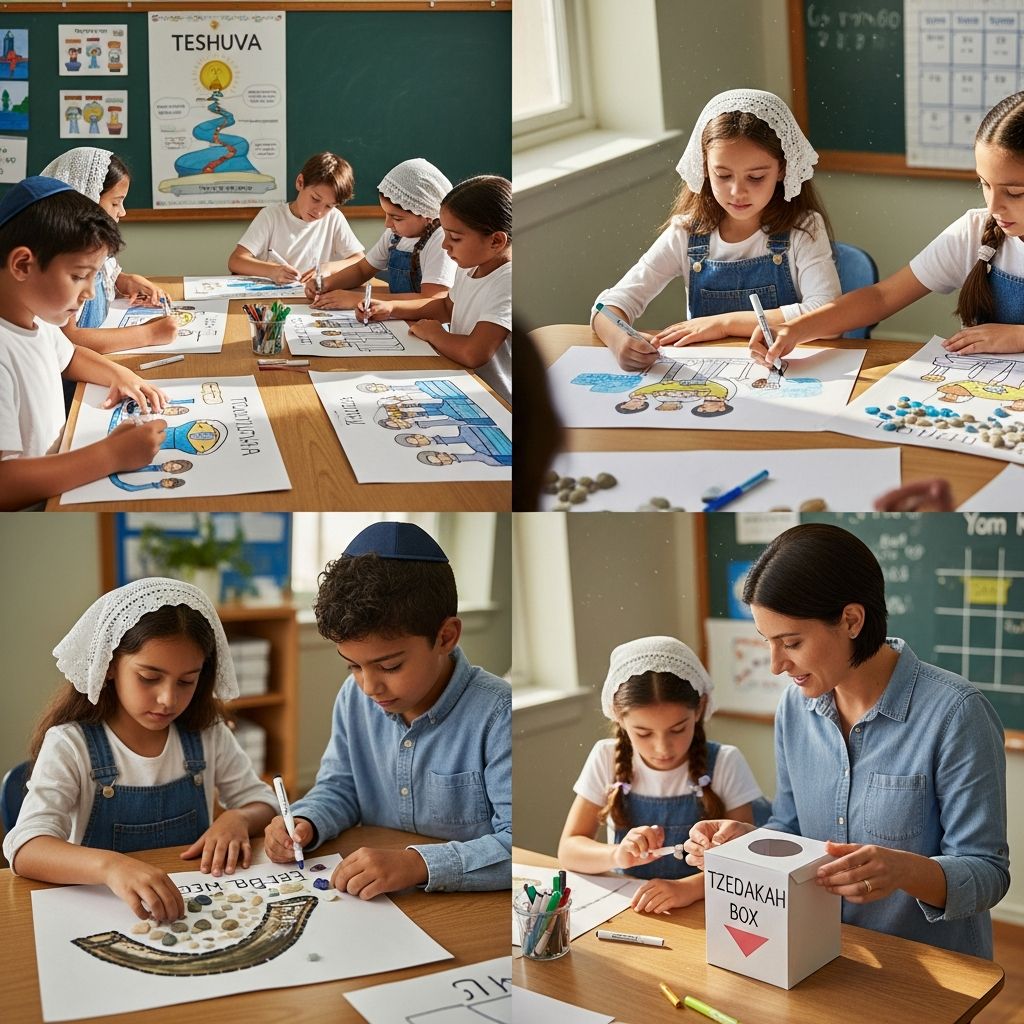
Yom Kippur, known as the Day of Atonement, is the holiest day in the Jewish calendar, observed with prayer, fasting, and deep reflection on personal growth and forgiveness. For educators, introducing this holiday provides an opportunity to build cultural competence, encourage empathy, and spark meaningful discussions among students. This article offers a fresh collection of classroom-ready activities designed to make learning about Yom Kippur interactive and memorable, suitable for elementary and middle school students.
Understanding the Essence of Yom Kippur
Before diving into activities, it’s essential to ground lessons in the holiday’s core principles. Yom Kippur falls on the 10th day of Tishrei, concluding the 10 Days of Awe that begin with Rosh Hashanah. Observers engage in teshuvah—repentance—by seeking forgiveness from others and reflecting on actions to improve in the coming year. Children can grasp these ideas through age-appropriate explanations, emphasizing saying sorry, making amends, and striving to be kinder.
In a diverse classroom, frame Yom Kippur as a universal lesson in accountability and renewal, helping all students connect personally. Use simple visuals like a calendar marking the holiday or a timeline of High Holy Days to set the context.
Interactive Greetings and Communication Lessons
Start with language-based activities to teach traditional greetings, promoting inclusivity. Common phrases include ‘G’mar Chatima Tova’ (May you be sealed for good in the Book of Life) and ‘Yom Kippur Sameach’ (Happy Yom Kippur), though the latter is less common due to the solemnity.
- Greeting Practice Game: Have students pair up and practice pronouncing greetings, then create posters with phonetic guides and meanings for classroom display.
- Role-Play Scenarios: Act out situations where characters apologize and use greetings, reinforcing social skills.
These exercises not only teach vocabulary but also model respectful interactions during holidays.
Creative Crafts for Reflection and Expression
Hands-on crafts transform abstract concepts into tangible experiences. Supplies like paper, markers, glue, and recyclables keep costs low while encouraging creativity.
Personalized Forgiveness Cards
Guide students in designing cards for friends or family. Include spaces for personal messages of apology or well-wishes. Discuss how a sincere note can mend relationships, tying back to teshuvah.
- Fold colored paper into cards.
- Add Jewish stars, shofars, or white doves symbolizing purity.
- Write greetings inside.
Sorry Stick Puppets
Create puppets from craft sticks where characters express remorse. Students write or draw scenarios on the back, then perform short skits. This builds emotional intelligence through play.
Extend with a class ‘Apology Chain’ where puppets link together, symbolizing community healing.
Educational Worksheets and Puzzles
Worksheets reinforce facts and critical thinking. A comprehensive pack might include crosswords on prayers, matching games for symbols like the Torah or kippah, and reading comprehensions about the holiday’s history.
| Worksheet Type | Objective | Age Group |
|---|---|---|
| Crossword: Yom Kippur Prayers | Vocabulary building | Grades 3-5 |
| Symbol Matching | Visual recognition | Grades K-2 |
| Comprehension Quiz | Reading analysis | Grades 4-6 |
| Word Search: Traditions | Spelling practice | All ages |
Print bundles for easy distribution, adapting difficulty for different levels.
Mindful Movement: Yoga and Mindfulness Integration
Incorporate physical activities to embody reflection. Yoga poses linked to themes help kinesthetic learners.
Theme-Based Yoga Sequence
- Mountain Pose (Tadasana): Stand tall, imagining strength for the new year. Add ‘Toe-Ga’ by picking up pompoms as apples in honey, connecting to Rosh Hashanah.
- Child’s Pose (Balasana): Kneel and fold forward for introspection and rest, mimicking prayer.
- Tree Pose (Vrksasana): Balance to represent growth and stability post-atonement.
- Warrior Pose (Virabhadrasana): Channel inner strength for positive change.
Follow with deep breathing exercises focused on releasing negativity. Pair with mindfulness coloring pages of holiday motifs like breaking the fast or synagogue scenes.
Storytelling and Literature Connections
Stories humanize the holiday. Read aloud books simplifying forgiveness, followed by discussions.
- Never Too Late: A tale of redemption, perfect for puppets or felt boards.
- Jonah and the Whale: Explores repentance through the prophet’s journey; use feltboard patterns for retelling.
- Age-appropriate selections on teshuvah for diverse family backgrounds.
Post-reading, journal prompts like ‘What would you apologize for?’ deepen personal connections.
Social Justice and Tzedakah Projects
Link Yom Kippur to action-oriented learning. Tzedakah (charity) aligns with repairing the world.
- Justice Research Stations: Rotate groups exploring racial justice, poverty, or refugee aid via primers.
- Charity Drive: Collect donations or create thank-you cards for contributors.
- Family Pledge Boards: Students design posters committing to kind acts.
These activities empower students to apply holiday lessons year-round.
Adapting for Special Needs and Home Use
Ensure inclusivity with modifications. For young children or those with disabilities, simplify to sensory activities like texture boards of white fabrics (purity) or soft chanting.
Provide take-home PDFs for family extension, including recipes for breaking the fast or audio blessings.
Frequently Asked Questions (FAQs)
What is the best age for Yom Kippur activities?
Activities scale from preschool crafts to middle school debates, focusing on empathy for all ages.
Do I need special supplies?
Basic classroom items suffice; free printables enhance without budget strain.
How can I make it multicultural?
Compare atonement practices across faiths to broaden perspectives.
Are there digital options?
Yes, quizzes, videos, and interactive PDFs support hybrid learning.
What if no students observe the holiday?
Emphasize universal themes of growth to benefit everyone.
Planning Your Yom Kippur Unit
Structure a week-long unit: Day 1 greetings/crafts, Day 2 worksheets/yoga, Day 3 stories/discussions, Day 4 projects. Assess via reflections or group shares. This approach fosters lasting understanding.
By integrating these activities, educators create a respectful space for exploring Yom Kippur, nurturing compassionate global citizens.
References
- Yom Kippur Activity Pack — Twinkl. 2023. https://www.twinkl.com/resource/t2-t-16368-yom-kippur-activity-pack
- Yom Kippur for Kids: Activities and Teaching Resources — KidsKonnect. 2023. https://kidskonnect.com/articles/yom-kippur-for-kids/
- Activities for Rosh Hashanah and Yom Kippur: Yoga Poses + Books — Kids Yoga Stories. 2023. https://www.kidsyogastories.com/activities-for-rosh-hashanah-and-yom-kippur/
- Bring Yom Kippur Activities Into Your Classroom — Newsela. 2023. https://newsela.com/blog/read/yom-kippur
- Yom Kippur Resource Collection — The Jewish Educator Portal. 2023. https://educator.jewishedproject.org/content/yom-kippur-resource-collection
- Yom Kippur with Kids — PJ Library. 2023. https://pjlibrary.org/yom-kippur
- Pursuing Social Justice: Yom Kippur Activities for Families — Reform Judaism. 2023. https://reformjudaism.org/jewish-holidays/yom-kippur/pursuing-social-justice-yom-kippur-activities-families

- Integrated M.A. in Applied Linguistics, University of Hyderabad
- 5+ years in editorial, instructional, SEO, and research-based writing
Sneha is a relationships and lifestyle writer with a strong foundation in applied linguistics and certified training in relationship coaching. She brings over five years of writing experience to theskillvault, crafting thoughtful, research-driven content that empowers readers to build healthier relationships, boost emotional well-being, and embrace holistic living. Her writing and insights reflect the belief that beauty, happiness, and wellness…