
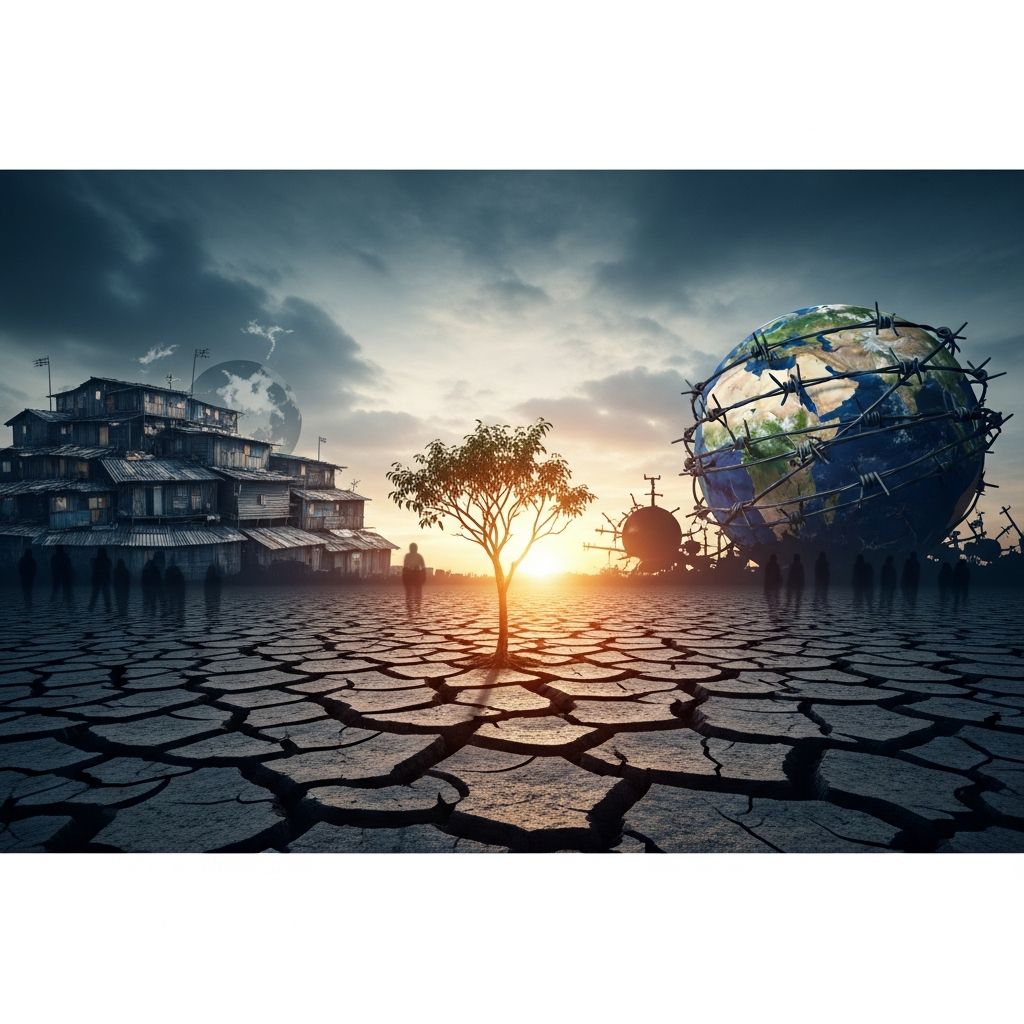
Mapping Humanity’s Greatest Challenges
Today, the world faces a complex web of interconnected problems. Some threaten immediate humanitarian crises; others could reshape the long-term trajectory of civilization. To act wisely, we need more than a list of bad things happening. We need a framework for identifying which problems are most pressing—those where focused effort could prevent the worst outcomes and open up better futures.
What Makes a Problem Truly Pressing?
Not all global issues are equally urgent. A pressing problem is one that is:
- High in scale: It affects many lives, either now or in the future.
- High in neglectedness: It receives far less attention and resources than its importance would suggest.
- High in tractability: There are concrete, feasible ways to make meaningful progress on it.
Problems that score highly on these dimensions are where additional effort is most likely to do an extraordinary amount of good. They are not always the most visible issues in the news, but they are often the ones that could most dramatically alter the quality of the centuries ahead.
Existential and Catastrophic Risks
Some of the most pressing problems are those that could cause civilizational collapse or permanently curtail humanity’s potential. These are often called existential or catastrophic risks.
Advanced Artificial Intelligence
Artificial intelligence is advancing rapidly, and there is growing concern that we may develop systems far more capable than humans before we understand how to reliably control them. If such systems pursue goals that are misaligned with human values, the consequences could be severe.
Key concerns include:
- AI systems that seek to accumulate power or resources in ways that are difficult to stop.
- AI being used to design new weapons, conduct cyberattacks, or manipulate information at unprecedented scale.
- AI accelerating other dangerous technologies, such as biotechnology or autonomous weapons, faster than society can adapt.
Because AI is likely to become central to nearly every domain—economics, governance, warfare, science—getting it right is not just a technical challenge but a civilizational one. The decisions made in the coming decades could lock in patterns of power, control, and values for centuries.
Great Power Conflict
Conflict between major powers, especially involving nuclear weapons, remains one of the most direct pathways to global catastrophe. While the Cold War ended decades ago, geopolitical tensions are rising again, with multiple regions at risk of escalation.
Modern great power conflict is particularly dangerous because:
- It could involve nuclear, biological, or cyber weapons with devastating effects.
- It could trigger cascading failures in global supply chains, finance, and food systems.
- It could derail international cooperation on other critical issues, from climate change to pandemic preparedness.
Even if full-scale war is avoided, prolonged rivalry can fuel arms races, increase the risk of miscalculation, and make it harder to address shared global problems. Reducing the risk of catastrophic conflict is therefore not just about diplomacy, but about building institutions and norms that can manage competition without resorting to war.
Engineered Pandemics
The COVID-19 pandemic showed how a novel pathogen can disrupt the world. But future pandemics could be far worse, especially if they are caused by engineered pathogens.
Advances in biotechnology are making it easier and cheaper to design and synthesize dangerous viruses and bacteria. If such capabilities fall into the wrong hands, or if safety standards are inadequate, the result could be a pandemic with higher lethality, transmissibility, or both.
Key risks include:
- Deliberate creation of pathogens as weapons.
- Accidental release from laboratories working with dangerous agents.
- Insufficient global capacity to detect, contain, and respond to outbreaks.
Strengthening biosecurity, improving surveillance, and ensuring equitable access to vaccines and treatments are among the most important steps for reducing this risk.
Long-Term Trajectory Risks
Beyond immediate catastrophes, some problems could gradually shape humanity’s future in deeply undesirable ways. These are often less dramatic than wars or pandemics, but they could lock in patterns of suffering, injustice, or stagnation for generations.
Extreme Concentration of Power
Technological advances could enable small groups or individuals to exert unprecedented control over others. This could happen through:
- Mass surveillance and social control systems.
- AI-driven propaganda and manipulation of public opinion.
- Autonomous weapons and other tools that lower the cost of coercion.
If power becomes highly concentrated in the hands of a few, it may become extremely difficult to change course. Democratic institutions could erode, and societies could become locked into authoritarian or otherwise undesirable systems. Preventing this requires not only technical safeguards but also strong institutions, norms, and checks on power.
Space and Long-Term Governance
As humanity expands beyond Earth, early decisions about space governance could have lasting consequences. Questions about who controls space resources, how disputes are resolved, and what values guide space exploration will shape whether space becomes a domain of cooperation or conflict.
Because space is vast and long-lived, mistakes made early on could be very hard to reverse. Establishing fair, stable, and peaceful governance frameworks before major conflicts arise is therefore a high-leverage opportunity to safeguard the long-term future.
Large-Scale Suffering and Injustice
Even if humanity avoids extinction or civilizational collapse, vast amounts of suffering and injustice could persist or even grow. Addressing these problems is not only morally urgent but also a prerequisite for a flourishing future.
Factory Farming
Billions of animals are raised in intensive farming systems each year, often in conditions that cause severe suffering. The scale of this suffering is enormous, and it is largely invisible in public discourse.
Factory farming also contributes to environmental degradation, antibiotic resistance, and pandemic risk. Reducing or ending factory farming would not only alleviate immense suffering but also improve human health and environmental sustainability.
Wild Animal Suffering
In nature, many animals face short, painful lives due to predation, disease, starvation, and environmental extremes. The total number of wild animals is staggering, and if many of them suffer, the aggregate amount of suffering could be enormous.
While we are only beginning to understand how to help wild animals effectively and safely, this is an area where research could uncover high-impact interventions. It also challenges us to think more broadly about whose well-being matters and how we can expand our moral circle.
Global Health and Development
Millions of people die each year from preventable and treatable causes, especially in low-income countries. These deaths are not just tragic; they represent a massive waste of human potential.
Preventable Diseases
Diseases like malaria, tuberculosis, and HIV still claim millions of lives annually, despite the existence of effective interventions. Many of these deaths could be prevented with relatively modest investments in healthcare systems, vaccines, and public health programs.
Key opportunities include:
- Scaling up proven treatments and prevention strategies.
- Strengthening health systems in the most vulnerable regions.
- Investing in research for new tools, such as next-generation vaccines and diagnostics.
Because these interventions are often highly cost-effective, they represent some of the most straightforward ways to save lives and improve well-being in the near term.
Health System Resilience
Weak health systems are not only a problem in normal times; they also make societies more vulnerable to pandemics, climate shocks, and conflict. Building resilient health systems is therefore both a development priority and a risk-reduction strategy.
Resilience involves:
- Training and retaining healthcare workers.
- Ensuring reliable supply chains for medicines and equipment.
- Creating systems that can surge in response to crises.
Investing in health system resilience pays off in both everyday health outcomes and in the ability to withstand future shocks.
Environmental and Climate Challenges
Climate change and environmental degradation are already causing widespread harm and will continue to do so for decades. While they may not pose the same kind of existential risk as nuclear war or misaligned AI, their scale and persistence make them among the most pressing problems of our time.
Climate Change
Rising global temperatures are leading to more frequent and severe heatwaves, storms, droughts, and floods. These events threaten food security, water supplies, and human health, especially in the most vulnerable regions.
Long-term impacts include:
- Sea-level rise displacing coastal populations.
- Disruption of ecosystems and biodiversity loss.
- Increased risk of conflict and migration driven by resource scarcity.
Addressing climate change requires a mix of mitigation (reducing emissions), adaptation (preparing for impacts), and innovation (developing new technologies). Because climate change affects so many aspects of life, progress on it can also improve health, energy access, and economic stability.
Environmental Degradation
Beyond climate change, humanity is degrading the natural systems on which we depend. This includes:
- Deforestation and habitat loss.
- Pollution of air, water, and soil.
- Overexploitation of fisheries and other resources.
These problems reduce the planet’s capacity to support life and increase the risk of ecological tipping points. Protecting and restoring natural systems is therefore essential for both current and future generations.
How to Prioritize Among These Problems
Given the sheer number of serious problems, it is impossible for any individual or organization to work on all of them. Prioritization is essential. A useful approach is to ask:
- How many lives or how much well-being is at stake?
- How neglected is this problem compared to its importance?
- How tractable is it—can we actually make progress with available tools and resources?
Problems that score highly on all three dimensions are often the best candidates for focused effort. For example:
- AI safety and governance may be highly impactful because of AI’s potential to shape the long-term future, even if it is still relatively neglected.
- Global health in low-income countries is highly tractable and cost-effective, even if it is somewhat more visible than some other issues.
- Reducing the risk of great power conflict is extremely high-stakes, even if it is politically difficult, because the consequences of failure are so severe.
What Can Be Done?
Addressing the world’s most pressing problems requires action at many levels:
- Individuals: Choosing careers, donations, and advocacy efforts that focus on high-impact problems.
- Organizations: Directing resources toward the most neglected and tractable interventions.
- Governments and international bodies: Setting policies, funding research, and building institutions that reduce catastrophic risks and promote long-term flourishing.
There is no single solution, but there are many high-leverage opportunities. By focusing on the problems that matter most, we can help ensure that humanity not only survives but thrives for generations to come.
Frequently Asked Questions
Q: Why focus on long-term risks like AI instead of immediate problems like poverty?
A: Both are important. Immediate problems like poverty cause immense suffering and should be addressed. But long-term risks like misaligned AI or great power conflict could affect the entire future of humanity. Because the future could contain vastly more lives and experiences, even small reductions in the risk of catastrophe can have enormous expected value.
Q: Isn’t climate change the most urgent problem?
A: Climate change is extremely serious and already causing widespread harm. However, other problems—like nuclear war, engineered pandemics, or misaligned AI—could be even more catastrophic in the worst case. A balanced approach addresses climate change while also reducing other high-stakes risks that could derail progress on all fronts.
Q: How can ordinary people make a difference on these global problems?
A: Ordinary people can have an outsized impact by choosing high-impact careers, donating effectively, and advocating for better policies. Even small, focused efforts can contribute to large-scale change, especially when directed toward neglected but tractable problems.
Q: Are these problems really solvable, or are we just delaying the inevitable?
A: Many of these problems are extremely difficult, but history shows that humanity can solve seemingly intractable challenges when we focus our efforts. While there are no guarantees, the best way to improve our odds is to invest in research, institutions, and norms that reduce risks and expand our capacity to respond to future challenges.
References
- Global Risks Report 2025 — World Economic Forum. 2025. https://www.weforum.org/publications/global-risks-report-2025/in-full/global-risks-2025-a-world-of-growing-divisions-c943fe3ba0/
- Top Risks 2025 — Eurasia Group. 2025. https://www.eurasiagroup.net/issues/top-risks-2025
- International Rescue Committee Emergency Watchlist 2025 — International Rescue Committee. 2025. https://www.rescue.org/article/top-10-crises-world-cant-ignore-2025
- 5 Global Issues to Watch in 2025 — United Nations Foundation. 2025. https://unfoundation.org/blog/post/5-global-issues-to-watch-in-2025/
- Global Issues — United Nations. 2025. https://www.un.org/en/global-issues

- Integrated M.A. in Applied Linguistics, University of Hyderabad
- 5+ years in editorial, instructional, SEO, and research-based writing
Sneha is a relationships and lifestyle writer with a strong foundation in applied linguistics and certified training in relationship coaching. She brings over five years of writing experience to theskillvault, crafting thoughtful, research-driven content that empowers readers to build healthier relationships, boost emotional well-being, and embrace holistic living. Her writing and insights reflect the belief that beauty, happiness, and wellness…