
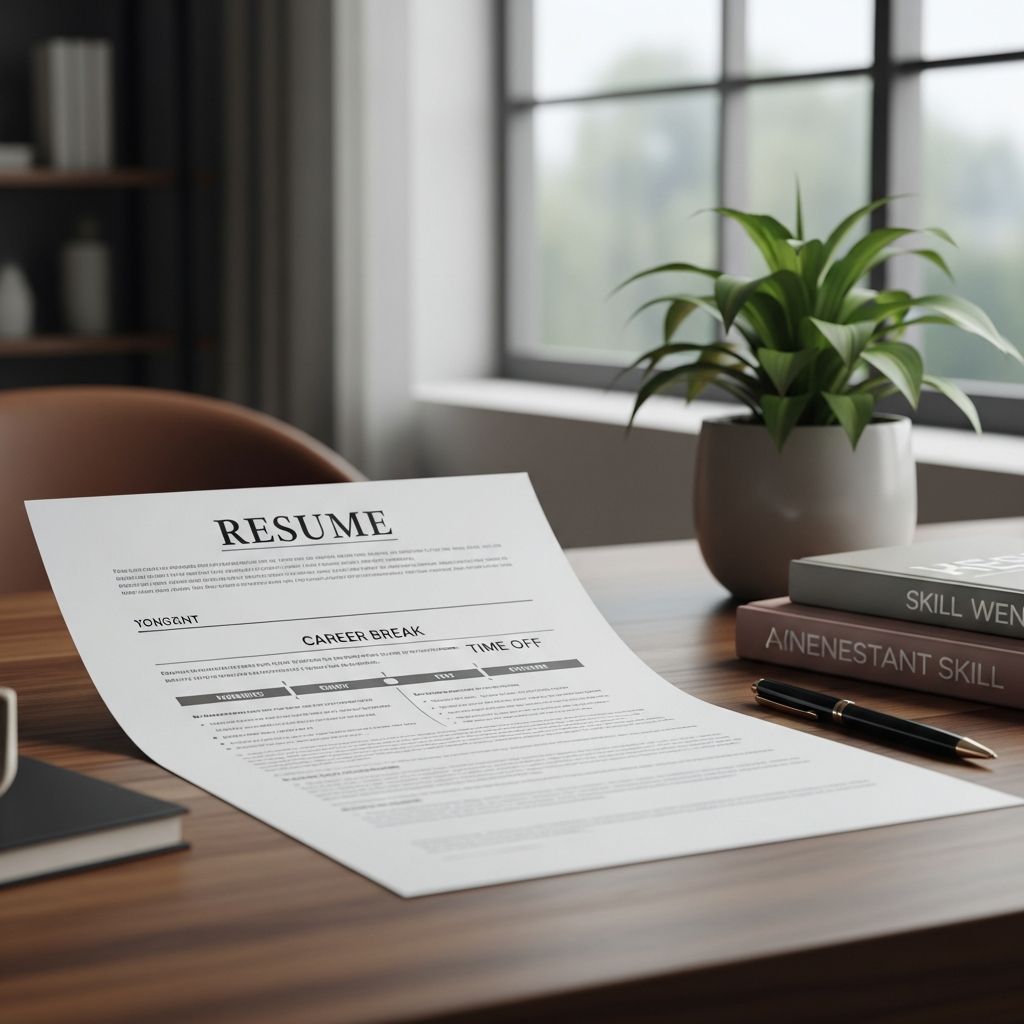
Rebuilding Your Professional Identity After a Career Break
Returning to the workforce after a period away—whether for caregiving, health, education, travel, or personal reasons—can feel daunting. One of the first and most important steps in this transition is updating or rebuilding your resume. A well-crafted resume doesn’t just list past jobs; it tells a story of capability, relevance, and readiness. It shows employers that your time away didn’t diminish your value, but may have even strengthened it in unexpected ways.
The goal is not to hide the gap, but to reframe it. Your resume should emphasize what you can do now, not just what you did years ago. This means making strategic choices about format, content, and language to keep the focus on your strengths and the value you bring to a new role.
Choosing the Right Resume Structure
The format of your resume plays a crucial role in how hiring managers perceive your background. Traditional chronological resumes, which list jobs in reverse order, can unintentionally highlight long gaps in employment. For someone re-entering the workforce, a different approach often works better.
A skills-based or hybrid format allows you to lead with your abilities rather than your timeline. In a skills-based resume, you group relevant competencies into categories such as project management, communication, technical tools, or customer service. Under each category, you list accomplishments and experiences that demonstrate those skills, drawing from both paid work and other activities.
A hybrid format combines this skills-first approach with a concise work history section. This gives you the best of both worlds: a clear picture of what you can do, supported by a brief overview of where and when you gained that experience. The key is to keep the work history section tight and focused on roles that are most relevant to the jobs you’re targeting now.
Opening Strong: The Summary or Objective Section
At the top of your resume, you have a small window to make a strong impression. A well-written summary or objective section can immediately signal that you’re a serious, capable candidate, even if your recent history doesn’t follow a traditional path.
A summary works well if you have a clear professional identity and a track record that still aligns with the roles you’re pursuing. It should be two to three sentences that highlight your core strengths, key achievements, and the type of role you’re seeking. For example, instead of saying, “Experienced professional returning to work,” you might say, “Detail-oriented project coordinator with a history of improving team efficiency and managing complex schedules, now seeking to bring strong organizational and communication skills to a dynamic operations role.”
If your background is more varied or you’re shifting into a new field, a targeted objective can be more effective. An objective clearly states your career goal and how your skills match the needs of the employer. It should be customized for each application, referencing the specific position and company when possible.
Highlighting Skills That Matter Now
When you’ve been out of the workforce for a while, your most recent job title may not be the most important thing on your resume. What matters more is what you can do today. That’s why a strong skills section is essential.
Start by reviewing job descriptions for the roles you’re interested in. Identify the skills and qualifications that appear repeatedly. These are the keywords and competencies you should prioritize. Group your skills into clear categories, such as:
- Technical skills (software, tools, platforms)
- Management and leadership abilities
- Communication and interpersonal strengths
- Problem-solving and critical thinking
- Industry-specific knowledge or certifications
Within each category, use brief, concrete examples to show how you’ve applied these skills. For instance, under project management, you might note that you coordinated a volunteer event for 200+ people, managed timelines and budgets, and collaborated with multiple stakeholders. This demonstrates relevant experience even if it wasn’t in a formal job setting.
Reframing Your Work History
Your work history should still be included, but it doesn’t need to dominate the page. The goal is to present it in a way that supports your current narrative, not distracts from it.
For each past role, focus on achievements and impact rather than just responsibilities. Use action verbs and, whenever possible, quantify results. Instead of “Responsible for customer service,” write “Resolved an average of 50+ customer inquiries per day, maintaining a 95% satisfaction rating.” This shifts the focus from what you did to what you accomplished.
If you have older roles that are less relevant, consider shortening them or listing only the most recent and significant positions. You don’t need to include every job from 20 years ago unless it directly supports your current goals. For roles that are highly relevant, you can expand slightly to emphasize transferable skills and measurable outcomes.
Accounting for the Gap Without Dwelling on It
Employment gaps are common and not automatically disqualifying. What matters is how you address them. On the resume itself, you don’t need a long explanation of why you were away from work. Instead, use the space to show what you’ve been doing and how it has prepared you for this next step.
If you’ve taken courses, earned certifications, volunteered, freelanced, or managed significant personal projects, include these in a dedicated section. For example:
- Completed a six-month online certification in digital marketing, gaining hands-on experience with analytics, content strategy, and campaign management.
- Volunteered as a community outreach coordinator, managing communications, organizing events, and building partnerships with local organizations.
- Freelanced as a writer and editor, producing content for small businesses and nonprofits, improving their online presence and engagement.
These experiences demonstrate initiative, continued learning, and the application of professional skills. They also provide natural talking points for interviews, where you can briefly and confidently explain your career break as a period of growth, reflection, or necessary life priorities.
Modernizing Your Contact and Personal Information
Before finalizing your resume, ensure all contact details are current and professional. Use a simple, professional email address (ideally your name or a variation of it) and include a phone number where you can be reliably reached.
If you have a LinkedIn profile or other professional online presence, include the link. Make sure your profile is up to date and consistent with your resume. A clean, well-organized LinkedIn profile can reinforce your credibility and give employers a fuller picture of your background.
Unless there’s a strong professional reason to include it, avoid listing personal details like age, marital status, or a photo. These are not standard in most professional resumes and can distract from the core message of your qualifications.
Using Language That Projects Confidence
The words you choose on your resume shape how you’re perceived. Passive language like “responsible for” or “involved in” can make your contributions sound vague or minor. Instead, use strong, active verbs that convey ownership and impact.
Examples of powerful action verbs include:
- Managed, led, coordinated, organized
- Developed, created, designed, implemented
- Improved, increased, reduced, optimized
- Trained, mentored, coached, supported
- Resolved, addressed, streamlined, solved
Each bullet point should clearly state what you did and, when possible, the result. For instance, “Led a team of five to complete a major client project two weeks ahead of schedule, resulting in a 15% increase in client satisfaction scores.” This kind of language positions you as a proactive, results-oriented professional.
Keeping It Concise and Focused
Most hiring managers spend only a few seconds scanning a resume before deciding whether to read further. That means every line should serve a purpose. Aim for a clean, one-page resume if possible, especially if you’re returning to work after a break.
To keep it concise:
- Focus on the most relevant roles and skills for the jobs you’re applying to.
- Remove outdated or irrelevant information (e.g., very old jobs with no transferable value).
- Use clear, simple formatting with plenty of white space and consistent headings.
- Avoid long paragraphs; use bullet points to make information easy to scan.
A tight, focused resume shows that you understand what matters to employers and that you can communicate your value efficiently.
Tailoring Each Application
One of the most effective ways to stand out is to customize your resume for each job. A generic, one-size-fits-all resume is less likely to catch attention than one that clearly aligns with the specific role and company.
To tailor your resume:
- Study the job description carefully and identify the key skills and requirements.
- Adjust your summary or objective to reflect the role you’re applying for.
- Reorder or emphasize skills that match the job posting.
- Use similar language and keywords from the posting, especially in your skills and experience sections.
- Highlight experiences that are most relevant to that particular employer.
This level of customization shows that you’ve done your homework and are genuinely interested in the position, not just sending out applications randomly.
Supporting Your Resume with a Strong Cover Letter
While the resume presents your qualifications, the cover letter is where you can tell your story more fully. It’s the place to briefly explain your career break in a positive, forward-looking way.
Your cover letter should:
- Express enthusiasm for the role and the company.
- Briefly mention the reason for your time away (e.g., family, health, education) without oversharing.
- Emphasize what you’ve learned or gained during that time and how it prepares you for this role.
- Highlight a few key skills or achievements that make you a strong fit.
- Close with a clear call to action, such as requesting an interview.
A well-written cover letter can turn a potential concern (the gap) into a strength by framing it as a period of growth and renewed focus.
Final Checks Before Sending
Before submitting your resume, take time to review and polish it. Small errors can undermine an otherwise strong application.
Key final steps include:
- Proofreading carefully for spelling, grammar, and punctuation.
- Reading the resume aloud to catch awkward phrasing.
- Checking that dates, job titles, and company names are accurate.
- Ensuring consistent formatting (font, spacing, bullet style).
- Having a trusted friend or mentor review it for clarity and impact.
Save your resume as a PDF unless the job posting specifies a different format. This preserves your layout and ensures it looks the same on any device.
Frequently Asked Questions
How do I explain a long employment gap?
Be honest but brief. In your cover letter, state the reason (e.g., caregiving, health, education) and focus on what you’ve done since then—courses, volunteering, freelance work, or personal projects. Emphasize your readiness to return and your relevant skills.
Should I include volunteer work on my resume?
Yes, especially if it involved skills relevant to the job you want. Treat volunteer roles like professional experience: list the organization, your role, dates, and key accomplishments using action verbs and, when possible, measurable results.
Is a one-page resume necessary?
For most roles, especially when re-entering the workforce, a one-page resume is ideal. It forces you to focus on what’s most relevant and makes it easier for hiring managers to scan quickly. If you have extensive, highly relevant experience, a second page may be acceptable, but keep it concise.
What if my past jobs aren’t related to the role I want now?
Focus on transferable skills: communication, organization, problem-solving, leadership, technical abilities, etc. Use a skills-based or hybrid format to highlight these competencies, and tailor your language to match the new field. A strong cover letter can also help explain your transition.
How important is the cover letter when returning to work?
Very important. It’s your chance to frame your career break positively, express enthusiasm, and connect your past experience to the role. A thoughtful cover letter can make a significant difference in how your application is received.
References
- U.S. Bureau of Labor Statistics, Employment Characteristics of Families Summary — U.S. Department of Labor. 2024. https://www.bls.gov/news.release/famee.nr0.htm
- “How to Write a Resume” — Harvard University Office of Career Services. 2024. https://ocs.fas.harvard.edu/resumes
- “Re-entering the Workforce” — U.S. Department of Labor, CareerOneStop. 2024. https://www.careeronestop.org/Toolkit/JobSearch/re-entering-the-workforce.aspx

- Integrated M.A. in Applied Linguistics, University of Hyderabad
- 5+ years in editorial, instructional, SEO, and research-based writing
Sneha is a relationships and lifestyle writer with a strong foundation in applied linguistics and certified training in relationship coaching. She brings over five years of writing experience to theskillvault, crafting thoughtful, research-driven content that empowers readers to build healthier relationships, boost emotional well-being, and embrace holistic living. Her writing and insights reflect the belief that beauty, happiness, and wellness…