
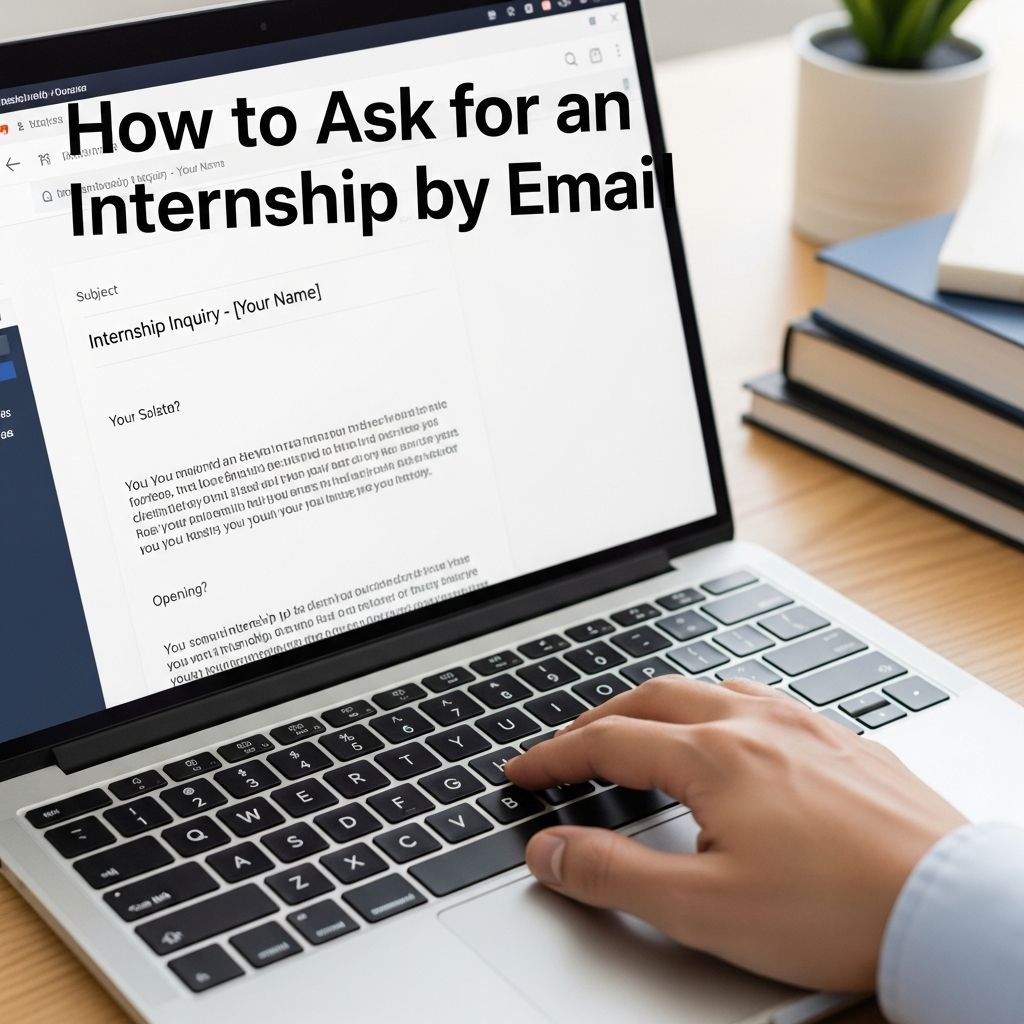
Sending a smart, well-written email can be the difference between your message getting ignored and landing a conversation that leads to an internship. This guide walks you through exactly how to ask for an internship over email, even if there is no formal posting.
Why Email Is a Powerful Way to Find Internships
Many internships are never advertised publicly. Instead, they are shared internally, given to referrals, or created for proactive students who reach out directly. Email lets you:
- Connect with hiring managers or potential mentors without needing a formal job posting.
- Show initiative, which employers consistently rate as a valued trait in early-career candidates.1
- Control your story and highlight the skills that make you a strong fit.
- Build a network, even if a specific internship does not appear immediately.
Before You Write: Research and Targeting
Your email is far more effective when it is personalized. Spend a bit of time researching before you ever hit compose.
Identify the right people to contact
Instead of emailing a generic company address, try to find real people whose work connects to your interests. Look for:
- Team leads or managers in the department you want to intern with (for example, marketing director, data science manager).
- Alumni from your college who work at the organization (many universities provide alumni directories and career tools).2
- Researchers, lab managers, or professors if you want academic or research internships.
- HR or early-career recruiting contacts when individual managers are hard to identify.
Understand the organization
Next, gather enough context to write a specific, credible email:
- Read the company or lab website: focus on mission, current projects, and recent news.
- Review any internship or entry-level descriptions they list to understand common skills they seek.
- Skim the LinkedIn profiles of people on that team to see their backgrounds and tools they use.
Being specific about why you are reaching out and how you could help signals that you respect their time.
Key Ingredients of an Effective Internship Email
Strong internship emails are short, clear, and tailored. Most effective messages contain the same core elements:
| Element | Purpose | Tips |
|---|---|---|
| Subject line | Grabs attention and sets expectations. | Include your role (student), field, and the word “internship” when possible. |
| Greeting | Establishes a respectful tone. | Use a professional salutation and the person’s name (and correct title, if academic). |
| Brief introduction | Explains who you are in 1–2 sentences. | Mention your school, year, major, and focus area. |
| Reason for writing | Clarifies what you are asking for. | State you are seeking an internship, and specify the timing or area. |
| Relevance and value | Shows why you chose them and what you bring. | Connect your skills or projects to their work; keep examples concrete. |
| Call to action | Gives them an easy next step. | Ask for a brief call, a quick review of your resume, or guidance on next steps. |
| Professional close | Ends on a courteous note. | Thank them, sign off formally, and include your contact details. |
Step-by-Step: How to Write Your Internship Email
1. Craft a specific subject line
Your subject line should be informative, not clever. A clear subject helps your email stand out in a busy inbox. For example:
- Subject idea: “Computer Science Student Interested in Data Internship”
- Subject idea: “Inquiry: Summer Marketing Internship Opportunities”
- Subject idea: “Undergrad Research Interest in Cognitive Psychology Lab”
2. Use a professional greeting
Start with a formal greeting and the person’s name. If you are writing to a professor, researcher, or physician, their title matters and should be used correctly.3
- “Dear Dr. Chen,”
- “Dear Ms. Rivera,”
- “Dear Hiring Manager,” (only if you cannot identify a specific person)
3. Introduce yourself briefly
In one or two sentences, answer: Who are you, and what are you studying?
- Your name
- Your year in school (e.g., second-year, junior)
- Your major or primary program
- Any concentration relevant to the role (for example, data analytics track, environmental policy focus)
4. Explain why you are reaching out to them
Now, move from who you are to why you chose this person or organization. This is where your research pays off:
- Reference a project, product, paper, or initiative that genuinely interests you.
- Mention if you heard about them from a professor, career center, event, or mutual contact.
- Connect their work to your academic or career goals.
5. Clearly state what kind of internship you are seeking
Be explicit about what you hope for, so the recipient is not left guessing. For example:
- The time frame: summer, fall semester, January term, year-long, etc.
- The number of hours per week you could commit.
- Whether you need academic credit, paid work, or are flexible.
Career advisors often recommend being direct about your goals so that professionals can respond efficiently.4
6. Highlight 2–3 relevant skills or experiences
You do not need to re-write your entire resume in the email. Instead, choose a few points that match their work:
- A class project, research assignment, or capstone where you used similar tools or methods.
- Part-time jobs, campus roles, or volunteer work that show transferable skills like communication, reliability, or teamwork.
- Personal or open-source projects if you lack formal experience (for example, a small app, design portfolio, or blog).
According to employer surveys, communication skills, problem-solving, and teamwork consistently rank among the most sought-after competencies for interns, often above technical expertise.5
7. Make a clear, reasonable request
Conclude the body of your email with a simple ask, such as:
- A 15–20 minute informational call to learn about potential intern needs.
- Guidance on how to apply or whom else to contact.
- Consideration for any upcoming internship openings on their team.
Giving a specific but modest next step makes it easier for them to say yes.
8. Attach your resume and close professionally
Attach a concise, internship-ready resume and, if relevant, a short portfolio or link to samples. In your closing lines:
- Thank them for their time.
- Mention that your resume is attached.
- Include a professional sign-off and signature block with contact info.
Sample Internship Email Templates
Use these templates as starting points and customize them based on your situation and the organization.
Template 1: Cold email to a company with no posted internship
Subject: Economics Student Interested in Summer Policy Internship
Dear [Name],
My name is [Your Name], and I am a third-year economics student at [University] focusing on public policy analysis. I have been following [Organization]’s recent work on [specific program, report, or initiative], and I am impressed by the way your team uses data to inform policy decisions.
I am hoping to gain hands-on experience supporting policy research and analysis this coming summer. I would be particularly excited about an internship that involves data analysis, literature review, or program evaluation related to [relevant topic].
In my coursework, I have completed statistical projects using [tools or methods], and recently helped a campus organization evaluate the impact of a student support program by designing surveys and presenting findings to leadership. These experiences strengthened my analytical skills and my ability to communicate results to non-technical audiences.
I have attached my resume for reference. If your team anticipates any internship needs for the upcoming summer, I would be grateful for the chance to be considered. If that is not possible, I would still appreciate any brief advice you might have about pursuing research-oriented internships in this field.
Thank you for your time and consideration.
Sincerely,
[Your Name]
[Phone Number]
[Email Address]
[LinkedIn or portfolio link, if appropriate]
Template 2: Email to an alum or personal contact
Subject: Question About Internship Opportunities at [Company]
Dear [Name],
I hope you are doing well. I am [Your Name], a [year] at [University] majoring in [major]. We met briefly at [event] / I found your profile through our alumni network, and I enjoyed learning about your work on [specific area or project].
I am currently exploring internship options in [field], and [Company] stands out to me because of [short, specific reason related to their work or culture]. I would be grateful for your perspective on what skills or experiences are most valuable for interns on your team.
Over the past year I have [one or two concrete experiences or achievements]. These experiences have confirmed my interest in [field] and helped me build [relevant skills].
If you have 15–20 minutes in the coming weeks, I would really appreciate the chance to ask a few questions about your path and how students typically get involved at [Company]. I have attached my resume in case it is helpful context, but I am primarily seeking your advice.
Thank you in advance for considering this, and I completely understand if your schedule is too full.
Best regards,
[Your Name]
Template 3: Follow-up email after no response
Subject: Follow-Up: Interest in [Team/Field] Internship
Dear [Name],
I hope your week is going well. I wanted to briefly follow up on the message I sent on [date] regarding potential internship opportunities with [team or organization]. I remain very interested in the chance to contribute to [specific focus or project] and to learn from your team.
I know you receive many requests and fully understand if now is not a good time. If there is someone else who would be more appropriate for me to contact about internships, I would appreciate any guidance you can share.
Thank you again for your time.
Best,
[Your Name]
Common Mistakes to Avoid
Even strong students sometimes undermine their own emails with small but important errors. Watch out for these pitfalls:
- Vague requests: Saying “I’d love to connect” without explaining what you want makes it harder to respond.
- Overly long messages: Busy professionals may skim or skip long emails; aim for 3–6 short paragraphs.
- Typos and informal language: Proofread; treat the email like a professional document, not a text.
- Mass mailing: Copy-pasting the same generic email to dozens of people usually leads to silence.
- Skipping the resume: Without a resume attached, interested readers may not have enough information to move you forward.
Quick Checklist Before Sending
Review this short checklist just before you click send:
- Subject line is specific and mentions “internship” or your field.
- Recipient’s name and title are spelled correctly.
- Introduction clearly states who you are and what you study.
- You explain why you chose this person or organization.
- You specify the type and timing of internship you seek.
- You highlight 2–3 skills or experiences that match their work.
- You make a clear request (call, advice, consideration for roles).
- Your resume is attached and file name looks professional.
- You proofread for spelling, grammar, and tone.
Frequently Asked Questions (FAQs)
Q: How long should an internship email be?
Aim for roughly 150–250 words. That is long enough to introduce yourself and make a clear request, but short enough that a busy manager can read it quickly.
Q: When is the best time to send an internship email?
Weekday mornings in the recipient’s time zone tend to work well, but the most important factor is reaching out early in the semester or recruiting cycle. Many organizations make summer internship decisions months in advance.4
Q: Should I follow up if I do not receive a response?
Yes, a short, polite follow-up after about 7–10 days is reasonable. If you still hear nothing after a second message, move on and focus your energy elsewhere.
Q: Is it acceptable to ask for an unpaid internship?
Policies on unpaid internships vary by country and industry. Labor agencies in several countries emphasize that unpaid internships must meet specific criteria and should primarily benefit the student’s learning, not replace paid work.6 Check your local regulations and consider whether you can reasonably afford unpaid work.
Q: Do I need a cover letter as well as an email?
For many informal or speculative internship requests, the email itself serves the role of a short cover letter. If you are applying to a posted internship through an official portal, follow the application instructions and include a separate cover letter when requested.
References
- Job Outlook 2024 — National Association of Colleges and Employers (NACE). 2023-11-15. https://www.naceweb.org/store/2023/job-outlook-2024/
- Making the Most of Your Internship Search — University of California, Berkeley Career Center. 2022-08-01. https://career.berkeley.edu/internships/search
- Email Etiquette — University of North Carolina at Chapel Hill Writing Center. 2022-01-10. https://writingcenter.unc.edu/tips-and-tools/effective-email-communication/
- Internship and Job Search Guide — University of Michigan Career Center. 2023-03-20. https://careercenter.umich.edu/article/internship-and-job-search-guide
- Job Outlook 2023 — National Association of Colleges and Employers (NACE). 2022-11-30. https://www.naceweb.org/store/2022/job-outlook-2023/
- Fact Sheet #71: Internship Programs Under The Fair Labor Standards Act — U.S. Department of Labor. 2018-01-05. https://www.dol.gov/agencies/whd/fact-sheets/71-flsa-internships

- Integrated M.A. in Applied Linguistics, University of Hyderabad
- 5+ years in editorial, instructional, SEO, and research-based writing
Sneha is a relationships and lifestyle writer with a strong foundation in applied linguistics and certified training in relationship coaching. She brings over five years of writing experience to theskillvault, crafting thoughtful, research-driven content that empowers readers to build healthier relationships, boost emotional well-being, and embrace holistic living. Her writing and insights reflect the belief that beauty, happiness, and wellness…