
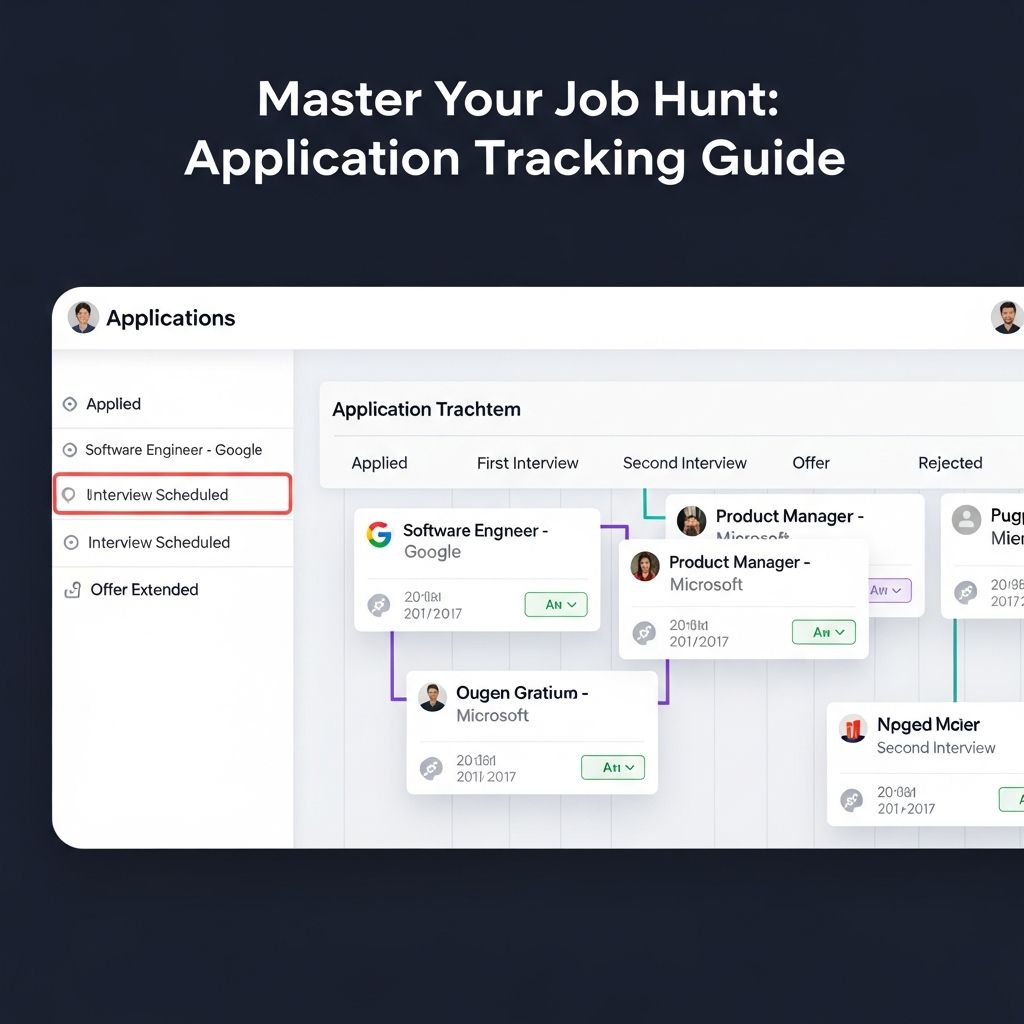
Transforming Chaos Into Strategy: Why Application Tracking Matters
The modern job search generates an overwhelming volume of information. Between dozens of applications, various contact details, interview schedules, and follow-up tasks, even the most organized person can struggle to maintain clarity. Without a systematic approach, job seekers often find themselves uncertain about which companies they’ve applied to, when follow-ups are due, or what information they shared in their application materials.
Application tracking is more than just keeping records organized—it’s a strategic practice that directly impacts your likelihood of landing interviews and ultimately securing job offers. When you maintain a clear overview of your job search pipeline, you gain the ability to identify patterns, recognize which types of positions generate callbacks, and adjust your strategy based on real data rather than guesswork.
The Foundation: Building Your Tracking System
Creating an effective application tracking system begins with selecting the right tool and establishing consistent data entry practices. Whether you choose a spreadsheet, dedicated application, or hybrid approach, the foundation rests on capturing and organizing essential information at the moment you submit each application.
Core Data Elements to Capture
Your tracking system should capture information across several critical dimensions. The company name forms the baseline identifier, allowing you to quickly recognize where each opportunity originated. The specific job title matters tremendously because organizations frequently post multiple roles, and you need to distinguish between them when preparing for interviews or following up.
Application submission dates serve multiple purposes—they help you track application aging, identify which positions warrant follow-up communication, and remember which role you were most enthusiastic about during particular periods of your search. Salary ranges provide context about market value and help you prioritize roles that align with your financial requirements.
Contact information for relevant personnel—whether recruiter names, hiring manager emails, or HR department phone numbers—transforms your tracker from a passive record into an active engagement tool. Interview dates and current application status indicators keep you synchronized with each opportunity’s progression through the hiring pipeline.
Strategic Organization: Moving Beyond Simple Lists
While basic information capture provides a foundation, strategic organization adds significant value by enabling quick analysis and informed decision-making. The way you structure and present data directly influences whether your tracking system remains useful or gradually becomes abandoned.
Status Indicators and Pipeline Visibility
Implementing clear status indicators allows you to immediately understand where each application stands. Categories might include “Applied,” “Under Review,” “Interview Scheduled,” “Interview Completed,” “Awaiting Decision,” “Offer Received,” or “Rejected.” This segmentation lets you quickly identify how many opportunities are in each stage and prevents the common mistake of losing track of applications during the extended waiting periods that characterize many hiring processes.
Creating separate views or filters for different statuses transforms your tracker into a dynamic management tool. You can instantly see which interviews require preparation, which follow-ups are overdue, and which companies have gone silent despite your application submission weeks ago.
Personal Impressions and Notes Section
Beyond structured data fields, effective tracking systems include space for subjective impressions and contextual notes. After researching a company or position, capturing your initial thoughts creates a valuable reference point. During interviews, recording observations about company culture, management style, or role expectations provides material you’ll want to review when comparing multiple offers.
These notes section also documents important conversation details—specific questions hiring managers asked, concerns they raised about your qualifications, or particular responsibilities they emphasized. This information proves invaluable when following up, customizing your approach for subsequent interviews, or evaluating offers later.
Workflow Integration: Connecting Application to Action
Tracking applications becomes truly powerful when integrated into your active job search workflow. This means establishing consistent processes that ensure no opportunity falls through the cracks and that your tracker reflects reality rather than outdated information.
Real-Time Updates During Application Submission
The optimal time to begin tracking an application is the moment you click “submit.” Recording the date immediately eliminates the common problem of forgetting exactly when you applied to a particular role. Capturing the job posting link before it potentially disappears from the job board ensures you can reference the original description during interview preparation.
Including the specific URL or application method—whether through LinkedIn, company careers page, recruiter email, or job board—creates a paper trail that helps when following up or if you receive interview inquiries weeks later and need to refresh your memory about the specific opportunity.
Follow-Up Scheduling and Reminder Integration
Your tracking system should connect to your calendar or reminder system to ensure follow-ups actually happen rather than merely being recorded in your spreadsheet. Establishing a consistent policy about follow-up timing—such as checking for updates ten business days after application submission or two weeks after interviews—creates predictable patterns that prevent important actions from slipping away.
Many people discover that scheduling follow-up reminders before they’re actually needed keeps the process from feeling overwhelming. Rather than trying to remember which applications might warrant checking on next Tuesday, you receive a notification that makes the decision for you.
Pre-Interview Preparation Through Notes Review
Before any interview, systematically reviewing your tracker entry for that position accelerates preparation. Revisiting the original job description refreshes your memory about required qualifications and key responsibilities. Your notes on company research reveal important context about organizational priorities, recent news, or cultural values.
If you’ve had previous conversations with the hiring manager or recruiter, those discussion summaries help you maintain continuity and demonstrate genuine interest through follow-up questions that build on previous conversations rather than rehashing ground you’ve already covered.
Advanced Analytics: Turning Data Into Strategic Insights
As your job search progresses and your tracker accumulates data, opportunities emerge to analyze patterns and extract strategic insights. These insights inform decisions about whether to adjust your approach, target different companies, or refine your pitch.
Application Volume and Success Rate Metrics
Tracking the number of applications submitted weekly, combined with callback rates, reveals whether your strategy is generating adequate interview opportunities. If you’re submitting twenty applications monthly but receiving no callbacks, the problem likely lies in application quality rather than volume. Conversely, if you’re receiving interview invitations from most submissions, your application materials effectively communicate your value proposition.
Role Type and Company Size Analysis
Over time, your tracker should reveal patterns about which types of positions generate interviews versus which remain silent. Perhaps you consistently receive callbacks for senior individual contributor roles but rarely hear back for management positions. Maybe large enterprises respond to your applications more frequently than startups, or vice versa.
These patterns allow you to adjust your targeting strategy, focusing greater energy on company sizes and role types that historically prove responsive to your background and qualifications.
Timeline Patterns and Decision Cycle Understanding
Your tracker documents the elapsed time from application to interview invitation, providing realistic expectations about how quickly various companies move. Some organizations extend interview invitations within days, while others require weeks or even longer to initiate contact. Understanding these patterns prevents unnecessary anxiety about silence and helps you decide when to follow up versus when to wait.
Comparison Table: Tracking Method Characteristics
| Tracking Method | Setup Complexity | Flexibility | Accessibility | Integration Potential | Automation Capabilities |
|---|---|---|---|---|---|
| Google Sheets | Low to Medium | High | Cloud-based, mobile-friendly | Basic integrations available | Formulas and conditional formatting |
| Excel Spreadsheet | Low to Medium | High | Desktop-dependent, limited mobile | Limited without add-ons | Macro support, advanced formulas |
| Dedicated ATS App | High | Medium | Cloud-based, mobile apps | Designed for job tracking | Automated reminders, matching scores |
| Note-Taking App | Low | Medium | Cloud-based, mobile-friendly | Limited tracking features | Search and tagging only |
Common Pitfalls and Solutions
Data Entry Inconsistency
The most frequent cause of tracking system failure is inconsistent data entry. When you update your tracker sporadically or only record partial information, it becomes increasingly unreliable. The solution involves establishing non-negotiable practices—such as updating your tracker immediately after submitting each application or setting a specific time each week to review and update application statuses.
Outdated or Duplicate Information
As you progress through the job search, applications move through various stages. If you don’t update your tracker as circumstances change, it becomes a historical record rather than an active management tool. Similarly, if you’re not careful about avoiding duplicate entries, you might inadvertently track the same application twice or lose track of which entry corresponds to which opportunity.
Overwhelming Detail or Insufficient Specificity
Tracking systems can suffer from either extreme—either capturing so much information that data entry becomes burdensome and the system feels difficult to navigate, or capturing so little information that you can’t distinguish between similar opportunities or remember important context when following up.
Frequently Asked Questions
Q: How often should I update my job application tracker?
A: Update your tracker immediately when submitting applications and whenever you receive communication from companies. Schedule a weekly review to verify status updates, schedule follow-ups, and refresh your memory about opportunities in progress.
Q: What information is essential to track versus optional?
A: Essential fields include company name, job title, application date, and current status. Optional but valuable information includes salary range, contact details, interview dates, and personal notes. Include additional fields only if you’ll realistically maintain them.
Q: How can I determine the right follow-up timing?
A: Most recruiters need 2-3 weeks to review applications. Waiting 10-15 business days before following up shows appropriate respect for their timeline while keeping your application fresh in their minds. After interviews, follow up within 24-48 hours if you haven’t received next-step communication.
Q: Should I track applications submitted through different platforms the same way?
A: Yes, use consistent fields and formats across all applications regardless of where you submitted them. However, document the submission platform to maintain a complete record and facilitate easier follow-up contact.
Q: What should I do when applications reach a dead end or receive rejection?
A: Mark these applications as “Rejected” or “No Further Contact” rather than deleting them. The complete record of your search, including rejection data, provides valuable information about patterns and helps you remember where you’ve already applied.
Moving Forward With Intention
Implementing an effective application tracking system transforms job searching from a chaotic process prone to mistakes into a strategic effort grounded in clear information and deliberate choices. The time invested in establishing and maintaining your tracking system yields returns through improved interview callback rates, eliminated missed opportunities, and data-informed strategy adjustments.
Your tracker becomes both a practical tool for managing day-to-day job search tasks and a strategic asset that reveals patterns and informs decisions about how to optimize your approach. Whether you choose a simple spreadsheet or a more sophisticated tracking application, consistency and completeness determine whether your system becomes an indispensable job search partner or an abandoned experiment.
References
- How to Use a Job Search Spreadsheet [Examples + Templates] — Teal. Accessed 2025. https://www.tealhq.com/post/job-search-tracking-spreadsheet
- Create a Job Application Tracker in Google Sheets (+Template) — Jobscan. Accessed 2025. https://www.jobscan.co/blog/job-search-spreadsheet-and-job-tracker/
- The Complete Guide to Using a Job Tracker Spreadsheet — Lark Suite. Accessed 2025. https://www.larksuite.com/en_us/blog/job-tracker-spreadsheet
- Free Job Application Tracker Templates for Google Sheets — Beam Jobs. Accessed 2025. https://www.beamjobs.com/career-blog/job-application-tracker-google-sheets
- Job Tracker Apps vs Spreadsheets: Which Should You Be Using? — Careerflow. Accessed 2025. https://www.careerflow.ai/blog/job-tracker-apps-vs-spreadsheets

- Integrated M.A. in Applied Linguistics, University of Hyderabad
- 5+ years in editorial, instructional, SEO, and research-based writing
Sneha is a relationships and lifestyle writer with a strong foundation in applied linguistics and certified training in relationship coaching. She brings over five years of writing experience to theskillvault, crafting thoughtful, research-driven content that empowers readers to build healthier relationships, boost emotional well-being, and embrace holistic living. Her writing and insights reflect the belief that beauty, happiness, and wellness…