
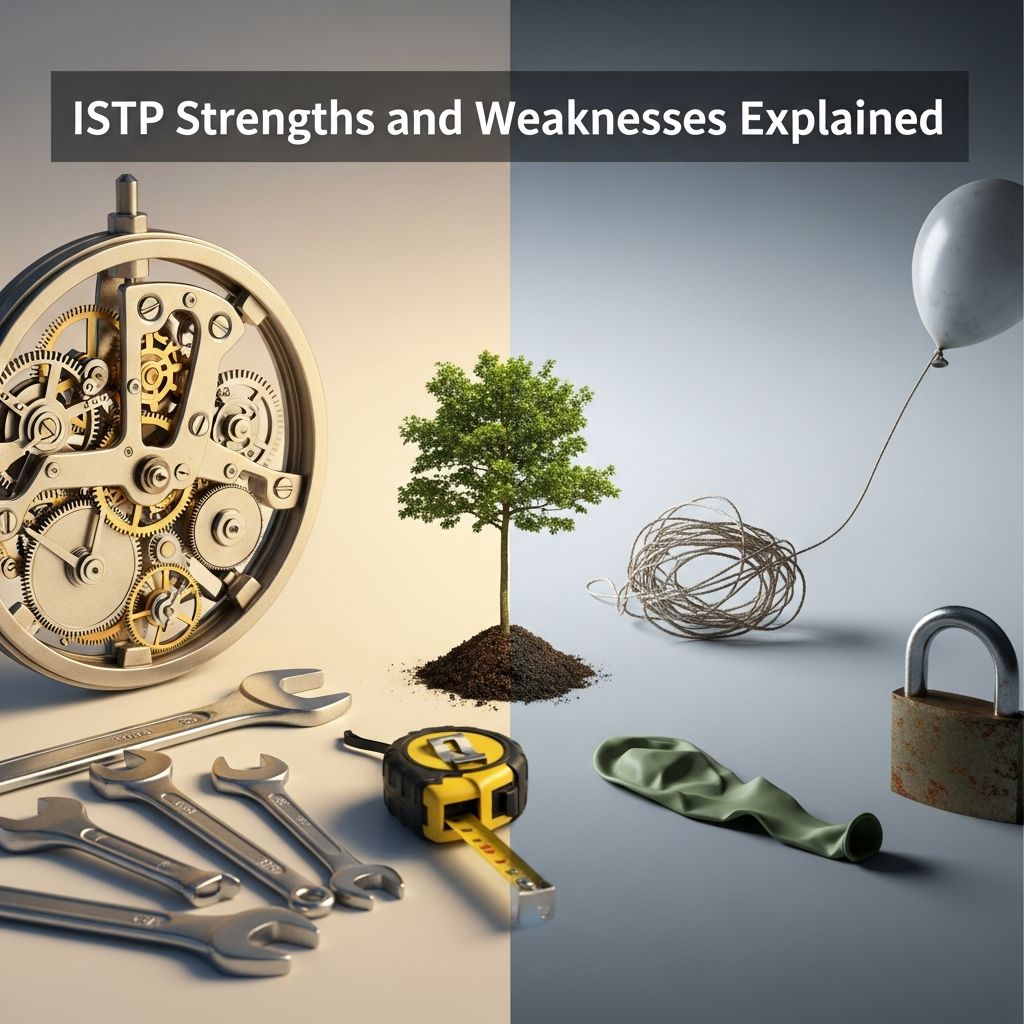
ISTPs, often called Virtuosos or logical pragmatists, combine calm observation with decisive action. They like to understand how things work in the real world, prefer hands-on problem-solving over theory, and value their independence and freedom of movement. This blend of traits gives them powerful strengths, but it also creates blind spots that can complicate work, relationships, and long-term goals.
This article offers an original, in-depth look at the main ISTP strengths and weaknesses, how they appear in everyday life, and what ISTPs (and those around them) can do to make the most of this unique personality style.
Snapshot of the ISTP Personality
In the Myers–Briggs framework, ISTP stands for:
- Introverted – Focused on the inner world of thoughts and experiences rather than constant social interaction.
- Sensing – Attuned to concrete details and present-moment information.
- Thinking – Prefers logic and objective criteria when making decisions.
- Prospecting (Perceiving) – Flexible, adaptable, and open-ended in approach.
Many ISTPs recognize themselves in descriptions such as:
- “Quiet until there is a problem to solve.”
- “Good in a crisis, bored by routine.”
- “Independent to the core; I need space to figure things out my own way.”
Core Strengths of ISTPs
ISTP strengths generally center on practical intelligence, composure under pressure, and flexible problem-solving. These advantages can make them highly effective in technical, hands-on, or high-stakes environments.
1. Calm and Effective in a Crisis
ISTPs are known for staying levelheaded when others panic. They quickly assess what is happening, identify the most important facts, and move straight into action.
- Strength in action: When something breaks, malfunctions, or goes off script, ISTPs tend to focus rather than freeze.
- Value to others: Colleagues and loved ones often turn to them as the “steady one” in emergencies or emotionally intense situations.
2. Hands-On Problem Solvers
ISTPs typically prefer to learn and solve problems by doing rather than by discussing or theorizing. They are often gifted with mechanical, technical, or kinesthetic abilities and like figuring out how systems, tools, or processes work.
- They rely heavily on firsthand observation and trial-and-error.
- They excel where quick, realistic fixes are needed more than long meetings or abstract plans.
3. Highly Independent and Self-Reliant
ISTPs prefer to work at their own pace and on their own terms. They dislike micromanagement and often develop personalized methods to become efficient, skilled, and self-sufficient.
- What this looks like:
- Taking on solo projects and quietly mastering a craft or skillset.
- Resisting unnecessary rules or rigid structures.
- Benefit: This independence can make them highly capable specialists and problem-solvers in almost any field they care about.
4. Realistic, Logical Thinkers
ISTPs rely on clear logic and concrete evidence when making decisions. They are less swayed by group pressure or emotional drama and more focused on what works.
- They often spot inefficiencies and practical flaws others miss.
- Their focus on reality helps keep plans grounded and achievable.
5. Adaptable and Flexible
Thanks to their flexible, perceiving style, ISTPs can adjust quickly to new information or changing conditions. They are comfortable with improvisation and rarely insist on sticking to a rigid script.
- They often perform well in dynamic, unpredictable environments.
- They are open to trying new tools, strategies, or approaches as soon as they prove useful.
6. Low-Drama and Straightforward
ISTPs tend to avoid unnecessary conflict and emotional intensity, preferring simple, direct communication. People often experience them as honest, unpretentious, and refreshingly straightforward.
- They are usually tolerant of different viewpoints, as long as decisions remain logical and fair.
- They respect others who “say what they mean” and appreciate similar clarity in return.
Key Weaknesses and Blind Spots of ISTPs
The same traits that make ISTPs effective can also create predictable problems. Their focus on logic, independence, and the present moment may lead to relational blind spots, commitment issues, or difficulty with long-term structure.
1. Difficulty Expressing Emotions
Many ISTPs experience emotions intensely but privately. Because they prioritize logic, they may struggle to express feelings in words or respond to the emotional needs of others in ways that are expected.
- They can come across as detached or uninterested, even when they care deeply.
- Attempts to show support may sound blunt, overly practical, or unintentionally dismissive.
2. Blunt or Insensitive Communication
ISTPs value directness and often skip social niceties they see as unnecessary. When stressed or impatient, this can turn into sharp comments, abrupt criticism, or a visible lack of patience for what they view as irrational behavior.
- Impact: Others may feel hurt, dismissed, or judged, especially more emotionally oriented personalities.
- Hidden cost: ISTPs might unintentionally damage trust or push people away when they only meant to be efficient or honest.
3. Resistance to Long-Term Planning and Routine
Because ISTPs prefer flexibility and real-time problem-solving, they can struggle with long-term structure, repetitive tasks, and distant deadlines.
- They may procrastinate on planning or avoid decisions that limit their future options.
- Routine maintenance tasks (paperwork, reporting, admin) can feel draining or pointless.
4. Tendency to Withdraw
As introverts who value autonomy, ISTPs often need a great deal of personal space to think, tinker, and recharge. Under stress, they may retreat suddenly, leaving others confused or worried.
- Instead of talking through issues, they may disappear into work, hobbies, or solitary activities.
- Partners, friends, or coworkers can misinterpret this as rejection rather than a coping strategy.
5. Boredom with “People Stuff” and Abstract Talk
ISTPs are often less interested in theoretical debates or extended emotional discussions, especially if there is no clear practical outcome.
- They may tune out in long meetings or conversations that stay abstract.
- Topics like office politics or social drama can feel particularly frustrating.
6. Risk of Over-Focus on Projects
When deeply engaged with a problem, hobby, or technical challenge, ISTPs can become intensely absorbed, sometimes to the point of workaholism or neglecting other areas of life.
- They may ignore rest, relationships, or health while chasing a solution or perfecting a skill.
- This “tunnel vision” can be productive in the short term but draining over time.
How ISTP Traits Play Out: A Strengths vs. Weaknesses Table
| ISTP Trait | Strength When Balanced | Weakness When Overused |
|---|---|---|
| Calm under pressure | Stabilizes teams during crises, makes clear decisions. | May seem emotionally distant or unaffected by others’ struggles. |
| Hands-on problem solver | Quickly finds practical, realistic solutions. | Impatient with theory, policy, or long explanations. |
| Independent | Self-sufficient, able to work effectively with minimal supervision. | Resists collaboration or help, struggles with authority and rules. |
| Logical and objective | Keeps decisions fair, consistent, and data-driven. | Overlooks emotional context, invalidates others’ feelings. |
| Spontaneous and adaptable | Responds well to change and unexpected challenges. | Has trouble with long-term planning, deadlines, and routine. |
Growth Tips for ISTPs
The goal for ISTPs is not to become a different type, but to round out their strengths so they do not become liabilities. Small, concrete adjustments can dramatically improve relationships and long-term success while preserving their natural independence and practical mindset.
1. Practice Low-Drama Emotional Communication
- Use simple feeling statements such as “I’m frustrated,” “I’m tired,” or “I’m worried” instead of going silent.
- When someone shares feelings, try reflecting one element back (“It sounds like you felt ignored”) before offering solutions.
- Remember that listening itself is often as valuable as fixing the problem.
2. Add Just Enough Structure
- Use lightweight tools (checklists, timers, brief planning notes) rather than rigid schedules.
- Block small, non-negotiable time slots for essentials: sleep, health, key relationships, and important deadlines.
- Treat structure as another “tool” you can optimize, not as a cage.
3. Signal When You Need Space
- Instead of disappearing, say something brief like: “I need some time to think; let’s talk about this later today.”
- Agree in advance with close people on what “normal” withdrawal vs. “problem” withdrawal looks like.
- Schedule re-connection points after stressful events so others do not feel abandoned.
4. Channel Directness into Constructive Feedback
- Focus on behavior and process, not on people: “This method is inefficient” vs. “You did this wrong.”
- Pair criticism with at least one specific suggestion for improvement.
- Ask a quick check question: “Does that make sense?” to invite dialogue instead of one-way judgment.
5. Choose Environments That Use Your Strengths
ISTPs tend to thrive where they can:
- Work with tangible systems, tools, or real-world problems.
- Have a good degree of autonomy and minimal micro-management.
- Respond to changing conditions rather than follow rigid scripts.
Roles involving engineering, technology, skilled trades, emergency response, technical analysis, or hands-on troubleshooting often align well with these preferences, as noted by official MBTI resources and personality research.
Supporting an ISTP in Your Life
If you live or work with an ISTP, understanding their typical strengths and weaknesses can reduce friction and build trust.
- Give them space without taking it personally. Their need for alone time is usually about recharging, not rejection.
- Be direct. Clear, concise communication works far better than hints or guilt.
- Invite their input on practical problems. They shine when there is something concrete to fix or optimize.
- Avoid unnecessary drama and exaggeration. They respond best to calm, factual discussion.
- Appreciate quiet reliability. Their support might show up as fixing a problem, handling logistics, or stepping in during a crisis rather than long emotional talks.
Frequently Asked Questions About ISTP Strengths & Weaknesses
Q1: Are ISTPs really unemotional, or do they just hide their feelings?
ISTPs are not inherently unemotional; many have a rich internal emotional life. However, because they rely on logic and action, they often see little point in lengthy emotional discussions and may keep most feelings private. To others, this can look like detachment, but it is usually a communication style rather than a lack of feeling.
Q2: Why do ISTPs seem so calm during emergencies?
Under pressure, ISTPs naturally shift into problem-solving mode, focusing on sensory details and concrete next steps instead of panicking. Research on personality and stress responses shows that individuals who rely on practical, task-focused coping often appear calmer and more effective in crises, which matches typical ISTP behavior.
Q3: What is the biggest challenge ISTPs face in relationships?
A common challenge is the gap between their internal caring and their external expression. Partners may want more verbal reassurance, emotional sharing, and long-term planning than ISTPs naturally provide. Learning a few simple emotional communication skills and being transparent about their need for space can dramatically improve relationship satisfaction.
Q4: How can an ISTP avoid getting bored at work?
ISTPs do best in roles that offer variety, real-world problem-solving, and opportunities to use tools, technology, or hands-on skills. They can reduce boredom by seeking projects that involve troubleshooting, building, repairing, optimizing processes, or responding to changing conditions, as opposed to purely repetitive or highly bureaucratic tasks.
Q5: Is it possible for ISTPs to become good long-term planners?
Yes, especially when they treat planning as a practical skill instead of a personality overhaul. Many ISTPs succeed by using minimal, efficient planning tools (brief checklists, short planning sessions, prioritized task lists) that preserve their spontaneity while still protecting important long-term goals. Over time, this “lightweight” structure becomes another way to enhance their effectiveness rather than constrain it.
References
- Strengths & Weaknesses – ISTP Personality (Virtuoso) — 16Personalities. 2023-05-10. https://www.16personalities.com/istp-strengths-and-weaknesses
- ISTP Personality Type: In-Depth Profile & Analysis — Personality Junkie. 2022-11-01. https://personalityjunkie.com/istp-type-profile/
- ISTP personality type description — The Myers-Briggs Company / MBTIonline. 2021-09-15. https://www.mbtionline.com/en-US/MBTI-Types/ISTP
- ISTP Personality (Virtuoso) — 16Personalities. 2023-04-20. https://www.16personalities.com/istp-personality
- 10 characteristics of the Virtuoso personality type (ISTP) — Calm Blog. 2023-07-18. https://www.calm.com/blog/istp
- ISTP Personality Type (The Detective) — Crystal Knows. 2022-06-30. https://www.crystalknows.com/personality-type/istp

- Integrated M.A. in Applied Linguistics, University of Hyderabad
- 5+ years in editorial, instructional, SEO, and research-based writing
Sneha is a relationships and lifestyle writer with a strong foundation in applied linguistics and certified training in relationship coaching. She brings over five years of writing experience to theskillvault, crafting thoughtful, research-driven content that empowers readers to build healthier relationships, boost emotional well-being, and embrace holistic living. Her writing and insights reflect the belief that beauty, happiness, and wellness…