
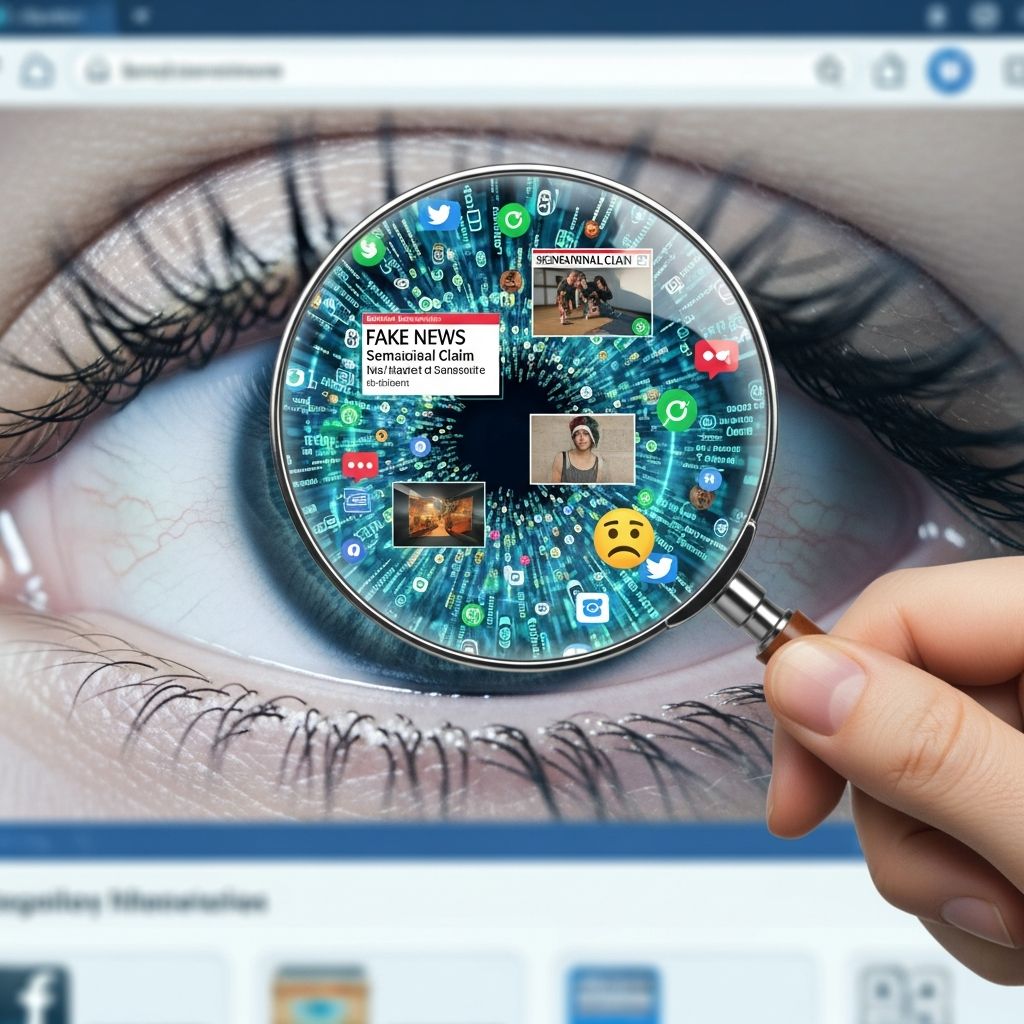
In an era where information spreads instantaneously across digital platforms, the ability to distinguish between credible reporting and false narratives has become essential. Every day, millions of people encounter questionable content on social media, news aggregators, and websites without realizing it may be deliberately crafted to deceive or manipulated to mislead. The proliferation of misleading information has profound implications for public discourse, personal decision-making, and social trust.
Understanding how to evaluate online sources and content authenticity is no longer a luxury—it is a fundamental skill for digital citizenship. This guide presents practical, evidence-based strategies to help you navigate the complex landscape of online information and make informed judgments about what you read, see, and share.
Assessing the Overall Quality and Appearance of a Website
Your first impression of a website matters significantly. Professional news organizations and established information sources typically invest in website design, functionality, and user experience. In contrast, sites created primarily to spread false information often display telltale signs of poor quality and unprofessionalism.
Examine the visual presentation carefully. Look for excessive advertisements, particularly intrusive pop-ups or animated ads that detract from content. Legitimate news organizations maintain design standards that prioritize readability and user experience. Pay attention to image quality and whether graphics appear warped, pixelated, or artificially altered. Examine text formatting—professional content uses consistent fonts, proper spacing, and clean layout.
Check whether the website appears outdated or regularly updated. Active, credible news sources continuously refresh their content and maintain current design standards. If a site looks abandoned or hasn’t been updated in months, this raises questions about its reliability. Additionally, verify that the website includes basic elements such as a functioning navigation menu, searchable archives, and properly working links.
Investigating the Source and Its Credibility
Before consuming content, take time to research the organization publishing it. Established news outlets like Reuters, the Associated Press, The Wall Street Journal, and BBC have built reputations through decades of editorial standards and fact-checking practices. If you encounter an unfamiliar news source, conduct online research to determine its background, ownership, and track record.
Visit the “About Us” section of the website, which legitimate organizations use to clearly state their mission, values, editorial policies, and contact information. This transparency allows readers to understand the organization’s purpose and accountability structures. Be wary of sites that provide vague background information, hide contact details, or offer no institutional transparency.
Consider the news outlet’s historical reliability. Has it been cited by other reputable sources? Do established news organizations reference it as authoritative? Search for independent reviews or evaluations of the source’s credibility. News organizations with strong reputations are typically well-known within their industries and recognized by media watchdogs and journalism associations.
Evaluating the Web Address for Red Flags
The domain name and URL structure can reveal much about a website’s legitimacy. Fraudulent sites frequently mimic legitimate news organizations by using deceptive domain names. For instance, a fake news site might use “abcnews.com.co” instead of the actual “abcnews.com,” counting on casual readers to overlook the subtle difference.
Examine the domain extension carefully. While .com, .org, and .edu are common and legitimate, be cautious of unusual extensions such as .co, .ltd, .online, or .foo, which may indicate deceptive intent. Additionally, check for spelling errors in the URL—misspellings or slightly altered domain names are common tactics used by sites spreading false information.
Legitimate news organizations typically use straightforward, professional domain names that clearly reflect their organization’s name or purpose. If a URL appears confusing, contains hyphens or numbers in unusual places, or uses unfamiliar extensions, investigate further before trusting the content.
Verifying the Author’s Credentials and Expertise
Content without an identified author should be treated with suspicion. Credible news articles include the author’s name, professional title, and often a brief biography or credentials statement. This transparency allows readers to assess whether the writer has expertise in the subject matter.
Conduct a search on the author’s name to determine their professional background, previous published work, and reputation. Are they recognized experts in their field? Do they have relevant qualifications or experience? Legitimate journalists often have verifiable professional histories, published articles, and presence on credible news platforms.
Be cautious of articles bylined by vague attributions such as “Staff Writer,” “Guest Contributor,” or anonymous sources without explanation. Fake news articles frequently omit author information entirely, making it impossible to verify who created the content or assess their credibility. Additionally, consider whether the author might have a financial stake or hidden agenda related to the topic they’re discussing.
Cross-Referencing Information Across Multiple Sources
One of the most effective verification methods is checking whether other reputable news outlets are reporting the same story. If a significant news event has occurred, major news organizations typically report on it, often using different sources, perspectives, and experts. Conversely, if only obscure or lesser-known sites are covering a story, this may indicate the story lacks credibility.
Search for the story on established news platforms and fact-checking websites. Do credible sources report the same facts? Are there discrepancies between different accounts? If multiple reputable outlets are covering the story consistently, this provides strong evidence of its legitimacy. Professional global news agencies maintain rigorous editorial guidelines and fact-checking resources, making their reporting generally more reliable.
When examining sources cited within an article, verify that the referenced information actually supports the claims being made. Click on hyperlinks to original sources and determine whether the quotes or data are accurately represented. Fake news articles often cite sources that either don’t support their claims or are themselves unreliable.
Analyzing the Evidence and Supporting Documentation
Credible reporting includes substantial supporting evidence: specific data, statistics, expert quotations, research citations, and references to verifiable sources. If an article makes significant claims but provides minimal evidence, this is a major red flag.
Examine whether sources are named and identifiable. Articles that rely heavily on anonymous sources or unnamed “experts” should be approached with skepticism. Legitimate journalism identifies sources whenever possible to allow readers to assess their credibility. Additionally, check whether quoted experts have genuine credentials and expertise related to the topic.
Pay attention to dates and timelines. False or misleading articles often contain incorrect publication dates or deliberately misrepresent when events occurred. If an article discusses a current event but reveals an old publication date, the information may be outdated or recontextualized deceptively. Verify when the article was originally published and whether it has been updated to reflect new information.
Recognizing Emotional Manipulation and Bias
Misinformation frequently employs emotional triggers—fear, anger, outrage, or excitement—to prompt rapid sharing without critical evaluation. Before reacting to content, pause and assess whether the article’s tone and language are designed to manipulate your emotions rather than inform you.
Ask yourself critical questions: Why was this article written? What agenda might it promote? Is it attempting to provoke clicks or social media shares? Is the information presented objectively, or does the language reveal a particular viewpoint or bias? Responsible journalism maintains neutrality and distinguishes between factual reporting and opinion pieces.
Consider your own biases as well. Social media algorithms often create filter bubbles by recommending content aligned with your existing beliefs and browsing history. To counteract this, actively seek information from diverse sources and perspectives. If you consistently encounter the same viewpoint across multiple platforms, this may indicate algorithmic filtering rather than comprehensive information exposure.
Detecting Satire, Parody, and Fabricated Imagery
Satirical websites create fictional, humorous content that mimics real news reporting. While satire serves a legitimate purpose in media criticism and entertainment, readers sometimes mistake satirical articles for factual reporting. Before sharing content that seems outlandish or exaggerated, verify whether the source is known for satire or parody.
Research the website to determine its intended purpose. Satirical sites typically include clear disclaimers, though some rely on readers recognizing the humorous intent. If a story seems too extreme to be true, it likely is—conduct a quick search to confirm whether the story is actually occurring or whether it originates from a satire site.
Images presented alongside articles require careful scrutiny. Digital manipulation has become increasingly sophisticated, but visible signs of alteration include warped or wavy lines in backgrounds, unusual shadows, jagged edges, or unnaturally perfect skin tones. Additionally, images may be authentic but presented in misleading contexts—showing real events from different times or locations. Use reverse image search tools to trace where an image originated and whether it has been used in different contexts.
Understanding Motivation and Examining Patterns
False information and propaganda serve specific purposes. Understanding the motivation behind content helps you assess its reliability. Ask yourself: Who created this content? Do they stand to profit from spreading this information? Are they selling products, collecting personal data, or promoting a particular political agenda?
Content labeled as “sponsored” or “paid promotion” indicates that someone is paying to display the content. While sponsored content isn’t inherently false, you should be aware of the financial interest behind it. Additionally, check whether sources quoted in an article are being paid or have financial incentives to make particular claims.
Information manipulation actors often engage in “cherry-picking” facts or mixing truth with falsehoods to mislead. They may cite isolated statistics without context, present correlations as causation, or highlight information that supports their narrative while omitting contradictory evidence. Extraordinary claims require particularly strong evidence—approach them with heightened skepticism until you can verify them through multiple reliable sources.
Utilizing Fact-Checking Resources and Expert Verification
Numerous organizations specialize in fact-checking and verifying information. Platforms like PolitiFact, FactCheck.org, Snopes, and Full Fact provide detailed analyses of claims appearing in media and social platforms. These organizations employ researchers and journalists who investigate the accuracy of popular narratives and provide transparent methodology for their determinations.
When you encounter questionable claims, search these fact-checking sites directly. They often provide detailed explanations of what is true, what is false, and what remains unverified. Additionally, consider consulting librarians or information specialists who can guide you toward credible sources and help you develop stronger information evaluation skills.
Government health agencies, scientific organizations, and academic institutions provide authoritative information on their respective areas of expertise. Organizations like the Centers for Disease Control and Prevention, the National Institutes of Health, and peer-reviewed scientific journals represent high credibility standards. When evaluating health, scientific, or technical claims, prioritize information from these authoritative sources.
Developing a Critical Evaluation Framework
Rather than memorizing individual tips, develop a systematic approach to evaluating all information. The CRAAP test offers a practical framework: evaluate content based on its Currency (is it recent?), Relevance (does it address your actual question?), Authority (does the source have credibility?), Accuracy (is it supported by evidence?), and Purpose (why was it created?).
Apply this framework consistently to all sources, from social media posts to formal news articles. By systematically evaluating each element, you’ll develop stronger critical thinking skills and become less susceptible to misinformation.
The Responsibility to Verify Before Sharing
False information depends on repeated sharing across networks. Before amplifying content on social media, pause and verify it. If you’re uncertain about a story’s authenticity, your responsibility includes either verifying it before sharing or choosing not to distribute it. Spreading unverified information, even unintentionally, contributes to a larger ecosystem of misinformation.
Consider the potential impact of sharing. Could this information mislead others? Might it cause harm if widely believed? Taking thirty seconds to verify a story before sharing represents a small investment in maintaining information integrity within your networks.
Common Fake News Tactics at a Glance
| Deceptive Tactic | What to Look For | How to Verify |
|---|---|---|
| Domain Name Spoofing | URLs resembling legitimate sites with slight variations (abcnews.com.co) | Check exact URL spelling; visit official site directly |
| Missing Author Information | No byline or vague attribution; anonymous authors | Search for author name; verify credentials online |
| Emotional Language | Sensational headlines; extreme emotional appeals | Assess whether language provokes emotion over information |
| Lack of Sources | Claims without citations; anonymous sources predominate | Click links; verify quotes originate from named sources |
| Altered Images | Warped lines, strange shadows, unnatural appearance | Use reverse image search; check image origin |
| No Independent Coverage | Story appears only on questionable sites | Search major news outlets; check fact-checking sites |
Frequently Asked Questions
Q: How can I quickly assess whether a website is trustworthy?
A: Perform a quick visual assessment of design quality and professionalism. Then check the “About Us” section for transparency, verify the author’s credentials, and search for the organization online to determine its reputation. If these elements are missing or vague, approach the content with skepticism.
Q: What should I do if I’ve already shared potentially false information?
A: Consider posting a correction or update acknowledging the error. Many social platforms allow you to edit posts or add context. Taking responsibility helps limit further spread of misinformation and demonstrates integrity to your audience.
Q: Are there specific signs that content is satire rather than genuine reporting?
A: Satirical sites often display absurd claims, exaggerated language, or obviously fictional scenarios. Check the website’s “About Us” section to see if satire is mentioned. When in doubt, search the site name with the word “satire” to determine its nature.
Q: How do I evaluate sources cited within an article?
A: Click on hyperlinked sources and read the original material. Verify that the article accurately represents what the source actually says. Be wary of sources that are anonymous, unnamed, or don’t actually support the claims being made.
Q: What role do algorithms play in spreading misinformation?
A: Social media algorithms prioritize engagement, sometimes promoting sensational or emotionally charged content—including false information. To counteract this, actively seek diverse sources, follow reputable news organizations directly, and be conscious of your filter bubble.
Q: Can I trust fact-checking websites completely?
A: Reputable fact-checking organizations like FactCheck.org and PolitiFact maintain transparent methodologies and disclose their sources. However, evaluate their evidence and reasoning independently rather than accepting conclusions at face value.
References
- How to Identify Fake News — Kaspersky. https://www.kaspersky.com/resource-center/preemptive-safety/how-to-identify-fake-news
- How to Identify Fake News in 10 Steps — National Oceanic and Atmospheric Administration (NOAA). https://www.aoml.noaa.gov/general/lib/lib1/nhclib/Fake-News-WorksheetProQuest.pdf
- 6 Tips to Spot and Stop Information Manipulation — European Commission. https://ec.europa.eu/stories/6-tips/
- Spotting Fake News — Enoch Pratt Free Library. https://www.prattlibrary.org/research/guides/spotting-fake-news

- Integrated M.A. in Applied Linguistics, University of Hyderabad
- 5+ years in editorial, instructional, SEO, and research-based writing
Sneha is a relationships and lifestyle writer with a strong foundation in applied linguistics and certified training in relationship coaching. She brings over five years of writing experience to theskillvault, crafting thoughtful, research-driven content that empowers readers to build healthier relationships, boost emotional well-being, and embrace holistic living. Her writing and insights reflect the belief that beauty, happiness, and wellness…