
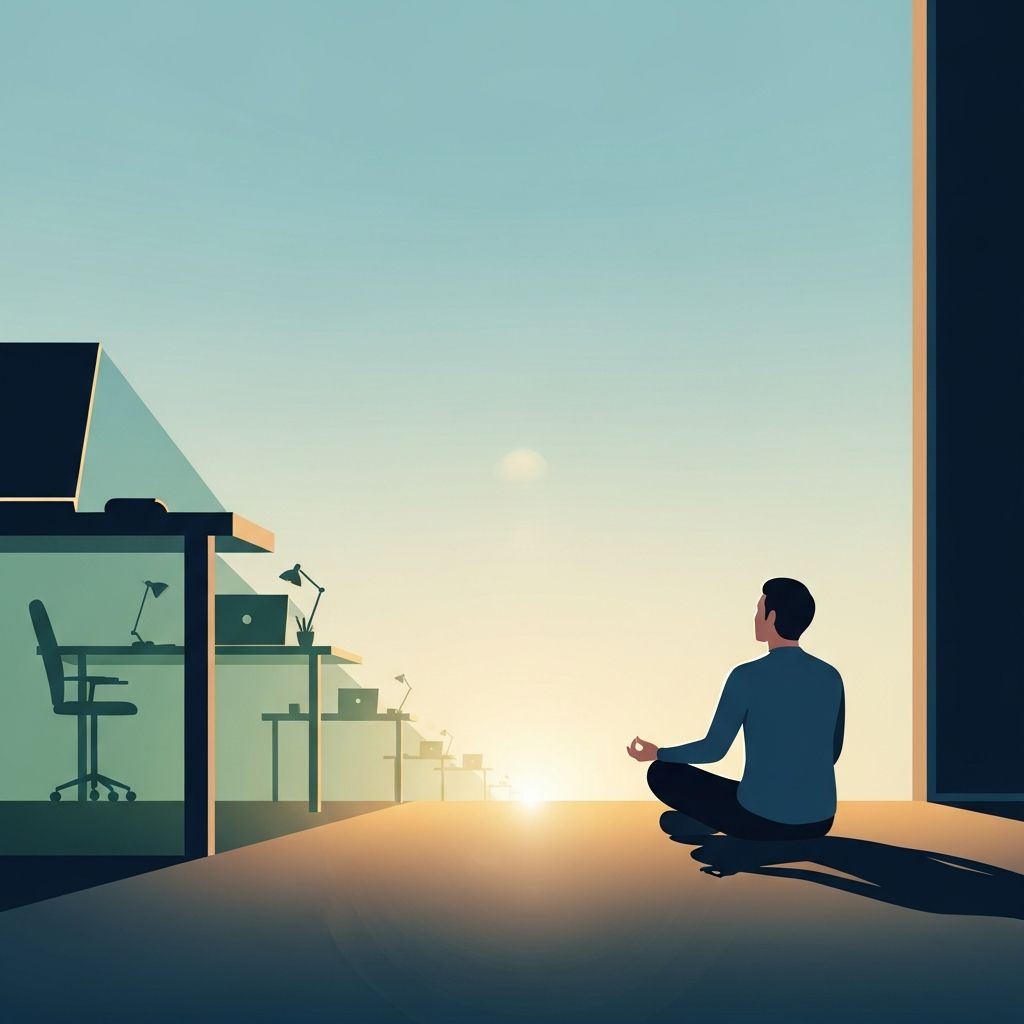
The Challenge of Psychological Separation from Work
In today’s hyper-connected professional environment, the psychological transition from work to personal time has become increasingly difficult for many individuals. The ability to mentally disengage from work-related responsibilities, even when you’re physically away from the office, is a critical component of maintaining overall well-being and preventing burnout. Unlike previous generations who could leave the office and genuinely forget about work until the next morning, modern professionals often find themselves unable to shift out of “work mode” due to constant email notifications, instant messaging platforms, and the expectation of perpetual availability.
This persistent mental engagement with work can have substantial consequences on your health, relationships, and quality of life. When your mind remains focused on professional concerns during your personal time, you miss opportunities for genuine rest and recovery. Your stress levels remain elevated, your relationships suffer from divided attention, and your personal interests and hobbies become neglected. Understanding how to effectively disconnect from work mode is therefore not merely a luxury but a necessary skill for maintaining psychological equilibrium and personal satisfaction.
Establish Clear Physical and Temporal Boundaries
One of the most effective ways to transition out of work mode is to create distinct physical and temporal boundaries between your professional and personal life. This begins with establishing a clear endpoint to your workday. Rather than allowing work tasks to bleed into your evening hours, commit to a specific time when your workday officially ends. This might be 5 PM, 6 PM, or whatever time aligns with your work schedule, but the key is consistency.
Once you’ve established your work endpoint, honor it as you would any important appointment. Set fair and realistic limits on what you will and will not do both at work and at home, and clearly communicate these boundaries to your supervisor, coworkers, and family members. For instance, you might commit to not working late on certain days unless there is a genuine crisis, and you might set aside specific times during which you will not check or respond to work-related emails or voice mails.
If you work from home, creating physical separation becomes even more critical. Designate a specific workspace that you leave at the end of your workday. This spatial demarcation helps your brain recognize the transition between work and personal time. When you step away from that space, you’re sending a signal to your mind that work mode is now off.
Develop a Structured Transition Ritual
The space between leaving work and arriving home is your window of opportunity to shift mental gears. Rather than allowing your thoughts to continue processing work concerns during this time, use this period intentionally to create a transition that signals your mind to disengage. Develop a mental on-off switch between work and home by establishing a transitional activity between the two realms.
This transitional activity might include:
- Listening to music, podcasts, or audiobooks during your commute that have nothing to do with work
- Exercising at a fitness center or engaging in physical activity
- Running personal errands that create a clear separation between work and home
- Practicing meditation or deep breathing exercises
- Taking a walk in a natural setting
The specific activity matters less than its consistency and its ability to occupy your mind with something unrelated to work. By scheduling such activities immediately following your normal work hours, you prevent that common pattern where you spend “just twenty minutes” at the office, which then transforms into several additional hours. This structured transition period essentially interrupts the momentum of work thinking and redirects your mental energy toward personal renewal.
Optimize Your Digital Engagement and Notifications
Technology is perhaps the primary barrier to disconnecting from work mode in the contemporary workplace. Emails, text messages, and instant messaging notifications create an illusion of perpetual workplace presence. To effectively disconnect, you must take deliberate control over your digital environment outside of work hours.
Consider implementing these digital boundary strategies:
- Remove work email and messaging apps from your personal phone, or disable notifications entirely after work hours
- Set your status in communication platforms to “unavailable” or “offline” at the end of your workday
- Establish specific times when you will check work communications rather than responding reactively throughout the evening
- Use “do not disturb” features on your devices to prevent work notifications from interrupting personal time
- Consider a physical separation strategy, such as leaving your work laptop in a drawer or keeping it in another room
If your role genuinely requires occasional after-hours availability, establish a clear protocol with your supervisor about what constitutes a genuine emergency versus standard matters that can wait until the next business day. This clarity prevents the anxiety that often accompanies constant connectivity, where you’re never quite sure if you should be checking your messages.
Prioritize Physical Activity and Movement
Physical exercise serves a dual function in helping you disconnect from work mode. First, engaging in regular physical activity directly reduces stress levels and improves mental clarity. Second, during exercise, your mind naturally shifts focus away from work concerns and toward the physical sensations and demands of the activity itself.
The type of physical activity matters less than its consistency and your enjoyment of it. Low-impact exercises such as yoga, swimming, walking, or cycling can be both effective and sustainable. By scheduling your exercise during or immediately after work hours, you create a powerful psychological transition. Your body is engaged in purposeful movement, your heart rate is elevated, and your mind is focused on the present moment rather than ruminating about workplace concerns.
Additionally, physical activity triggers the release of endorphins, which naturally improve mood and reduce the stress hormones that often keep you mentally locked in work mode. Regular exercise also promotes better sleep quality, which further supports your ability to mentally distance yourself from work concerns during your personal time.
Engage in Absorbing Personal Activities
Your personal time should be filled with activities that genuinely engage your attention and bring you satisfaction. This might seem obvious, but many people struggle with this aspect because they haven’t intentionally identified what activities truly absorb their interest and focus.
The key is selecting activities that demand sufficient mental engagement that work thoughts cannot simultaneously occupy your mind. Consider activities such as:
- Creative pursuits like painting, writing, music, or crafting
- Engaging hobbies that require concentration and problem-solving
- Sports or recreational activities that demand focus and skill
- Learning new skills through classes or self-directed study
- Social activities with friends and family that encourage meaningful conversation
The critical distinction is between passive consumption and active engagement. While watching television or scrolling through social media might provide temporary escape, these activities often leave your mind available to wander back to work concerns. In contrast, activities that demand active participation and creative engagement naturally crowd out work-related thoughts.
Cultivate Mindfulness and Present-Moment Awareness
Even when you’ve physically separated from work and engaged in personal activities, your mind might still partially remain in work mode, processing unresolved tasks or concerns. Mindfulness practices help anchor your awareness in the present moment, making it more difficult for work-related thoughts to dominate your consciousness.
Implement mindfulness through techniques such as:
- Meditation, even for just 10-15 minutes daily
- Deep breathing exercises practiced throughout the day
- Mindful eating, where you fully experience your meals without distraction
- Mindful walking, where you focus on sensations rather than thinking
- Progressive muscle relaxation before bedtime
These practices train your mind to focus on present experiences rather than replaying work events or planning future work tasks. Over time, this mental flexibility makes it easier to consciously redirect your thoughts away from work when you notice them drifting in that direction.
Establish a Pre-Sleep Routine That Protects Your Rest
Your nighttime routine profoundly influences your ability to maintain mental separation from work. Many people lie in bed reviewing the day’s work events, planning tomorrow’s tasks, or worrying about unresolved professional issues. This mental activity prevents quality sleep and ensures that work concerns are among your last thoughts before sleep and potentially your first thoughts upon waking.
Develop a bedtime routine that intentionally excludes work content:
- Stop checking work communications at least one hour before bed
- Avoid discussing work with your partner or family during evening hours
- Practice relaxation techniques like reading, gentle stretching, or meditation
- Keep your bedroom free from work materials and devices when possible
- If work thoughts arise, acknowledge them briefly and deliberately redirect your mind to your breathing or a pleasant memory
Quality sleep is essential for your brain’s ability to process and compartmentalize work experiences. When you protect your sleep from work intrusions, you’re not merely improving your rest but also supporting your brain’s natural capacity to mentally distance itself from professional concerns.
Strategic Use of Time Blocking for Balance
Rather than allowing work and personal time to blur throughout your week, use deliberate time blocking to create structure and clarity. Organize your day into distinct blocks designated for various activities, such as health-related tasks, work, exercise, hobbies, and social engagements. This approach helps streamline your activities and makes it easier to transition smoothly from one domain to the next without losing focus.
When you visually and temporally separate work time from personal time through blocking, your mind receives clear signals about when it’s appropriate to engage in work thinking and when that mental space should be reserved for personal concerns. This structured approach reduces the likelihood of work thoughts randomly intruding during personal hours because your brain has been trained to recognize distinct temporal zones for different types of thinking.
Communicate Boundaries With Your Support Network
Your ability to disconnect from work mode depends partly on the expectations and behaviors of people around you. Clearly communicate your boundaries to your supervisor, coworkers, partner, and family members. Explain that you’re establishing specific times when you’re unavailable for work communication and why this separation is important for your effectiveness and well-being.
Most reasonable supervisors and colleagues will respect these boundaries if you communicate them clearly and demonstrate that you’re still meeting your work responsibilities during designated work hours. Similarly, family members need to understand that your personal time, while reserved for them and personal renewal, should be protected from work interruptions.
FAQ Section
Q: Is it realistic to completely disconnect from work in today’s professional environment?
A: Complete disconnection may not be possible for all roles, but substantial separation is achievable and important. Most professionals can establish clear protocols about when they’re available and protect the majority of their personal time from work intrusions. The goal is psychological separation even if occasional work communication occurs.
Q: What should I do if my job genuinely requires evening or weekend availability?
A: If your role demands irregular hours, establish clarity with your supervisor about what constitutes a genuine emergency versus routine matters. Create specific windows of availability rather than maintaining constant connectivity. On days or periods when you’re not on call, protect that time completely to ensure adequate recovery.
Q: How long does it take to develop the ability to disconnect from work mode?
A: Most people notice improvements within 1-2 weeks of consistently implementing these strategies. However, building a strong habit typically requires 4-6 weeks of consistent practice. The longer you’ve been in the habit of constant work engagement, the more time you may need to retrain your mental patterns.
Q: Can disconnecting from work actually make me more productive at work?
A: Yes, research on work-life balance indicates that proper rest and mental recovery actually enhance work performance. When you fully disconnect during personal time, your brain recovers, your creativity replenishes, and you return to work with renewed focus and energy. Constant mental engagement with work typically reduces rather than increases productivity.
References
- Achieving a Healthy Work-Life Balance: Tips and Strategies — PromiseCare. Accessed January 2026. https://promisecare.com/achieving-a-healthy-work-life-balance-tips-and-strategies/
- 12 Tips to Achieve a Healthy Work-Life Balance — BetterUp. Accessed January 2026. https://www.betterup.com/blog/how-to-have-good-work-life-balance
- 12 Key Strategies to Achieving a Work-Life Balance — IndustryWeek. Accessed January 2026. https://www.industryweek.com/leadership/article/21982458/12-key-strategies-to-achieving-a-work-life-balance
- Work Life Balance — Mental Health America. Accessed January 2026. https://mhanational.org/resources/work-life-balance/

- Integrated M.A. in Applied Linguistics, University of Hyderabad
- 5+ years in editorial, instructional, SEO, and research-based writing
Sneha is a relationships and lifestyle writer with a strong foundation in applied linguistics and certified training in relationship coaching. She brings over five years of writing experience to theskillvault, crafting thoughtful, research-driven content that empowers readers to build healthier relationships, boost emotional well-being, and embrace holistic living. Her writing and insights reflect the belief that beauty, happiness, and wellness…