
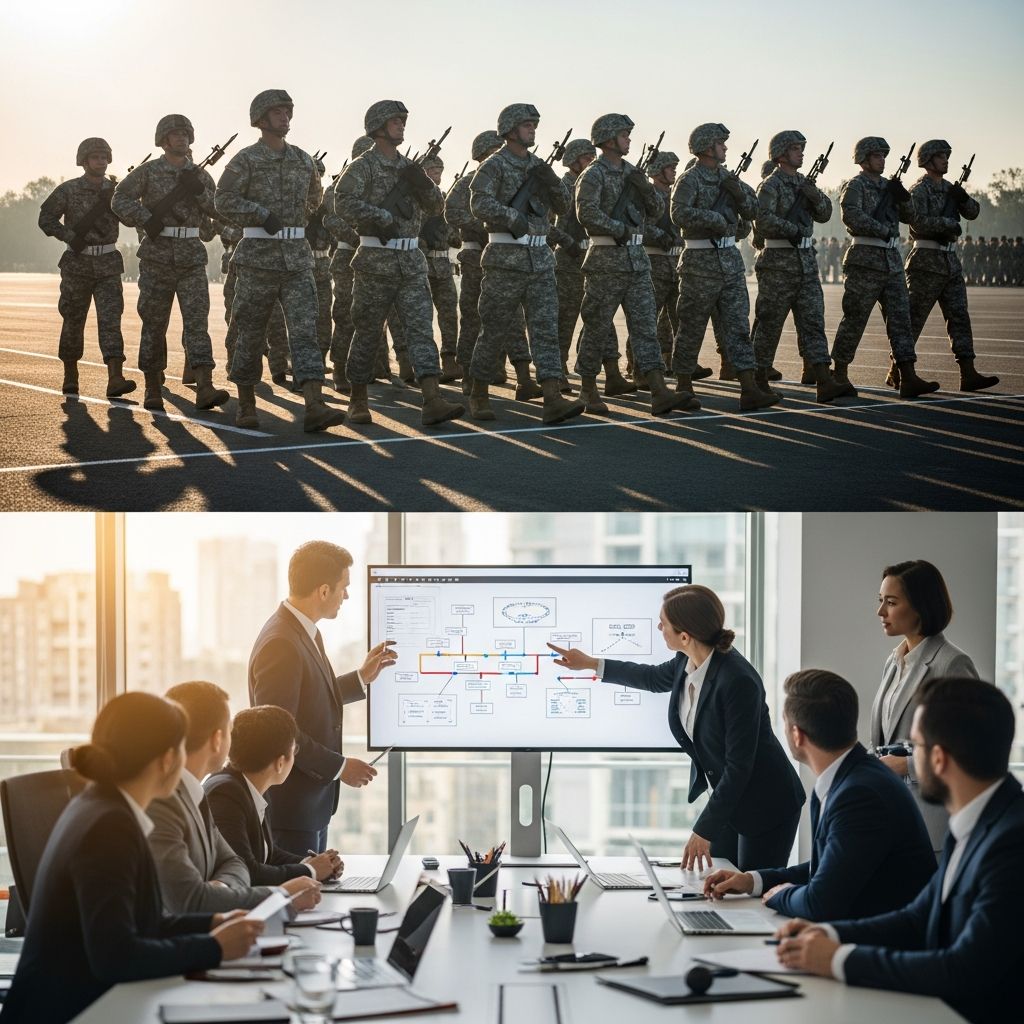
The disciplined approach and unwavering mindset cultivated within elite military units have long fascinated civilians seeking to enhance their personal and professional lives. Navy SEALs, recognized as one of the world’s most demanding forces, operate under a sophisticated framework of values and practices that extend far beyond combat operations. These principles have proven transferable to everyday challenges, offering practical strategies for improving resilience, accountability, and performance across various life domains.
Understanding the Foundation of Military Excellence
The framework guiding Navy SEAL operations rests upon core values that shape every decision and action. The primary pillars include loyalty to country and team, integrity in all circumstances, readiness to lead or follow, personal accountability, discipline combined with innovation, and commitment to continuous improvement. These values function not as abstract ideals but as lived principles that operational personnel internalize through rigorous training and repeated application in high-stakes environments.
What distinguishes this approach from typical organizational frameworks is the degree to which these principles are embedded into training methodology and daily practice. Unlike values statements that remain posted on office walls, SEAL principles become reflexive—guiding instinctive responses during moments when deliberate decision-making becomes impossible.
The Practice of Leading by Visible Example
One fundamental principle separating exceptional leaders from mediocre ones involves demonstrating commitment before demanding it from others. In SEAL culture, leadership authority derives not from rank alone but from proven willingness to undertake the same challenges expected of subordinates. Leaders maintain physical presence during critical operations, share in hardships, and establish standards through personal conduct.
This approach directly contradicts hierarchical models where leadership distance increases with rank. Instead, effective leaders signal through action rather than declaration. They arrive early, stay late, handle unglamorous tasks, and maintain visibility during periods of organizational difficulty. This visible commitment accomplishes several objectives:
- Establishes credibility through demonstrated capability
- Creates psychological safety by showing leadership understands inherent challenges
- Builds trust through consistency between stated values and actual behavior
- Develops loyalty by prioritizing team welfare over personal convenience
Applying this principle in civilian contexts means engineering opportunities to work alongside those you lead, participating in challenging projects personally, and making difficult decisions visibly rather than delegating them entirely downward.
Eliminating the Culture of Excuses
Navy SEAL training deliberately eliminates environmental comfort to develop what trainers call the accountability reflex. When external circumstances cannot be changed, the only variable becomes personal response. This creates an organizational culture where responsibility flows upward regardless of contributing factors.
The “no excuses” mentality does not deny that obstacles exist; rather, it reframes obstacles as givens rather than justifications. In high-pressure scenarios, blaming circumstances provides temporary emotional relief but creates organizational dysfunction. Teams that accept excuses develop patterns where individuals focus on defending their position rather than solving problems.
Implementing this principle practically requires distinguishing between explanation and excuse. Explanations clarify contributing factors without absolving responsibility. Excuses deflect accountability entirely. Leaders can encourage accountability by:
- Modeling personal responsibility openly, including admitting mistakes
- Focusing team discussions on solutions rather than blame attribution
- Recognizing efforts that overcome legitimate obstacles
- Creating psychological safety so failures become learning opportunities rather than punishment triggers
Adaptive Decision-Making Under Uncertainty
SEAL operational doctrine acknowledges that detailed plans rapidly become irrelevant upon contact with reality. Rather than viewing this as organizational failure, SEALs build adaptability into their culture and training. Personnel train to maintain mission focus while remaining flexible about methods.
This principle proves particularly valuable in modern civilian environments characterized by rapid change, incomplete information, and unpredictable market dynamics. Organizations that develop adaptive capabilities rather than rigid procedures maintain competitive advantage when circumstances shift unexpectedly.
Cultivating adaptability involves several concrete practices:
- Establishing clear mission objectives while remaining flexible about tactical approaches
- Training personnel to make decisions within defined parameters without requiring approval for every variation
- Creating rapid feedback mechanisms that reveal when assumptions no longer hold
- Normalizing course corrections as evidence of effective decision-making rather than initial failure
The SEAL motto “The only easy day was yesterday” captures this philosophy—continuous advancement requires embracing increasing difficulty rather than seeking comfort.
Building Trust Networks That Enable Excellence
SEAL teams function as interdependent units where individual competence becomes meaningful only within the context of team reliability. Personnel consciously develop relationships based on demonstrated trustworthiness across time and circumstances. This creates genuine camaraderie distinct from surface-level collegiality.
Trust in high-performing teams operates on multiple levels. Competence trust means confidence in someone’s technical abilities. Character trust involves believing someone will prioritize team interests over personal advancement. Consistency trust develops through repeated demonstrations of predictable behavior across varying scenarios.
Organizations seeking to strengthen trust networks can implement:
- Shared challenging experiences that reveal character under pressure
- Transparent communication about both successes and failures
- Intentional team-building activities beyond casual socializing
- Systems that reward collaboration rather than individual achievement
- Leadership modeling of vulnerability and willingness to admit limitations
Developing Mental Resilience Through Systematic Training
Navy SEAL Basic Underwater Demolition/SEAL training (BUD/S) functions as a carefully designed psychological stress program that teaches personnel to distinguish between physical limitations and mental constructs. A critical insight emerging from this training is that mental toughness—not physical capability—determines performance in challenging environments.
Mental resilience represents a trainable skill rather than an innate characteristic. It develops through repeated exposure to manageable stressors, coupled with techniques for regulating emotional and physiological responses. SEALs learn specific practices for maintaining focus during discomfort, managing fear without eliminating it, and sustaining effort when motivation fluctuates.
Civilians can develop comparable mental resilience through:
- Systematic exposure to uncomfortable situations that remain within control
- Meditation or mindfulness practices that strengthen attention regulation
- Deliberate practice of stressful skills until competence reduces anxiety
- Reflection on past challenges overcome to strengthen confidence
- Community engagement that provides external motivation during low periods
The insight that effort and focus matter more than innate talent applies broadly across learning domains and professional challenges.
Communication Precision in Complex Environments
SEAL operational planning follows the KISS principle—Keep It Simple, Stupid—recognizing that detailed complexity creates interpretation errors under pressure. Clear, concise communication becomes critical when individuals must execute coordinated actions in chaotic environments where verbal clarification becomes impossible.
This principle extends beyond military operations. In organizations where coordination requires precise execution, clarity prevents expensive errors. Ambiguous requirements, vague expectations, and indirect communication create space for misalignment that compounds across teams.
Applying this principle involves:
- Defining objectives and success criteria explicitly
- Removing unnecessary jargon that obscures meaning
- Confirming understanding through concrete examples rather than abstract discussion
- Providing reasoning behind decisions to enable autonomous judgment
- Creating feedback mechanisms that surface confusion before errors accumulate
Continuous Improvement as Cultural Foundation
Navy SEAL doctrine emphasizes that training never reaches completion. This reflects the understanding that both external threats and personal capabilities continuously evolve. Organizations that internalize this principle avoid the stagnation that affects complacent high performers.
Continuous improvement operates differently from perfectionism. It accepts current capability while maintaining commitment to progressive advancement. This creates psychological climates where feedback becomes welcomed guidance rather than criticism, and mistakes become learning opportunities rather than failures.
Implementing continuous improvement culture requires:
- Regular assessment of current capabilities and emerging requirements
- Structured reflection on what worked, what didn’t, and why
- Investment in skill development even when current performance exceeds requirements
- Recognition of effort and improvement, not just outcomes
- Leadership willingness to acknowledge and work on personal limitations
Applying Military Principles to Civilian Challenges
The transferability of SEAL principles to civilian contexts rests on recognizing that humans respond similarly to challenges regardless of context. Fear, fatigue, uncertainty, and interpersonal conflict affect civilians as much as military personnel. The difference lies in whether individuals have developed specific capacities to manage these universal experiences effectively.
Someone implementing these principles might begin with a single area of focus—perhaps accountability or communication clarity—and develop competence before expanding to other domains. This staged approach prevents overwhelming change while building demonstrated success that generates momentum.
Organizations seeking systematic implementation should:
- Assess current culture against these principles
- Identify specific behaviors that would exemplify each principle
- Create accountability mechanisms that reinforce new behaviors
- Celebrate examples of principle application visibly
- Provide sustained training and reinforcement rather than expecting instantaneous transformation
Frequently Asked Questions
How can individuals apply SEAL principles without military training?
The principles themselves do not require military experience to implement. Beginning with specific practices—such as taking complete responsibility for outcomes, volunteering for challenging tasks, or communicating with greater clarity—develops competence progressively. Reading about SEAL methodology provides intellectual understanding, but behavior change requires repeated practice in realistic situations.
Do these principles work in all organizational contexts?
These principles prove applicable across military, corporate, educational, and nonprofit contexts. However, implementation requires thoughtful adaptation to specific organizational constraints. A startup environment might emphasize adaptability and innovation more heavily, while a manufacturing operation might prioritize communication precision and discipline.
Can individuals develop these capacities at any life stage?
Research on neuroplasticity indicates that behavioral and psychological capacities develop throughout life. While earlier development may require less effort, individuals of any age can meaningfully strengthen resilience, accountability, communication skills, and leadership capability through deliberate practice.
How long does implementing these principles typically require?
Initial behavioral change often emerges within weeks of consistent practice. However, deep integration where principles guide instinctive responses requires months or years depending on starting point and commitment level. Realistic expectations about timeline reduce discouragement that undermines sustained effort.
References
- Department of the Navy Core Values Charter — Secretary of the Navy. U.S. Department of the Navy. https://www.secnav.navy.mil/ethics/pages/corevaluescharter.aspx
- 6 Principles From the Navy SEAL Code That Will Make Your Team More Effective — B-Side Fund. https://www.bsidefund.org/all-blog-posts/6-principles
- Six Leadership Lessons from the Navy SEALs — Australasian Leadership Institute. https://www.australasianleadershipinstitute.com/blog/Six-Leadership-Lessons-from-the-Navy-SEALS.html
- SEAL Code: a Warrior Creed — U.S. Navy SEALs. Naval Special Warfare Command. https://navyseals.com/nsw/seal-code-warrior-creed/
- SEAL Ethos — Naval Special Warfare (NSW). U.S. Navy. https://www.nsw.navy.mil/NSW/SEAL-Ethos

- Integrated M.A. in Applied Linguistics, University of Hyderabad
- 5+ years in editorial, instructional, SEO, and research-based writing
Sneha is a relationships and lifestyle writer with a strong foundation in applied linguistics and certified training in relationship coaching. She brings over five years of writing experience to theskillvault, crafting thoughtful, research-driven content that empowers readers to build healthier relationships, boost emotional well-being, and embrace holistic living. Her writing and insights reflect the belief that beauty, happiness, and wellness…