
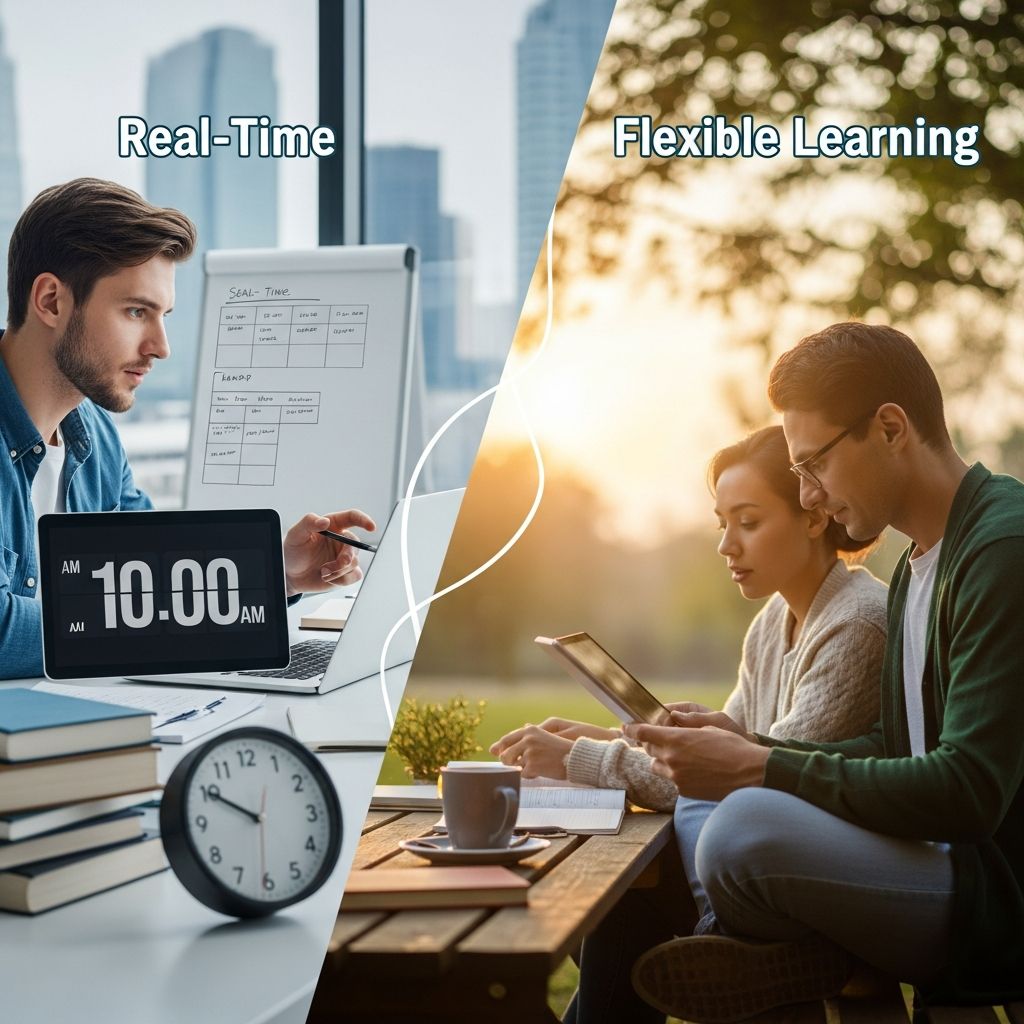
Real-time learning, often called synchronous, involves live interactions where participants join at scheduled times, while flexible learning, or asynchronous, allows access to materials anytime for self-paced progress. These models shape modern education, especially in online settings, by balancing structure with independence.
Defining the Core Models of Digital Education
In today’s digital classrooms, two primary approaches dominate: real-time sessions that mimic traditional in-person classes through virtual platforms and flexible formats that prioritize learner autonomy. Real-time learning requires everyone to be online simultaneously for lectures, discussions, or activities, fostering immediate exchanges. Flexible learning, by contrast, delivers pre-recorded content, assignments, and forums that students tackle on their own schedules, accommodating diverse lifestyles.
This distinction arises from the need to adapt education to varied needs, such as working professionals or students across time zones. Understanding these models helps educators design effective programs and students choose fitting paths.
Advantages of Real-Time Learning Environments
Real-time learning excels in building community and momentum. Participants experience live discussions that spark critical thinking and collaborative problem-solving, much like a physical classroom but via video tools. Instructors provide instant feedback, adjusting lessons based on reactions, which boosts comprehension for complex topics.
- Enhanced Engagement: Shared experiences create camaraderie, reducing isolation in virtual settings.
- Accountability Boost: Fixed schedules combat procrastination, ensuring consistent progress.
- Dynamic Interactions: Group activities, role-plays, and Q&A sessions simulate real-world scenarios effectively.
These elements make real-time ideal for subjects needing hands-on guidance, like language practice or team-based projects.
Strengths of Flexible Learning Approaches
Flexible learning shines in accessibility and personalization. Learners access videos, quizzes, and resources anytime, pausing or rewinding as needed, which suits varied paces and supports retention through repetition. This model scales easily for large groups without scheduling conflicts.
- Ultimate Flexibility: Perfect for global audiences or those with irregular hours, eliminating travel or time zone barriers.
- Cost Efficiency: One-time content creation serves unlimited users, cutting instructor and material expenses.
- Improved Retention: Studies show self-paced formats can reduce learning time by up to 60% while allowing review, aligning with forgetting curve principles.
Interactive elements like simulations further immerse users without live pressure.
Challenges and Limitations to Consider
No model is flawless. Real-time learning demands reliable tech and strict adherence to times, potentially excluding those with poor internet or conflicts, and may overwhelm slower learners in group paces. Flexible learning risks lower motivation without deadlines, leading to incompletion, and lacks instant clarification for tough concepts.
| Aspect | Real-Time Learning | Flexible Learning |
|---|---|---|
| Interaction Style | Live chats and feedback | Forums and recordings |
| Scheduling | Rigid timelines | Self-directed |
| Engagement Risk | Tech failures disrupt flow | Procrastination common |
| Scalability | Limited by group size | Highly expandable |
| Best For | Collaborative skills | Independent study |
This table highlights trade-offs, guiding choices based on goals.
When to Choose Real-Time Learning
Opt for real-time when fostering social skills or real-time adaptation is key, such as in mentorship programs or debate-heavy courses. It suits students thriving on routine and peer input, providing structure that mirrors traditional schools. For instance, virtual breakout rooms enable collaborative experiments or discussions, enhancing critical thinking on the spot.
Ideal Scenarios for Flexible Learning
Select flexible learning for skill-building in low-stakes settings or when reaching diverse groups matters. It’s optimal for content-heavy subjects like history or math drills, where review is vital, and accommodates needs like captions for accessibility. Busy parents or professionals benefit from chunked modules that fit into daily life.
Blending Models for Optimal Results
Hybrid approaches combine both, offering live sessions weekly alongside on-demand resources. This balances interaction with flexibility, as seen in many online programs where students attend key meetings but complete work independently. Such blends improve outcomes by leveraging strengths: real-time for motivation, flexible for depth.
Technological Tools Supporting Each Model
Real-time relies on platforms like Zoom for video, polls, and whiteboards to mimic classrooms. Flexible uses learning management systems (LMS) for hosting videos, quizzes, and forums. Both benefit from analytics tracking progress, but flexible tools emphasize mobile access for anytime use.
Impact on Student Outcomes and Retention
Real-time often yields higher engagement via immediacy, though group pace can frustrate some. Flexible promotes deeper reflection and better suits self-motivators, with research noting easier revisits aiding memory. Completion varies: structured real-time aids finish rates, while flexible demands discipline.
Practical Tips for Educators Implementing Real-Time
- Schedule considering time zones and send agendas ahead.
- Incorporate polls and breaks to maintain focus.
- Record sessions for absentees.
Strategies for Success in Flexible Learning
- Set clear milestones and automated reminders.
- Build community via discussion boards.
- Offer varied media like infographics for engagement.
Common Myths Debunked
Myth: Flexible learning lacks interaction—reality: forums and peer reviews provide robust exchanges. Myth: Real-time is always superior—actually, it suits collaboration, not all content.
Future Trends in Learning Modalities
Advancements like AI tutors blend real-time chat with flexible pacing, while VR enhances both for immersive experiences. Expect more personalization as data analytics refine hybrids.
Frequently Asked Questions
What is the main difference between real-time and flexible learning?
Real-time requires simultaneous participation; flexible allows anytime access.
Which is better for working adults?
Flexible, due to scheduling freedom.
Can real-time learning be asynchronous?
Recordings make it hybrid.
Does flexible learning reduce costs?
Yes, through scalability and no live facilitation.
How to stay motivated in flexible courses?
Use deadlines, goals, and accountability partners.
References
- Asynchronous vs. Synchronous Learning: Which Is Best? — Articulate. 2023. https://www.articulate.com/blog/asynchronous-vs-synchronous-e-learning-which-is-best/
- The Difference Between a Synchronous and an Asynchronous Class — Boise State University. 2024-10-25. https://www.boisestate.edu/online/2024/10/25/the-difference-between-a-synchronous-and-an-asynchronous-class/
- Synchronous vs. Asynchronous Classes — Cairn University. N/A. https://cairn.edu/synchronous-vs-asynchronous-classes/
- Exploring the Differences: On-Demand vs. Live Online Learning — University of Melbourne CircuitStream. N/A. https://umelbourne.circuitstream.com/blog/exploring-the-differences-on-demand-vs-live-online-learning
- In-Person vs. Online Learning: An Educator’s Guide — American College of Education. N/A. https://ace.edu/blog/examining-in-person-instruction-from-a-virtual-mindset-what-can-we-improve/
- 5 Differences Between Asynchronous vs Synchronous — Summit Learning Charter. N/A. https://summitlearningcharter.org/resources/blog/asynchronous-vs-synchronous-learning/
- Remote vs. In-Person Learning — Almy Education. N/A. https://www.almyeducation.com/resources/remote-vs-in-person-learning
- Remote and In-Person Learning: Utility Versus Social Experience — PMC (PubMed Central). 2022. https://pmc.ncbi.nlm.nih.gov/articles/PMC9769479/

Medha Deb is an editor with a master's degree in Applied Linguistics from the University of Hyderabad. She believes that her qualification has helped her develop a deep understanding of language and its application in various contexts. Medha specializes in the areas of beauty, health, sports, and wellness and is committed to ensuring that the content on the website is…