
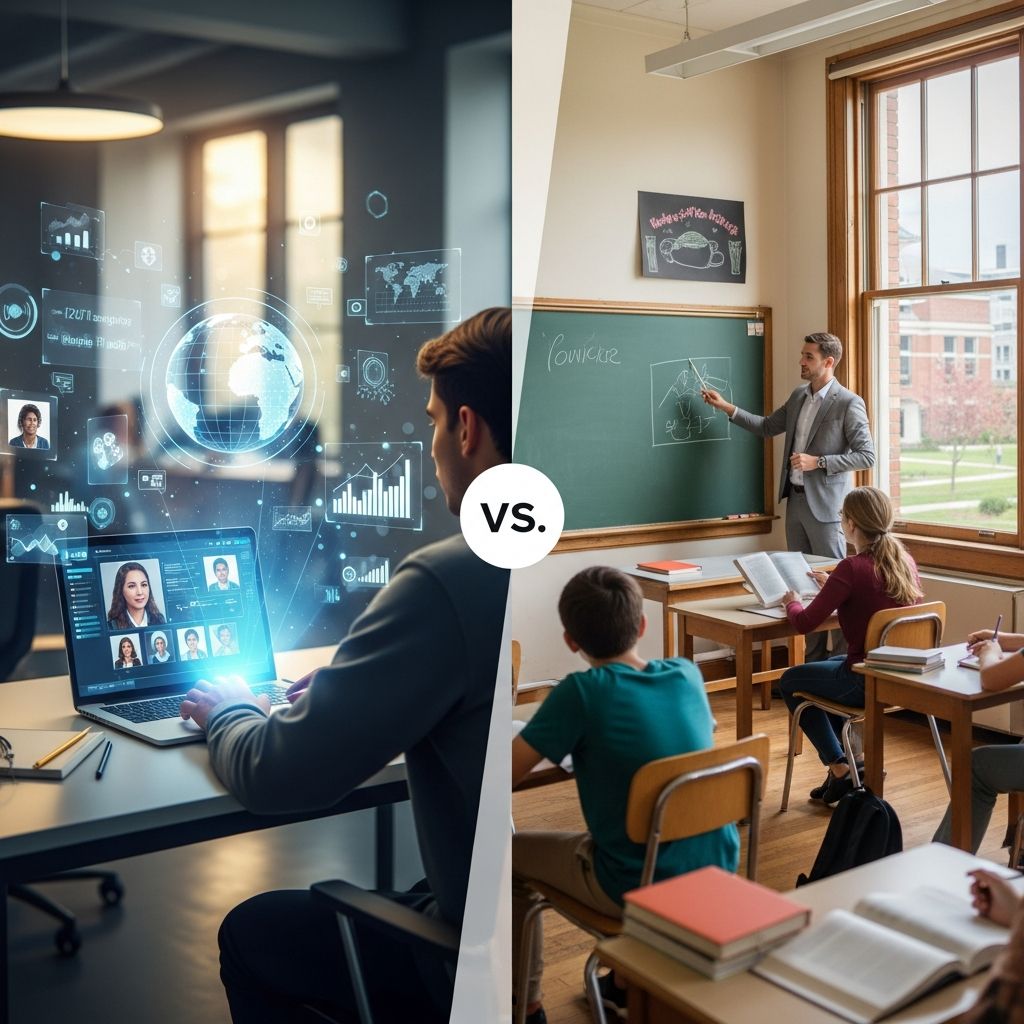
Virtual learning and traditional brick-and-mortar schools both deliver quality public education at no tuition cost, but they differ significantly in delivery, flexibility, and student experience. Virtual options empower families with customizable schedules and home-based environments, while traditional schools emphasize structured in-person interactions.
Core Similarities Between Virtual and Traditional Models
Both educational approaches share foundational elements that ensure accessibility and quality. They provide tuition-free access to certified instruction, foster peer collaboration, and align with standard academic calendars.
- Certified Educators: State-licensed teachers with expertise lead lessons in both formats, often bringing advanced credentials and years of experience to support student growth.
- Peer Interaction: Opportunities for group projects and discussions build teamwork skills, applicable in virtual breakout rooms or physical classrooms.
- Extracurricular Engagement: Clubs, events, and activities promote socialization, ranging from online forums to in-person gatherings.
- Standard Calendar: A typical September-to-June schedule with holidays accommodates family planning across both systems.
Flexibility: The Hallmark of Virtual Education
Virtual schools stand out for their adaptable schedules, allowing students to balance academics with personal commitments like travel, sports, or medical needs without falling behind. Unlike fixed classroom hours, learners access materials anytime, progressing at their own rhythm—ideal for those needing extra time on complex topics or acceleration for advanced mastery.
This autonomy reduces commute stress and integrates seamlessly with family life, enabling parents to curate optimal study atmospheres free from external disruptions.
Customization and Individualized Instruction
Traditional classrooms often adopt uniform pacing due to group dynamics, limiting tailored support. Virtual platforms, however, leverage data analytics for bespoke paths, adjusting to strengths, weaknesses, and interests.
| Aspect | Virtual Learning | Traditional Learning |
|---|---|---|
| Pacing | Self-paced with teacher guidance | Group synchronized |
| Adaptation | Real-time adjustments via tech tools | Limited by class size |
| Electives | Wide variety including career prep | Often restricted |
| Support | One-on-one virtual sessions | After-school or honors tracks |
High schoolers in virtual settings explore diverse electives and career-focused courses, fostering early vocational awareness not always available traditionally.
Socialization and Community Building
A frequent concern is whether virtual students miss out on social development. Quality programs counter this with live virtual classes, online clubs, and hybrid events blending digital and physical meetups. These cultivate relationships through shared interests, mirroring traditional extracurriculars but with broader reach.
Parents report stronger family bonds, as home learning encourages collaborative problem-solving and shared ‘aha’ moments. For some, the controlled environment minimizes bullying or peer pressure, promoting emotional safety.
Support for Diverse Learners
Students with unique needs thrive virtually via assistive tech, like communication aids unavailable in under-resourced traditional settings. Flexible pacing aids those with learning differences, while gifted learners access advanced content without waiting for peers.
Parental involvement amplifies this: as learning coaches, guardians monitor progress, reinforce skills, and integrate real-world pursuits like volunteering or arts.
Financial Considerations
Both models are tuition-free for public options, but traditional schooling incurs indirect costs like transportation and supplies. Virtual learning minimizes these, though reliable internet and devices are essential—often school-provided. Long-term, online paths may reduce expenses by enabling part-time work or avoiding relocation for specialized programs.
Technology’s Role and Challenges
Virtual education demands digital proficiency, with content delivered via streaming and interactive platforms. While this equips students for tech-driven futures, it requires self-discipline to combat distractions.
Traditional methods excel in immediate, face-to-face clarifications, leveraging physical resources like labs. Hybrids merge these, offering 30-79% online content with in-person elements for balanced benefits.
Academic Outcomes and Research Insights
Studies affirm virtual learning’s efficacy when structured well, matching or exceeding traditional results in flexibility and engagement. Students download resources for review, participate asynchronously to reduce anxiety, and benefit from recorded feedback.
Choosing the Right Path for Your Family
The optimal choice hinges on lifestyle, learning style, and priorities. Virtual suits mobile families, those seeking personalization, or with special needs; traditional fits structure-loving students craving daily peer immersion.
Self-assessments help evaluate fit, considering tech access and motivation.
Frequently Asked Questions
Is virtual school as rigorous as traditional school?
Yes, with certified teachers and aligned curricula ensuring equivalent standards.
Do virtual students get diplomas?
Absolutely—graduates earn state-recognized diplomas from accredited public programs.
How do virtual schools handle socialization?
Through live classes, clubs, and events blending online and offline interactions.
What’s required for virtual learning success?
Reliable internet, a quiet space, and parental support as learning coaches.
Can virtual school accommodate gifted or special needs students?
Yes, with pacing flexibility and specialized tools.
References
- Online Vs Traditional Public School — K12. Accessed 2026. https://www.k12.com/why-k12/online-vs-traditional-public-school/
- Online vs Traditional School — Connections Academy. Accessed 2026. https://www.connectionsacademy.com/support/resources/article/online-school-vs-traditional-school/
- Cyber School vs. Traditional Learning: What the Research Says — 21cccs.org. Accessed 2026. https://21cccs.org/cyber-school-vs-traditional-learning-what-the-research-says/
- Online classes versus traditional classes? Comparison during… — PMC (PubMed Central). 2022-02-01. https://pmc.ncbi.nlm.nih.gov/articles/PMC8826787/
- Online Learning vs Traditional — Hutchinson Community College. Accessed 2026. https://www.hutchcc.edu/online-vs-trad
- Traditional Learning Vs. Online Learning — eLearning Industry. Accessed 2026. https://elearningindustry.com/traditional-learning-vs-online-learning
- Cost of Online Education vs Traditional Education [2025]: Comparison — EducationData.org. 2025. https://educationdata.org/cost-of-online-education-vs-traditional-education

- Integrated M.A. in Applied Linguistics, University of Hyderabad
- 5+ years in editorial, instructional, SEO, and research-based writing
Sneha is a relationships and lifestyle writer with a strong foundation in applied linguistics and certified training in relationship coaching. She brings over five years of writing experience to theskillvault, crafting thoughtful, research-driven content that empowers readers to build healthier relationships, boost emotional well-being, and embrace holistic living. Her writing and insights reflect the belief that beauty, happiness, and wellness…