
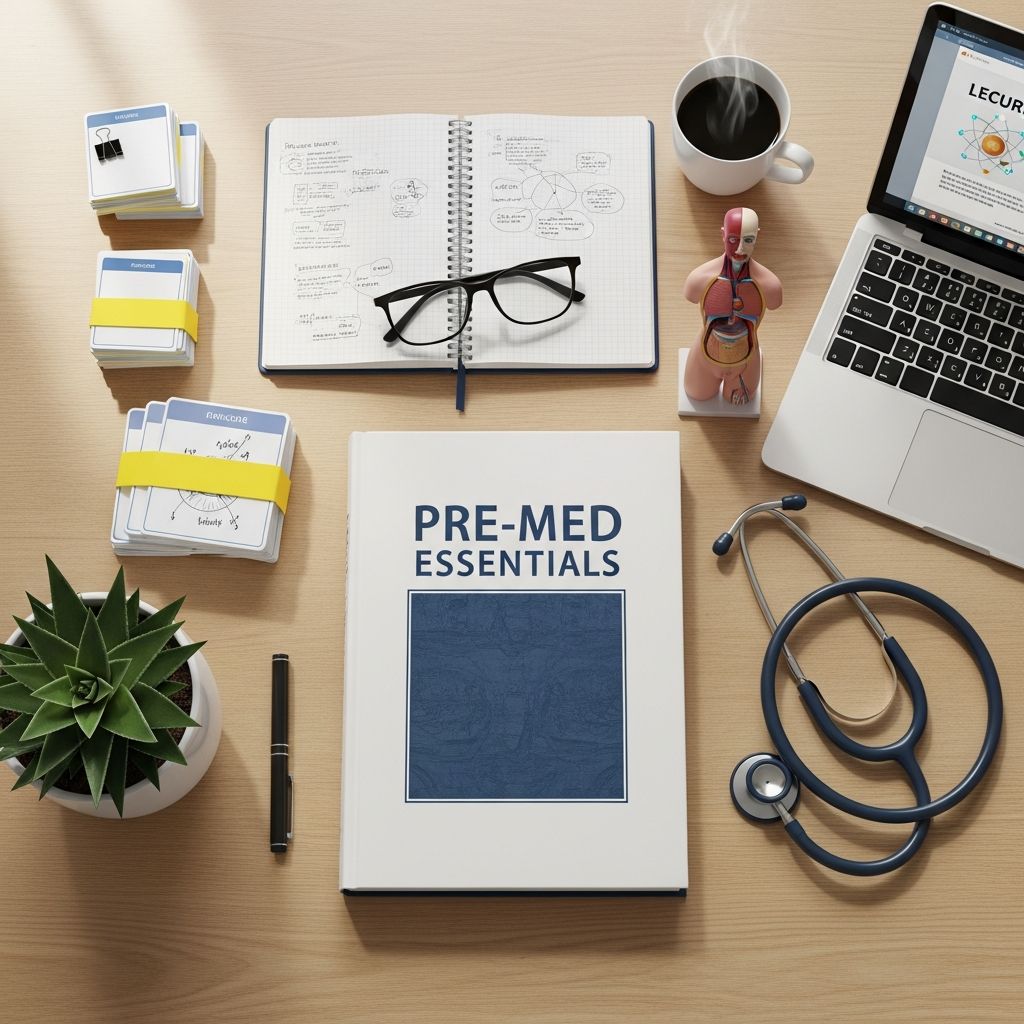
Preparing for a career in medicine starts with navigating the pre-med track during undergraduate studies. This path demands rigorous coursework, high academic performance, standardized testing, and meaningful extracurricular involvement to build a competitive profile for medical school admission.
Understanding the Pre-Med Track
The pre-med designation refers to a set of undergraduate preparations rather than a specific major. Students from diverse fields like humanities or engineering can pursue medicine by completing required science prerequisites alongside their degree. A bachelor’s degree, typically a B.A. or B.S., serves as the foundation before applying to four-year medical programs.
Medical schools evaluate applicants holistically, prioritizing science GPA (often called BCPM: Biology, Chemistry, Physics, Math), overall GPA, MCAT scores, research, clinical exposure, and leadership. Average accepted GPAs range from 3.60 to 3.75, underscoring the need for consistent excellence.
Core Coursework Requirements
Most U.S. medical schools mandate specific science courses with labs to ensure foundational knowledge. These prerequisites must usually be completed with letter grades of C or higher, though competitive applicants aim for A’s and B’s.
- Biology: Two semesters with lab, covering cellular and organismal principles.
- General Chemistry: Two semesters with lab, focusing on atomic structure and reactions.
- Organic Chemistry: Two semesters with lab, exploring carbon compounds and mechanisms.
- Physics: Two semesters with lab, including mechanics, electricity, and waves.
- Biochemistry: One semester with lab, increasingly required for molecular processes.
- Mathematics: One semester of calculus and/or statistics.
- English/Writing: Two semesters for communication skills.
Additional recommended courses include genetics, physiology, psychology, sociology, and public health to strengthen MCAT preparation and demonstrate breadth.
| Subject | Semesters Required | Lab Component | Notes |
|---|---|---|---|
| Biology | 2 | Yes | Introductory level |
| General Chemistry | 2 | Yes | Inorganic focus |
| Organic Chemistry | 2 | Yes | Mechanisms emphasized |
| Physics | 2 | Yes | Algebra or calculus-based |
| Biochemistry | 1 | Yes (often) | Upper-level |
| Math/Stats | 1-2 | No | Calculus or statistics preferred |
Individual schools vary; for instance, Johns Hopkins requires 24 hours in humanities/social sciences plus genetics and epidemiology recommendations. Always verify target schools’ lists via the AAMC’s Medical School Admission Requirements (MSAR).
Academic Performance Benchmarks
Achieving a science GPA of 3.60-3.80 positions applicants competitively, as med schools screen for minimums before holistic review. Balance heavy course loads—14-16 credits per semester, including 6-9 science hours—while seeking tutoring or supplemental instruction early.
AP/IB credits may fulfill some requirements, but many schools prefer college-level coursework. Plan timelines carefully: complete most prerequisites by junior year for timely applications.
The MCAT: Gateway to Med School
The Medical College Admission Test (MCAT) assesses critical thinking, scientific knowledge, and behavioral analysis. It covers biology, chemistry, physics, biochemistry, psychology, and sociology—aligning directly with pre-med courses.
Aim for scores above the 50th percentile (around 511) for competitive programs; top schools seek 515+. Prepare over 3-6 months with practice exams, focusing on weak areas.
- Sections: Biological/Biochemical Foundations; Chemical/Physical Foundations; Psychological/Social/Biological; Critical Analysis/Reasoning.
- Timing: Take by spring of junior year for early applications.
Building Extracurricular Experience
Med schools seek evidence of commitment through shadowing physicians (100+ hours), volunteering in clinics/hospitals, research (publications ideal), and leadership in clubs or community service. Clinical exposure confirms patient care interest; non-clinical activities show well-roundedness.
Paid roles like EMT or scribe count toward clinical hours. Sustained involvement over depth in one area trumps sporadic participation.
Application Components Demystified
Primary applications via AMCAS (MD) or AACOMAS (DO) include transcripts, MCAT, personal statement, and activities list. Secondaries feature school-specific essays on motivations and experiences.
Secure 3-5 letters of recommendation from science faculty, a physician mentor, and a research supervisor. Interviews (traditional, MMI) test interpersonal skills; prepare with mock sessions.
Choosing the Right Undergraduate Path
No “pre-med major” exists; biology, chemistry, or neuroscience are common but not required. Non-STEM majors succeed if prerequisites are met and GPA/MCAT shine. Universities offer pre-health advising for course planning and application support.
Consider BS/MD programs for accelerated paths (6-8 years total), though highly competitive.
Financial and Timeline Considerations
Pre-med spans four years; budget for MCAT fees ($320+), application costs ($170 primary + $40/secondaries), and travel. Scholarships and fee assistance from AAMC help.
Post-baccalaureate programs aid career-changers or GPA improvers. Gap years common for added experience.
FAQs
Can I major in something non-science as pre-med?
Yes, any major works if prerequisites are completed with strong grades.
What’s a competitive GPA?
3.60+ overall and science GPA; higher for top schools.
When should I take the MCAT?
Junior or senior year spring, after core courses.
Do I need research experience?
Recommended, especially for research-oriented MD programs.
How many clinical hours?
100-200+ shadowing/volunteering ideal.
Success Strategies
Meet advisors quarterly, track progress via spreadsheets, join pre-med societies, and prioritize mental health amid rigor. Persistence and passion define successful applicants.
References
- The Prerequisites for Medical School – Kaplan Test Prep — Kaplan Test Prep. 2023. https://www.kaptest.com/study/mcat/medical-school-requirements-prerequisites/
- Pre-Med Requirements: Courses You Need for Medical School — CollegeVine. 2023. https://blog.collegevine.com/pre-med-requirements
- Pre-Med Requirements at US Universities — Shorelight. 2023. https://shorelight.com/student-stories/pre-med-requirements-at-us-universities
- Pre-Med Course Requirements — University of Texas at Austin Health Professions Office. 2023. https://healthprofessions.utexas.edu/health-professions/pre-medical-pathway/pre-med-course-requirements
- Required Coursework — Georgetown University Pre-Health Studies. 2023. https://premed.georgetown.edu/undergraduates/required-coursework/
- How to Choose a Pre-Med Major — The Princeton Review. 2023. https://www.princetonreview.com/med-school-advice/how-to-choose-a-pre-med-major

- Integrated M.A. in Applied Linguistics, University of Hyderabad
- 5+ years in editorial, instructional, SEO, and research-based writing
Sneha is a relationships and lifestyle writer with a strong foundation in applied linguistics and certified training in relationship coaching. She brings over five years of writing experience to theskillvault, crafting thoughtful, research-driven content that empowers readers to build healthier relationships, boost emotional well-being, and embrace holistic living. Her writing and insights reflect the belief that beauty, happiness, and wellness…