
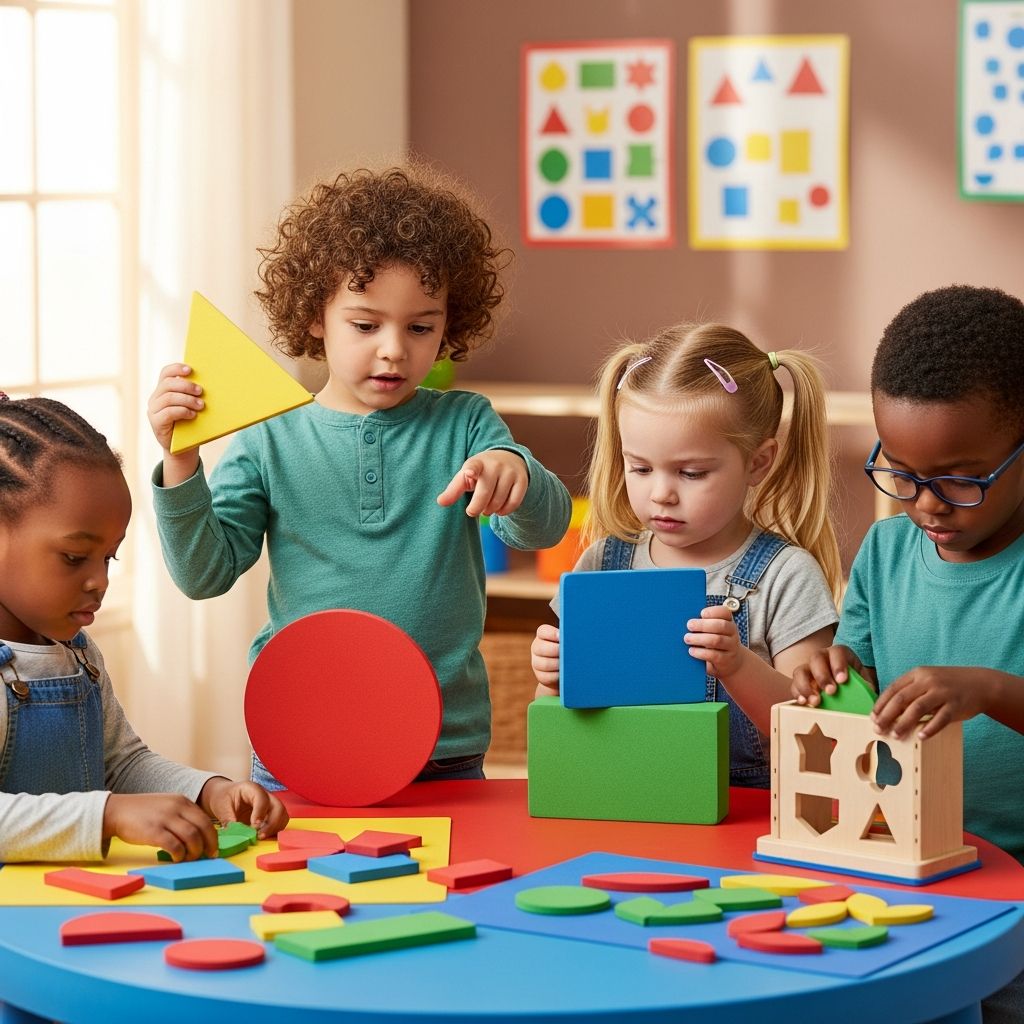
Shapes form the foundation of early mathematical understanding, helping children recognize patterns in their environment and develop critical thinking skills. From basic forms like circles and squares to more complex structures, introducing geometry early prepares kids for future academic success. This guide provides parents and educators with innovative strategies to make shape learning exciting and effective.
Why Shape Recognition Matters in Early Development
Recognizing shapes boosts visual discrimination, a key precursor to reading and math proficiency. Children who master basic geometry by preschool age show improved problem-solving abilities and spatial awareness, essential for STEM fields later in life. According to educational research, early exposure to 2D and 3D forms enhances cognitive flexibility.
In everyday life, shapes appear in toys, food, and architecture, making them relatable entry points into abstract concepts. Toddlers begin with simple identifications, progressing to composing and transforming shapes, which builds confidence and curiosity.
Core Shapes Every Child Should Know First
Start with foundational 2D shapes to build a strong base. These are universally present and easy to spot:
- Circle: No corners, endless curve—think wheels or plates.
- Square: Four equal sides and angles—common in tiles or windows.
- Rectangle: Opposite sides equal, four right angles—like books or doors.
- Triangle: Three sides, varied angles—found in roofs or pizza slices.
Once comfortable, introduce ovals, stars, hearts, and diamonds to expand vocabulary. For 3D mastery, add spheres, cubes, cylinders, and cones, using household items for tactile exploration.
Hands-On Activities for Shape Discovery at Home
Turn routine moments into learning opportunities with these creative, low-prep ideas tailored for different ages.
Playdough Geometry Builders
Mold playdough into flat shapes or 3D solids like spheres and cubes. Guide toddlers to roll a “circle snake” or flatten a “square pancake.” For preschoolers, challenge them to combine shapes into animals or vehicles, naming each part aloud to reinforce labels.
Snack-Time Shape Cuts
Use cookie cutters or knives to form shapes from fruits, cheese, or bread. A round sandwich becomes a circle, triangular melon slices teach angles. Discuss textures and tastes while identifying forms, merging sensory play with geometry.
Craft Stick Constructions
Provide popsicle sticks, pipe cleaners, or toothpicks with mini playdough blobs to connect ends. Build triangles, then extend to rectangles or stars. This develops fine motor skills alongside shape properties understanding.
Chalk and Tape Outdoor Adventures
Draw oversized shapes on pavement with chalk; have kids trace or “erase” with water brushes while chanting names. Indoors, tape outlines on floors for block-matching or hopping games. These gross motor integrations make learning kinetic.
| Shape | Food Examples |
|---|---|
| Circle | Blueberries, eggs, cookies |
| Triangle | Pizza slices, strawberries |
| Square/Rectangle | Crackers, cheese slices |
| Oval | Boiled eggs, avocados |
Classroom Strategies for Preschool Shape Mastery
Educators can create immersive environments using posters, blocks, and manipulatives. Group activities encourage peer learning and deeper analysis.
Shape Hunts and Photo Journals
Lead outdoor scavenger hunts for real-world examples: manhole covers (circles), flags (rectangles). Photograph findings, label in a class book, and vote on favorites. This connects abstract names to concrete objects.
3D to 2D Printing Fun
Dip cans (cylinders), balls (spheres), or boxes in washable paint and press onto paper. Discuss how 3D sides flatten into recognizable 2D shapes, bridging dimensions playfully.
Tangram Puzzles and Pattern Play
Introduce tangram sets with animal patterns. Kids replicate designs, then invent their own, practicing composition. Progress to freeform creations to spark creativity.
Hokey Pokey Shape Edition
Adapt the classic dance: “Put your triangle in, take your triangle out!” Use cutouts for each child. This kinesthetic method embeds names through rhythm and movement.
Advanced Concepts: Building and Transforming Shapes
Once basics are solid, teach deconstruction and recombination. Cut a cereal box to reveal its rectangular faces, then reassemble. Use straws or sticks to form hexagons or prisms, exploring side counts and angles.
Spatial skills grow via transformations: rotate (turn), reflect (flip), translate (slide). Games with toys or cards prompt, “Slide the square to match!” These prepare for geometry standards in kindergarten.
Books, Songs, and Media to Reinforce Learning
Literature and music amplify exposure. Shape-themed books like those featuring adventurous cats highlight forms in stories. Songs listing everyday objects by shape—vehicles as rectangles, fruits as circles—make memorization melodic.
- Read aloud, pausing to point: “The sun is a big yellow circle!”
- Sing-along videos with animated characters reinforce visually and auditorily.
- Create personalized shape books from magazine clippings.
Expert Tips for Effective Shape Teaching
Speech-language specialists advise declarative labeling over questions: “This is a red triangle,” not “What’s this?” Ensure eye contact when pointing. Compare shapes side-by-side: “The circle rolls, but the square stacks.” Consistency across home and school accelerates retention.
Frequently Asked Questions (FAQs)
What age should children start learning shapes?
Toddlers (18-24 months) can identify circles and squares; by age 3-4, aim for triangles, rectangles, and basic 3D forms.
How can I help my child who struggles with shapes?
Use multi-sensory approaches: touch, build, eat shapes. Short, daily sessions prevent frustration. Track progress with simple charts.
Are 3D shapes important before kindergarten?
Yes, distinguishing spheres from cubes builds spatial reasoning, crucial for math standards.
What’s the best way to teach shape names?
Point out real-life examples repeatedly, using statements and comparisons for natural absorption.
Can screen time help with shape learning?
Interactive songs and apps supplement, but hands-on activities yield deeper understanding.
Tracking Progress and Next Steps
Observe milestones: naming 4+ shapes by age 3, composing with 2-3 by 4. Celebrate small wins with shape stickers or certificates. Transition to sorting by attributes (sides, curves) for advanced math readiness.
Incorporate shapes into routines—board games direct to “blue square,” art projects blend colors with forms. Parental involvement correlates with faster gains, per extension programs.
References
- 10 Ways To Help Your Child With Learning Shapes — Pathways.org. 2023. https://pathways.org/help-your-child-with-learning-shapes
- Helping Children Learn Shapes — Michigan State University Extension. 2022-05-15. https://www.canr.msu.edu/news/helping_children_learn_shapes
- Discovering Shapes and Space in Preschool — National Association for the Education of Young Children (NAEYC). 2014-04-01. https://www.naeyc.org/resources/pubs/tyc/apr2014/discovering-shapes-and-space-preschool
- Learn about Shapes with Pete the Cat! — HarperKids (YouTube). 2023. https://www.youtube.com/watch?v=hQO1soadGAA
- Learn All About Shapes Playlist — CVS 3D Rhymes & Kids Songs (YouTube). 2024. https://www.youtube.com/playlist?list=PLh1_24pGXWZKG7mbfLDIOeWEpRdY2j9w3

Medha Deb is an editor with a master's degree in Applied Linguistics from the University of Hyderabad. She believes that her qualification has helped her develop a deep understanding of language and its application in various contexts. Medha specializes in the areas of beauty, health, sports, and wellness and is committed to ensuring that the content on the website is…