
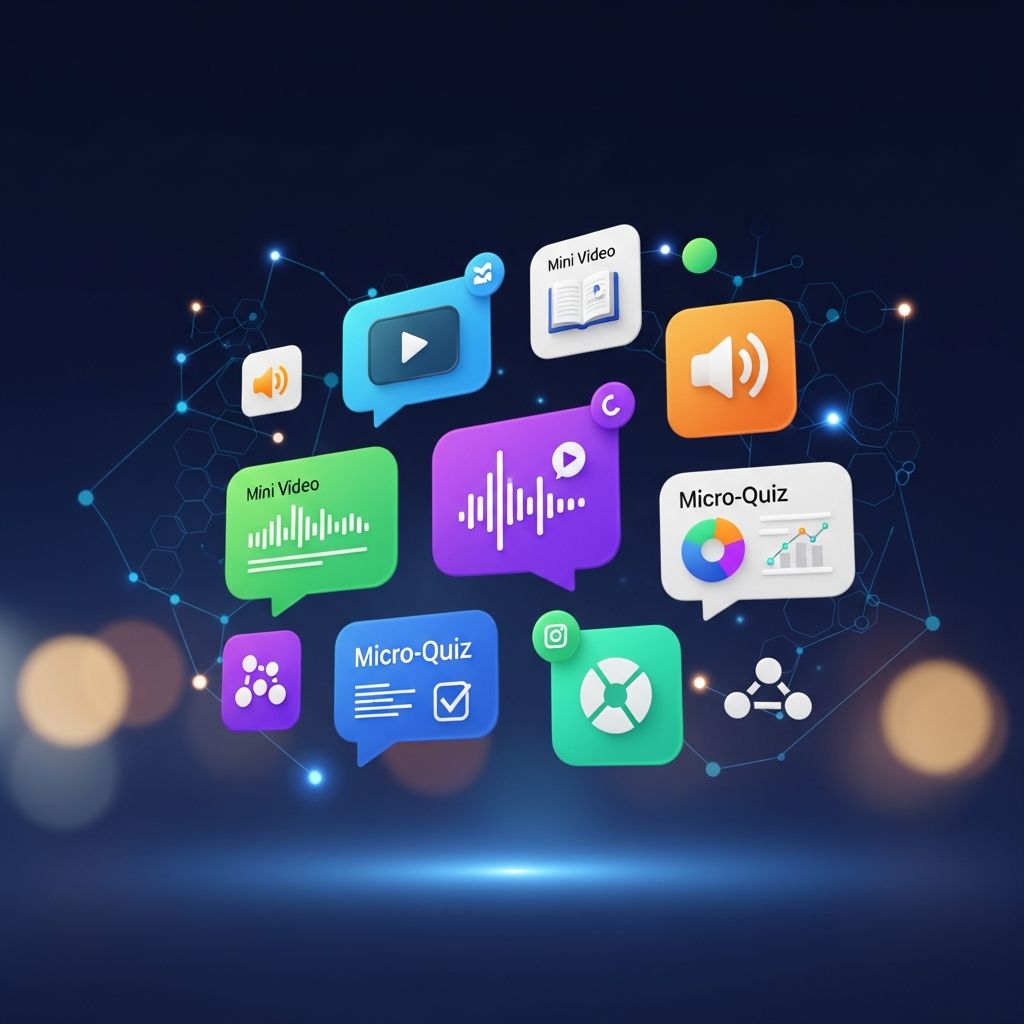
Understanding Compact Learning: Foundations for Modern Workforce Development
In today’s rapidly evolving workplace, traditional lengthy training sessions no longer align with how employees prefer to learn. The modern learner faces competing demands on their time, making extended classroom sessions or lengthy online courses increasingly impractical. Compact learning represents a paradigm shift in how organizations approach employee development, breaking complex information into focused, manageable segments that employees can consume on their schedule.
This learning methodology centers on delivering targeted information through short, purposeful content units designed to address specific workplace challenges and skill gaps. Rather than overwhelming employees with comprehensive courses, this approach isolates individual concepts, allowing professionals to build competency progressively. The effectiveness of this strategy lies in its alignment with how the human brain processes and retains information, particularly when learners can immediately apply newfound knowledge to real-world scenarios.
The Architecture of Effective Compact Learning Programs
Successful implementation of compact learning requires deliberate structural planning. Organizations must move beyond simply shortening existing training materials and instead reimagine content delivery from the ground up. This involves identifying the precise learning outcomes desired and then determining the most efficient delivery method for each outcome.
The foundation of any effective program begins with establishing clear, singular objectives for each learning unit. Rather than attempting to cover multiple concepts within one module, each segment should address a single, focused competency or skill. This approach prevents cognitive overload and ensures learners grasp the material thoroughly before progressing to related topics. By maintaining this disciplined focus, organizations increase comprehension rates and enable learners to apply knowledge immediately in their daily work.
Content structure must prioritize conciseness without sacrificing completeness. Learning modules should typically span between two and ten minutes, though the exact duration depends on content complexity and delivery format. This timeframe respects the reality of workplace schedules—employees can complete learning during brief breaks, transition periods between tasks, or while traveling. Importantly, every element included in the module must directly support the primary learning objective, eliminating unnecessary information that dilutes focus and extends completion time.
Diverse Delivery Formats for Multiple Learning Preferences
Recognizing that learners possess different cognitive preferences, organizations should employ varied delivery mechanisms to maximize engagement and comprehension across their workforce.
Visual-Based Delivery Mechanisms
Video content stands out as one of the most versatile and effective formats for compact learning. Short video segments, typically ranging from two to seven minutes, transform complex procedures into sequential, visually accessible lessons. Animation, real-life demonstrations, and on-screen text overlays combine to accommodate visual learners while providing multiple reinforcement pathways for information processing. Video content proves particularly effective for demonstrating procedural steps, illustrating abstract concepts, and showcasing practical applications.
Beyond traditional video, visual infographics and illustrated summaries serve distinct purposes within a compact learning strategy. These static visual formats condense complex information into digestible graphics that highlight critical steps, relationships between concepts, or sequential processes. Infographics prove particularly valuable for compliance training, safety procedures, or any context where visual pattern recognition aids memory formation and recall.
Mobile-optimized page layouts represent another visual format increasingly popular in compact learning programs. These scrollable, vertically-oriented interfaces mirror the content consumption patterns users already employ on social media platforms, reducing the learning curve for navigation while presenting text, images, video, and interactive elements in an intuitive flow.
Audio and Conversational Formats
Not all learning occurs at a desk or through visual media. Audio-based compact learning accommodates employees during commutes, while exercising, or while performing routine tasks requiring minimal cognitive load. Mini-podcast episodes focused on singular topics provide expert perspectives and introduce new concepts in conversational tones that feel less formal than traditional training. Voice-recorded notes and guided reflections create intimate, personalized learning experiences that encourage learners to process information and consider practical applications to their specific roles.
Interactive and Game-Based Approaches
Interactive PDFs enhanced with embedded quizzes, clickable navigation, and integrated videos transform static documents into engaging learning experiences. These hybrid documents bridge traditional text-based resources with modern interactive elements, appealing to learners who prefer reading while adding engagement through dynamic features.
Dedicated mobile applications provide comprehensive platforms for delivering multiple compact learning formats simultaneously. Within a single app interface, employees can access mini-lessons, complete quick quizzes, engage with simulations, and participate in interactive scenarios—all designed for seamless access across devices. This consolidation eliminates the friction of navigating multiple platforms while creating a unified learning environment that tracks progress and personalizes content recommendations.
Strategic Implementation: From Planning to Execution
Transitioning to a compact learning approach requires systematic planning and organizational alignment. Several key considerations determine implementation success.
Identifying Relevant Training Opportunities
Organizations should begin by auditing current training needs, identifying specific workplace challenges, and determining which scenarios benefit most from compact learning interventions. Rather than converting all existing training to this format, strategic selection focuses resources on high-impact areas where brief, focused interventions address immediate performance gaps.
Optimizing Information Architecture
Once content topics are identified, organizing information for rapid discovery becomes critical. A well-structured learning platform with intuitive tagging systems, clear categorization hierarchies, and robust search functionality ensures employees can locate precisely the information they need at the moment they need it. This just-in-time availability transforms learning resources from periodic training requirements into practical reference materials employees consult throughout their workday.
Embracing Technological Integration
Modern learning management systems and dedicated compact learning platforms streamline creation, distribution, and performance tracking. These systems enable organizations to monitor engagement metrics, identify struggling learners, and quickly iterate on content based on completion rates and assessment performance.[10]
Artificial intelligence tools can accelerate content development by generating initial outlines, module structures, and assessment questions, though human customization remains essential. Organizations should leverage AI to expedite the production timeline while maintaining authentic, culturally-relevant examples and maintaining alignment with organizational values and communication styles.
Maximizing Mobile Accessibility and On-Demand Access
Employee smartphone usage presents both a challenge and an opportunity for modern learning programs. Research indicates that corporate learners access mobile devices up to nine times per hour, making smartphones the primary platform for brief learning activities. Rather than fighting this reality, progressive organizations embrace mobile-first learning delivery, ensuring all content renders perfectly on small screens and accounts for touch-based navigation and variable connectivity.
By combining compact learning with mobile delivery, organizations unlock substantial improvements in engagement, participation, knowledge retention, and course completion rates. Employees transform idle moments—waiting for meetings, commuting, or other brief intervals—into productive learning opportunities. Equally important, mobile access converts learning resources into persistent reference tools that employees consult repeatedly, reinforcing knowledge through spaced retrieval over extended periods.
Content Quality and Ongoing Relevance
While brevity defines compact learning, quality and accuracy remain non-negotiable. Each module should undergo rigorous review to ensure technical accuracy, clarity of explanation, and alignment with current organizational practices and external standards.
Video content deserves particular attention regarding technical quality. Including captions and transcripts expands accessibility to hearing-impaired learners and those in sound-sensitive environments, while controlled video playback allows learners to pause for processing information before advancing. Audio-based content should feature clear narration and professional production quality that projects credibility and maintains listener engagement.
Providing pathways for deeper exploration serves learners whose curiosity exceeds the scope of brief modules. Supplementary links to comprehensive articles, full-length courses, and expert resources enable motivated learners to extend their understanding while preserving the focused, time-efficient nature of core modules.
Measuring and Optimizing Program Effectiveness
Data-driven optimization transforms compact learning from a theoretical approach into a continuously improving system. Organizations should track engagement metrics including completion rates, time-on-content, assessment scores, and learner satisfaction ratings. When employees access learning resources consistently and achieve high assessment scores while completing modules efficiently, these indicators suggest effective design.
Longitudinal performance tracking reveals whether learning translates into workplace behavior change and measurable performance improvements. Following module completion, managers can monitor whether employees apply newly-acquired skills, suggesting that learning gained genuine retention and transfer potential.
| Content Format | Ideal Duration | Best Use Cases | Equipment Requirements |
|---|---|---|---|
| Short Videos | 2-7 minutes | Procedures, demonstrations, concept explanation | Smartphone, tablet, or computer |
| Audio Podcasts | 5-15 minutes | Concept discussion, expert interviews, reflection | Smartphone or audio player |
| Infographics | 2-5 minutes | Process mapping, compliance steps, data summary | Mobile or desktop display |
| Interactive Quizzes | 3-10 minutes | Knowledge assessment, spaced retrieval practice | Smartphone, tablet, or computer |
| Mobile Apps | Varies (typically 5-15 min per session) | Multi-format learning, progress tracking | Smartphone or tablet |
Frequently Asked Questions About Compact Learning Implementation
Q: How does compact learning differ from traditional online courses?
A: Traditional online courses typically span several hours and cover comprehensive subject matter, while compact learning isolates individual concepts into focused modules completed in 2-10 minutes. Compact learning emphasizes just-in-time access and immediate workplace application rather than comprehensive subject mastery.
Q: Can all types of training content be converted to compact learning format?
A: While most training benefits from compact learning principles, complex topics requiring extensive context or developing sophisticated judgment may benefit from hybrid approaches combining brief modules with supplementary resources or facilitated discussion opportunities.
Q: What’s the optimal length for compact learning modules?
A: Most research suggests 2-10 minutes provides the ideal balance between content depth and workplace accessibility, though exact duration depends on content complexity and delivery format. Prioritize learner completion within a single brief work interval over strict time limits.
Q: How can organizations ensure employees actually complete compact learning modules?
A: Mobile delivery, authentic relevance to immediate job challenges, and integration into workflows increase completion rates. Additionally, tracking completion through learning platforms and incorporating modules into performance expectations strengthens accountability.
Q: What role does artificial intelligence play in compact learning development?
A: AI can generate initial content drafts, module outlines, and quiz questions to accelerate development timelines, but organizational customization remains essential to ensure content reflects specific workplace contexts, terminology, and cultural values.
Q: How should organizations balance brief focused modules with learners desiring deeper exploration?
A: Core modules should maintain focused single-concept structures, while supplementary links to comprehensive articles, full-length courses, and expert resources enable motivated learners to extend their understanding independently.
References
- The Ultimate Guide to Creating Effective Microlearning — Shifted eLearning. 2024. https://www.shiftelearning.com/blog/guide-microlearning-workplace
- What is Microlearning? The Ultimate Beginner’s Guide — Vibe. 2024. https://vibe.us/blog/what-is-microlearning/
- What Is Microlearning? The Complete Guide — Grand Canyon University. 2024. https://www.gcu.edu/blog/teaching-school-administration/what-is-microlearning
- The Ultimate Guide to Microlearning: Definition, benefits & use cases — TalentCards. 2024. https://www.talentcards.com/microlearning-definition-benefits-examples
- What Is Microlearning: A Complete Guide For Beginners — eLearning Industry. 2024. https://elearningindustry.com/what-is-microlearning-benefits-best-practices
- The Educator’s Guide to Microlearning: How bite-sized lessons drive engagement and retention — PowerSchool. 2024. https://www.powerschool.com/blog/educators-guide-to-microlearning/
- Microlearning — Human Resources, University of Texas at Austin. 2023. https://hr.utexas.edu/sites/default/files/Microlearning.pdf

- Integrated M.A. in Applied Linguistics, University of Hyderabad
- 5+ years in editorial, instructional, SEO, and research-based writing
Sneha is a relationships and lifestyle writer with a strong foundation in applied linguistics and certified training in relationship coaching. She brings over five years of writing experience to theskillvault, crafting thoughtful, research-driven content that empowers readers to build healthier relationships, boost emotional well-being, and embrace holistic living. Her writing and insights reflect the belief that beauty, happiness, and wellness…