
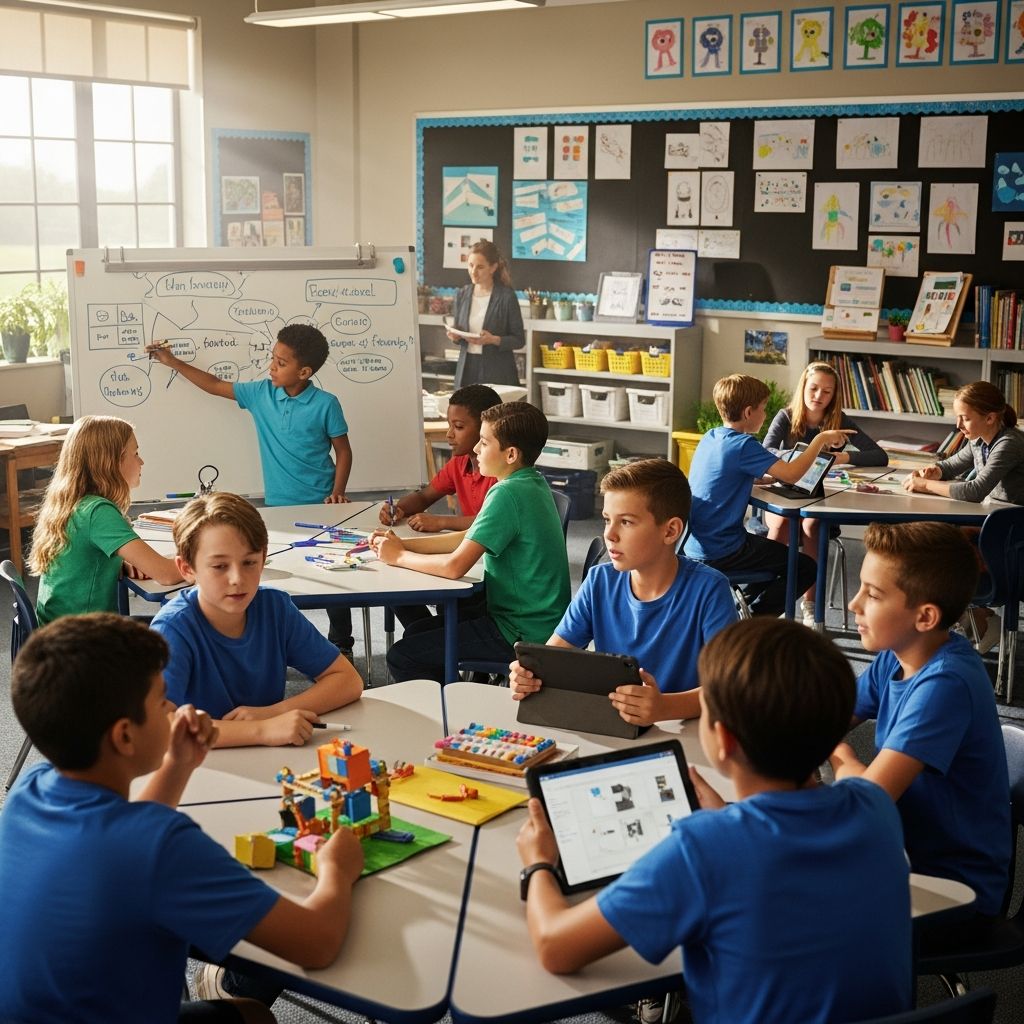
Student-driven classrooms place learners at the heart of the educational process, shifting the focus from passive reception to active involvement. This approach cultivates deeper understanding, motivation, and lifelong learning skills by allowing students to guide their own educational journeys.
Understanding the Shift to Learner-Led Education
Traditional classrooms often position teachers as the primary knowledge dispensers, with students in receptive roles. In contrast, student-driven models emphasize learner agency, where students make choices, set goals, and reflect on progress. This paradigm empowers individuals to take ownership, fostering resilience and adaptability essential for modern challenges.
Research highlights that such environments improve academic outcomes and social-emotional development. For instance, when students participate in decision-making, engagement rises significantly, leading to better retention and application of knowledge. Educators begin by assessing current practices and gradually introducing elements like choice in assignments or collaborative rule-setting.
Core Principles Guiding Student-Driven Instruction
Several foundational principles underpin effective student-driven teaching:
- Learner Agency: Students direct their learning paths through goal-setting and self-assessment tools like data notebooks.
- Personalization: Tailoring content to individual needs, interests, and paces ensures relevance.
- Collaboration: Peer interactions build communication and empathy, turning classrooms into supportive communities.
- Active Engagement: Hands-on activities replace lectures, making learning experiential.
These principles create equitable spaces where diverse backgrounds enrich collective growth. Teachers act as facilitators, scaffolding skills while stepping back to let students lead.
Practical Strategies for Implementation
Transitioning requires actionable steps. Start small with one strategy per unit, scaling as comfort grows.
1. Introduce Choice Boards for Flexible Task Selection
Choice boards offer menus of activities aligned to learning objectives, allowing students to select based on strengths or interests. In language arts, options might include writing alternative story endings, creating visual storyboards, or comparing characters analytically. This promotes differentiation without overwhelming planning, as boards can be reused across grades.
Benefits include increased motivation and skill demonstration in preferred formats. Teachers provide rubrics for self-evaluation, reinforcing accountability.
2. Adopt Flipped Learning Models
In flipped classrooms, students access instructional videos or readings at home, reserving class time for application. For science, a video on the water cycle precedes in-class experiments or discussions. This inverts traditional homework, enabling real-time clarification of misconceptions.
Technology like pre-recorded lessons or AI tools enhances accessibility. Group interactions during class build problem-solving through shared scenarios.
3. Facilitate Project-Based Challenges
Project-based learning (PBL) immerses students in real-world problems. A math class might design a zoo, applying measurements, budgeting, and geometry to create exhibits. Students drive research, collaboration, and presentations, developing critical thinking alongside content mastery.
PBL culminates in public showcases, boosting confidence. Teachers guide with prompts but let student inquiries shape direction.
4. Promote Inquiry and Experimentation
Inquiry-based methods start with student questions, evolving from basic recall to deep analysis. Provide think time and model questioning before independent exploration. Experiments test hypotheses, turning passive listeners into active investigators.
This strategy suits all subjects; history students might query primary sources on events, constructing evidence-based narratives.
5. Utilize Learning Stations for Varied Experiences
Stations rotate students through targeted activities: one for tech simulations, another for group collaboration, and independents for reflection. This keeps energy high and accommodates multiple intelligences, preventing monotony.
For younger learners, stations build foundational skills; older ones tackle complex integrations like VR challenges.
6. Encourage Collaborative Jigsaw Activities
Jigsaw divides topics among expert groups, who then teach peers. This fosters interdependence and deepens understanding through teaching. In social studies, groups master regions before reassembling to form global pictures.
Digital tools amplify reach, with AI aiding research and VR simulating scenarios for immersive learning.
Optimizing the Physical and Social Environment
The classroom layout profoundly influences dynamics. Flexible spaces with movable furniture, zones for collaboration or quiet work, and tech integration support diverse needs.
| Zone Type | Purpose | Example Setup |
|---|---|---|
| Collaboration Zone | Group discussions | Round tables, whiteboards |
| Independent Zone | Solo focus | Bean bags, headphones |
| Lab/Studio | Hands-on creation | Tech stations, supplies |
| Reflection Area | Goal review | Comfortable seating, journals |
Socially, co-create norms with students to build ownership. Autonomy thrives when voices shape the community.
Differentiation Techniques for Inclusive Learning
Personalization meets diverse needs via multi-modal delivery: oral instructions, videos, visuals. Assess profiles to adapt—visual aids for some, kinesthetic for others.
- Offer tiered assignments scaling complexity.
- Incorporate cultural relevance in projects.
- Use data to group dynamically for support.
Tools like virtual simulations (e.g., Gizmos) allow paced mastery.
Overcoming Common Challenges
Resistance from structured preferences or management concerns arises. Mitigate by piloting strategies, sharing success data, and professional development. Time for planning increases initially but saves through reusable resources.
Address equity by ensuring tech access and scaffolding for all. Measure impact via student feedback and growth metrics.
Frequently Asked Questions (FAQs)
What is the main benefit of student-driven classrooms?
They boost engagement and agency, leading to better retention and real-world skill development.
How do I start with limited time?
Implement one strategy like choice boards per week, gradually expanding.
Does this work for all grade levels?
Yes, adapt stations or PBL for elementary to high school.
What role does technology play?
It enables flipped models, VR, and personalized tools, enhancing interactivity.
How to assess student-driven work?
Use rubrics, self-reflections, and peer reviews aligned to standards.
Measuring Success and Iterating
Track via engagement surveys, progress data, and reflections. Adjust based on feedback, refining for continuous improvement. Sustained implementation yields transformative results.
References
- 6 Strategies for Student-Centered Learning — ExploreLearning. 2023. https://www.explorelearning.com/resources/insights/student-centered-learning
- Creating Student-Centered Classrooms: Strategies for K-12 Teachers — Marymount University. 2023-10-12. https://marymount.edu/blog/creating-student-centered-classrooms-strategies-for-k-12-teachers/
- Student-Centered Learning: The Ultimate Guidebook — Teacher Academy. 2024. https://www.teacheracademy.eu/blog/student-centered-learning/
- A Guide to Implementing Student-Centered Learning Approaches — Voyager Sopris Learning. 2023. https://www.voyagersopris.com/vsl/blog/student-centered-learning
- Three Ways to Start Making Your Classroom Student-Centered — KnowledgeWorks. 2023. https://knowledgeworks.org/resources/strategy-student-centered-classroom/

- Integrated M.A. in Applied Linguistics, University of Hyderabad
- 5+ years in editorial, instructional, SEO, and research-based writing
Sneha is a relationships and lifestyle writer with a strong foundation in applied linguistics and certified training in relationship coaching. She brings over five years of writing experience to theskillvault, crafting thoughtful, research-driven content that empowers readers to build healthier relationships, boost emotional well-being, and embrace holistic living. Her writing and insights reflect the belief that beauty, happiness, and wellness…