
The Emergence of New Species: Exploring Evolutionary Divergence
Evolution shapes life on Earth through numerous processes, but one of the most profound mechanisms is the creation of entirely new species from existing populations. This transformation, known as speciation, represents a fundamental shift in how organisms develop, interact, and adapt to their environments. Understanding speciation requires examining how populations become genetically distinct and eventually unable to interbreed, marking the birth of separate species. This process unfolds through multiple pathways, each influenced by different environmental pressures and biological circumstances.
The Foundation of Species Formation: Reproductive Isolation
At the heart of speciation lies a critical concept: reproductive isolation. For a new species to emerge, populations must develop barriers that prevent individuals from successfully mating and producing fertile offspring. These barriers can take many forms, ranging from physical geography to behavioral differences to genetic incompatibilities. Without reproductive isolation, genetic exchange between populations continues, maintaining them as a single species despite any differences that may develop.
Reproductive isolation accumulates gradually as populations experience different evolutionary pressures. Mutations arise randomly in each isolated group, and natural selection favors certain traits within each environment. Over sufficient time, the genetic makeup of these groups diverges so substantially that even if individuals encounter one another, they can no longer produce viable, fertile offspring. This genetic incompatibility represents the final step in speciation, cementing the division into separate species.
Major Pathways to Species Divergence
Biologists recognize several distinct mechanisms through which speciation occurs, classified primarily by how populations become separated and how gene flow is restricted. Each pathway involves unique conditions and evolutionary dynamics that lead to the emergence of new species.
Geographic Isolation: The Primary Driver
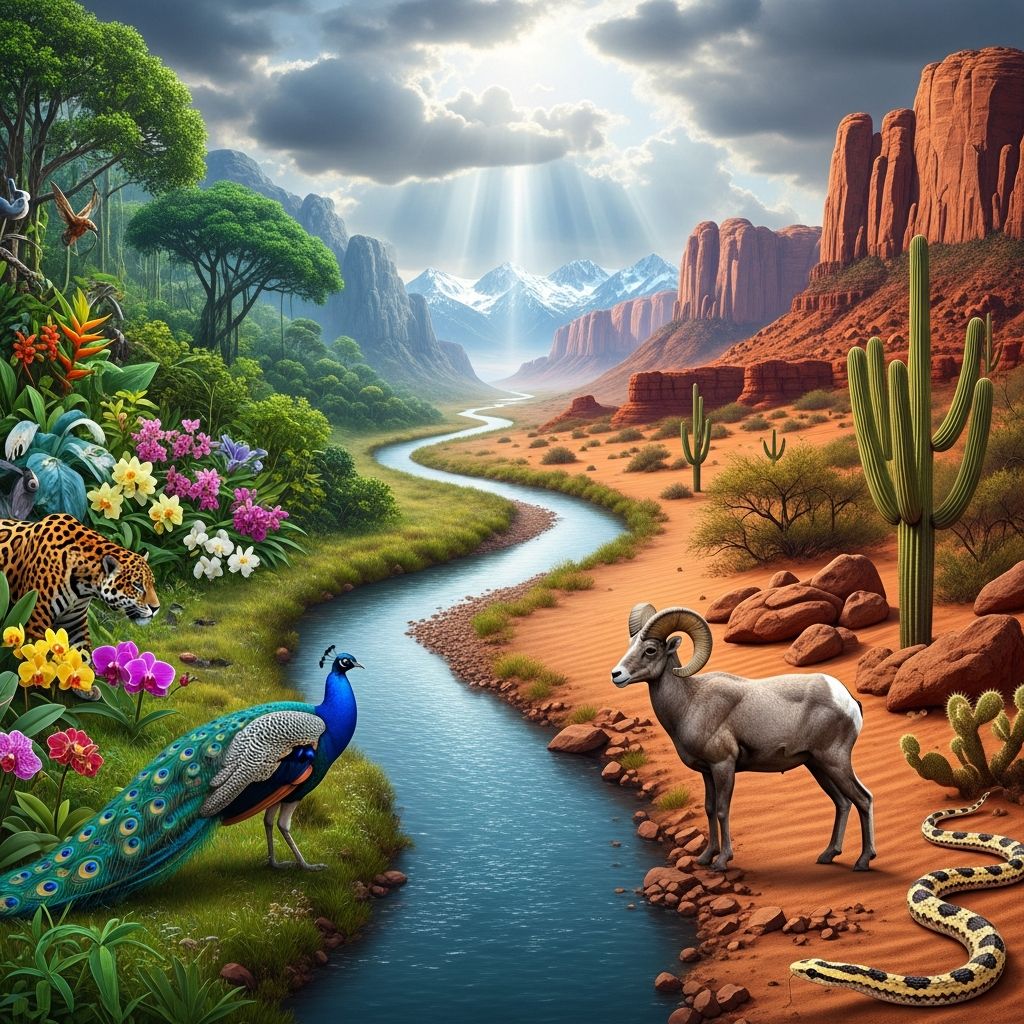
The most straightforward and common mechanism for species formation involves physical separation of populations by geographic barriers. When mountains rise, rivers shift course, or bodies of water recede, populations that once interacted become divided. Island formation, canyon development, or forest fragmentation can all create the conditions necessary for divergent evolution. Once separated, each population evolves independently according to the unique environmental conditions of its isolated region.
Geographic isolation proves remarkably effective because it completely halts gene flow between separated groups. Without the homogenizing effect of genetic exchange, random mutations accumulate differently in each population, and local adaptations emerge to match regional environmental demands. The Galápagos finches famously demonstrate this principle—an ancestral finch population colonizing different islands evolved distinct beak shapes optimized for available food sources, eventually becoming separate species.
Founder Effects and Small Population Dynamics
Sometimes speciation occurs when a small subset of a population establishes itself in a new location, cut off from the larger group. This scenario introduces special evolutionary dynamics driven largely by genetic drift—random changes in gene frequencies that occur most dramatically in small populations. The founding individuals carry only a fraction of the genetic diversity present in the original population, and random inheritance patterns cause significant changes in allele frequencies across generations. This founder effect accelerates divergence by creating a population with fundamentally different genetic composition from its source.
Small peripheral populations especially experience pronounced genetic drift effects. Chance events determining which individuals survive and reproduce become more consequential than natural selection alone. Over generations, this combination of limited starting diversity and strong random change produces populations distinctly different from their parent group, eventually leading to reproductive incompatibility.
Sympatric Divergence Without Geographic Barriers
Speciation need not require geographic separation. In some circumstances, populations evolving side by side develop reproductive isolation through mechanisms other than spatial separation. This process, called sympatric speciation, challenges the traditional model of geographic-driven divergence but occurs through identifiable mechanisms.
Behavioral differences represent one pathway to sympatric speciation. Populations may develop distinct mating preferences, courtship rituals, or mate-selection criteria that restrict reproduction to specific individuals within the population. Temporal isolation offers another route—populations evolving different breeding seasons eliminate the opportunity for interbreeding even while occupying the same space. Habitat preferences can also drive divergence, with subpopulations specializing on different food sources or microhabitats and consequently encountering one another less frequently.
Polyploidy in plants offers perhaps the most dramatic form of sympatric speciation. When chromosome numbers double through spontaneous genetic events, the resulting individuals become reproductively isolated from their parent population immediately, as chromosome pairing problems prevent successful reproduction with non-polyploid individuals. This mechanism creates new species in a single generation, contrasting sharply with the gradual divergence typical of other speciation modes.
Continuous Populations and Gradient-Based Divergence
Some species occupy expansive geographic ranges where populations grade gradually into one another rather than existing as distinct groups. Within this continuous distribution, neighboring populations interbreed readily, but distant populations may be sufficiently different that interbreeding proves unsuccessful. This scenario creates an interesting evolutionary puzzle: gene flow occurs between adjacent groups but insufficient interchange happens across the full range to maintain uniform genetic composition.
In such continuously distributed populations, localized environmental variation drives speciation as different subgroups adapt to distinct ecological niches within the broader range. Slight habitat differences accumulate such that populations at opposite ends of the distribution become fundamentally incompatible, despite the lack of any obvious geographic barrier separating them. This process unfolds gradually across the population’s entire range rather than from a clear point of division.
Comparative Overview of Speciation Mechanisms
| Speciation Type | Geographic Separation | Primary Isolation Mechanism | Speed of Divergence |
|---|---|---|---|
| Allopatric | Complete physical barrier | Prevention of gene flow through distance | Gradual to moderate |
| Peripatric | Small isolated population at range edge | Genetic drift in small populations | Rapid due to founder effects |
| Parapatric | Continuous distribution with localized adaptation | Habitat-based selection and reduced interbreeding | Gradual across range |
| Sympatric | None—same geographic area | Behavioral, temporal, or genetic isolation | Variable; very rapid with polyploidy |
Real-World Examples of Speciation in Action
The London Underground mosquito demonstrates speciation occurring in modern times under human-altered conditions. Ancestral mosquito populations utilizing above-ground habitats colonized the underground railway system, where they encountered a new environment with distinct temperature regimes, food availability, and breeding sites. Over approximately 100 years, these subway populations diverged genetically and behaviorally from surface populations, developing distinct breeding seasons and preferences. While complete reproductive isolation has not yet developed, these populations show advanced divergence toward speciation.
Hawaiian honeycreepers provide another compelling example of rapid speciation through adaptive radiation. Ancestral finch colonists encountering diverse ecological niches across the Hawaiian Islands evolved into numerous species with dramatically different beak morphologies and ecological roles. Each island population adapted to available resources, driving the formation of multiple species within the relatively recent timeframe of 5–7 million years.
Cichlid fish in African lakes represent textbook examples of sympatric speciation, with numerous species evolving in isolated lake environments where geographic barriers within the lake volume create ecological specialization and behavioral isolation. These fish demonstrate that reproductive isolation can develop without obvious geographic separation between populations.
The Timeline of Species Emergence
Determining how long speciation requires remains an active area of paleontological and evolutionary research. Fossil evidence suggests that speciation typically unfolds over thousands to millions of years, though the rate varies substantially depending on generation time and other factors. Organisms with short generation times, like insects and plants, may complete speciation on timescales observable within human history. Long-lived organisms like mammals generally require longer periods to accumulate sufficient genetic and phenotypic differences.
The tempo of speciation also depends on the speciation mechanism employed. Peripatric speciation driven by founder effects and genetic drift in small populations occurs more rapidly than gradual divergence in large populations. Polyploidy-based speciation in plants creates new species instantaneously from a genetic perspective, though establishing populations large enough to persist requires additional time.
Mechanisms of Reproductive Isolation
Understanding how populations become unable to interbreed helps clarify why speciation constitutes a genuine evolutionary transition. Several types of reproductive barriers can develop independently or in combination:
- Pre-mating isolation prevents individuals from meeting or recognizing one another as potential mates, including behavioral differences, temporal separation, and ecological specialization
- Post-mating isolation prevents successful reproduction even when mating occurs, including genetic incompatibilities that reduce hybrid viability or fertility
- Hybrid inviability occurs when genetic incompatibilities disrupt development in hybrid offspring, causing abortion or death before reproductive maturity
- Hybrid sterility prevents reproduction in hybrids despite normal development, exemplified by the sterile mule resulting from horse-donkey crosses
These barriers typically accumulate gradually through divergence. Early in divergence, populations may still produce viable but less-fit hybrids. Over time, genetic differences accumulate until hybrids suffer substantial fitness reductions, eventually becoming inviable or sterile.
The Role of Natural Selection and Genetic Drift
Speciation represents the outcome of evolutionary forces acting on isolated or semi-isolated populations. Natural selection shapes adaptation to local environmental conditions, driving populations toward distinct phenotypes suited to their specific ecological contexts. Simultaneously, genetic drift—random changes in allele frequency particularly pronounced in small populations—contributes substantially to divergence independent of adaptive advantage.
The relative importance of these forces remains debated among evolutionary biologists. In large populations, natural selection likely predominates, directing evolution toward locally optimal solutions. In small populations or those experiencing founder effects, genetic drift can overpower weak selective pressures, driving change in non-adaptive directions. Most speciation probably reflects both processes operating in concert, with their relative contributions depending on population size, environmental heterogeneity, and generation time.
Frequently Asked Questions About Speciation
Q: Can speciation occur in humans?
A: Modern humans show minimal speciation tendency due to extensive gene flow across populations, rapid transportation enabling worldwide mating, and the relatively short period humans have inhabited Earth. The genetic differences between human populations remain insufficient to prevent interbreeding. Speciation requires sustained isolation over many generations, which modern human societies actively prevent through migration and cultural exchange.
Q: How do scientists determine when speciation has occurred?
A: Scientists typically use the biological species concept, identifying separate species when populations can no longer interbreed and produce fertile offspring. For extinct organisms and some living populations, researchers examine genetic divergence and morphological differences. Molecular analysis comparing DNA sequences helps identify divergence time and degree of genetic differentiation between populations.
Q: Does speciation require complete geographic isolation?
A: No, although complete isolation accelerates speciation, reproductive isolation can develop through behavioral, temporal, or genetic mechanisms even without physical barriers. Sympatric speciation demonstrates that populations can diverge while occupying the same location, though such speciation typically proceeds more slowly than allopatric processes.
Q: What role does mutation play in speciation?
A: Mutation provides the raw material for evolutionary change by introducing new genetic variants. However, mutation alone cannot cause speciation; the variants must be preserved through genetic drift or favored by natural selection. Speciation depends on accumulated differences in allele frequencies, not simply on mutations arising.
Q: Can speciation reverse or can species merge back together?
A: Once reproductive isolation becomes established through substantial genetic divergence, reversal proves extremely unlikely. Species possess incompatibilities at multiple genetic levels that took millions of years to accumulate. However, hybridization can occasionally occur at speciation’s boundaries, creating novel species through genetic recombination of parental genomes.
Speciation’s Significance in Evolutionary Biology
Speciation represents evolution’s most dramatic outcome—the transformation of living populations from one organizational form into multiple distinct entities. This process explains the enormous diversity of life on Earth, from the thousands of insect species inhabiting a single rainforest to the endemic fauna of isolated islands. Understanding speciation mechanisms reveals how life adapts to changing environments, colonizes new habitats, and generates the biological complexity characterizing modern ecosystems.
The study of speciation continues revealing unexpected mechanisms and challenging assumptions about how reproductive isolation develops. As research tools improve and evolutionary biologists examine more organisms across diverse environments, additional nuance emerges regarding the relative importance of different factors and the conditions favoring various speciation pathways. This ongoing research expands our comprehension of life’s evolutionary trajectory and Earth’s biological heritage.
References
- Types of Speciation — Study.com. 2026. https://study.com/learn/lesson/speciation-types-facts.html
- Speciation — Wikipedia. 2026. https://en.wikipedia.org/wiki/Speciation
- Types of Speciation (Allopatric, peripatric, parapatric, sympatric) — SlideShare. 2026. https://www.slideshare.net/slideshow/speciation-types-of-speciation-allopatric-peripatric-parapatric-sympatric-kinds-of-different-species-docx/273753916
- Types of Speciation: Allopatric, Sympatric, Peripatric, and Parapatric — YouTube/Professor Dave Explains. 2026. https://www.youtube.com/watch?v=fAajKkjjLCQ
- Types of Speciation — Biology LibreTexts (Lumen Learning). 2026. https://bio.libretexts.org/Courses/Lumen_Learning/Biology_for_Majors_II_(Lumen)/06:_Module_3-_History_of_Life/6.09:_Types_of_Speciation

Medha Deb is an editor with a master's degree in Applied Linguistics from the University of Hyderabad. She believes that her qualification has helped her develop a deep understanding of language and its application in various contexts. Medha specializes in the areas of beauty, health, sports, and wellness and is committed to ensuring that the content on the website is…