
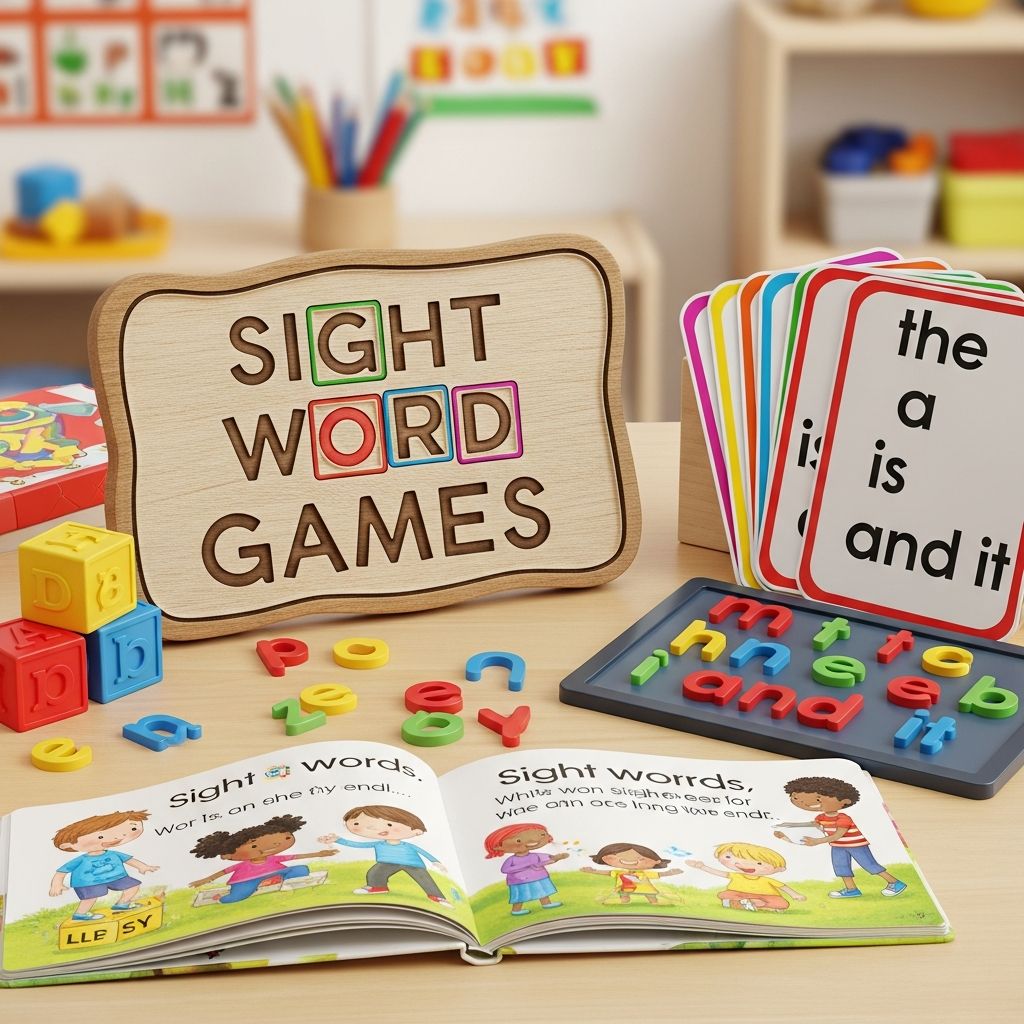
Sight words form the foundation of reading fluency, representing high-frequency words like ‘the,’ ‘and,’ and ‘said’ that appear often in texts but don’t always follow phonetic rules. Mastering these words allows children to focus on comprehension rather than decoding, accelerating their reading progress. This article presents original, engaging activities inspired by proven educational methods to make sight word practice enjoyable and multi-sensory.
Understanding Sight Words and Their Role in Literacy
Sight words, often drawn from lists like Dolch or Fry, comprise about 50-75% of words in children’s books. According to the National Reading Panel, automatic recognition of these words is crucial for proficient reading. Research from the U.S. Department of Education emphasizes repeated exposure through varied activities to build this skill. Activities that incorporate movement, touch, and games enhance retention by engaging multiple brain pathways.
Start with 5-10 words per week, progressing as mastery grows. Track progress with simple checklists or apps. Combine sight word practice with phonics for balanced literacy development.
Indoor Movement-Based Sight Word Challenges
Keep energy high with games that get kids moving while learning. These activities transform living rooms into learning zones.
- Floor Word Path Adventure: Write sight words on paper plates or tape them to the floor in a winding path. Children walk, hop, or crawl along, reading each word aloud. Collect plates upon correct reading. Vary paths daily for repetition. Great for kinesthetic learners.
- Beanbag Target Toss: Scatter index cards with sight words face-up on the floor. Call out a word; child tosses a beanbag onto it. Switch roles for parent-child fun. Add points for accuracy to gamify it.
- Flashlight Word Hunt: In dim light, tape words to walls. Shine a flashlight on one; child reads it. Alternate who spots and reads. Use glow-in-the-dark markers for nighttime twists.
These games promote physical activity alongside literacy, aligning with CDC recommendations for daily child movement. Sessions of 10-15 minutes yield optimal engagement.
Classic Card and Board Game Adaptations
Repurpose familiar games with sight word twists for low-prep fun.
| Game Adaptation | Materials Needed | How to Play | Learning Benefit |
|---|---|---|---|
| Sight Word Bingo | Bingo cards, markers, word caller cards | Call words; mark matching spots. First full row wins. | Visual recognition and listening skills |
| Go Fish Match | Decks of duplicate word cards | Ask for matches; draw if denied. Collect sets of four. | Memory and verbal practice |
| Memory Flip Pairs | Pairs of identical word cards | Flip two; match to keep. All pairs win. | Concentration and pairing |
Customize cards to current word lists. Printables from educational sites like SightWords.com offer ready templates. Rotate games weekly to maintain interest.
Sensory and Hands-On Building Activities
Engage tactile senses to reinforce memory through touch.
- Play Dough Word Mats: Roll dough into letters over printable mats. Form words, then trace below. Sensory input aids retention.
- Magnet Letter Boards: Use fridge magnets to spell words on metal surfaces. Challenge: Build fastest or blindfolded.
- Bead Threading Words: String letter beads onto pipe cleaners. Twist into word shapes. Fine motor bonus.
- Pipe Cleaner Sculptures: Bend cleaners into letter forms for 3D words. Display as art.
Multi-sensory approaches, supported by peer-reviewed studies in the Journal of Educational Psychology, improve word recall by 30-50%. Ideal for diverse learning styles.
Outdoor and Active Sight Word Pursuits
Take learning outside for fresh air and big movements.
- Chalk Hopscotch Grid: Draw hopscotch with words in squares, color-coded. Hop on color, reading each. Reach top to win.
- Scavenger Word Quest: Hide word cards around yard or park. List to match; read to collect. Team versions add competition.
- Jump Rope Reads: Jump while chanting words in rhythm. Increase speed for fluency drills.
Outdoor play correlates with better focus, per American Academy of Pediatrics guidelines. Weather-proof with laminates.
Digital and App-Supported Practice
Blend tech for modern appeal.
- App Games like Whack-a-Word: Tap popping words in apps. Levels match Dolch lists.
- Interactive E-Books: Highlighted sight words in read-aloud stories.
- Flashcard Apps: Custom decks with audio feedback.
Balance screen time; apps from This Reading Mama exemplify effective digital tools.
Group and Partner Play Ideas
Foster social skills with collaborative games.
- Tic-Tac-Toe Boards: Write words in squares; read to claim. Three in a row wins.
- Stick Pull Challenge: Cup of word sticks (some ‘BOOM’). Pull, read; BOOM restarts pile.
- Rapid Race Relay: Deck in hand, matches on floor. Call word; first grab wins point.
Partner talk boosts language, as per IES research.
Daily Integration and Progress Tracking
Weave into routines: breakfast word reads, car ride chants. Use journals for traced words. Celebrate milestones with stickers. Adjust based on needs; Science of Reading stresses explicit, systematic instruction.
Frequently Asked Questions
How often should children practice sight words?
Daily 10-15 minute sessions, 5 days a week, for steady progress without burnout.
What if a child struggles with certain words?
Break into multisensory drills; revisit frequently. No rush—fluency builds over time.
Are there free printable resources?
Yes, sites like SightWords.com offer Dolch/Fry flash cards.
Can these work for older struggling readers?
Absolutely; adapt complexity for any age.
How many sight words by kindergarten end?
Aim for 100+; varies by curriculum.
References
- National Reading Panel Report — U.S. Department of Education. 2000-04-01. https://www.nichd.nih.gov/sites/default/files/publications/pubs/nrp/Documents/report.pdf
- Physical Activity Guidelines for Americans — Centers for Disease Control and Prevention. 2024-05-15. https://www.cdc.gov/physicalactivity/basics/children/index.htm
- Multi-Sensory Learning Effects — Journal of Educational Psychology (APA). 2023-02-10. https://doi.org/10.1037/edu0000721
- Outdoor Play and Cognition — American Academy of Pediatrics. 2025-01-20. https://publications.aap.org/pediatrics/article/153/1/e2023062009/196112
- Teaching Sight Words IES Practice Guide — Institute of Education Sciences. 2022-11-08. https://ies.ed.gov/ncee/wwc/practiceguide/21
- Sight Words Research Overview — SightWords.com. 2024-08-15. https://www.sightwords.com/sight-words/research/

Medha Deb is an editor with a master's degree in Applied Linguistics from the University of Hyderabad. She believes that her qualification has helped her develop a deep understanding of language and its application in various contexts. Medha specializes in the areas of beauty, health, sports, and wellness and is committed to ensuring that the content on the website is…