
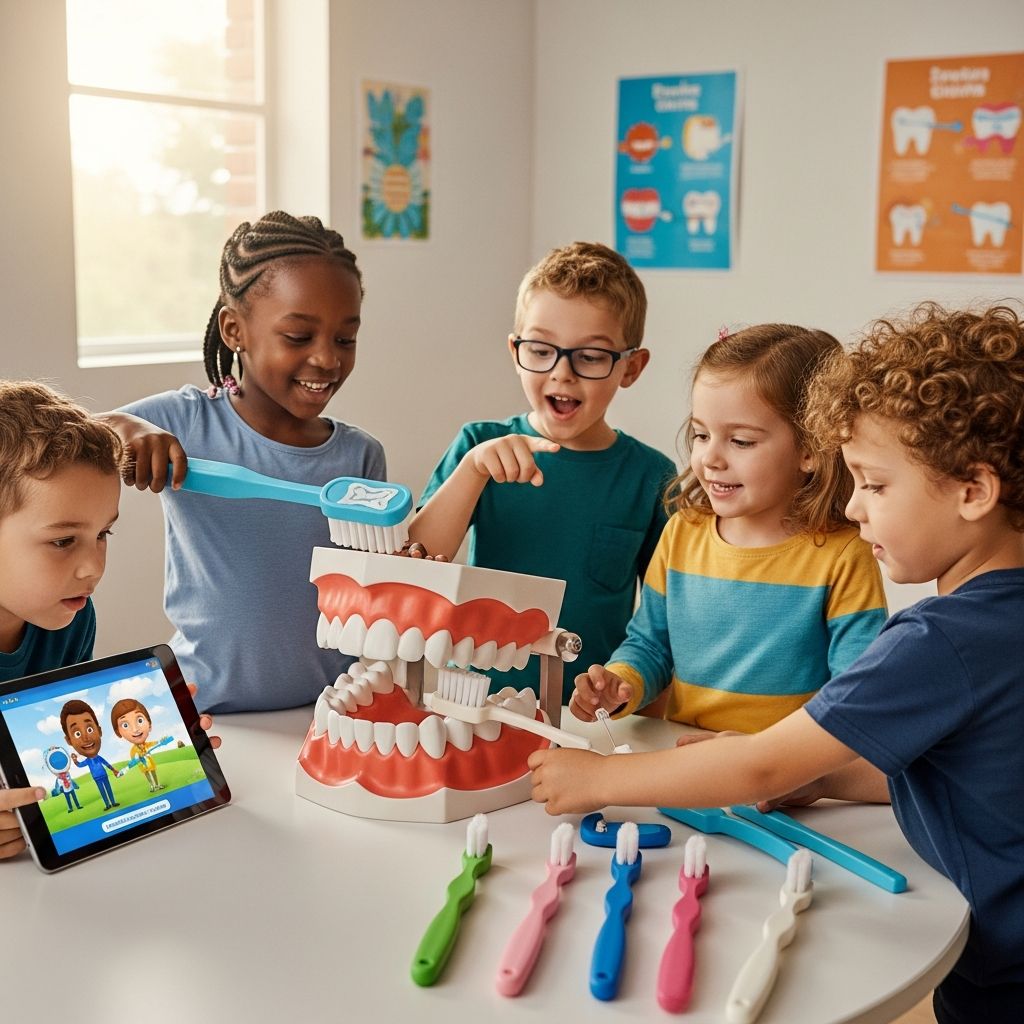
Transforming Dental Education Through Active Engagement
Teaching children about oral health requires moving beyond traditional lectures and worksheets. Modern educational approaches recognize that young learners absorb information most effectively when actively participating in discovery-based activities. Dental health education has evolved to incorporate hands-on experiences that capture children’s imagination while embedding crucial hygiene concepts into their long-term memory. This transformation reflects broader educational research demonstrating that experiential learning creates stronger neural pathways and behavioral change compared to passive instruction methods.
The foundation of effective dental health teaching lies in creating age-appropriate experiences that allow children to see, touch, and understand the consequences of their oral care choices. When children manipulate materials, conduct experiments, and create projects related to dental care, they develop ownership over their learning and internalize the importance of brushing, flossing, and healthy eating habits.
Laboratory-Based Demonstrations for Understanding Tooth Decay
Scientific experiments provide powerful visual evidence of how dietary and behavioral choices affect dental health. The most accessible and effective demonstrations use everyday household materials to simulate what happens to teeth under various conditions.
The egg enamel simulation experiment stands as a cornerstone activity for elementary classrooms. Eggs possess a calcium-based shell composition remarkably similar to tooth enamel, making them ideal substitutes for demonstrating acid erosion and staining. In this activity, hard-boiled eggs are placed in containers with substances such as cola, fruit juice, vinegar, or water. Over several days, students observe visible discoloration and deterioration of the egg shells in acidic liquids compared to those in water. Following this observation period, students use toothbrushes and toothpaste to attempt removal of stains, discovering that some damage cannot be reversed through brushing alone. This tangible demonstration transforms abstract concepts about sugar and acid into concrete visual evidence that resonates with children across different learning styles.
The sugar fermentation experiment offers another compelling investigation into bacterial growth. By combining yeast, sugar, and warm water in a sealed container, educators create a model of bacterial proliferation that occurs in the mouth when sugar is consumed. As fermentation proceeds, students observe bubbling and expansion, directly connecting sugar consumption to microbial activity. This experiment elegantly demonstrates why dentists recommend limiting sugary foods and beverages—not simply because they taste bad, but because they literally feed harmful organisms in the mouth.
Craft-Based Learning for Anatomical Understanding
Creating physical models of dental structures helps children internalize proper brushing and flossing techniques while reinforcing anatomical knowledge. These projects combine artistic expression with functional learning.
Mouth Models Using Construction Materials
Students can construct three-dimensional mouth representations using pink or red construction paper shaped into an open mouth outline, with white modeling clay, marshmallows, or carved soap bars representing individual teeth. Once assembled, these models become tools for demonstrating proper brushing technique. Educators can guide students in showing circular brushing motions, reaching the gum line, and accessing all tooth surfaces. The tactile experience of manipulating the toothbrush against model teeth reinforces muscle memory that translates to improved brushing habits at home.
These mouth models can be enhanced with labels identifying different tooth types—incisors, canines, molars—teaching children that different teeth serve different purposes. Some advanced models include representations of the gum line and tongue, providing more comprehensive anatomical education.
Flossing Practice Through Creative Play
Introducing flossing to young children presents unique challenges, as the motions required are unfamiliar and the concept of cleaning between teeth can seem abstract. Creative adaptations make this concept accessible. One effective approach uses Lego Duplo bricks arranged with studs facing upward, with Playdough pressed between the studs to simulate food debris. Students then use yarn or actual dental floss to demonstrate removal of debris from between the studs, directly paralleling the flossing motion. Another variation uses ice cube trays where students place small objects in each compartment and use floss to remove them, reinforcing the importance of interdental cleaning.
Behavioral Reinforcement Through Tracking Systems
While experiments and crafts build conceptual understanding, behavioral change requires consistent practice and positive reinforcement. Tracking systems transform daily oral hygiene routines into visible progress metrics that motivate continued effort.
Tooth brushing charts provide structured frameworks for monitoring daily compliance with recommended hygiene practices. Effective charts include spaces for both morning and evening brushing sessions, allowing children and parents to track twice-daily brushing as recommended by dental professionals. Charts gain enhanced motivational power when children personalize them through decoration with stickers, drawings, or favorite character images. The visual accumulation of completed days creates a sense of achievement, while reward systems—such as small privileges or new toothbrushes upon completing a week—reinforce the connection between consistent habits and positive outcomes.
These tracking systems extend beyond simple compliance; they serve as communication tools between home and school or daycare, allowing parents and educators to collaborate on dental health promotion.
Game-Based Learning for Nutritional Awareness
Sugar’s role in dental decay represents a critical educational objective, as dietary choices often reflect habits established during childhood. Games that make nutritional learning engaging help children develop critical evaluation skills regarding food choices.
The Sugar Detective activity transforms learning about food ingredients into an investigative game. Students examine various food items—including fruits, vegetables, dairy products, processed snacks, and beverages—making predictions about which contain significant sugar. Using Benedict’s solution (typically available through school science departments) or simple visual inspection techniques, students test their predictions. Items that contain reducing sugars produce visible color changes or reactions, creating surprise moments that reinforce learning. This hands-on approach teaches children that sugar hides in unexpected places, including seemingly healthy foods like certain yogurts and fruit juices.
A complementary activity uses pretend grocery shopping scenarios where children must identify cavity-friendly foods versus those that promote dental disease. Armed with magnifying glasses and checklist guides, students inspect packaging labels, discussing nutritional information and sugar content. This exercise develops label-reading skills while establishing the foundation for informed dietary choices.
Role-Playing for Desensitization and Familiarity
Dental anxiety affects many children, often stemming from unfamiliar environments and procedures. Pretend dental office scenarios provide safe spaces for children to become familiar with dental settings and procedures before experiencing them professionally.
In these role-playing activities, children take turns as dentist and patient, using toy dental tools or household items like spoons and mirrors to simulate examinations and procedures. Stuffed animals or dolls serve as initial patients, allowing children to direct their learning and feel in control. Through repetition, children practice opening their mouths for examination, learn the names of instruments they might encounter, and understand the sequence of typical dental visits. This familiarity reduces anxiety and increases cooperation during actual professional appointments.
Creative Projects for Oral Health Promotion
Beyond experiments and games, various creative projects reinforce dental concepts through multiple learning modalities.
Toothpaste Formulation
Students can create custom toothpaste by combining baking soda, salt, and food-safe flavoring in proportions that suit their preferences. This activity teaches the functional components of commercial toothpaste while allowing creative expression through flavor selection and label design. Students craft attractive labels for their creations, reinforcing brand concepts and personal responsibility for oral care products.
Nutritional Collages and Concept Maps
Using magazines, newspapers, and printed images, students create visual representations of food categories and their impacts on dental health. Constructing separate collages for cavity-promoting foods and tooth-friendly foods creates visual contrasts that reinforce categorization. These projects develop fine motor skills while providing repeated exposure to nutritional concepts.
Superhero Design Projects
Encouraging children to design original superheroes that protect teeth from cavities combines creative expression with advocacy for oral health. Children illustrate their dental defenders, write biographical information about their powers, and explain how these heroes keep teeth safe. This activity transforms dental concepts into heroic narratives that resonate with children’s imaginations.
Assessment and Interactive Tools
Assessing comprehension requires moving beyond simple recall to demonstrate applied understanding. Interactive tools provide engaging assessment methods that feel like games rather than tests.
Quiz and puzzle activities present dental health concepts in formats that challenge critical thinking. Word searches help children retain vocabulary related to oral anatomy and care practices. Multiple-choice quizzes assess understanding of cause-and-effect relationships between behaviors and dental outcomes. Matching exercises connect dental tools to their functions and food items to their nutritional categories.
Interactive digital platforms offer animated scenarios where children make decisions about fictional characters’ oral health choices, predicting outcomes and discussing consequences. These branching narratives help children understand that individual choices create measurable results over time.
Implementation Across Age Groups
Effective dental health education requires age-appropriate modifications. Young children in preschool benefit from simple activities emphasizing basic brushing and mouth awareness. Elementary-aged children can engage in more complex experiments and analytical tasks. Older students can explore topics like orthodontics, cosmetic dentistry, and the connection between oral health and systemic diseases.
Frequently Asked Questions
Q: What materials are most cost-effective for classroom dental health demonstrations?
A: Eggs, vinegar, soda, construction paper, and household items like spoons and mirrors provide excellent learning tools at minimal cost. Many schools receive donations from local dental offices of materials like toothbrushes and floss suitable for demonstrations.
Q: How can educators motivate children who resist brushing?
A: Tracking systems with rewards, role-playing scenarios that make dental care seem important, and experiments showing visible consequences of neglect create intrinsic motivation. Making brushing social—encouraging peer accountability—also increases compliance.
Q: Are these activities suitable for children with sensory sensitivities?
A: Many activities can be modified. Children uncomfortable with textures can participate in observation-based experiments or digital activities. Offering choices and allowing children to participate at their comfort level ensures inclusion.
Q: How can parents extend dental health learning at home?
A: Parents can create tracking charts, conduct simplified experiments together, practice flossing with the Duplo brick method, and involve children in meal planning discussions about nutrition and dental health.
Q: What frequency of dental health lessons is recommended?
A: Consistent reinforcement works better than intensive cramming. Monthly activities combined with daily habit tracking creates lasting behavioral change more effectively than occasional special units.
References
- CDC Children’s Oral Health Activity Book — Centers for Disease Control and Prevention. 2024. https://www.cdc.gov/oral-health/media/pdfs/dental_health_activity_book_PRINT.pdf
- 30 Fun Ways to Teach Kids About Oral Health (That Actually Work) — America’s ToothFairy. 2025. https://www.americastoothfairy.org/news/30-fun-ways-to-teach-kids-about-oral-health
- Fun and Educational Activities to Teach Kids About Dental Health — Kidzville Dental. 2025. https://kidzvildental.com/fun-and-educational-activities-to-teach-kids-about-dental-health/
- Oral Health Tools For Schools — South Carolina Department of Health and Environmental Control. 2024. https://dph.sc.gov/health-wellness/oral-health/oral-health-resources/oral-health-tools-schools
- Activities: Teaching Kids Healthy Smiles — University of Michigan School of Dentistry. 2024. https://media.dent.umich.edu/teachoralhealth/activities.html

- Integrated M.A. in Applied Linguistics, University of Hyderabad
- 5+ years in editorial, instructional, SEO, and research-based writing
Sneha is a relationships and lifestyle writer with a strong foundation in applied linguistics and certified training in relationship coaching. She brings over five years of writing experience to theskillvault, crafting thoughtful, research-driven content that empowers readers to build healthier relationships, boost emotional well-being, and embrace holistic living. Her writing and insights reflect the belief that beauty, happiness, and wellness…