
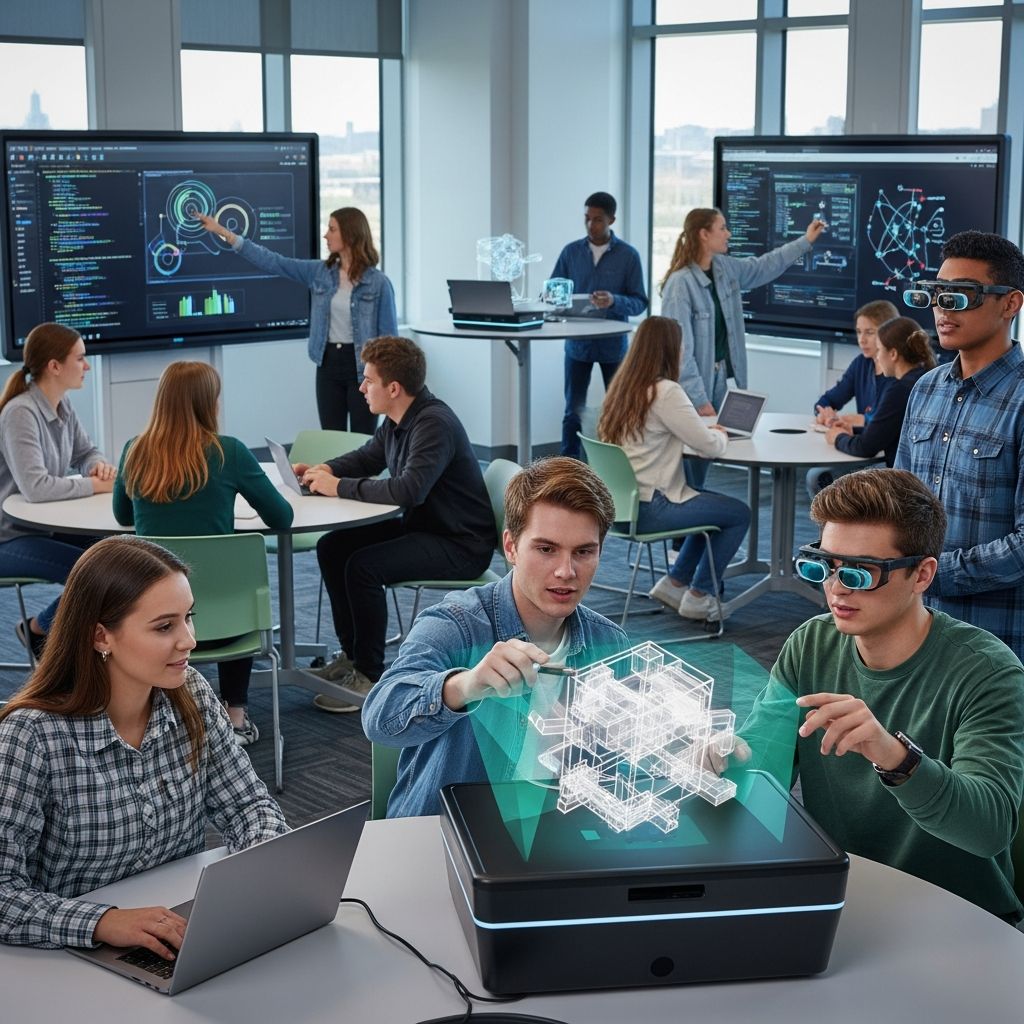
Bridging the Gap Between Education and Emerging Career Pathways
The landscape of employment is undergoing rapid transformation. Traditional career trajectories are evolving into dynamic, multidirectional paths shaped by technological advancement, market demands, and global economic shifts. Educational institutions face an unprecedented challenge: preparing students not just for jobs that exist today, but for roles that may not yet be clearly defined. This fundamental shift requires a reimagining of how we approach curriculum design, skill development, and career guidance in educational settings.
The global online tutoring market is projected to reach approximately USD 152.76 billion by 2026, with sustained double-digit growth driven by flexible, personalized learning and digital adoption. This expansion reflects a broader recognition that students require more than traditional classroom instruction to succeed in emerging industries. Educational approaches must evolve to incorporate real-world applications, adaptive learning technologies, and industry-connected experiences that prepare learners for sectors that are still taking shape.
Understanding the Evolving Nature of Career Readiness
Career readiness in the modern era extends far beyond subject matter expertise. Employers in emerging industries increasingly seek candidates who possess a combination of technical competencies, adaptive capabilities, and soft skills that enable them to navigate uncertainty and continuous change. Students entering fields such as artificial intelligence, renewable energy, biotechnology, and digital innovation require educational experiences that cultivate both depth in specialized knowledge and breadth in transferable competencies.
The traditional model of education—where students master a defined body of knowledge before entering their profession—is becoming obsolete. Instead, learners need frameworks that enable them to become self-directed in their professional development, comfortable with ambiguity, and capable of integrating new information and technologies throughout their careers. This represents a fundamental shift in educational philosophy, moving from knowledge transmission to capability development.
Personalization as the Foundation of Modern Learning
One of the most significant transformations in educational delivery involves the shift toward personalized learning experiences. Rather than adopting a one-size-fits-all approach, educational institutions and tutoring services now recognize that students have distinct learning preferences, paces, and foundational knowledge bases. Personalized learning pathways enable educators to tailor instruction to individual student needs while maintaining rigor and high expectations.
AI-powered personalization creates adaptive learning environments that identify knowledge gaps and offer targeted interventions. Research demonstrates that students receiving personalized instruction show measurably improved outcomes compared to their peers in traditional settings. This personalization extends beyond content delivery to encompass assessment, feedback mechanisms, and resource recommendations. When students encounter customized learning experiences that respond to their specific challenges and build on their strengths, engagement and achievement increase substantially.
Furthermore, hyper-personalized learning is becoming standard in forward-thinking educational environments. Students require tailored, real-time feedback more than ever, with instruction adapting moment-to-moment based on individual readiness and learning progress. This dynamic responsiveness creates optimal conditions for skill acquisition and knowledge retention, particularly important when students are preparing for careers in rapidly evolving sectors.
Integration of Technology and Human Expertise
The incorporation of advanced technologies into educational practice does not diminish the role of human educators; rather, it fundamentally transforms how educators allocate their time and expertise. AI and intelligent tutoring systems excel at handling routine administrative functions, grading, progress tracking, and initial content delivery. Research from McKinsey indicates that teachers can redirect 20-40% of their time from routine tasks to direct student engagement when supported by AI tools.
This redistribution of effort allows educators to focus on higher-order activities: facilitating complex problem-solving, providing mentorship, offering emotional support, and helping students develop critical thinking capabilities. Human tutors remain irreplaceable for motivation, emotional support, and guidance through sophisticated reasoning processes. The optimal educational model combines the scalability and efficiency of technology with the irreplaceable human qualities of empathy, adaptive coaching, and real-world contextual guidance.
Automated grading, progress tracking, content creation, and communication functions powered by AI tools enable educators to operate more efficiently. These administrative efficiencies create capacity for more meaningful student interactions and personalized guidance—precisely what students need when preparing for uncertain career futures.
Specialized Learning Pathways and Niche Expertise Development
As emerging industries become more specialized, the demand for niche tutoring and focused skill development intensifies. General tutoring is increasingly supplemented or replaced by specialized instruction in high-demand fields. Trending niche tutoring areas in 2026 include business and MBA subjects, finance and accounting, coding and STEM disciplines, test preparation, language learning, and career skills and certifications.
Students preparing for careers in emerging industries benefit significantly from learning with subject-matter experts who possess deep domain knowledge. These specialists can connect abstract concepts to real-world applications, explain industry trends, and provide insights into professional practice that generalist educators cannot offer. This specialization creates higher-quality learning experiences and better prepares students for actual professional environments.
Platforms offering instant homework assistance, guided solutions, and doubt-clearing sessions are becoming extremely popular among students pursuing specialized knowledge. When learners can access rapid expert feedback and guidance, their learning efficiency increases, and they build confidence in their ability to navigate complex material relevant to emerging fields.
Bridging Academic Learning and Professional Application
A critical gap in traditional education often exists between theoretical knowledge and practical application. Students may understand concepts in isolation but struggle to apply them in real-world professional contexts. Modern educational approaches increasingly emphasize this bridge through experiential learning, case studies, simulations, and project-based work connected to actual industry challenges.
Business simulation games represent one innovative approach, allowing students to learn by doing through management of virtual companies, making decisions about pricing and marketing, then observing immediate results. This methodology teaches decision-making and allows learning from mistakes without real-world risk. Similarly, career-connected learning experiences that embed academic content within authentic professional contexts significantly enhance student readiness for emerging industries.
When students apply their learning to realistic scenarios and understand how academic knowledge translates to professional value, motivation increases and knowledge retention improves. This approach also helps students recognize connections across disciplines and understand the integrated nature of professional practice in emerging sectors.
Flexibility and Accessibility in Educational Delivery
The traditional constraints of classroom-based education—fixed schedules, geographic limitations, and standardized pacing—no longer serve modern learners. Nearly 72% of students prefer online tutoring for its flexibility and customized learning paths, highlighting why digital learning has overtaken traditional tutoring models. This preference reflects not merely convenience seeking but a recognition that flexible delivery enables better learning outcomes for many students.
Online and hybrid educational models provide several advantages for students preparing for emerging industry careers. Students can access global expert tutors rather than being limited to local resources. Learning can occur at times that align with individual circumstances, whether students are working part-time, managing family responsibilities, or pursuing multiple educational paths simultaneously. This flexibility proves particularly valuable for adult learners transitioning into new career sectors or professionals seeking skill upgrades alongside employment.
The accessibility benefits extend beyond scheduling convenience. Online platforms enable cost-effective delivery at scale, making specialized expertise available to students regardless of geographic location or socioeconomic background. This democratization of access to quality education is particularly important for equitable preparation of diverse populations for opportunities in emerging industries.
Beyond Academic Subjects: Career Development and Professional Growth
Educational support in 2026 extends beyond traditional academic subjects into explicit career development and professional skill building. Tutoring and educational services now address job interview preparation, corporate training, business mentorship, MBA concept guidance, and professional skill learning. This expansion reflects a recognition that career success requires capabilities beyond subject matter knowledge.
More learners are choosing tutoring and educational support not just to pass exams but to build careers and achieve future readiness. This shift in educational purpose requires different pedagogical approaches, assessment methods, and learning outcomes. Students need guidance in translating their academic knowledge into professional value propositions, understanding industry dynamics, and developing the adaptive capabilities essential for navigating emerging career landscapes.
Educational institutions and tutoring services increasingly provide resources addressing these professional dimensions: mock interviews, professional communication training, industry trend analysis, networking guidance, and mentorship from active practitioners. This comprehensive approach to career readiness proves far more effective than academic instruction alone in preparing students for success in evolving professional contexts.
Building Sustainable and Scalable Educational Models
For educational platforms and tutoring services to sustainably support students preparing for emerging industries, business models must evolve beyond simple one-to-one tutoring. Platform ecosystems that expand services by integrating complementary tools—such as homework help, test preparation, career coaching, and professional development resources—create comprehensive learning environments. These integrated ecosystems increase user engagement and lifetime value while providing students with multifaceted support.
Scalable tutoring businesses increasingly leverage AI to create self-paced courses, hybrid programs combining AI-driven practice with periodic live sessions, and automated homework assignment and grading systems. These models enable educational providers to serve more students without proportionally increasing human resource requirements. Geographic reach extends beyond local markets through online platforms, and tutors can develop specialized expertise in high-demand niches that serve global student populations.
The Imperative for Continuous Educational Evolution
Perhaps most importantly, students preparing for careers in emerging industries must develop capacities for continuous learning and adaptation. Educational experiences should explicitly cultivate metacognitive skills, self-directed learning capabilities, and resilience in the face of professional uncertainty. Rather than viewing education as preparation that culminates with degree completion, both educators and students must embrace lifelong learning as the foundation for sustained professional relevance.
This requires educational institutions to model adaptability, maintain current knowledge about emerging industries and evolving skill requirements, and teach students frameworks for identifying, acquiring, and integrating new knowledge throughout their careers. When educational approaches emphasize learning processes alongside content knowledge, students develop the psychological and practical foundations for thriving in dynamic professional environments.
Key Elements for Effective Career-Preparation Education
- Personalized learning pathways adapted to individual student readiness, learning preferences, and career aspirations
- Integration of emerging technologies that enhance learning efficiency while preserving human mentorship and emotional support
- Specialized instruction from subject-matter experts with deep industry knowledge and professional experience
- Real-world application opportunities including simulations, case studies, and project-based learning connected to actual industry challenges
- Flexible delivery models enabling access to quality education regardless of geographic location or temporal constraints
- Explicit career development support addressing professional skill building, industry navigation, and career strategy
- Scalable educational ecosystems combining multiple support services within integrated platforms
- Development of adaptive capabilities including self-directed learning, metacognition, and resilience
Frequently Asked Questions
Q: How can students identify which emerging industries align with their interests and strengths?
A: Students should explore industry trends, engage in informational interviews with professionals in emerging fields, complete skills assessments, and seek guidance from career counselors. Experiential opportunities like internships, project-based learning, and industry simulation exercises help students understand actual work demands and personal fit before committing substantial educational time.
Q: What role should traditional academic subjects play in preparation for emerging industry careers?
A: Foundational academic knowledge remains essential, but must be connected explicitly to emerging industry applications. Mathematics, scientific reasoning, communication, and analytical skills form the basis for specialized knowledge in emerging fields. The key is integrating traditional subjects within career-relevant contexts rather than treating them as separate.
Q: How can educational institutions keep pace with rapidly evolving skill requirements in emerging industries?
A: Institutions should establish ongoing partnerships with industry leaders, maintain curriculum review processes that respond to market changes, provide professional development for educators, and build flexibility into program structures. Advisory boards composed of active practitioners help ensure educational content remains current and relevant.
Q: What skills are most universally valuable across emerging industries?
A: Critical thinking, complex problem-solving, data literacy, digital communication, collaboration, adaptability, and continuous learning capabilities prove valuable across most emerging fields. These foundational capabilities complement specialized technical knowledge in enabling career success.
Q: How can students leverage online tutoring for career preparation?
A: Online tutoring provides access to specialized experts, flexible scheduling for working professionals, personalized instruction adapted to individual pace, and exposure to global perspectives. Students should seek tutors with industry experience, request connections to real-world applications, and use online platforms for specialized skill development in high-demand areas.
References
- 2026 Tutoring Trends: What Tutors Need to Know to Stay Relevant — Tutorition. 2026. https://tutorition.com/blog/online-tutoring-growth-trends-and-insight-2026
- How AI Will Transform The Tutoring Industry In 2026 — MentoMind. 2026. https://mentomind.ai/tutoring-industry-in-2026/
- EdTech Trends 2026: Top Technologies for Business Education — Startup Wars. 2026. https://www.startupwars.com/edtech-trends-to-watch/
- 49 predictions about edtech, innovation, and AI in 2026 — eSchool News. 2026. https://www.eschoolnews.com/innovative-teaching/2026/01/01/draft-2026-predictions/
- 10 ed tech trends reshaping corporate learning in 2026 — Preply. 2026. https://preply.com/en/blog/b2b-ed-tech-trends/

Medha Deb is an editor with a master's degree in Applied Linguistics from the University of Hyderabad. She believes that her qualification has helped her develop a deep understanding of language and its application in various contexts. Medha specializes in the areas of beauty, health, sports, and wellness and is committed to ensuring that the content on the website is…