
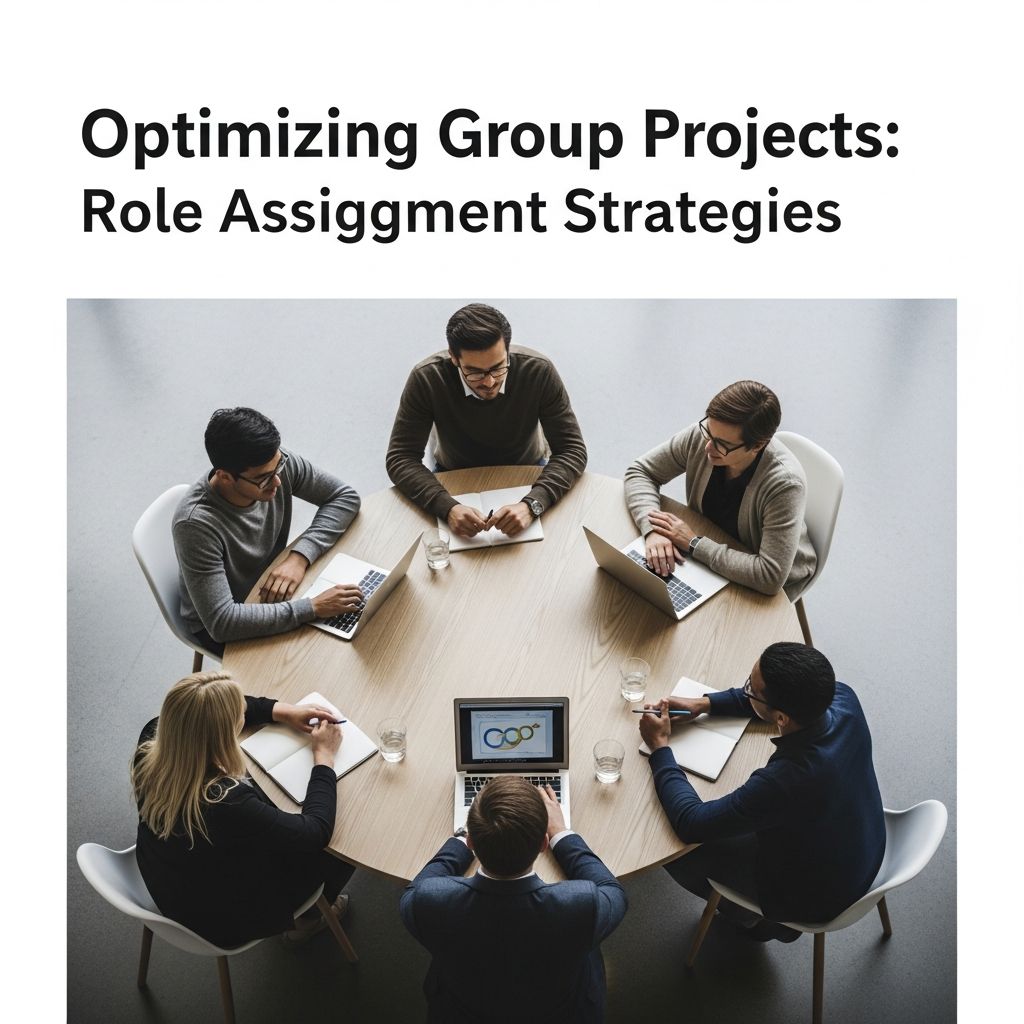
Group projects are a cornerstone of modern education, fostering skills like teamwork, communication, and problem-solving. However, without proper structure, they often lead to uneven workloads, conflicts, and subpar results. Strategic role assignment transforms these challenges into opportunities for growth and efficiency. This guide outlines a comprehensive approach to structuring teams for success, drawing on educational best practices to ensure every member contributes meaningfully.
Why Role Assignment Matters in Collaborative Learning
Assigning specific roles in group projects clarifies responsibilities, leverages individual strengths, and promotes accountability. Research shows that structured teams perform better, with reduced free-riding and higher overall effectiveness. By defining roles early, groups minimize confusion and align efforts toward shared goals.
Key benefits include balanced participation, skill development across diverse functions, and smoother conflict resolution. For instance, roles encourage students to step outside comfort zones, building versatility. Educators report that role-based groups complete tasks faster and produce higher-quality work compared to unstructured ones.
Assessing Team Composition and Strengths
Begin by evaluating your group’s makeup. Consider skills, interests, and schedules to match roles effectively. A simple strengths inventory—listing expertise in research, writing, design, or leadership—helps identify fits.
- Conduct an initial survey: Ask members to rate proficiency in key areas like data analysis, presentation skills, or time management.
- Balance diversity: Pair analytical thinkers with creative ones for complementary dynamics.
- Account for availability: Avoid overloading members with conflicting commitments.
This step prevents mismatches and builds buy-in, as members feel valued for their unique contributions.
Defining Essential Roles for Project Success
Core roles vary by project type but typically cover coordination, content creation, and quality control. Customize based on scope—shorter tasks need fewer roles, while complex ones benefit from specialization.
| Role | Key Responsibilities | Ideal Skills |
|---|---|---|
| Project Coordinator | Schedules meetings, tracks progress, communicates updates | Organization, communication |
| Content Researcher | Gathers sources, verifies data, summarizes findings | Analytical thinking, attention to detail |
| Writer/Editor | Drafts content, ensures clarity and cohesion | Writing proficiency, grammar expertise |
| Designer/Presenter | Creates visuals, prepares slides or reports | Creativity, technical design skills |
| Quality Reviewer | Checks for errors, suggests improvements | Critical thinking, objectivity |
These roles ensure comprehensive coverage. For larger groups, split duties like research into primary and secondary. Rotate roles in multi-phase projects to broaden experience.
Methods for Distributing Roles Fairly
Fair assignment prevents resentment and maximizes engagement. Options include self-selection, instructor assignment, or random draws.
- Self-selection: Groups nominate based on strengths, voting if conflicts arise. Promotes ownership.
- Instructor-led: Best for skill-building; assign to challenge comfort zones.
- Random rotation: Use tools like draws or apps for equity, ideal for short-term teams.
Document roles in a shared space like Google Docs or Trello for transparency. Revisit assignments mid-project if needs shift.
Creating Robust Timelines and Milestones
Roles alone aren’t enough; pair them with timelines. Break projects into phases: planning, execution, review.
Set milestones with deadlines:
- Week 1: Role assignment and initial research.
- Week 2-3: Content development.
- Week 4: Integration and review.
- Final week: Rehearsal and submission.
Regular check-ins—weekly meetings—maintain momentum and allow adjustments. Use tools like shared calendars to visualize progress.
Handling Conflicts and Free-Riders Proactively
Conflicts arise from unclear roles or imbalances. Address them with defined protocols.
- Early intervention: During check-ins, discuss issues openly.
- Accountability measures: Track contributions via logs; reassign if needed.
- Escalation path: Designate the coordinator to mediate, escalating to instructors if unresolved.
To curb free-riding, tie individual grades to role fulfillment[10]. Peer evaluations reinforce fairness.
Leveraging Tools for Seamless Collaboration
Digital tools amplify role efficiency. Centralize work to avoid silos.
- Project boards: Trello or Asana for task tracking.
- Document sharing: Google Workspace for real-time edits.
- Communication: Slack or Microsoft Teams for quick updates.
- Version control: GitHub for technical projects.
Train the team on tools during kickoff to minimize learning curves.
Evaluating Performance and Reflecting on Outcomes
End with assessment: group and individual rubrics measuring role execution. Include self and peer reviews for holistic feedback.
Post-project reflections identify strengths and improvements:
- What roles worked best?
- How can timelines be refined?
- What conflicts emerged and how were they resolved?
This iterative process enhances future projects.
Frequently Asked Questions (FAQs)
What if no one wants the leadership role?
Vote or rotate; frame it as a skill-building opportunity. Volunteer incentives like first pick on tasks can encourage participation.
How do you handle unequal group sizes?
Combine roles or pair members. Ensure workload equity through clear task division.
Should roles rotate in long-term projects?
Yes, for balanced experience. Rotate every 2-3 weeks to build versatility.
Can roles be changed mid-project?
Absolutely, if circumstances shift. Vote and update shared docs promptly.
How to grade group projects fairly?
Use a mix of group product (60%), individual contributions (30%), and peer reviews (10%)[10].
Advanced Tips for Educators Implementing Role-Based Groups
For instructors, introduce roles transparently, explaining benefits like improved equity. Provide role descriptions and examples upfront. Monitor early to ensure clarity. Adapt roles to learning objectives—emphasize research for data-heavy projects.
Incorporate flexibility: Allow groups to propose custom roles. This fosters ownership while maintaining structure. For hybrid or online classes, emphasize virtual tools proficiency.
Long-term, track outcomes across semesters to refine approaches. Studies confirm role assignment boosts engagement by 20-30% in structured settings.
References
- Assigning Roles to Increase the Effectiveness of Group Work — Karen De Meyst, Scholarly Teacher. 2023-05-15. https://www.scholarlyteacher.com/post/assigning-roles-to-increase-the-effectiveness-of-group-work
- Group project tips: Roles, time, conflict management — IE University. 2024-02-10. https://www.ie.edu/uncover-ie/group-project-tips/
- 7 Tips to More Effectively Work on Group Projects — Saint Leo University. 2023-11-20. https://www.saintleo.edu/about/stories/blog/7-tips-to-more-effectively-work-on-group-projects
- What are best practices for designing group projects? — Carnegie Mellon University Eberly Center. 2024-01-08. https://www.cmu.edu/teaching/designteach/design/instructionalstrategies/groupprojects/design.html
- 7 Strategies for Successful Group Projects — University of Bridgeport. 2023-09-12. https://www.bridgeport.edu/news/strategies-for-success-in-group-projects/

- Integrated M.A. in Applied Linguistics, University of Hyderabad
- 5+ years in editorial, instructional, SEO, and research-based writing
Sneha is a relationships and lifestyle writer with a strong foundation in applied linguistics and certified training in relationship coaching. She brings over five years of writing experience to theskillvault, crafting thoughtful, research-driven content that empowers readers to build healthier relationships, boost emotional well-being, and embrace holistic living. Her writing and insights reflect the belief that beauty, happiness, and wellness…