
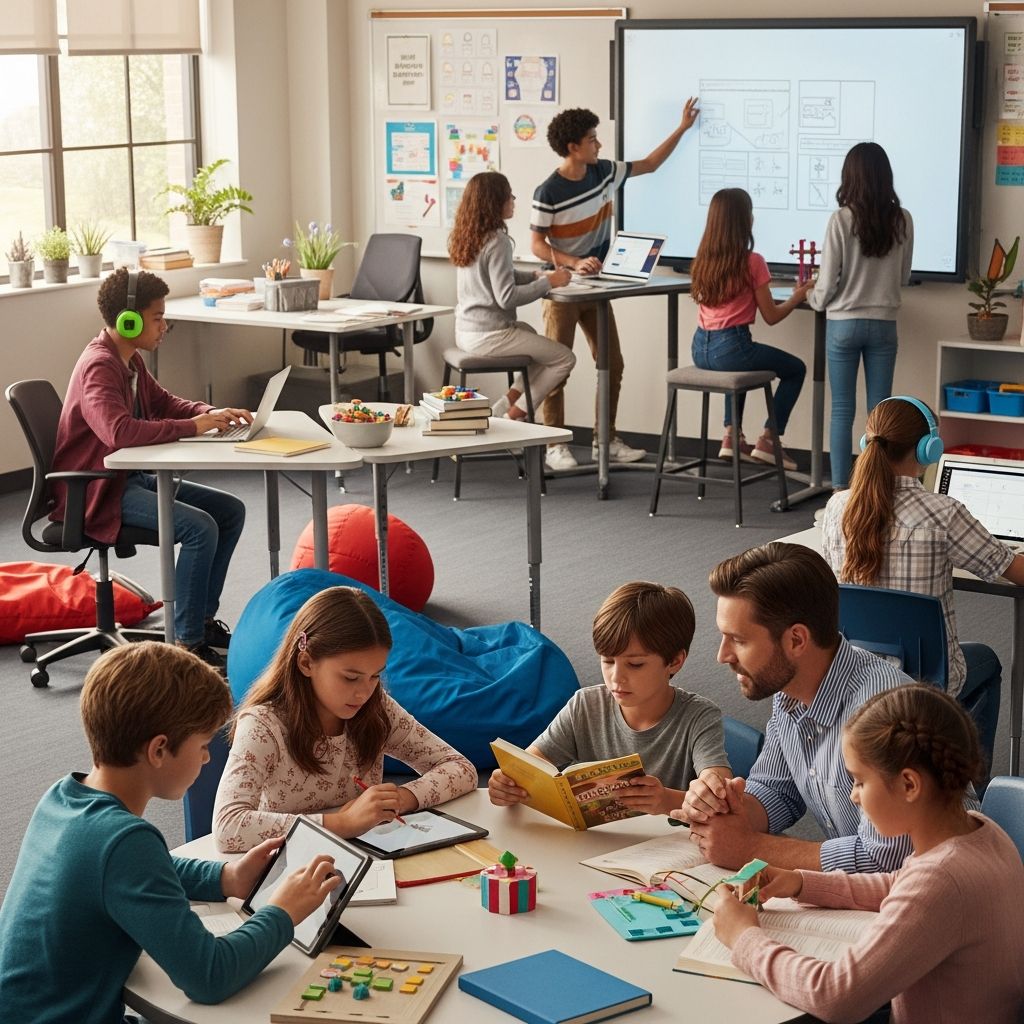
In an era of increasingly diverse classrooms, **differentiated instruction** stands as a cornerstone for equitable education. This approach involves customizing teaching methods to accommodate each student’s unique readiness, interests, and learning profiles, ensuring no child is left behind.
Understanding the Foundations of Classroom Differentiation
Differentiation transcends basic teaching adjustments; it requires intentional planning to address individual learner needs. Effective educators analyze student data from assessments to identify patterns in readiness levels, preferences, and strengths, forming the basis for tailored lessons.
Core principles include flexible grouping, where students collaborate in temporary teams based on current needs rather than fixed ability tracks. This promotes dynamic interaction and targets specific standards-driven goals. Unlike rigid tracking systems, these groups evolve daily, allowing for ongoing progress monitoring.
Key Elements of Differentiated Teaching
Differentiation operates across three primary dimensions: content, process, and product. Each element offers opportunities to personalize learning while maintaining rigorous standards.
| Dimension | Description | Examples |
|---|---|---|
| Content | All students engage with essential concepts, but materials vary in complexity or format. | Leveled readings, tiered worksheets, multimedia resources. |
| Process | Activities differ to help students process information uniquely. | Graphic organizers, collaborative protocols, hands-on experiments. |
| Product | Students demonstrate mastery through varied outputs. | Essays, presentations, projects, or digital portfolios. |
By balancing these areas, teachers create inclusive environments where every learner accesses challenging material.
Practical Strategies for Implementing Differentiation
Begin with thorough student assessment to map needs. Formative tools reveal gaps and strengths, guiding activity design.
- Tiered Activities: Assign tasks of varying complexity within the same skill. For instance, in math, basic groups add two-digit numbers with scaffolds, while advanced groups tackle multi-step problems.
- Learning Stations: Set up rotations focusing on prerequisites, with teacher-led support for targeted groups.
- Choice Menus: Offer options like “mild, medium, spicy” tasks, empowering students to select based on confidence.
- Scaffolds and Supports: Provide word banks, sentence starters, or recorded readings to bridge gaps without lowering expectations.
These methods ensure progression at individual paces, with constant access to appropriate challenges.
Building a Supportive Differentiated Environment
Success hinges on clear routines and behavioral norms. Establish expectations for independent work, group collaboration, and help-seeking to minimize disruptions.
Flexible seating and resource access enhance autonomy. Teachers model think-alouds during scaffolding, gradually fading support as mastery grows. Peer collaboration, structured with protocols, fosters mutual learning.
Addressing Challenges in Diverse Classrooms
Modern classes feature wide-ranging abilities, backgrounds, and interests. Differentiation counters one-size-fits-all pitfalls by customizing for equity.
Common hurdles include time constraints and planning overload. Start small: differentiate one lesson per unit, using data to refine iteratively. Professional development on tools like leveled texts boosts efficiency.
Data-driven adjustments prevent stagnation. Frequent checks inform grouping and scaffolds, ensuring relevance.
Real-World Examples of Differentiation in Action
Consider a science unit on ecosystems. All students explore core concepts, but content varies: visual learners use videos, while others read tiered articles.
In process, stations include model-building for kinesthetics and discussions for verbal processors. Products range from posters to lab reports, matching strengths.
Another example: Language arts with choice-based mastery checks. Students select reading levels via platforms, advancing upon proficiency.
Benefits for Students and Teachers Alike
Differentiated classrooms yield higher engagement, reduced behavioral issues, and improved outcomes. Students gain agency, building confidence through achievable challenges.
Teachers evolve as lifelong learners, honing data analysis and flexibility. Clear expectations create orderly spaces, freeing time for personalized support.
Measuring Impact and Continuous Improvement
Track progress via formative assessments and student feedback. Adjust based on what drives growth.
Long-term, aim for school-wide adoption, integrating into MTSS frameworks for Tier 1 excellence.
Frequently Asked Questions (FAQs)
What is the difference between differentiation and individualized education plans?
Differentiation tailors instruction for whole classes proactively, while IEPs provide formalized supports for specific students with disabilities.
How do I start differentiating with limited time?
Focus on one element per lesson, like content tiers, and use ready-made resources.
Does differentiation lower standards for advanced students?
No; it challenges all through tiered tasks and extensions.
Can technology aid differentiation?
Yes, tools for leveled content and adaptive assessments streamline personalization.
How often should groups change?
Daily or per lesson, based on needs and data.
References
- Making a Case for Differentiation in the Classroom — Branching Minds. 2023. https://www.branchingminds.com/blog/differentiation-in-the-classroom
- What Does Successful Differentiated Instruction Look Like in the Classroom? — Education Week. 2023-11. https://www.edweek.org/teaching-learning/opinion-what-does-successful-differentiated-instruction-look-like-in-the-classroom/2023/11
- Using Differentiation to Challenge All Students — Edutopia. N/A. https://www.edutopia.org/article/differentiation-challenge-all-students/
- Differentiate Content — IRIS Center, Peabody College, Vanderbilt University. N/A. https://iris.peabody.vanderbilt.edu/module/di/cresource/q2/p05/
- The Art of Differentiation in the Classroom — Opportunity Education. N/A. https://opportunityeducation.org/the-art-of-differentiation-in-the-classroom/
- Differentiation & Student Choice — Modern Classrooms Project. N/A. https://www.modernclassrooms.org/videos/v/teacher-tips/differentiation-student-choice

- Integrated M.A. in Applied Linguistics, University of Hyderabad
- 5+ years in editorial, instructional, SEO, and research-based writing
Sneha is a relationships and lifestyle writer with a strong foundation in applied linguistics and certified training in relationship coaching. She brings over five years of writing experience to theskillvault, crafting thoughtful, research-driven content that empowers readers to build healthier relationships, boost emotional well-being, and embrace holistic living. Her writing and insights reflect the belief that beauty, happiness, and wellness…