
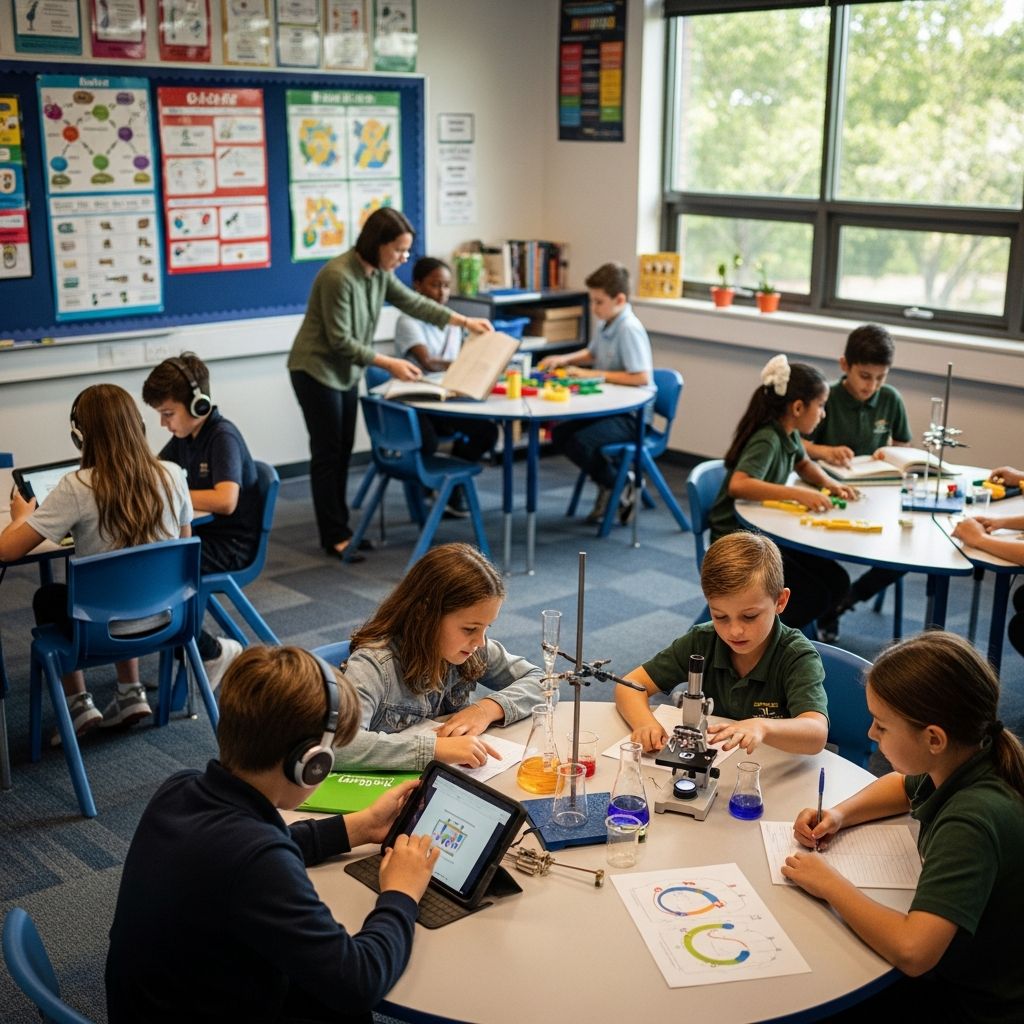
Station rotation transforms traditional classrooms into hubs of personalized learning by having students cycle through targeted activity zones. This blended approach integrates teacher guidance, digital tools, and collaborative tasks to address individual needs efficiently.
Understanding the Core Principles of Station Rotation
At its heart, station rotation divides class time into distinct learning zones where students rotate systematically. Typically featuring a teacher-directed area, a technology-based station, and hands-on group work, this model ensures every learner progresses at their pace while receiving tailored support. Research highlights its effectiveness in fostering autonomy and deep understanding through varied modalities.
The flexibility of this method allows adaptation across subjects and grades. For instance, in math, one station might involve algorithmic practice online, another physical manipulatives, and the third problem-solving discussions led by the instructor. This structure maximizes instructional time by freeing teachers for intensive small-group interventions.
Designing Effective Learning Stations
Successful station rotation hinges on purposeful station design. Each zone must align with learning objectives, balancing rigor with accessibility.
- Teacher-Directed Station: Focus on reteaching, extension, or intervention. Use data to customize content, providing scaffolds like visual aids or simplified explanations for struggling learners.
- Digital Station: Leverage adaptive platforms for self-paced practice. Tools offering instant feedback, such as interactive quizzes or simulations, reinforce concepts independently.
- Collaborative Station: Promote peer teaching and application through projects or games. This builds communication skills and deeper comprehension via explanation.
Start with three stations to build routines, expanding as proficiency grows. Ensure activities are meaningful, avoiding filler tasks that dilute focus.
Strategic Student Grouping Strategies
Grouping is pivotal for personalization. Base assignments on formative assessments, skill levels, or interests to create homogeneous or heterogeneous mixes as needed.
| Grouping Type | Purpose | Example |
|---|---|---|
| Skill-Based | Targeted support | Students needing phonics review together |
| Mixed-Ability | Peer tutoring | Pairs with varying strengths collaborate |
| Interest-Driven | Engagement boost | Topic enthusiasts in creative projects |
Regroup weekly using quick checks like exit tickets. This dynamic approach mirrors real-world adaptability, ensuring relevance.
Implementing Smooth Rotation Schedules
Clear rotation protocols prevent chaos. Use timers, visual cues, or digital slides for assignments.
- Practice transitions without content initially, debriefing successes.
- Opt for whole-class cycles or A/B splits over multiple days for deeper dives.
- Incorporate ‘must-do/may-do’ for flexibility, mandating essentials while allowing choices.
For younger grades, shorten intervals; older students handle longer, student-paced flows. Digital tools like slideshows enhance visibility and reusability.
Building Student Independence and Accountability
Independence grows through explicit routines. Teach procedures: material handling, help-seeking (peer first, then station resources), and cleanup.
- Model behaviors at each station.
- Use checklists for task completion.
- Incorporate self-assessments for reflection.
Gradually release control, starting teacher-timed and evolving to free-flow models where students advance upon mastery. This cultivates ownership, vital for lifelong learning.
Adapting for Diverse Classroom Environments
Station rotation suits face-to-face, hybrid, or remote setups. In hybrids, post rotations online for absent students. Virtually, use breakout rooms mimicking physical stations.
For project-based integration, dedicate a station to extended inquiries, rotating all students through weekly. Balance screen time with offline activities to prevent fatigue.
Overcoming Common Implementation Challenges
Initial hurdles like noise or off-task behavior resolve with practice. Address them by:
- Setting behavioral norms collaboratively.
- Providing noise-minimizing tools like headphones.
- Monitoring via roaming during rotations.
Track efficacy with observations and data. Adjust based on engagement metrics and growth.
Real-World Applications Across Grade Levels
Elementary: Short rotations with play-based collaboratives build foundational skills.
Middle: Deeper digital explorations support independence.
High School: Advanced projects and choice boards foster critical thinking.
Subject versatility shines in science labs (experiments), language arts (reading corners), and more.
Frequently Asked Questions
How long should students stay at each station?
Typically 10-20 minutes, adjusted by age and activity complexity. Practice ensures smooth pacing.
Can station rotation work without devices?
Yes; substitute digital with additional offline options, maintaining the rotation’s benefits.
What if a student finishes early?
Provide extensions, choice boards, or reflection prompts to sustain engagement.
How do I assess station work?
Combine digital analytics, observation notes, and student products for holistic evaluation.
Is training needed for this model?
Initial practice sessions equip students; teacher professional development enhances design.
Measuring Success and Iterating
Success manifests in heightened engagement, data-driven growth, and student feedback. Regularly survey learners and analyze progress to refine. This iterative process ensures sustained impact.
Station rotation empowers educators to meet diverse needs systematically, elevating classroom efficacy.
References
- How to Make Station Rotations Effective in Your Learning Environment — Novak Education. 2023. https://www.novakeducation.com/blog/how-to-make-station-rotations-effective-in-your-learning-environment
- Optimize Station Rotation in Blended Learning — AVID Open Access. 2023. https://avidopenaccess.org/resource/optimize-station-rotation-in-blended-learning/
- The Station Rotation Model: Prioritize Differentiation — Catlin Tucker. 2021-10-01. https://catlintucker.com/2021/10/station-rotation-model/
- How and Why to Integrate Station Rotation into Your Classroom — McGraw Hill PreK-12 (YouTube). 2023. https://www.youtube.com/watch?v=oY5iXxqe_WU
- The Station Rotation — PBIS Missouri. 2017-06. https://pbismissouri.org/wp-content/uploads/2017/06/STI2017_5E_The-Station-Rotation.pdf
- 3 Secrets to Successful Station Rotations — Blended Learning Universe. 2023. https://www.blendedlearning.org/3-secrets-to-successful-station-rotations/

Medha Deb is an editor with a master's degree in Applied Linguistics from the University of Hyderabad. She believes that her qualification has helped her develop a deep understanding of language and its application in various contexts. Medha specializes in the areas of beauty, health, sports, and wellness and is committed to ensuring that the content on the website is…