
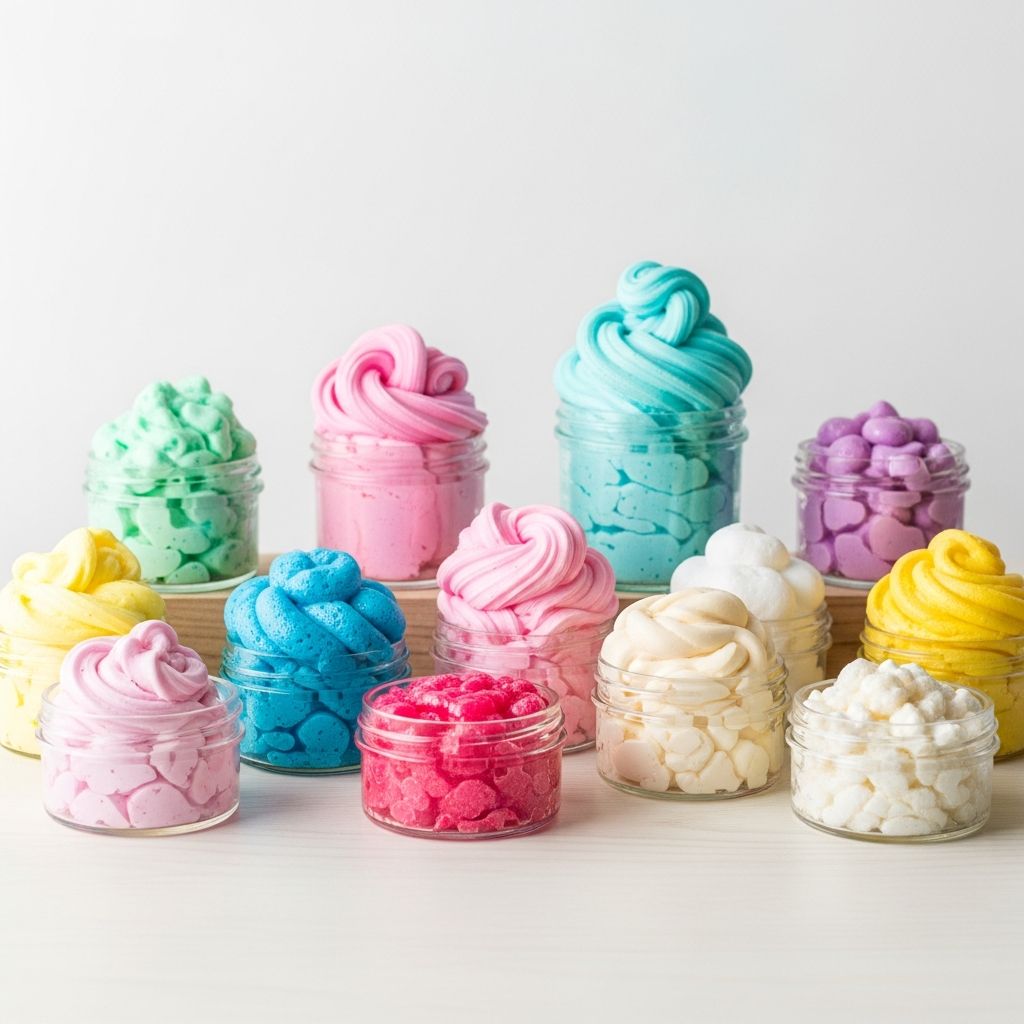
Slime has captivated imaginations across generations, serving as both a playful toy and an accessible science experiment. This guide dives deep into creating diverse slime types at home, using everyday ingredients to achieve unique textures and effects. From stretchy classics to airy clouds and crunchy surprises, these recipes promote creativity, teach basic chemistry principles like polymerization, and provide hours of sensory entertainment. Whether for kids’ parties, educational activities, or stress relief, mastering slime opens a world of customization possibilities.
Understanding Slime Science Basics
At its core, slime forms through a process called cross-linking, where polymers in glue or starch connect via an activator like borax or saline solution. This creates a non-Newtonian fluid that flows under gentle pressure but firms up when squeezed. Safety is paramount: supervise children, avoid ingestion, and use gloves if sensitive to ingredients. Common bases include PVA glue, cornstarch, or edible alternatives; activators vary from borax (diluted for safety) to baking soda and contact solution. Experimenting with ratios yields custom consistencies—more activator for firmer slime, less for gooier results.
Classic Stretchy Slime Foundations
Start with reliable basics before advancing to complex textures. These recipes yield about 1 cup of slime each and store in airtight containers for up to a week.
- Simple PVA Glue Slime: Mix ½ cup clear or white PVA glue with ½ cup water. In a separate bowl, dissolve 1 tsp borax in 1 cup warm water. Slowly add activator to glue mixture, stirring until it pulls away from the bowl. Knead for 2-3 minutes. Add food coloring for vibrant hues.
- Baking Soda Basic Slime: Combine 4 oz glue, 1 tbsp baking soda, and 1-2 tsp saline solution (with boric acid). Stir until non-sticky; adjust saline as needed. Ideal for sensitive skin.
These foundational slimes stretch up to 3 feet without breaking, perfect for beginners learning measurement and mixing skills.
Fluffy and Airy Slime Delights
Fluffy slime introduces volume and lightness using shaving cream or foam, mimicking clouds or marshmallows. Great for little hands due to its soft, moldable feel.
- Ultra-Fluffy Shaving Cream Slime: Blend ½ cup glue, 2 cups shaving cream, 1 tbsp cornstarch, and optional color/sparkles. Activate with 1-2 tbsp borax solution (1 tsp borax in ½ cup water), adding gradually. Knead until smooth; yields pillow-like texture.
- Microbead Snow Slime: Mix ½ cup glue, ½ tsp baking soda, 3 cups shaving cream, and ½ cup foam microbeads. Add 1 tbsp saline; knead on a wet surface. Shape into snowmen with tiny figures.
Pro tip: Over-kneading deflates fluffiness, so handle gently. These store best refrigerated.
Clear and Glossy Slime Techniques
Clear slime showcases embeds like glitter or beads, creating a glass-like, glossy finish after resting 3-5 days to de-bubble.
- Crystal Clear Goo: Use ½ cup clear glue and 1 tbsp baking soda. Activate with 1-2 tsp saline, washing hands first to minimize bubbles. Let sit uncovered overnight.
- Glitter-Infused Clear Slime: To 6 oz clear glue add 6 oz white glue, ½ tsp baking soda, and saline drops. Mix in fine glitter for sparkle.
| Slime Type | Key Ingredient | Rest Time | Best For |
|---|---|---|---|
| Clear Goo | Clear PVA Glue | 3-5 days | Embeds & Glitter |
| Glossy Basic | Clear Glue + Saline | 1 day | Quick Shine |
Patience is key—rushing leads to cloudy results. Use for jewelry-like creations or visual art projects.
Butter Slime and Smooth Sensations
Butter slime’s velvety, spreadable texture rivals lotion, achieved with clay or lotion additives. Non-sticky and ultra-soft.
- Classic Butter Slime: Mix 4 oz glue with 3 tbsp unscented lotion and 2 tbsp water. Add ½ tsp baking soda and 1 tsp glow powder (optional). Activate with 1 tbsp saline; knead extensively.
- Soft Clay Butter: Combine butter slime base with 1-2 tbsp soft modeling clay. Ideal for sculpting.
This variety reduces hand fatigue during long play sessions and holds shapes beautifully.
Cloud and Floam Textural Wonders
Cloud slime floats like cotton candy; floam adds satisfying crunch with beads.
- DIY Cloud Slime: Whisk ½ cup glue, 2 tbsp lotion, 1 cup + water, and 2 tbsp + dry cornstarch. Activate slowly; divide for colors. Airy and stretchy.
- Floam Crunch Slime: To fluffy base, stir in ½ cup polystyrene beads. Use liquid starch activator for best bead suspension.
Floam provides auditory feedback (crunch!), engaging multiple senses.
Edible and Taste-Safe Slime Options
For toddlers or sensitive skin, edible slimes use food items—no activators needed.
- Marshmallow Stretch Slime: Microwave 1 cup marshmallows with 1.5 tbsp coconut oil until gooey. Add cornstarch to knead into dough-like slime.
- Chia Seed Slime: Soak ¼ cup chia seeds in 1 cup water overnight; mix with cornstarch for gel texture.
- Starburst Candy Slime: Melt Starbursts, add powdered sugar for handling.
These prioritize safety over stretchiness but spark culinary creativity.
Themed and Holiday Slime Inspirations
Elevate slime with scents, colors, and embeds for occasions.
- Ocean Wave Slime: Blue clear slime with shell beads and neon food coloring.
- Hot Cocoa Slime: Brown fluffy with cocoa powder scent and mini marshmallows.
- Unicorn Floam: Pastel floam with iridescent glitter.
Customization: Infuse essential oils for scents like lavender or peppermint.
Troubleshooting Common Slime Issues
Slime too sticky? Add activator drops. Too hard? Rehydrate with lotion. Bubbles in clear? Let rest longer. Always measure precisely and mix thoroughly.
Frequently Asked Questions (FAQs)
What is the safest slime activator for kids?
Saline solution with baking soda is gentle and boric-acid based, minimizing irritation compared to straight borax.
How long does homemade slime last?
Up to 1 week in airtight containers; refrigerate fluffy types. Discard if moldy or foul-smelling.
Can I make slime without glue?
Yes, cornstarch oobleck or edible recipes work glue-free for non-stretchy alternatives.
Why is my clear slime cloudy?
Bubbles from over-stirring; rest 3-5 days uncovered to clear.
Is borax safe for slime?
Diluted and washed off hands, yes—but use alternatives for young kids.
Advanced Tips for Slime Mastery
Layer textures (cloud over butter), embed thermochromic pigment for color-changing effects, or scale up for parties. Track recipes in a journal to perfect personal favorites. Slime fosters STEM learning: discuss states of matter, viscosity, and chemical reactions during creation.
With these recipes, transform household staples into mesmerizing creations. Experiment boldly—slime’s forgiving nature encourages trial and error, building confidence and curiosity.
References
- How to make slime | Five slime recipes for slimy fun! — Rosie Research. 2023-05-15. https://rosieresearch.com/how-to-make-slime-recipe/
- 9 Different Types of Slime with Baking Soda — ARM & HAMMER™. 2024-02-10. https://www.armandhammer.com/en/articles/how-to-make-different-types-slime-with-baking-soda
- 50 of the Best Slime Recipes for Kids — Babble Dabble Do. 2023-11-20. https://babbledabbledo.com/50-of-the-best-slime-recipes-for-kids/
- Cloud Slime DIY Recipe — Eating Richly. 2024-01-05. https://eatingrichly.com/cloud-slime-diy-recipe/
- Slime Texture Guide — Sea Dragon Slime Shop. 2023-08-12. https://seadragonslimes.com/slime-texture-guide/

- Integrated M.A. in Applied Linguistics, University of Hyderabad
- 5+ years in editorial, instructional, SEO, and research-based writing
Sneha is a relationships and lifestyle writer with a strong foundation in applied linguistics and certified training in relationship coaching. She brings over five years of writing experience to theskillvault, crafting thoughtful, research-driven content that empowers readers to build healthier relationships, boost emotional well-being, and embrace holistic living. Her writing and insights reflect the belief that beauty, happiness, and wellness…