
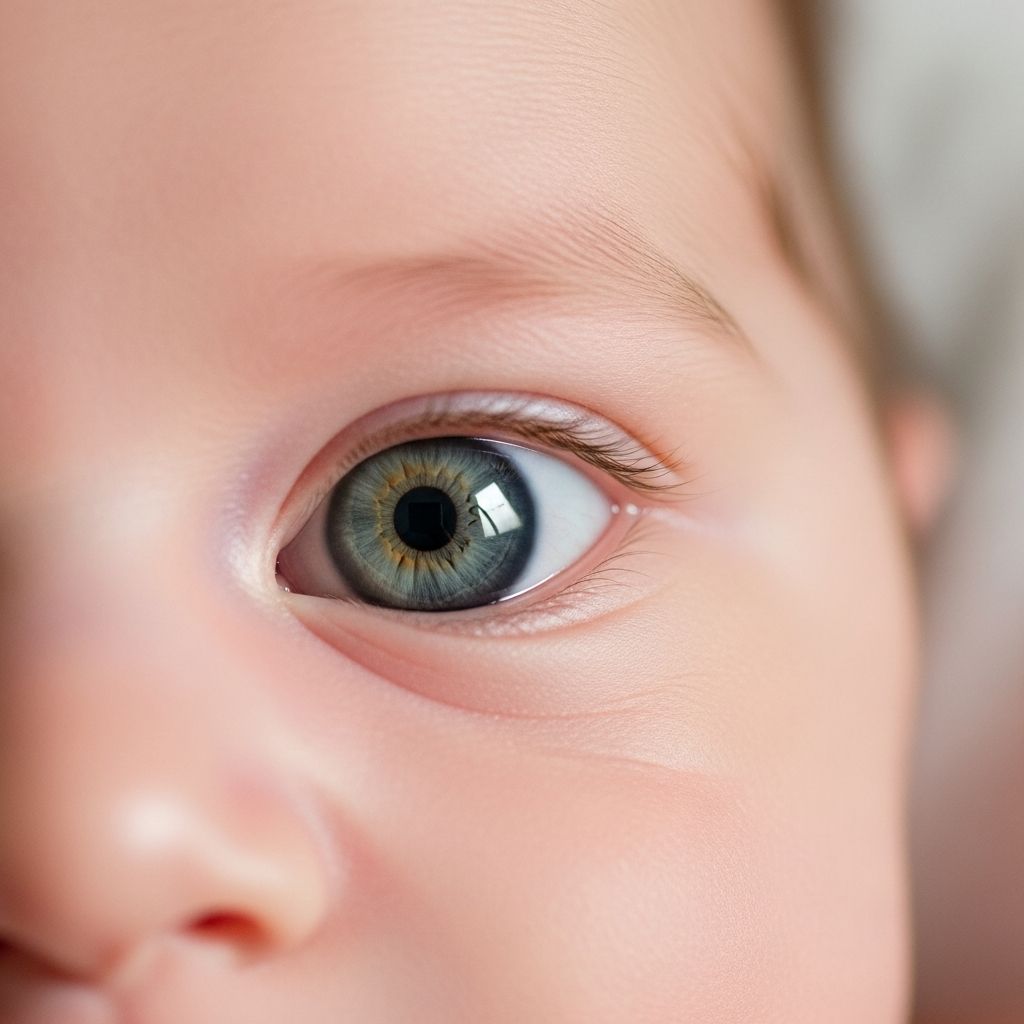
The Common Misconception About Newborn Eye Color
One of the most persistent myths in parenting and childhood development is that all babies arrive into the world with blue eyes. This widespread belief has been reinforced through popular culture, family stories, and casual conversation for generations. However, the reality is considerably more nuanced and scientifically fascinating. Research reveals that the actual percentage of newborns born with blue eyes is far lower than commonly assumed. A comprehensive 2016 study examining 192 newborns discovered that nearly two-thirds of them entered the world with brown eyes, while only approximately one in five possessed blue eyes at birth. This striking data demonstrates that blue eyes, far from being universal among newborns, represent just a fraction of the diverse eye colors present in infants across the globe.
The persistence of this myth stems largely from a limited geographical and cultural perspective. The statement “all babies are born with blue eyes” primarily reflects the experience of populations of European ancestry, where lighter eye colors are more prevalent. This narrow viewpoint has become so normalized in Western culture that it often overshadows the reality experienced by the majority of the world’s newborns. Understanding the true distribution of eye colors at birth requires acknowledging the significant role that genetics, ethnicity, and melanin production play in determining an infant’s initial iris appearance.
The Science of Melanin and Eye Pigmentation
At the heart of understanding newborn eye color lies a fundamental biological molecule: melanin. This dark pigment is responsible for coloring not only the iris but also the skin and hair. Melanin is produced by specialized cells called melanocytes, which are present throughout the body from birth. The amount of melanin present in the iris at birth determines whether a baby’s eyes appear blue, gray, brown, green, or hazel.
The relationship between melanin concentration and eye color follows a direct and predictable pattern. When melanocytes secrete minimal amounts of melanin into the iris, the eyes appear blue or gray. As melanin production increases, the eyes gradually transition through various shades: slightly more melanin produces green or hazel tones, while substantial melanin deposition results in brown eyes. This gradient system means that eye color exists along a spectrum rather than in discrete categories.
An intriguing aspect of blue eye color involves the physics of light itself. Babies born with blue eyes don’t actually possess blue pigment in their irises. Instead, their eyes appear blue through a phenomenon called Rayleigh scattering, the same process that makes the sky appear blue. When light enters an iris with minimal melanin, the light wavelengths scatter in a way that reflects shorter, blue wavelengths back to the observer. As melanin accumulates over time, it absorbs more light wavelengths, causing the apparent eye color to darken and shift toward brown, green, or hazel.
Ethnic and Genetic Factors in Eye Color Determination
The color of a newborn’s eyes is fundamentally determined by genetics and ethnic background. Babies born to parents with African, Asian, Hispanic, or Middle Eastern ancestry typically enter the world with brown or dark eyes because their melanocytes are already producing significant amounts of melanin in utero. These babies are often born with pre-determined, high melanin levels that result in tan skin, deep brown eyes, and dark hair. Because the pigment is already substantially present at birth, these features are likely to remain relatively unchanged throughout childhood and into adulthood.
In contrast, babies of primarily European ancestry typically possess lower melanin levels at birth, resulting in blue or gray eyes and lighter skin tones. The majority of newborns born with blue eyes are Caucasian or of European descent. This difference reflects evolutionary adaptations to varying levels of sun exposure in different geographical regions. Populations that evolved in areas with intense, year-round sunlight developed higher baseline melanin production to provide protection from ultraviolet radiation. Conversely, populations in regions with less intense sunlight evolved to produce melanin more gradually, triggered by post-natal light exposure.
Genetic inheritance of eye color follows established patterns but with important nuances. When both parents have blue eyes, there is approximately a 99% probability that their child will also have blue eyes. However, the inheritance of brown eyes is more complex. While two brown-eyed parents are statistically more likely to produce a brown-eyed child, it is entirely possible for them to have a blue-eyed baby, especially if grandparents or other relatives in the family lineage possessed blue eyes. This occurs because eye color genes can skip generations, carried silently in recessive genetic material.
The Timeline of Eye Color Development in Infants
Eye color in newborns is not static; it evolves significantly during the first months and years of life. Understanding this developmental timeline helps parents anticipate changes and recognize when development is proceeding normally.
- Birth to Three Months: Newborns with low melanin levels typically display blue or gray eyes. During this period, melanin production begins to accelerate in response to light exposure. Some babies may show subtle color shifts even in these early weeks.
- Three to Six Months: This is the period of most noticeable change for many infants. By approximately six months of age, a baby’s eye color has usually been largely determined. However, this doesn’t mean all changes have concluded; it simply represents a significant milestone in the development process.
- Six Months to One Year: Continued melanin deposition may produce further subtle shifts. Eyes may gradually deepen from blue to blue-green, from gray to hazel, or from light brown to darker brown.
- One to Three Years: In some cases, eye color continues to change beyond the first year of life. Green eyes may gradually shift to hazel, and hazel eyes may deepen into brown. However, brown eyes that are present at birth or develop early typically remain brown throughout life.
- Beyond Three Years: While most eye color changes occur within the first three years, approximately 10% of the population experience continued eye color shifts into adulthood. These changes are usually subtle and involve gradual deepening or slight hue modifications rather than dramatic transformations.
Factors That Influence Melanin Production and Eye Color Changes
Several environmental and physiological factors influence the rate and extent of melanin production in developing infants, thereby affecting the timeline and final outcome of eye color changes.
Light Exposure: Sunlight serves as a primary trigger for melanin production. Babies exposed to more natural light tend to experience more rapid melanin deposition and faster eye color changes. Increased light exposure stimulates melanocytes to produce and deposit more pigment into the iris. This explains why eye color changes often accelerate during spring and summer months when babies spend more time outdoors.
Individual Metabolic Differences: The rate at which individual melanocytes function varies from person to person. Some infants’ melanocytes respond quickly to light stimulation and rapidly deposit melanin, resulting in fast eye color changes. Others produce melanin more gradually, extending the timeline for color development over several years.
Genetic Programming: Beyond the genes that determine baseline melanin levels, genetic factors also influence the rate at which melanin production accelerates during infancy. Some families show patterns of rapid eye color changes across generations, while others demonstrate more gradual transitions.
Overall Health and Development: General infant health, nutrition, and development can subtly influence the timeline of melanin production. Infants who are healthy and developing normally typically follow expected patterns of eye color development, though individual variation always exists.
Special Conditions and Unusual Eye Colors
While typical eye color development follows predictable patterns, certain conditions and characteristics produce unusual or distinctive eye appearances that differ from the normal progression.
Albinism: Individuals with albinism produce little to no melanin throughout their bodies. Babies with albinism have eyes that appear pink or very light red, reflecting the blood vessels visible through the unpigmented iris. This condition is fundamentally different from normal developmental processes and requires specific medical care and sun protection.
Heterochromia: In rare cases, infants may develop eyes of different colors, a condition known as heterochromia. This occurs when melanin production differs between the two eyes, resulting in one eye appearing blue while the other is green, brown, or hazel. This condition is usually benign and cosmetic, though it warrants professional evaluation to rule out underlying conditions.
Gray Eyes: Some newborns are born with distinctly gray eyes rather than blue. Gray eyes typically indicate slightly more melanin than pure blue eyes but less than what would produce hazel or green. As with blue eyes, gray eyes often transition to other colors as melanin accumulates.
Distinguishing Eye Color Changes From Pathological Conditions
Parents and caregivers should understand that normal eye color development differs from changes that might indicate underlying medical conditions. While gradual color transitions from blue to blue-green to hazel to brown represent normal development, certain changes warrant professional evaluation.
Sudden dramatic changes in eye color, particularly changes that occur after the third year of life, may indicate conditions requiring medical attention. Additionally, changes accompanied by other symptoms such as eye pain, vision problems, excessive tearing, or light sensitivity should be evaluated by a pediatric ophthalmologist. These symptoms might indicate conditions unrelated to normal melanin development.
Practical Implications for Parents and Caregivers
Understanding the science and timeline of eye color development helps parents make informed decisions about their infant’s care and development. Recognizing that eye color changes are normal and expected prevents unnecessary concern. Additionally, understanding the genetic basis of eye color helps explain why siblings may have different eye colors despite having the same parents.
Exposure to appropriate amounts of natural light supports healthy development, including normal melanin production and eye color development. However, this must be balanced with proper sun protection, particularly for infants with lighter skin tones who are more susceptible to sun damage.
Frequently Asked Questions
Q: Is it true that all babies are born with blue eyes?
A: No, this is a common misconception. Research shows that only about 20% of newborns are born with blue eyes. Approximately two-thirds of newborns are born with brown eyes, while others are born with gray, green, or hazel eyes. The myth primarily reflects the experience of populations of European ancestry.
Q: When will my baby’s eye color stop changing?
A: Most babies’ eye color is largely determined by six months of age. However, changes can continue until approximately three years old. In about 10% of the population, subtle eye color changes may continue into adulthood.
Q: Can brown eyes change to blue eyes?
A: No, brown eyes will not change to blue eyes. Once brown color is established through substantial melanin deposition, it remains stable. However, lighter eye colors like blue may change to green, hazel, or brown as melanin levels increase.
Q: Does sunlight exposure affect my baby’s eye color development?
A: Yes, sunlight exposure stimulates melanin production in the iris, which can accelerate eye color changes. Babies exposed to more natural light typically experience faster melanin deposition. However, proper sun protection is still essential for skin and eye health.
Q: If both my parents have blue eyes, what color will my baby’s eyes be?
A: There is approximately a 99% probability that your baby will have blue eyes if both parents have blue eyes. However, if you carry recessive genes for brown eyes from your grandparents, there is a small possibility your child could have brown eyes.
Q: Why do babies of African and Asian descent typically have brown eyes at birth?
A: Babies from these ethnic backgrounds typically have higher melanin levels at birth because their melanocytes are already producing substantial amounts of pigment in utero. This reflects evolutionary adaptations to geographic regions with more intense sunlight.
Q: What causes blue eyes if babies don’t have blue pigment?
A: Blue eyes result from a physics phenomenon called Rayleigh scattering. When light enters an iris with minimal melanin, the light wavelengths scatter in a way that reflects shorter blue wavelengths. This is the same process that makes the sky appear blue.
References
- Are All Babies Born With Blue Eyes? Fact or Fiction? — Healthline. 2024. https://www.healthline.com/health/all-babies-are-born-with-blue-eyes
- Is it true all babies are born with blue eyes? — All About Vision. 2024. https://www.allaboutvision.com/eye-care/parents-kids/are-all-babies-born-with-blue-eyes/
- When Do Babies’ Eyes Change Color? — Cleveland Clinic. 2024. https://health.clevelandclinic.org/when-do-babies-eyes-change-color
- Why Babies Are Born With Blue Eyes — FLEI. 2024. https://flei.com/why-babies-are-born-with-blue-eyes/
- Are All Babies Born with Blue Eyes? The Truth About Newborn Eye Color — YouTube (Dr. Rupa Wong, Board-Certified Pediatric Ophthalmologist). 2024. https://www.youtube.com/watch?v=8bnaRNg1LbA
- When Do Babies’ Eyes Change Color? Uncover the Answer — Pampers. 2024. https://www.pampers.com/en-us/baby/development/article/when-do-babies-eyes-change-color

- Integrated M.A. in Applied Linguistics, University of Hyderabad
- 5+ years in editorial, instructional, SEO, and research-based writing
Sneha is a relationships and lifestyle writer with a strong foundation in applied linguistics and certified training in relationship coaching. She brings over five years of writing experience to theskillvault, crafting thoughtful, research-driven content that empowers readers to build healthier relationships, boost emotional well-being, and embrace holistic living. Her writing and insights reflect the belief that beauty, happiness, and wellness…