
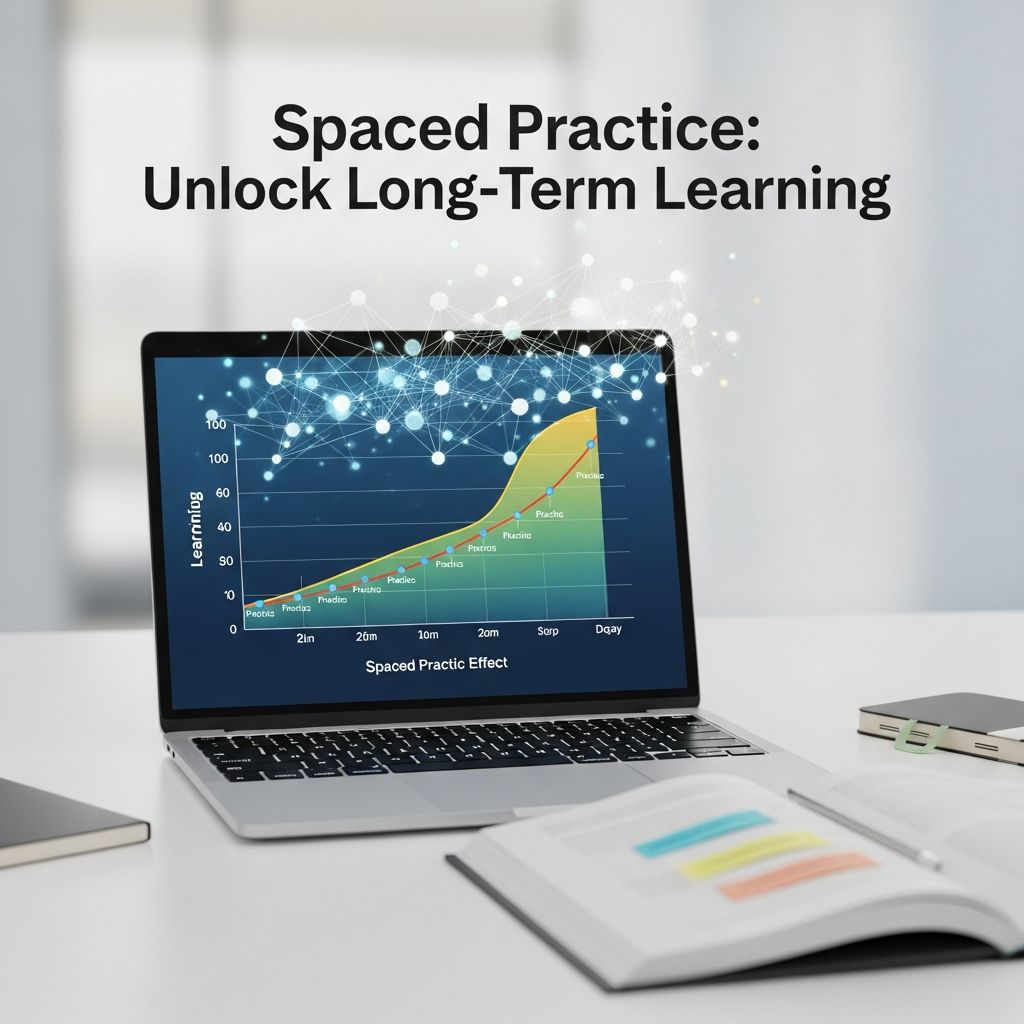
Spaced practice involves distributing study sessions across time rather than concentrating them into one intensive block, leading to superior memory retention and recall compared to traditional cramming methods.
The Science Behind Spaced Practice
At its foundation, spaced practice leverages the brain’s natural memory processes. When new information enters the mind, it resides briefly in working memory before fading unless reinforced. By introducing deliberate intervals between reviews, learners exploit the forgetting curve—a concept pioneered by Hermann Ebbinghaus showing rapid initial memory decay that slows with repeated exposure.
During these gaps, the brain consolidates information, strengthening neural pathways through synaptic plasticity. Sleep plays a crucial role here, as it facilitates memory reactivation and transfer to long-term storage. Research demonstrates that this method not only counters forgetting but builds more resilient memories, enabling quicker retrieval with less effort.
Unlike massed practice, where fatigue sets in quickly, spacing reduces cognitive overload, allowing deeper processing. Studies across psychology and neuroscience confirm spaced sessions yield retention lasting years, not weeks.
Key Benefits for Learners of All Ages
Implementing spaced practice delivers measurable advantages in educational and professional settings. Here’s a breakdown:
- Enhanced Retention: Information sticks longer, with learners recalling facts months later.
- Improved Recall Speed: Frequent, spaced retrieval makes accessing knowledge automatic.
- Reduced Study Time: Shorter, distributed sessions achieve better results than marathon crams.
- Lower Stress Levels: Breaking learning into manageable chunks minimizes burnout and anxiety.
- Broader Applicability: Effective for facts, skills, languages, and complex concepts.
In classrooms, students using spaced techniques outperform peers on exams and retain knowledge for future applications. Professionals in training programs report higher engagement and fewer refreshers needed.
How Spaced Practice Differs from Common Study Habits
Many default to cramming, believing intensity equals mastery. However, this creates shallow, short-lived memories prone to decay. Spaced practice, by contrast, emphasizes quality over quantity.
| Aspect | Massed Practice (Cramming) | Spaced Practice |
|---|---|---|
| Session Structure | Long, continuous blocks | Short sessions with growing intervals |
| Memory Outcome | Temporary boost, quick forget | Durable long-term storage |
| Cognitive Load | High fatigue, overload | Manageable, restorative breaks |
| Retention Duration | Weeks | Years |
Interleaving—mixing topics—complements spacing by enhancing discrimination between concepts, but spacing alone fortifies individual items.
Practical Ways to Implement Spaced Practice
Adopting this technique requires planning but yields exponential returns. Start by mapping review schedules based on material complexity.
For Students
- After initial learning, review the next day, then after 3 days, 1 week, and 1 month.
- Use flashcards with apps that automate intervals, like those employing spaced repetition algorithms.
- End each study session with 5-minute quizzes on prior material.
For Teachers and Trainers
- Incorporate low-stakes retrieval at lesson starts, linking back to past topics.
- Design curricula with built-in reviews: weekly recaps, monthly assessments.
- Focus on one theme per cycle to avoid overload.
Incorporate active recall—testing yourself—over passive rereading for amplified effects. Tools like digital platforms can generate quizzes and track progress automatically.
Real-World Applications Across Disciplines
Spaced practice transcends academics, proving versatile in diverse fields.
- Language Acquisition: Daily vocab drills transition to weekly, building fluency without overwhelm.
- Corporate Training: Monthly compliance modules replace annual marathons, boosting adherence.
- Skill Development: Coders practice techniques weekly; musicians rehearse pieces over expanding gaps.
- Health Education: Nurses retain protocols longer via spaced simulations.
Context variation during reviews—different environments or cues—further solidifies access, mimicking real-life variability.
Overcoming Common Challenges
Barriers like procrastination or irregular schedules can hinder adoption. Counter them by:
- Setting micro-habits: 10 minutes daily beats none.
- Using reminders via apps or calendars.
- Pairing with accountability partners for consistency.
Background knowledge influences optimal spacing; novices need tighter intervals, experts wider ones. Experiment to personalize.
Evidence from Cognitive Research
Decades of studies validate spacing’s supremacy. Ebbinghaus’s early experiments laid groundwork, with modern meta-analyses confirming 200%+ retention gains. Neuroscience reveals strengthened synapses post-sleep consolidation.
In education, spaced groups score 10-20% higher on delayed tests. Health professions see sustained procedural memory.
Spaced Practice in Digital Tools
Technology amplifies accessibility. AI-driven platforms create multimodal content—quizzes, videos—for varied intervals. Adaptive algorithms adjust spacing per performance, optimizing efficiency.
Frequently Asked Questions (FAQs)
What exactly is spaced practice?
It’s distributing learning sessions over time with increasing intervals, promoting memory consolidation over cramming.
How does spaced practice improve memory?
By allowing partial forgetting then effortful recall, it strengthens neural connections and counters the forgetting curve.
Is spaced practice suitable for all subjects?
Yes, from math facts to language skills and professional training.
How do I create a spaced practice schedule?
Review Day 1, Day 3, Week 1, Month 1; adjust based on mastery.
Can spaced practice reduce exam stress?
Absolutely, shorter sessions build confidence and retention gradually.
Final Thoughts on Transforming Your Learning
Shifting to spaced practice rewires study habits for enduring success. Whether student or professional, this method turns fleeting knowledge into lasting expertise. Begin small—space one topic today—and watch retention soar.
References
- Spaced Practice: A Teacher’s Guide — Structural Learning. 2023. https://www.structural-learning.com/post/spaced-practice-a-teachers-guide
- Spaced Practice: The Secret to Smarter, Longer-Lasting Learning — LearnExperts.ai. 2023. https://learnexperts.ai/blog/spaced-practice/
- Spaced practice and its role in supporting learning and retention — The Education Hub. 2023. https://theeducationhub.org.nz/spaced-practice-and-its-role-in-supporting-learning-and-retention/
- The effect of spaced learning on the learning outcome and retention — PMC (NCBI). 2024-03-15. https://pmc.ncbi.nlm.nih.gov/articles/PMC10958887/
- L2L Strategy – Spaced Practice — University of Arizona Academic Affairs. 2023. https://academicaffairs.arizona.edu/l2l-strategy-spaced-practice

- Integrated M.A. in Applied Linguistics, University of Hyderabad
- 5+ years in editorial, instructional, SEO, and research-based writing
Sneha is a relationships and lifestyle writer with a strong foundation in applied linguistics and certified training in relationship coaching. She brings over five years of writing experience to theskillvault, crafting thoughtful, research-driven content that empowers readers to build healthier relationships, boost emotional well-being, and embrace holistic living. Her writing and insights reflect the belief that beauty, happiness, and wellness…