
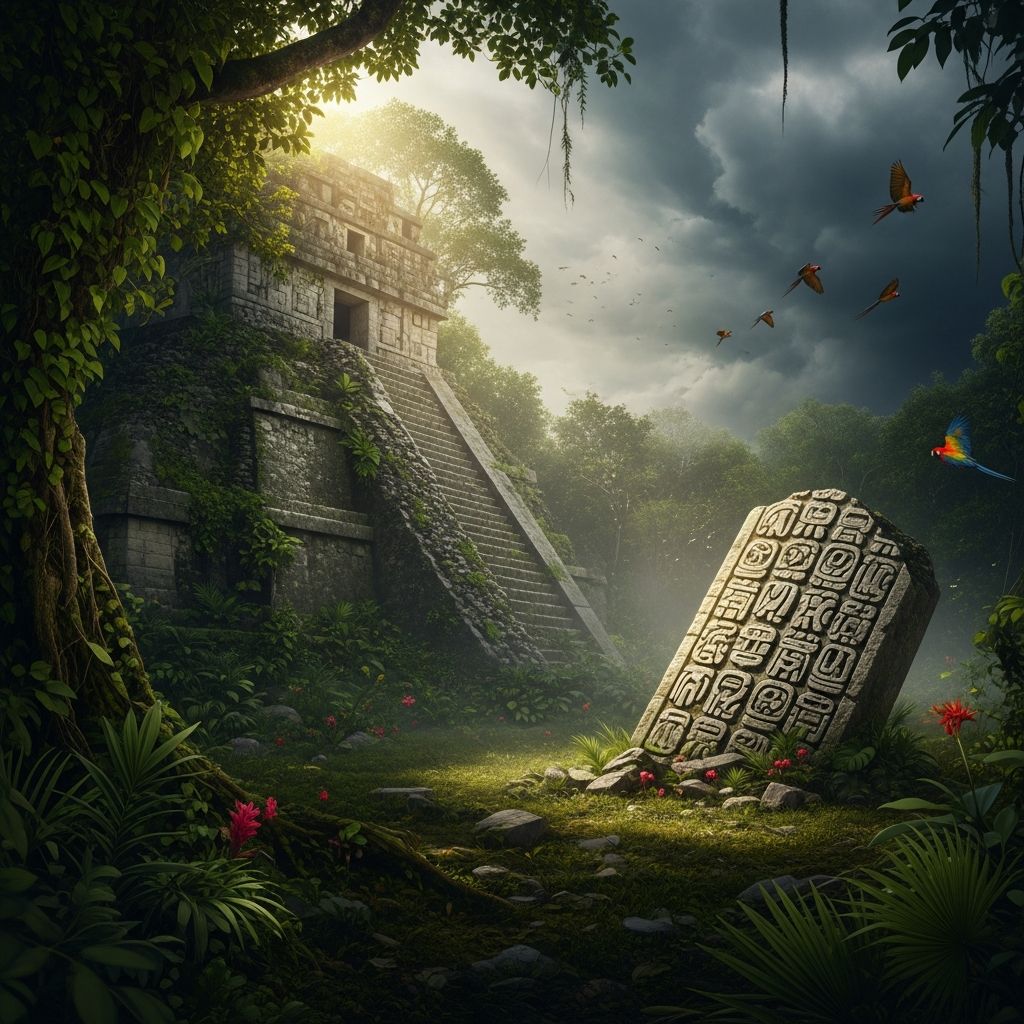
The Classic Maya civilization, renowned for its sophisticated writing system, monumental architecture, and intricate calendar, flourished across Mesoamerica from approximately 250 to 900 AD. Yet, by the end of the 9th century, many of its grand city-states in the southern lowlands lay abandoned, marking what historians term the “Classic Maya collapse.” This event was not a total extinction but a profound transformation, with northern regions like Chichen Itza thriving into the Postclassic period. Understanding this decline requires examining intertwined environmental, social, and political pressures that pushed these urban centers beyond sustainability.
Environmental Pressures: Drought and Climate Shifts
One of the most compelling explanations for the Maya collapse centers on severe, prolonged droughts that afflicted the Yucatán Peninsula and Petén Basin between 800 and 930 AD. Paleoclimatological evidence from speleothems—cave formations like stalactites and stalagmites—reveals multi-year dry spells that drastically reduced rainfall. These megadroughts disrupted the delicate balance of wet and dry seasons critical to Maya agriculture, which relied on rain-fed maize cultivation and managed water systems.
Maya kings constructed urban reservoirs to store rainwater, attracting farmers during the dry season. However, dropping water levels led to crop failures, famine, and erosion of royal authority, as rulers’ divine claims faltered amid scarcity. Lower water also hampered canoe-based trade, isolating cities economically. Studies of lake sediments, including sulfur percentages and oxygen isotopes in gastropod shells from Lake Chichancanab, confirm strong correlations between drought peaks and cultural discontinuities.
Deforestation and Soil Degradation
The Maya population boom during the Late Classic period exacerbated environmental vulnerabilities. Clearing vast forests for agriculture, urban expansion, and lime plaster production stripped the thin tropical soils of protective cover. This deforestation accelerated erosion, reduced soil fertility, and diminished water retention, compounding drought effects.
In the southern lowlands, where soils were already nutrient-poor, intensive farming practices like slash-and-burn depleted resources faster than they could regenerate. Lidar surveys in the Western Maya Lowlands reveal modified landscapes in rural areas, such as terraced hillsides and drainage channels, indicating adaptive efforts. Yet, major centers like Piedras Negras lacked such infrastructure, suggesting uneven resilience and potential overreliance on tribute from outlying farms.
Escalating Warfare and Political Instability
Chronic warfare among rival city-states intensified during the Late Classic, diverting resources from agriculture and infrastructure to fortifications and military campaigns. Hilltop forts detected via lidar across the landscape point to ongoing conflicts over tribute, trade routes, and fertile lands. Kings, portraying themselves as divine intermediaries, engaged in escalating violence that disrupted daily life and economic stability.
As droughts eroded trust in these rulers—whose powers were tied to rain-bringing deities—political fragmentation grew. Rulers wasted resources on wars rather than maintaining water systems, further weakening their polities. This internal strife prevented coordinated responses to environmental crises, hastening urban abandonment.
Alternative Hypotheses: Trade Disruptions and Disease
Beyond environmental and martial factors, disruptions in long-distance trade networks may have contributed. The intricate exchange systems linking Maya lowlands to central Mexican powers like Teotihuacán faltered, possibly due to lowered river levels impeding canoe travel or broader regional shifts. While not the primary cause, this economic strain amplified hardships.
Epidemic diseases represent another theory, with tropical parasites like those causing trypanosomiasis or diarrheal illnesses thriving in deforested, densely populated areas. Though direct evidence is scarce, such outbreaks could explain rapid depopulations and hinder recovery.
| Theory | Primary Evidence | Strengths | Limitations |
|---|---|---|---|
| Drought | Speleothems, lake sediments | Correlates with abandonment timelines | Northern Maya persisted |
| Deforestation/Erosion | Pollen records, soil analysis | Explains agricultural decline | Did not affect all regions equally |
| Warfare | Fortifications, stelae depictions | Documented escalation | Ongoing before collapse |
| Trade Collapse | Archaeological trade goods | Links to external networks | Limited direct proof |
| Disease | Bioarchaeological inferences | Explains depopulation | Lack of skeletal evidence |
Regional Variations: Not a Uniform Fall
The collapse was not synchronous or uniform. Southern lowland centers like Tikal and Calakmul were hit hardest around 900 AD, while northern Yucatán sites endured. Lidar data from Piedras Negras, La Mar, and surrounding areas show rural communities with robust agricultural adaptations, contrasting with urban cores lacking such features. This suggests some polities buffered crises better through decentralized farming or conflict-driven fortifications.
Postcollapse, Maya descendants reorganized into smaller, more resilient communities, contributing to Postclassic florescence at sites like Mayapán. The “collapse” thus represents a systemic reconfiguration rather than annihilation.
Modern Insights from Science and Technology
Advances like lidar have revolutionized Maya archaeology, unveiling hidden forts, fields, and roads under jungle canopies. Paleoclimate reconstructions from tree rings, isotopes, and sediments provide quantifiable drought data, strengthening the multifactor model. Over 80 theories exist, but consensus leans toward drought as a catalyst interacting with human-induced stresses.
- Speleothem analysis: Tracks rainfall via oxygen isotopes.
- Lidar mapping: Reveals 10,000+ structures in previously surveyed areas.
- Sediment cores: Indicate evaporation-precipitation balances.
Lessons for Today: Sustainability in Fragile Environments
The Maya saga underscores vulnerabilities in tropical civilizations dependent on unpredictable rainfall and fragile ecosystems. Modern climate change echoes these megadroughts, prompting reflections on water management, deforestation, and sociopolitical resilience. Unlike the Maya, contemporary societies have global trade and technology, but local overexploitation remains a risk.
Frequently Asked Questions (FAQs)
Did the Maya civilization completely disappear?
No, the Classic collapse affected southern lowlands primarily; northern groups persisted, and Maya descendants number millions today.
Was drought the only cause?
No, it interacted with warfare, deforestation, and overpopulation; no single factor explains the full picture.
How do we know about these droughts?
Through cave speleothems and lake sediments showing reduced rainfall from 800-930 AD.
Did invaders cause the collapse?
Evidence for foreign invasion, like Toltec influence, is minimal and not seen as primary.
What role did kings play?
Rulers’ focus on wars and divine claims eroded legitimacy during crises.
References
- Why did the Maya civilization collapse? — Live Science. 2023-05-15. https://www.livescience.com/why-maya-civilization-collapsed.html
- Classic Maya collapse — Wikipedia. 2024-01-10. https://en.wikipedia.org/wiki/Classic_Maya_collapse
- Why did the Maya civilization collapse? — YouTube (Kings and Generals). 2022-08-20. https://www.youtube.com/watch?v=SxwxTgFVUDE
- Did the ancient Maya fall because of a drought, or something else? — Brandeis University. 2021-11-10. https://www.brandeis.edu/now/2021/november/maya-research-golden.html
- Drought and the Ancient Maya Civilization — NOAA NCEI. 2021-10-31. https://ncei.noaa.gov/sites/default/files/2021-11/7%20Drought%20and%20the%20Ancient%20Maya%20Civilization%20-%20FINAL%20OCT%202021.pdf

- Integrated M.A. in Applied Linguistics, University of Hyderabad
- 5+ years in editorial, instructional, SEO, and research-based writing
Sneha is a relationships and lifestyle writer with a strong foundation in applied linguistics and certified training in relationship coaching. She brings over five years of writing experience to theskillvault, crafting thoughtful, research-driven content that empowers readers to build healthier relationships, boost emotional well-being, and embrace holistic living. Her writing and insights reflect the belief that beauty, happiness, and wellness…