
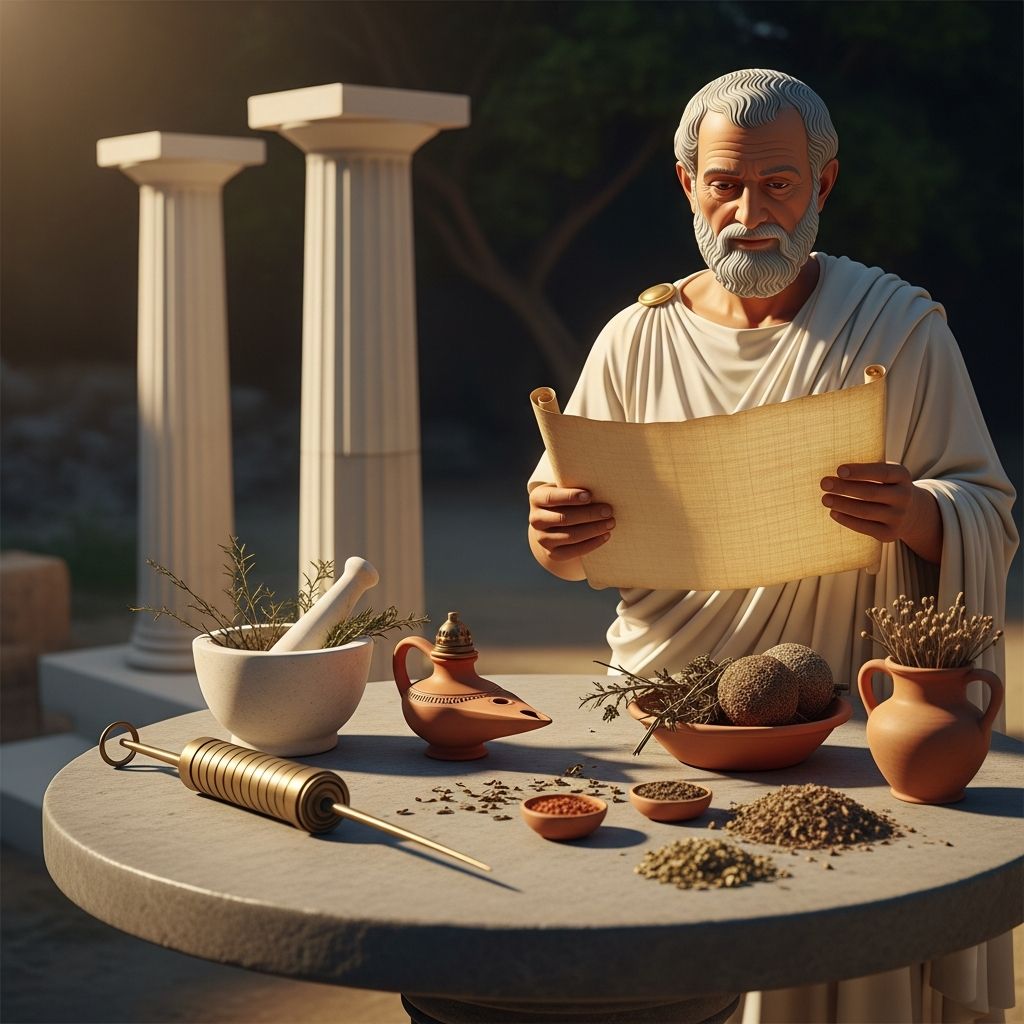
Ancient Greek medicine marked a transformative era in human health practices, shifting from supernatural explanations to empirical observation and rational inquiry. This evolution laid foundational principles for Western medicine, emphasizing balance, diet, and natural remedies over divine intervention alone.
Mythological Foundations of Greek Healing
In the earliest phases of Greek society, medicine intertwined deeply with mythology. Deities like Asclepius, son of Apollo, embodied healing powers. Legends recount Chiron, the wise centaur, who mentored heroes such as Achilles in medicinal arts after suffering a wound himself. These stories highlight how Greeks initially viewed illness as potentially stemming from godly displeasure or heroic wounds, blending narrative with practical knowledge.
Achilles, trained by Chiron, applied herbal poultices to battlefield injuries, as depicted in Homeric epics. This mythological lens provided cultural context for later scientific advancements, where healers invoked gods during treatments while experimenting with plants and techniques.
The Dawn of Rational Medicine: Hippocrates’ Legacy
Hippocrates of Kos (c. 460–370 BCE), revered as the ‘Father of Medicine,’ revolutionized healing by rejecting supernatural causes for diseases. He advocated examining patients holistically—considering diet, environment, and lifestyle—over attributing ailments to demons or gods. His school on Kos produced the Hippocratic Corpus, a collection of texts covering diagnostics, prognoses, and therapies.
Hippocratic physicians observed symptoms meticulously: facial expressions, pulse rates, urine analysis, and bowel habits informed diagnoses. This clinical approach prioritized prognosis, predicting disease courses to guide interventions, establishing medicine as a systematic discipline.
Humoral Theory: Balancing the Body’s Essences
Central to Greek medicine was humoral theory, positing four bodily fluids—blood, phlegm, yellow bile, and black bile—must remain in equilibrium for health. Imbalances, influenced by seasons, diet, or age, caused illness. For instance, excess black bile linked to melancholy, while phlegm excess caused colds.
| Humor | Element | Quality | Associated Illness |
|---|---|---|---|
| Blood | Air | Moist, Warm | Fever, Vitality Loss |
| Phlegm | Water | Cold, Moist | Respiratory Issues |
| Yellow Bile | Fire | Warm, Dry | Anger, Digestion Problems |
| Black Bile | Earth | Cold, Dry | Melancholy, Tumors |
Treatments aimed to restore balance through opposites: cooling hot conditions or drying wet ones. Dietetics played a key role, blurring lines between food and medicine—plants like silphium served culinary and curative purposes.
Temple Medicine: Sacred Spaces for Recovery
Asclepeia, sanctuaries dedicated to Asclepius, offered holistic healing. Patients underwent purification rituals, then ‘enkoimesis’—temple-induced sleep where dreams delivered divine prescriptions. Attendants interpreted these, prescribing baths, exercises, or diets. Pergamum’s Asclepeion featured therapeutic springs and herbal teas like chamomile for calm.
- Purification: Cleansing baths and vows prepared the body and spirit.
- Incubation: Sleeping in sacred chambers for healing visions.
- Therapies: Mud packs, massages, and herbal infusions followed dreams.
These sites combined faith, rest, and nature, functioning as early wellness retreats with high success rates due to placebo effects and sanitation.
Herbal and Pharmacological Innovations
Greeks excelled in botany, using plants for remedies. Hippocratic texts detail barley soups with honey for chest ailments, celery for inflammation, and hellebore in microdoses for gout—poisonous in excess.
Pharmacology distinguished healing doses from toxic ones. Myrrh, frankincense, and pomegranate featured in both cuisine and cures. Essential oils and teas persisted into modern herbalism, underscoring enduring efficacy.
Diet and Lifestyle in Preventive Care
Prevention trumped cure in Greek thought: ‘Let food be thy medicine.’ Regimens tailored to humoral types included balanced meals, exercise, and massages. Galen later refined athletic training with progressive friction techniques—slow to vigorous—for muscle recovery.
Seasonal adjustments prevented imbalances; summer diets favored cooling fruits, winter warming spices. This dietetic focus influenced longevity practices.
Surgical Practices and Wound Management
Surgery remained limited due to infection risks and absent antiseptics/anesthetics. Battlefield medicine advanced: arrowhead removal, wound cleaning, hemorrhage control via ligation. Trepanation addressed skull fractures, possibly relieving pressure pre-infection.
Minor procedures like abscess drainage or cataract couching occurred, often with opium for pain—though patients were typically restrained. Instruments from archaeological sites reveal sophisticated tools for probing and cutting.
Key Figures Beyond Hippocrates
Asclepius symbolized divine healing, but mortals like Herophilus dissected cadavers, mapping nerves and distinguishing arteries/veins. Erasistratus theorized circulation precursors. Galen synthesized these, influencing medicine for millennia.
Legacy and Modern Influence
Greek medicine’s rationalism, ethics (Hippocratic Oath), and empiricism underpin today’s practices. Humoral ideas evolved into germ theory, dietetics into nutrition science. Temples prefigured hospitals; herbals inform pharmacology.
Frequently Asked Questions (FAQs)
What was the most important innovation in ancient Greek medicine?
The shift to rational, observation-based diagnosis by Hippocrates, separating medicine from religion.
How did Greeks treat imbalances in humors?
Through diet, exercise, purgatives, and bloodletting to restore equilibrium.
Were surgeries common in ancient Greece?
Rare for internal issues due to risks, but battlefield wound care was advanced.
What role did temples play in healing?
Asclepeia provided ritualistic, dream-based therapies combining faith and nature.
Do any Greek remedies persist today?
Yes, herbal teas like chamomile and diet-based prevention echo Hippocratic principles.
References
- Ancient Greek Medicine — World History Encyclopedia. 2020-10-02. https://www.worldhistory.org/Greek_Medicine/
- Ancient Greek medicine: Influences and practice — Medical News Today. 2018-06-27. https://www.medicalnewstoday.com/articles/323596
- Flora Physic: Magic and Medicine in Ancient Greece — Hellenic.org.au. N/A. https://www.hellenic.org.au/post/flora-physic-magic-and-medicine-in-ancient-greece
- Ancient Greek medicine — Wikipedia. 2023-01-15. https://en.wikipedia.org/wiki/Ancient_Greek_medicine
- Medicine in Classical Antiquity — The Metropolitan Museum of Art. N/A. https://www.metmuseum.org/essays/medicine-in-classical-antiquity
- Hippocrates and humours: medicine in ancient Greece — HistoryExtra. 2021-05-12. https://www.historyextra.com/period/ancient-greece/medicine-ancient-greece-hippocrates-oath-humours/

- Integrated M.A. in Applied Linguistics, University of Hyderabad
- 5+ years in editorial, instructional, SEO, and research-based writing
Sneha is a relationships and lifestyle writer with a strong foundation in applied linguistics and certified training in relationship coaching. She brings over five years of writing experience to theskillvault, crafting thoughtful, research-driven content that empowers readers to build healthier relationships, boost emotional well-being, and embrace holistic living. Her writing and insights reflect the belief that beauty, happiness, and wellness…