
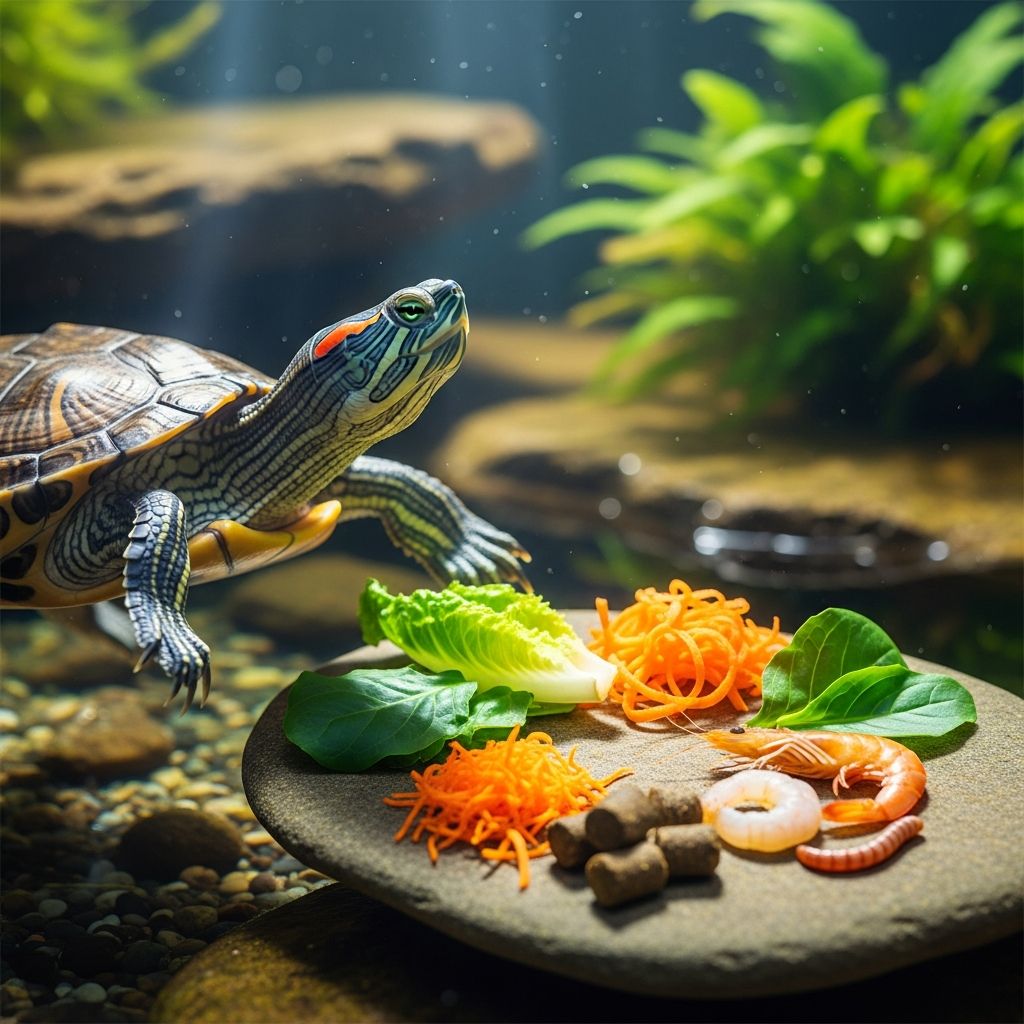
Turtles exhibit diverse eating habits depending on their species, age, and habitat. While many pet turtles are omnivores requiring a mix of proteins and plants, others like tortoises stick primarily to vegetation. Understanding these needs ensures your reptile companion stays healthy and vibrant.
Understanding Turtle Nutritional Needs
Turtle diets must balance proteins, vitamins, minerals, and hydration. Omnivorous species need animal-based proteins alongside leafy greens, while herbivores focus on fiber-rich plants. Calcium supplementation prevents shell deformities, a common issue in captivity. Always tailor feeding to the specific species for longevity and vitality.
Dietary Categories of Turtles
Turtles fall into three main dietary groups: omnivores, carnivores, and herbivores. This classification guides what to offer in captivity.
- Omnivores: Consume both plants and animals. Common in semi-aquatic pets like red-eared sliders.
- Carnivores: Primarily meat-eaters, favoring insects, fish, and shellfish. Seen in map and softshell turtles.
- Herbivores: Plant-exclusive diets, typical for tortoises and adult green sea turtles.
Aquatic and Semi-Aquatic Turtle Nutrition
Popular pet species like red-eared sliders and painted turtles thrive on varied diets. Juveniles require higher protein (up to 50%), shifting to 25% as adults with 75% plants.
| Species | Juvenile Diet Focus | Adult Diet Focus |
|---|---|---|
| Red-Eared Slider | 50% protein | 75% plants |
| Painted Turtle | High protein (insects, fish) | More plants |
| Map Turtle | Carnivorous (snails, crayfish) | Primarily carnivorous |
Commercial pellets form 25% of meals, providing balanced nutrition.
Land-Dwelling Turtles and Tortoises
Box turtles and tortoises differ markedly. Box turtles are omnivores, blending insects, berries, and greens. Tortoises, as herbivores, graze on grasses and veggies with minimal fruit (10-20%). Young box turtles lean carnivorous, maturing to herbivorous tendencies.
- Box turtles: Insects, worms, mushrooms, leafy greens.
- Tortoises: Grasses, hay, dandelion greens.
Sea Turtle Feeding Habits
Wild sea turtles have specialized diets. Green turtles shift from omnivorous hatchlings to herbivorous adults eating seagrasses and algae. Leatherbacks target jellyfish, while olive ridleys mix crabs, shrimp, and algae. These patterns inform conservation but differ from pet care.
| Sea Turtle Species | Primary Diet |
|---|---|
| Green | Algae, seagrasses (adults) |
| Leatherback | Jellyfish, soft invertebrates |
| Olive Ridley | Crabs, shrimp, algae |
| Kemp’s Ridley | Crabs, fish, mollusks |
Safe Proteins for Turtle Diets
Proteins fuel growth and energy. Offer live or fresh options weekly.
- Earthworms, nightcrawlers
- Crickets, mealworms, waxworms
- Feeder fish (guppies, minnows)
- Shrimp, snails, crustaceans
- Commercial pellets with high protein
Avoid overfeeding pinkie mice to prevent obesity in larger species.
Essential Vegetables and Greens
Dark leafy greens dominate plant intake, delivering calcium and vitamins. Feed 50%+ of diet for omnivores.
- Mustard greens, collard greens
- Dandelion greens, turnip greens
- Kale (moderation), romaine lettuce
- Aquatic plants: Duckweed, water hyacinth
Skip high-oxalate foods like spinach and parsley to avoid binding calcium.
Fruits as Occasional Treats
Fruits add variety but limit to 10-20% due to sugars. Wash thoroughly and remove seeds.
- Berries, melons, apples
- Bananas, grapes, mango (small amounts)
Offer weekly to mimic natural foraging without health risks.
Feeding Schedules and Portions
Frequency varies by age and species. Juveniles eat daily; adults every 2-3 days.
- Juveniles: Daily, small portions they finish in 15-20 minutes.
- Adults: 2-3 times weekly, matching head size.
- Remove uneaten food within 1 hour to prevent water fouling.
Fast adults weekly for digestion, especially herbivores.
Supplements and Mineral Balance
Calcium powder on food 2-3 times weekly prevents metabolic bone disease. UVB lighting aids vitamin D3 synthesis for absorption. Dust insects lightly; greens naturally provide some minerals.
Foods to Avoid for Turtle Safety
Certain items harm turtles. Steer clear to prevent toxicity or digestive issues.
- Iceberg lettuce (low nutrition)
- High-oxalate greens: Spinach, beet tops (sparingly)
- Toxic plants: Avocado, rhubarb
- Processed human foods, dairy
- Wild-caught prey (parasites)
Common Health Issues from Poor Diet
Imbalanced feeding leads to pyramiding shells, obesity, or deficiencies. Overprotein causes rapid growth and deformities; insufficient calcium softens shells. Consult a reptile vet for symptoms like lethargy or swelling.
Frequently Asked Questions
Can turtles eat strawberries?
Yes, in moderation as a fruit treat. They provide hydration and vitamins but limit due to sugar content.
How often should I feed my baby turtle?
Daily, focusing on high-protein foods for growth.
Are commercial pellets enough for turtles?
No, combine with fresh veggies and live foods for complete nutrition.
What do snapping turtles eat?
Opportunistic omnivores: Fish, amphibians, plants, carrion.
Do tortoises need protein?
Minimal; focus on plants. Occasional insects for young ones.
Creating a Balanced Weekly Meal Plan
Sample for adult red-eared slider:
- Monday: Pellets + collards + crickets
- Wednesday: Earthworms + dandelion greens
- Friday: Shrimp + mustard greens + duckweed
- Sunday: Fruit treat + kale
Adjust portions to avoid leftovers. Monitor weight and shell condition monthly.
References
- What Do Turtles Eat? A Guide To Feeding Your Pet Turtle — Chewy.com. 2023. https://www.chewy.com/education/reptile-and-amphibian/turtle-and-tortoise/what-do-turtles-eat
- What Do Turtles Eat? A Complete Guide to Turtle Nutrition — Deltona Animal Medical Center. 2024. https://www.deltonavet.com/exotic-animal-hospital/what-do-turtles-eat-a-complete-guide-to-turtle-nutrition/
- What Do Sea Turtles Eat? — Olive Ridley Project. 2023. https://oliveridleyproject.org/ufaqs/what-do-sea-turtles-eat/
- What Do Pet Turtles Eat? Diets, Mealtimes, Amounts — WebMD. 2024. https://www.webmd.com/pets/what-do-pet-turtles-eat
- Sea Turtle Diet — See Turtles. 2023. https://www.seeturtles.org/sea-turtle-diet
- What Do Turtles Eat? — Backwater Reptiles. 2024. https://www.backwaterreptiles.com/turtles/what-do-turtles-eat.html

Medha Deb is an editor with a master's degree in Applied Linguistics from the University of Hyderabad. She believes that her qualification has helped her develop a deep understanding of language and its application in various contexts. Medha specializes in the areas of beauty, health, sports, and wellness and is committed to ensuring that the content on the website is…