
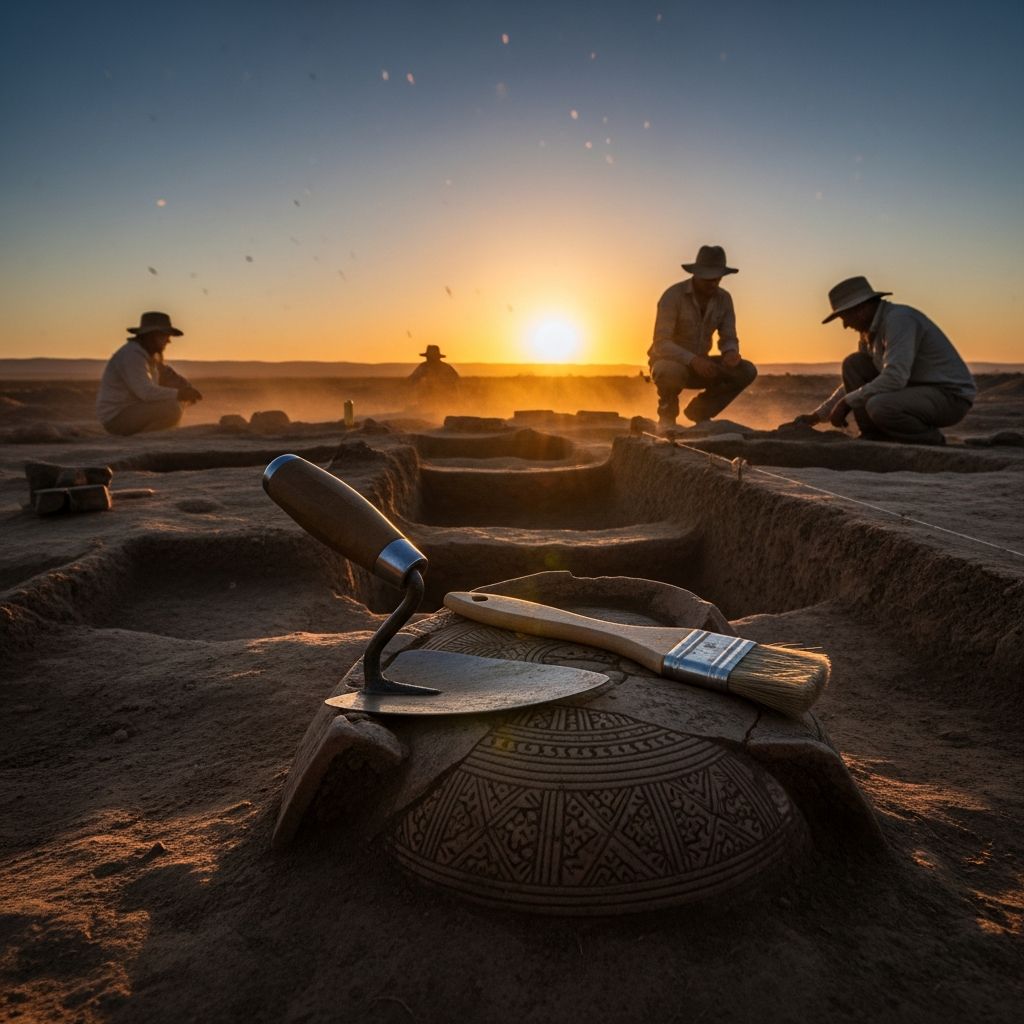
Archaeology captivates with its blend of mystery, science, and storytelling. Iconic quotes from pioneers illuminate why we unearth the past, blending passion with precision. This article deciphers key sayings, revealing their deeper significance.
The Passionate Drive Behind Every Shovel
At the core of archaeology lies an unyielding motivation to revive forgotten worlds. One timeless reflection captures this essence: ‘Every archaeologist knows in his heart why he digs. He digs, in pity and humility, that the dead may live again, that what is past may not be forever lost.’ This statement, attributed to archaeologist Grahame Clark, underscores the emotional pull of the field. It portrays digging not as mere labor but as an act of resurrection, driven by empathy for those long gone.
Consider the humility invoked here. Archaeologists approach sites with reverence, recognizing their own fleeting place in time. This mindset fosters meticulous care, ensuring artifacts tell authentic stories. In practice, this translates to techniques like stratigraphic analysis, where layers of soil reveal chronological narratives. The ‘pity’ element highlights a moral imperative: without excavation, histories vanish, silencing voices of the marginalized.
- Emotional Resurrection: Quotes like this remind us that artifacts breathe life into ancestors.
- Humility in Method: Practitioners avoid imposing modern biases on ancient evidence.
- Preservation Ethic: Each find combats cultural amnesia.
Clark’s words resonate in modern projects, such as the ongoing digs at Pompeii, where daily uncovers revive Roman lives frozen in ash.
Defining the Discipline: Science Meets History
Archaeology defies simple labels, merging recovery with rigorous analysis. A foundational definition states: ‘Archaeology is the study of human cultures through the recovery, documentation and analysis of material remains and environmental data.’ This from Wikiquote encapsulates the field’s breadth, emphasizing tangible evidence over myths.
Material remains—pottery shards, tools, bones—form the backbone. Documentation ensures reproducibility, akin to scientific experiments. Environmental data, like pollen samples, reconstructs ecosystems, painting holistic pictures of past societies. This quote demystifies archaeology as empirical science, countering Indiana Jones stereotypes.
David Clarke’s provocative ‘Archaeology is archaeology is archaeology’ from his 1968 book Analytical Archaeology challenges complacency. It urges constant self-examination, evolving methodologies to match new technologies like LiDAR scanning buried cities without disturbance.
| Core Elements | Description | Example Application |
|---|---|---|
| Recovery | Excavating artifacts | Tutankhamun’s tomb |
| Documentation | Recording contexts | 3D modeling of sites |
| Analysis | Interpreting data | DNA from ancient bones |
Archaeologists as Time Travelers of the Present
A witty observation quips: ‘An archaeologist is a scientist who seeks to discover past civilizations while the present one is still around.’ This highlights the urgency of fieldwork. Unlike paleontologists chasing dinosaurs, archaeologists document living legacies before urbanization erases them.
Sites like Göbekli Tepe in Turkey exemplify this. Uncovered before modern development swallowed it, this 12,000-year-old complex rewrote Neolithic history. The quote stresses proactivity: today’s digs preserve tomorrow’s knowledge amid climate change and expansion threats.
Another gem: ‘Archaeology is the science that proves you can’t keep a good man down.’ Playful yet profound, it celebrates human resilience. Buried empires resurface, affirming endurance. Think of the Indus Valley’s planned cities, submerged yet rediscovered, proving sophistication thrived early.
Gender Dynamics and Humor in the Field
Archaeology’s fieldwork sparks unique interpersonal tales. Agatha Christie’s reputed line, ‘An archaeologist is the best husband any woman can have; the older she gets, the more interested he is in her,’ injects levity. Though Christie denied it, her husband Max Mallowan, a noted archaeologist, popularized it. It pokes fun at stratigraphy—deeper layers (older strata) hold greater value.
Reality tempers the jest. Mixed digs pose challenges, as one quote notes reluctance for close male-female teamwork due to ‘irritation’ from constant proximity. Historical accounts from early 20th-century excavations reveal tensions, yet women like Kathleen Kenyon broke barriers, leading major Jordan digs.
Today, inclusivity prevails. Women helm projects worldwide, from Egypt’s Valley of the Kings to Mesoamerican ruins, blending diverse perspectives for richer interpretations.
Pottery and the Devil in the Details
Often dismissed as mundane, pottery shards are archaeological gold. ‘Next to coins, fragments of pottery afford the most reliable of all evidence,’ asserts a historical insight. Stylistic variations date sites precisely, linking trades and cultures.
Consider Mycenaean stirrup jars, their shapes tracing Mediterranean commerce. Or British earthworks, where sherds pinpoint eras. This quote elevates ‘trivial details,’ urging focus on discards that reveal daily life—diets, crafts, migrations.
The archaeologist is digging up, not things, but people. Unless the bits and pieces with which he deals be alive to him… he had better seek out other disciplines.
This emphasizes empathy. Artifacts embody humans: a shard from a mother’s pot evokes family routines. Without this ‘common touch,’ analysis turns sterile.
Eternal Art and Archaeology’s Promise
Art’s immortality shines in: ‘It is we who shall die — art will remain.’ From an ancient reflection, it affirms archaeology’s role in safeguarding cultural treasures against time’s erosion.
Martin Archer Shee’s verse celebrates resurrected forms: ‘Dug from the tomb of taste-refining time, each form is exquisite.’ Even flawed works gain glory upon rediscovery, as with Cycladic idols, once crude, now revered.
Modern parallels include AI-enhanced restorations of Lascaux caves, preserving parietal art for eternity.
Challenges and Philosophical Depths
Archaeology grapples with biases. ‘The natural person is to be found… beneath layers and layers of official beliefs,’ suggests Seth, framing digs as belief archaeology. Practitioners peel interpretive layers, seeking unvarnished truths.
Monumental, written, and oral evidences form a triad. Balancing them avoids overreliance, as in debunking Trojan War myths via Hisarlik excavations.
Ethical dilemmas persist: Who owns the past? Repatriation debates, like Elgin Marbles, test stewardship versus heritage rights.
Frequently Asked Questions
What motivates archaeologists most?
Passion for reviving the dead through humble, precise excavation drives them, as captured in classic quotes.
Why are pottery shards crucial?
They provide reliable dating and cultural links, outshining many artifacts in evidential value.
Is archaeology purely scientific?
Yes, it relies on material analysis, though human stories infuse it with narrative depth.
How has technology changed the field?
Tools like ground-penetrating radar and genomics uncover non-invasively, enhancing accuracy.
What role do women play today?
They lead globally, bringing fresh insights and challenging outdated field dynamics.
Conclusion: Quotes as Timeless Guides
These quotes distill archaeology’s soul: curiosity, rigor, humor, and reverence. They guide practitioners and enthusiasts alike, ensuring the past enlightens the future.
References
- Archaeology Quotes — Goodreads. Accessed 2026. https://www.goodreads.com/quotes/tag/archaeology
- Archaeology — Wikiquote. Accessed 2026. https://en.wikiquote.org/wiki/Archaeology
- Archaeologist Quotes — Today in Science History. Accessed 2026. https://todayinsci.com/QuotationsCategories/A_Cat/Archaeologist-Quotations.htm
- Top 25 Archeology Quotes — A-Z Quotes. Accessed 2026. https://www.azquotes.com/quotes/topics/archeology.html
- Analytical Archaeology — David Clarke, Methuen. 1968. (Cited via Wikiquote for quote extraction)

- Integrated M.A. in Applied Linguistics, University of Hyderabad
- 5+ years in editorial, instructional, SEO, and research-based writing
Sneha is a relationships and lifestyle writer with a strong foundation in applied linguistics and certified training in relationship coaching. She brings over five years of writing experience to theskillvault, crafting thoughtful, research-driven content that empowers readers to build healthier relationships, boost emotional well-being, and embrace holistic living. Her writing and insights reflect the belief that beauty, happiness, and wellness…