
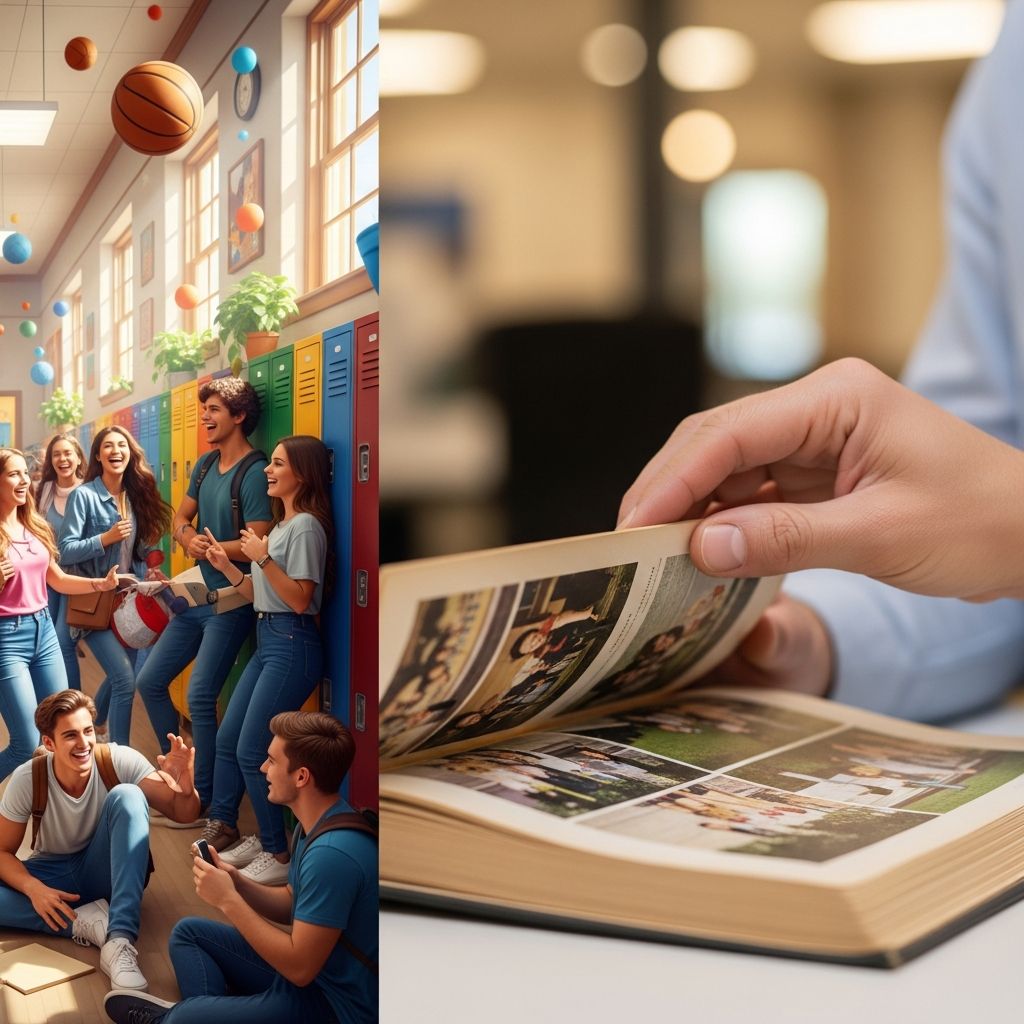
Introduction: The Value of Strategic High School Years
High school represents a critical junction in your educational journey and personal development. While you cannot turn back the clock, understanding what students and adults wish they had prioritized during these formative years can fundamentally reshape how you approach your own experience. The intersection of academic achievement, social connection, skill development, and self-discovery creates opportunities that, if maximized, can establish a powerful foundation for your future. This article explores the multifaceted dimensions of high school success and presents evidence-based strategies to help you make the most of every opportunity available to you.
Establishing a Sustainable Academic Foundation
Many students who reflect on their high school experience identify academic approach as an area they would fundamentally alter. However, this does not necessarily mean they wish they had studied harder or earned higher grades. Rather, the focus shifts to how they studied and why they prioritized academics the way they did.
The most common regret centers on developing effective study methodologies early in your high school career. Students often rely on last-minute cramming, passive review of materials, or inefficient techniques that consume excessive time while delivering minimal retention. Establishing systematic study habits in your freshman year creates compounding advantages throughout your remaining high school years and into college. This includes learning to break complex material into manageable components, spacing your review across multiple sessions, and employing active recall techniques rather than passive re-reading.
Another critical dimension involves creating realistic academic goals and establishing transparent connections between daily effort and long-term outcomes. Many students struggle with abstract thinking about their educational trajectory, failing to translate overarching ambitions into concrete daily actions. Breaking down long-term academic objectives into quarterly, monthly, and weekly targets provides clarity and maintains motivation. Additionally, seeking support from teachers and tutors when conceptual understanding falters prevents knowledge gaps from compounding.
Perhaps most importantly, students often wish they had participated more actively in class discussions and learning activities. Passive attendance without engagement creates an illusion of learning while limiting the development of critical thinking and communication skills that prove invaluable across all future endeavors.
Diversifying Extracurricular Engagement Beyond Surface Involvement
The traditional wisdom that “colleges want to see well-rounded students” has created a counterproductive culture where students accumulate numerous shallow involvements rather than developing meaningful expertise and genuine passion. Students retrospectively identify this approach as a significant missed opportunity.
Instead of joining every club or participating in every activity that might enhance a college application, strategic selection of two or three activities aligned with authentic interests generates substantially greater benefits. Deep involvement in select pursuits develops genuine leadership competencies, builds authentic relationships with mentors and peers, and creates genuine excitement rather than obligatory participation. Whether through academic clubs, athletic teams, community service, government-focused initiatives, or debate competitions, the quality and depth of engagement matters far more than the quantity of activities listed on a resume.
These deeper involvements provide practical laboratories for developing transferable skills including collaboration, project management, public speaking, and problem-solving. They also create natural opportunities for networking with accomplished individuals, exposure to professional environments through internships or mentorships, and exploration of potential career trajectories in low-stakes settings where failure carries minimal consequences.
Furthermore, students frequently overlook the relationship between strategic extracurricular selection and stress management. Pursuing activities because they genuinely interest you rather than because you believe they strengthen your application creates sustainable motivation and prevents the burnout that characterizes the high school experience for many ambitious students.
Rebalancing the Personal Development Triangle
High school students often encounter an implicit message that they must choose between academic excellence, physical and mental health, and meaningful social relationships. This false choice creates unnecessary conflict and prevents the development of holistic resilience.
The reality involves understanding that sustainable excellence requires attending to all three dimensions simultaneously, though not necessarily at extreme levels in any single area. Students who achieve extraordinary grades while sacrificing sleep, exercise, and friendships often experience deteriorating performance due to stress, health complications, and emotional depletion. Conversely, those who prioritize social life while neglecting academics face academic consequences and missed learning opportunities.
The optimal approach involves moderate, consistent attention to all three dimensions. This might mean maintaining a regular exercise routine not for performance optimization but for stress management and health maintenance. It might mean dedicating specific time blocks to academic work with clear boundaries rather than constant background worry. It might mean investing in a small number of meaningful friendships rather than attempting to maintain countless surface-level connections. This balanced approach prevents the mental and physical deterioration that results from extreme prioritization in any single direction.
Strategic Planning and Time Management Capabilities
One of the most universally expressed regrets involves the delayed adoption of planning and time management systems. Students who developed these skills in their first year experienced compounding advantages, while those who postponed this development scrambled to establish systems during crucial academic periods.
Effective planning begins with systematic use of calendars and task management systems, whether through traditional planners, digital applications, or hybrid approaches. This isn’t merely about remembering to complete assignments; it involves visualizing how multiple commitments fit together, identifying potential bottlenecks before they become crises, and allocating appropriate time for different types of work.
A particularly valuable technique involves “time blocking,” where you allocate specific calendar slots to specific activities with clear start and end times. This prevents the common pattern where students sit down to study only to find three hours have disappeared through phone scrolling, snacking, or mental wandering. Establishing dedicated study periods with phone placed in another room or setting application blockers creates an environment conducive to focused work.
Additionally, learning to break extended projects into intermediate milestones prevents the last-minute panic that undermines both performance quality and learning retention. A research paper due in eight weeks might be divided into topic selection (week one), source identification (week two), outline development (week three), draft completion (week four through six), and revision (week seven), with each milestone receiving calendar attention.
Communication Skills and Relationship Development
Many students identify social anxiety and communication hesitation as barriers that they wish they had overcome during high school. This includes both anxiety about speaking in class settings and broader shyness that limited friendship formation and professional networking.
Speaking up in classroom discussions presents lower-stakes opportunities to develop this crucial skill. The worst consequence of contributing an imperfect thought to class discussion remains minimal, yet many students allow fear of judgment to prevent this basic engagement. Paradoxically, regular classroom participation builds confidence that eventually manifests in professional settings decades later.
Similarly, many students wish they had invested more intentionally in building diverse relationships during high school. These connections might involve approaching teachers with questions about their professional backgrounds, joining clubs to meet peers with shared interests, or volunteering alongside community members. These relationships provide guidance, support during difficult periods, and sometimes open unexpected doors. Moreover, the ability to form genuine connections across different social groups during high school represents a valuable skill that becomes increasingly difficult to develop in more stratified adult environments.
Breaking Free from Comparison and Self-Doubt
Numerous students retrospectively identify the energy wasted on social comparison and self-doubt as one of their greatest high school regrets. The constant mental calculation about how you compare to peers in appearance, athletics, academics, or social status consumes mental resources that could have been directed toward growth and enjoyment.
This comparison often creates a distorted lens through which students view opportunities. A student who believes she is “not a math person” skips calculus. A student who considers himself “not athletic” avoids sports. A student who fears public speaking refuses debate competitions. Yet many of these limiting beliefs bear no relationship to actual capability; they represent internalized comparisons to classmates who had earlier exposure or prior success in specific areas.
Moving beyond this comparison mindset involves deliberately seeking discomfort and stepping outside established comfort zones. Trying activities at which you are not immediately excellent, attempting pursuits where you lack existing expertise, and pursuing interests regardless of peer perception all represent forms of brave experimentation. Many students discover unexpected passions and competencies through this willingness to be a beginner.
Career Exploration and Informed Decision-Making
While high school need not produce definitive career decisions, many students wish they had engaged more deliberately with career exploration during these years. This involvement need not require knowing your precise future path; rather, it involves gathering information that informs decision-making in college and beyond.
Career exploration might take multiple forms: informational interviews with professionals in fields of interest, job shadowing opportunities that provide behind-the-scenes exposure to professional environments, internships or part-time positions that develop both skills and awareness, or research into educational pathways leading to various fields. Many high schools provide guidance counselors, career fairs, and internship programs, yet students often overlook these resources.
This exploration serves multiple purposes simultaneously. It provides realistic information about various career paths, preventing the development of unrealistic expectations based on media portrayals or parental assumptions. It creates opportunities to develop professional skills and build professional networks before college begins. It also helps students make more informed choices about course selection and college major selection, potentially accelerating progress toward meaningful goals.
The Relationship Between Mindset and Achievement
Underlying many successful high school strategies lies a fundamental shift in mindset. Students who believe their abilities are fixed rather than developable tend to avoid challenging situations where they might fail. Conversely, students who understand that capabilities develop through effort and practice approach challenges as learning opportunities rather than as tests of inherent ability.
This growth-oriented perspective explains why some students benefit from challenging courses and difficult projects while others avoid them. A student with a fixed mindset interprets struggles as evidence of inadequacy. A student with a growth mindset interprets the same struggles as information about what requires additional practice or different approaches.
Cultivating this perspective early in high school amplifies the benefits of all other strategies described in this article. Effective study techniques work better for those who believe improved performance is possible. Extracurricular participation becomes more meaningful for those who believe they can develop competencies. Attempts at communication and relationship-building occur more readily for those who believe social skills can be strengthened.
Frequently Asked Questions
Q: Is it too late to change my approach if I’m already in my junior or senior year?
A: No. While earlier implementation provides compounding advantages, substantial positive changes can occur even in your final years of high school. Focusing on one or two meaningful changes—such as developing better study habits or deepening commitment to activities aligned with genuine interests—can yield significant benefits for your college experience and beyond.
Q: How do I know which extracurricular activities truly align with my interests versus which ones I think I should do?
A: Notice which activities you anticipate with genuine excitement and which ones feel obligatory. Consider which activities you would continue even if they provided no college application benefit. Real interest generates intrinsic motivation and creates space for genuine growth rather than surface-level participation.
Q: Won’t focusing deeply on fewer activities hurt my college applications?
A: Research on college admissions indicates that most institutions prefer to see evidence of meaningful involvement in a few areas over scattered participation in numerous activities. Depth of commitment, demonstrated growth, and genuine passion typically weigh more heavily than the quantity of activities listed.
Q: How can I balance academic success with maintaining mental health and friendships?
A: This balance requires intentional scheduling rather than attempting everything simultaneously. Schedule time for studying, physical activity, and social connection as distinct calendar items, just as you would schedule classes. Treat these commitments with equal seriousness, recognizing that all three contribute to your long-term success.
Q: What specific study techniques are most effective for different subject areas?
A: Different subjects benefit from different approaches. Mathematics often improves through problem practice and worked examples. Language learning benefits from spaced repetition and active practice. History and literature benefit from active recall, where you retrieve information from memory rather than passively reviewing notes. Experiment with various techniques and notice which approaches produce better retention and understanding in each subject.
Q: How do I overcome fear of speaking up in class?
A: Start with lower-stakes contributions. Ask a clarifying question rather than attempting complex analysis. Prepare one comment before class and commit to sharing it. Recognize that most classmates focus on their own anxiety rather than judging your contributions. Each successful contribution builds confidence for the next one.
References
- What do college students wish they’d done differently in high school? — Unigo Admissions Advice. Accessed April 2026. https://www.unigo.com/admissions-advice/what-do-college-students-wish-theyd-done-differently-in-high-school
- If you were to go back to high school what would you do differently? — CareerVillage.org. Accessed April 2026. https://www.careervillage.org/questions/39655/if-you-were-to-go-back-to-high-school-what-would-you-do-differently
- 4 Things I Wish I Did Differently In High School — Niche Blog. Accessed April 2026. https://www.niche.com/blog/4-things-i-wish-i-did-differently-in-high-school/
- 5 Things I Wish I Had Done Differently In High School — Girls’ Life Magazine. Accessed April 2026. https://girlslife.com/life/124363/5-things-i-wish-i-had-done-differently-in-high-school/
- Advice! What do you wish you had known/done differently during the HS years? — College Confidential Discussion Forum. Accessed April 2026. https://talk.collegeconfidential.com/t/advice-what-do-you-wish-you-had-known-done-differently-during-the-hs-years/1895848
- What if High School Were Different? — Center on Reinventing Public Education (CRPE). Accessed April 2026. https://crpe.org/what-if-high-school-were-different/

- Integrated M.A. in Applied Linguistics, University of Hyderabad
- 5+ years in editorial, instructional, SEO, and research-based writing
Sneha is a relationships and lifestyle writer with a strong foundation in applied linguistics and certified training in relationship coaching. She brings over five years of writing experience to theskillvault, crafting thoughtful, research-driven content that empowers readers to build healthier relationships, boost emotional well-being, and embrace holistic living. Her writing and insights reflect the belief that beauty, happiness, and wellness…