
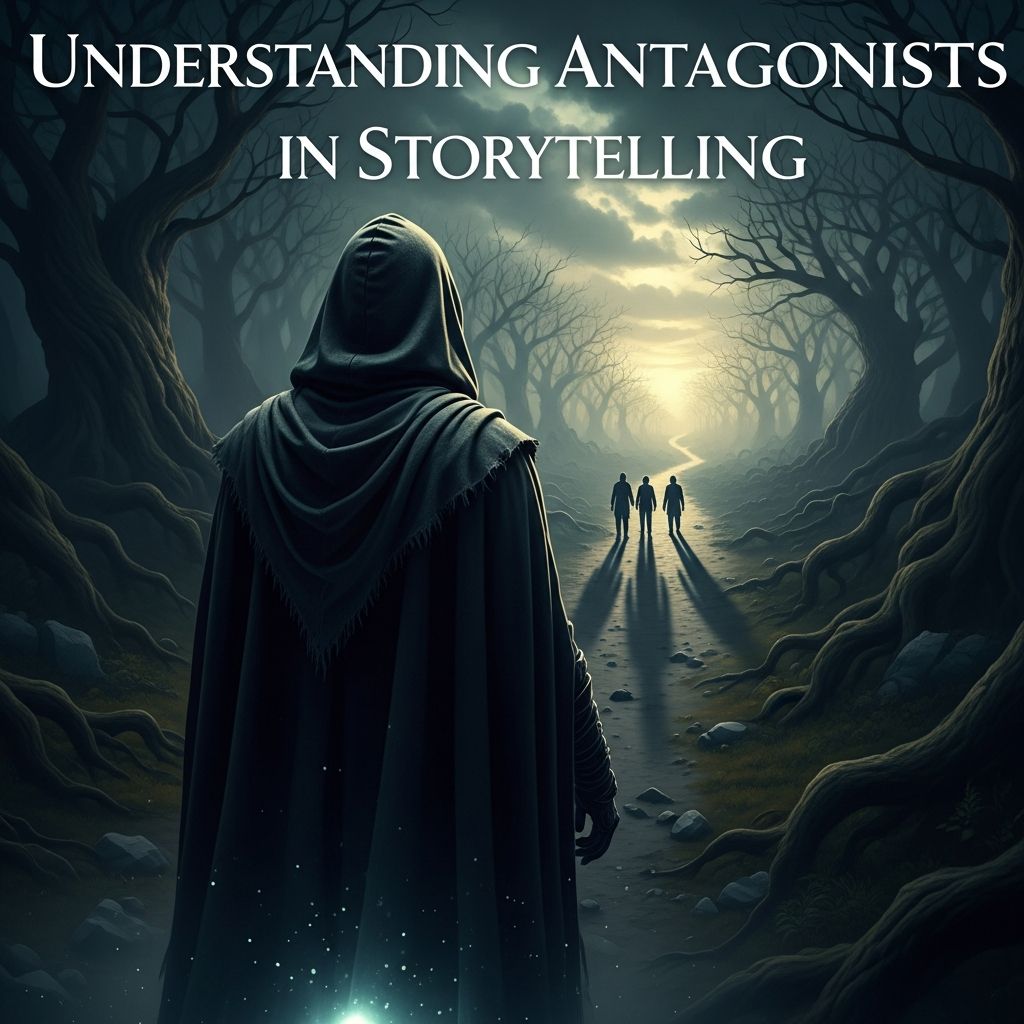
The antagonist serves as the primary force of opposition in any narrative, standing directly against the protagonist’s desires and objectives. This opposition generates the central conflict that propels the story forward and fosters character development.
The Fundamental Role of Opposition in Narratives
Every compelling story hinges on conflict, and at its core lies the antagonist—the entity or force that thwarts the protagonist’s path. Derived from the Greek word meaning ‘opponent,’ the antagonist need not embody pure evil; rather, it embodies whatever prevents the main character from achieving their goals. This could manifest as a rival character, societal pressures, natural disasters, or even the protagonist’s inner demons.
Without this opposing element, narratives lack tension and stakes. The antagonist compels the protagonist to grow, adapt, and reveal their true nature. For instance, in tales of heroism, the antagonist raises the emotional and physical barriers that test resolve and highlight virtues.
Distinguishing Antagonists from Villains
A common misconception equates antagonists with villains, but they are not synonymous. A villain typically acts with malicious intent, driven by selfishness or cruelty. An antagonist, however, simply opposes the protagonist, regardless of morality. This distinction allows for nuanced storytelling where the antagonist might be sympathetic or even heroic.
- Villain: Motivated by evil, destruction, or personal gain (e.g., a scheming dictator).
- Antagonist: Creates obstacles through any means, including noble intentions (e.g., a law enforcer pursuing a vigilante protagonist).
This separation enriches plots, challenging readers’ assumptions about right and wrong.
Categories of Antagonists in Fiction
Antagonists appear in diverse forms, each suited to different genres and themes. Recognizing these categories helps writers craft believable opposition.
Character-Based Antagonists
The most straightforward type pits one character against another. These rivals often serve as foils, mirroring and contrasting the protagonist’s traits to underscore key differences.
- Rival: A peer competitor, like a detective clashing with a criminal mastermind.
- Heroic Foil: An antagonist with upright motives blocking a flawed protagonist, flipping traditional good-vs-evil dynamics.
- Conflicted Ally: A former friend whose betrayal introduces unexpected hurdles.
Abstract and Environmental Forces
Not all antagonists have faces. Impersonal forces create external conflicts that feel relentless and overwhelming.
| Type | Description | Example Scenario |
|---|---|---|
| Societal Systems | Institutions or norms that suppress individual goals | A rebel fighting oppressive government bureaucracy |
| Nature | Environmental perils beyond human control | A sailor battling a merciless ocean storm |
| Time or Fate | Intangible pressures like deadlines or destiny | A terminally ill character racing against mortality |
Internal Struggles
The most intimate antagonists arise within the protagonist themselves—doubts, addictions, or moral dilemmas that sabotage progress. These ‘person vs. self’ conflicts delve into psychological depths, making victories profoundly personal.
Classic Illustrations from Literature
Renowned works showcase antagonists’ versatility, demonstrating their impact on plot and theme.
In Ernest Hemingway’s The Old Man and the Sea, the vast ocean and elusive marlin embody nature’s antagonism, testing fisherman Santiago’s endurance and spirit.
George Orwell’s 1984 presents Big Brother and the totalitarian regime as systemic antagonists, crushing individual freedom and illustrating power’s corrupting force.
William Golding’s Lord of the Flies features Jack as Ralph’s foil: Jack’s descent into savagery contrasts Ralph’s civilized ideals, mirroring humanity’s primal undercurrents.
Arthur Conan Doyle’s Sherlock Holmes stories pit the brilliant detective against Professor Moriarty, a rival intellect whose schemes threaten society.
Even fairy tales like Snow White employ the vain Queen as a villainous antagonist, her envy driving the classic pursuit narrative.
Crafting Effective Antagonists for Writers
To build memorable antagonists, authors must imbue them with depth beyond mere obstruction. Start by aligning their motivations with the story’s world—make their opposition logical and inevitable.
- Define Clear Motivations: Give antagonists believable reasons for their actions, fostering empathy.
- Ensure Balance: A too-powerful foe frustrates readers; a weak one undermines tension.
- Layer Complexity: Reveal backstories or vulnerabilities to humanize them.
- Integrate with Theme: Let the antagonist embody the story’s central question or flaw.
Strong antagonists transform passive protagonists into dynamic heroes, elevating the narrative’s emotional resonance.
Antagonists’ Influence on Protagonist Evolution
Interaction with antagonists catalyzes change. Through trials, protagonists confront flaws, forge strengths, and achieve catharsis. This arc—from vulnerability to triumph—defines character-driven fiction.
For example, a timid hero facing a bullying rival learns courage; a prideful leader challenged by societal norms gains humility. The antagonist’s pressure reveals what was hidden, driving growth.
Antagonists Across Genres and Media
While rooted in literature, antagonists adapt seamlessly to film, theater, and games. In superhero epics, arch-nemeses like the Joker embody chaos against Batman’s order. Horror thrives on monstrous forces, amplifying primal fears. Even comedies use quirky rivals for humorous clashes.
In video games, antagonists provide interactive challenges, evolving with player choices to heighten immersion.
Frequently Asked Questions About Antagonists
What is the primary function of an antagonist in a story?
The antagonist creates conflict by opposing the protagonist, building tension and driving the plot toward resolution.
Can an antagonist be a good person?
Yes, heroic antagonists pursue noble goals that clash with the protagonist’s path, adding moral ambiguity.
Is the antagonist always human?
No, it can be nature, society, time, or internal struggles, broadening conflict possibilities.
How does an antagonist differ from a foil?
A foil highlights traits through contrast; an antagonist actively obstructs goals.
Why are complex antagonists important?
They make stories realistic and engaging, avoiding one-dimensional ‘evil’ tropes.
Conclusion: Mastering the Art of Opposition
Antagonists are storytelling’s unsung architects, shaping conflicts that resonate long after the final page. By thoughtfully designing these oppositional forces, writers craft worlds where triumph feels earned and characters truly transform.
References
- What Is an Antagonist? Definition & Examples — Literature & Latte. 2023-05-15. https://www.literatureandlatte.com/blog/antagonist-definition
- What Does “Antagonist” Mean in Literature? — Grammarly. 2024-02-10. https://www.grammarly.com/blog/literary-devices/antagonist/
- Antagonist – Definition and Examples — LitCharts. 2023-11-20. https://www.litcharts.com/literary-devices-and-terms/antagonist
- Antagonist in Literature | Definition, Usage & Examples — Study.com. 2024-01-05. https://study.com/learn/lesson/antagonist-overview-examples.html
- What is an Antagonist? Definition & Examples — Writers.com. 2023-08-12. https://writers.com/antagonist-definition
- Protagonist vs. Antagonist: A Must-Know Literary Pair, Defined — Reedsy. 2023-09-18. https://reedsy.com/blog/protagonist-and-antagonist/
- Antagonist | literature — Britannica. 2024-03-01. https://www.britannica.com/art/antagonist-literature

- Integrated M.A. in Applied Linguistics, University of Hyderabad
- 5+ years in editorial, instructional, SEO, and research-based writing
Sneha is a relationships and lifestyle writer with a strong foundation in applied linguistics and certified training in relationship coaching. She brings over five years of writing experience to theskillvault, crafting thoughtful, research-driven content that empowers readers to build healthier relationships, boost emotional well-being, and embrace holistic living. Her writing and insights reflect the belief that beauty, happiness, and wellness…