
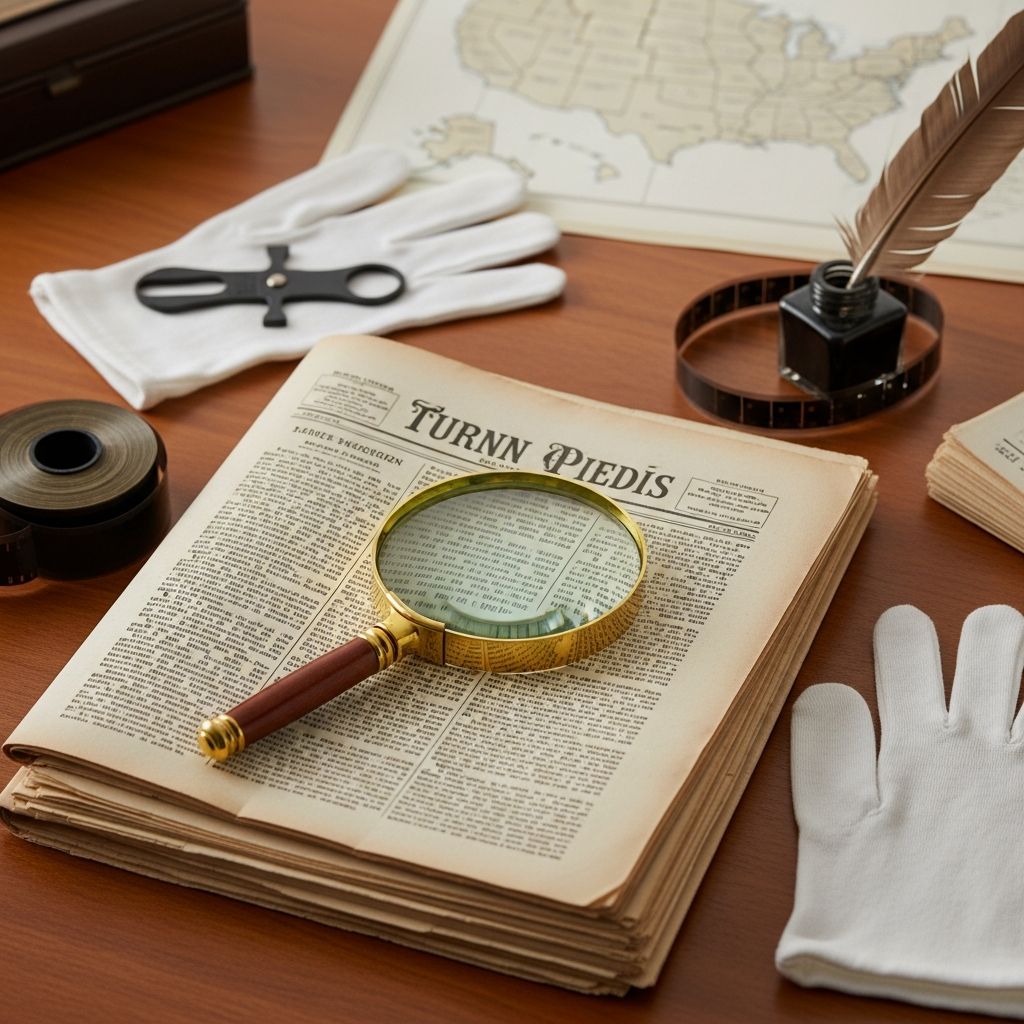
Tracing ancestry or delving into past events often leads researchers to primary sources like newspapers, and Newspapers.com stands out as a leading digital repository for such materials. This platform aggregates millions of pages from publications across the United States, enabling users to search, browse, and discover stories from bygone eras with unprecedented ease.
The Power of Digitized Historical Newspapers
Historical newspapers serve as invaluable windows into the lives of our ancestors, capturing local events, personal announcements, and societal shifts that official records might overlook. Unlike static documents, these publications offer vivid narratives through headlines, advertisements, and editorials that reveal daily realities, cultural norms, and community dynamics of their time.
Platforms like Newspapers.com have digitized vast collections, transforming dusty microfilm reels into accessible online databases. This shift democratizes access, allowing anyone with an internet connection to explore content that once required visits to libraries or archives. Key advantages include full-text searchability, high-resolution images, and clipping tools that facilitate sharing discoveries.
- Comprehensive Coverage: Spans from the 1700s to the 2000s, covering small-town weeklies to major dailies.
- Local Focus: Emphasizes regional papers, ideal for uncovering hyper-local stories.
- Search Precision: Advanced filters by location, date, and keyword yield targeted results.
Building a Massive Archive: Origins and Growth
Newspapers.com emerged from a vision to centralize America’s printed heritage. Launched by Ancestry.com, it quickly expanded through partnerships with libraries, historical societies, and publishers. Today, it boasts over 500 million searchable pages from more than 17,000 newspapers, continually growing via ongoing digitization projects.
The archive’s strength lies in its diversity. Users can find everything from Civil War-era dispatches to 20th-century society pages. Rural publications provide insights into agricultural life, while urban papers document industrial booms and migrations. This breadth ensures relevance for researchers nationwide.
Mastering the Search Interface
Navigating Newspapers.com begins with its intuitive search bar, but unlocking full potential requires leveraging advanced options. Start with broad queries like a surname and state, then refine using date ranges, specific titles, or proximity searches for names mentioned near events.
| Search Feature | Description | Best Use Case |
|---|---|---|
| Keyword Search | Exact or fuzzy matching for terms | Finding obituaries or marriage notices |
| Date Slider | Visual timeline for narrowing eras | Targeting life events like births (e.g., 1900-1920) |
| Location Filters | State, county, or city selection | Local history tied to family migrations |
| Proximity Search | Terms appearing near each other | Contextual stories, e.g., “John Smith” near “accident” |
| Clipping Tool | Extract and save page sections | Building family timelines or sharing finds |
Results display thumbnail previews with highlighted matches, allowing quick scans. Optical character recognition (OCR) powers the text search, though older print quality may introduce minor errors—always verify with images.
Subscription Options and Accessibility
Newspapers.com offers tiered plans to suit different needs. A free account provides limited previews, while paid Publisher Extra subscriptions unlock full-page views and exclusive titles. Monthly or annual billing provides flexibility, with frequent promotions for new users.
- Basic Free Tier: Search and page previews.
- Standard Subscription: Core collection access.
- Publisher Extra: 30,000+ rare papers, no clipping limits.
Institutional access through libraries expands reach, often via Ancestry Library Edition. Trial periods let users test the platform before committing.
Real-World Applications in Genealogy
For family historians, newspapers fill gaps in census data or vital records. Birth announcements confirm parentage, society columns track relocations, and legal notices reveal property dealings. A single obituary might list surviving relatives, occupations, and migration paths.
Consider a researcher seeking Irish immigrant roots in 19th-century Ohio. A query for “O’Brien” in Cleveland papers yields a 1885 wedding notice linking to prior arrivals via ship manifests. Such interconnections build robust family trees.
Beyond Family History: Broader Research Uses
Newspapers.com extends to academic, journalistic, and hobbyist pursuits. Historians analyze election coverage for voter sentiment, economists study classified ads for wage trends, and authors mine for authentic dialogue. Sports enthusiasts trace team lineages through box scores.
Even non-genealogists benefit: a query on “Prohibition” in 1920s Chicago reveals speakeasy raids, while “Great Depression” in rural Kansas exposes farm foreclosures. These primary sources enrich any historical inquiry.
Overcoming Common Challenges
While powerful, the platform has hurdles. OCR inaccuracies in faded print require image inspection. Name variations (e.g., nicknames, misspellings) demand creative searching—try wildcards like “J?n* Smith”.
Geographic gaps exist; some regions have sparser coverage. Cross-reference with other sites like Chronicling America for federal collections. Patience and iteration refine results.
Integrating with Other Tools
Maximize discoveries by linking Newspapers.com to tree-building software like Ancestry or FamilySearch. Export clippings as sources with citations. Combine with DNA matches to corroborate newspaper finds, such as verifying ethnic origins via old community news.
Future Directions and Innovations
Ongoing digitization promises fuller coverage, with AI enhancements improving OCR and suggesting related searches. Mobile apps enable on-the-go research, while community contributions via user-submitted corrections enhance accuracy.
As archives grow, Newspapers.com solidifies its role in preserving ephemera threatened by time. Its evolution mirrors the digital shift in historical access, ensuring past voices endure.
Frequently Asked Questions (FAQs)
What is the largest collection on Newspapers.com?
The site features over 500 million pages from 17,000+ U.S. newspapers, with strengths in 19th-20th century local dailies and weeklies.
Can I access Newspapers.com for free?
Free accounts offer searches and previews; full access requires a subscription or library card for institutional logins.
How accurate is the text search?
OCR is highly reliable for clear print but may falter on ornate fonts or poor scans—always check original images.
Does it include international papers?
Primarily U.S.-focused, with some Canadian content; for global searches, pair with sites like British Newspaper Archive.
Can I download full pages?
Publisher Extra subscribers enjoy unlimited downloads and print options for personal use.
How do I cite a newspaper clipping?
Use format: “Title, Date, Page. Newspapers.com: [clip ID].” Include image URL for verification.
References
- Reasons for the Decline of Local Newspapers — Close Up Foundation. 2023. https://www.closeup.org/the-decline-of-local-newspapers/
- Decline of newspapers — Wikipedia (informed background; primary sources preferred). 2024. https://en.wikipedia.org/wiki/Decline_of_newspapers
- The Decline of Newspapers, in Four Charts — Brookings Institution. 2023-05-15. https://www.brookings.edu/articles/the-decline-of-newspapers-in-four-charts/
- The Loss of Newspapers and Readers — US News Deserts. 2023. https://www.usnewsdeserts.com/reports/expanding-news-desert/loss-of-local-news/loss-newspapers-readers/
- Audiences are declining for traditional news media in the U.S. — Pew Research Center. 2023-11-28. https://www.pewresearch.org/short-reads/2023/11/28/audiences-are-declining-for-traditional-news-media-in-the-us-with-some-exceptions/

- Integrated M.A. in Applied Linguistics, University of Hyderabad
- 5+ years in editorial, instructional, SEO, and research-based writing
Sneha is a relationships and lifestyle writer with a strong foundation in applied linguistics and certified training in relationship coaching. She brings over five years of writing experience to theskillvault, crafting thoughtful, research-driven content that empowers readers to build healthier relationships, boost emotional well-being, and embrace holistic living. Her writing and insights reflect the belief that beauty, happiness, and wellness…