
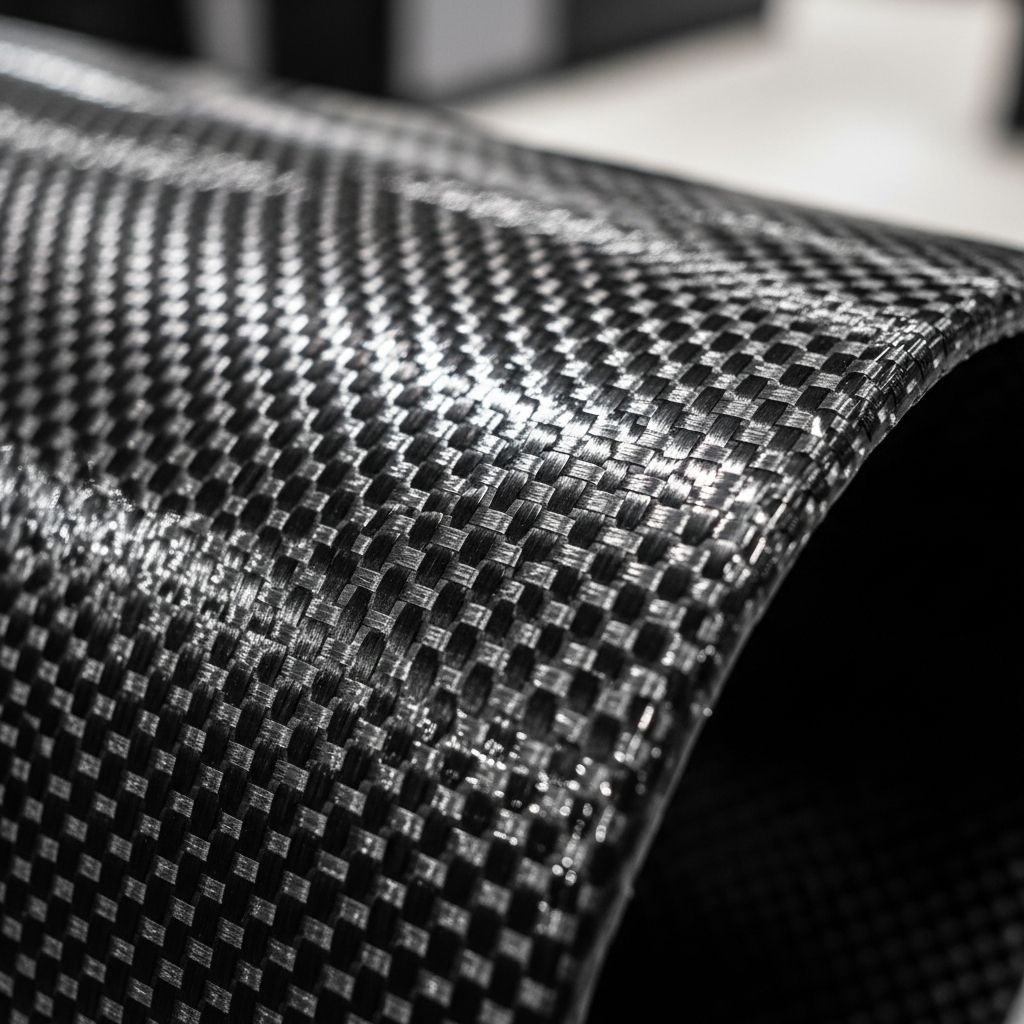
Carbon fiber stands as one of the most revolutionary materials in modern engineering, prized for its extraordinary strength-to-weight ratio and versatility across demanding industries. Composed primarily of thin strands of carbon atoms bonded in a crystalline structure, it outperforms traditional metals like steel and aluminum in key performance metrics while remaining remarkably lightweight.
Origins and Evolution of Carbon Fiber Technology
The development of carbon fiber traces back to the mid-20th century, initially driven by aerospace needs for lighter, stronger components. Early experiments with precursors like rayon laid the groundwork, but breakthroughs in polyacrylonitrile (PAN) processing in the 1960s propelled it to commercial viability. Today, approximately 90% of carbon fibers are produced via the PAN method, which yields high-quality filaments suitable for high-modulus applications.
Pitch-based and rayon processes account for the remainder, each offering distinct advantages in cost or specialized properties. This evolution reflects ongoing refinements in thermal processing and precursor chemistry, enabling carbon fiber to penetrate sectors from automotive to biomedical engineering.
Core Production Techniques: From Precursors to Finished Fibers
Manufacturing carbon fiber involves a multi-stage transformation of organic polymers into highly ordered carbon structures. The process demands precise control over temperature, atmosphere, and tension to achieve desired tensile strength up to 7 GPa and modulus up to 900 GPa.
Key steps include:
- Precursor Preparation: PAN, a synthetic polymer, is polymerized and spun into fine filaments. Pitch from coal-tar distillation provides an alternative with high aromatic content over 90%, ideal for premium grades.
- Stabilization: Fibers are heated in air at 200-300°C for 30-120 minutes, introducing oxygen to form thermally stable ladder bonding and prevent melting during later stages.
- Carbonization: In inert atmospheres like nitrogen or argon, temperatures reach 1500-1600°C, expelling non-carbon elements and crystallizing the structure.
- Graphitization: Optional heating to 1600-3000°C enhances modulus by increasing crystallinity, though it may slightly reduce tensile strength.
- Surface Treatment and Sizing: Oxidation improves resin bonding, followed by protective coatings for weaving or composite integration.
These stages result in fibers with densities of 1.75-2.00 g/cm³, far lighter than metals, enabling dramatic weight savings.
Exceptional Mechanical and Physical Properties
Carbon fiber’s dominance stems from its unmatched combination of attributes. It boasts high specific stiffness and toughness, low density, and superior fatigue resistance, making it ideal for dynamic loads.
| Property | Value/Comparison | Benefit |
|---|---|---|
| Tensile Strength | Up to 7 GPa (around 4,000 MPa typical) | Surpasses steel at 1/5th the weight |
| Modulus | Up to 900 GPa | High rigidity for structural applications |
| Density | 1.75-2.00 g/cm³ | Lightweight design enables fuel efficiency |
| Thermal Expansion | 5.5x lower than steel, near zero CTE | Precision in optics and satellites |
| Other | Chemical resistance, X-ray transparency | Medical and nuclear uses |
Compared to aluminum, carbon fiber parts can be twice as thick for equivalent weight yet 8 times stiffer due to cubed thickness rigidity. Its low coefficient of thermal expansion (CTE) ensures dimensional stability in extreme environments.
Advanced Manufacturing Methods for Composites
Beyond raw fibers, carbon fiber shines in composites, where it’s layered with resins like epoxy for tailored parts. Common techniques include:
- Prepreg Autoclave: Layers of pre-impregnated fabric are cured under vacuum and pressure, yielding void-free, aesthetically superior components with complex shapes.
- Vacuum-Assisted Resin Transfer Molding (VARTM): Fibers are laid in molds, resin infused under vacuum, and cured—perfect for large, intricate geometries like boat hulls.
- Hot-Press Forming: High fiber content (up to 70%) with short cycles, though limited for negative angles.
- 3D Printing/Additive: Chopped fibers in Nylon matrices via SLS enable rapid prototyping of heat-resistant parts.
These methods allow optimization of fiber orientation, thickness, and resin for specific needs, from high-volume automotive to custom aerospace.
Diverse Industrial Applications and Case Studies
Carbon fiber’s properties unlock innovations across sectors. In aerospace, it reduces aircraft weight by 20-30%, boosting fuel efficiency in components like fuselages and wings. Automotive uses include hoods and chassis for electric vehicles, enhancing range without added mass.
Key applications include:
- Precision Structures: Telescopes, antennas, and satellite dishes leverage low thermal expansion.
- Medical Devices: Prostheses, implants, and X-ray equipment benefit from biological inertness and transparency.
- Consumer Goods: Sports equipment, audio speakers, and robotics for vibration damping.
- Energy and Defense: Generator rings, nuclear valves, and EMI shielding.
For instance, carbon composites in marine transport cut fuel use, while in textiles, self-lubricating properties extend machinery life.
Challenges, Innovations, and Future Prospects
Despite advantages, carbon fiber faces hurdles like high production costs and recycling complexities. Manufacturing remains energy-intensive, but advances in precursor efficiency and scalable methods like VARTM address this. Emerging trends include sustainable bio-based precursors and hybrid composites blending with glass fibers for cost-effectiveness.
Future growth targets automotive mass adoption, with projections for widespread EV integration, and space exploration via reusable rockets. 3D printing innovations promise democratized access for custom parts.
Frequently Asked Questions (FAQs)
What makes carbon fiber stronger than steel?
Its crystalline carbon structure provides tensile strength up to 7 GPa at 1/5th steel’s density, with superior stiffness.
How is carbon fiber different from fiberglass?
Carbon fiber offers higher modulus and lower weight, ideal for high-performance uses, while fiberglass is cheaper for general applications.
Can carbon fiber be recycled?
Yes, through pyrolysis or chemical processes reclaiming fibers, though scalability is improving with new technologies.
What are the main precursors for carbon fiber?
PAN (90%), pitch, and rayon; PAN yields the highest quality for aerospace.
Is carbon fiber conductive?
Yes, it conducts electricity, enabling uses in shielding and brushes.
What temperatures are involved in production?
Stabilization at 200-300°C, carbonization at 1500-1600°C, graphitization up to 3000°C.
References
- Carbon Fibres: Production, Properties and Potential Use — Materials Science Journal. 2023. https://www.materialsciencejournal.org/vol14no1/carbon-fibres-production-properties-and-potential-use/
- Carbon Fiber Composites: properties | manufacturing methods — Dexcraft. 2023. http://www.dexcraft.com/carbon-fiber-composites
- How to Manufacture Carbon Fiber Parts — Formlabs. 2023. https://formlabs.com/blog/composite-materials-carbon-fiber-layup/
- Carbon Fiber Manufacturing Methods — Element 6 Composites. 2023. https://element6composites.com/carbon-fiber-manufacturing-methods/
- How is Carbon Fiber Made? — AZoM. 2024-10-15. https://www.azom.com/article.aspx?ArticleID=24480
- Carbon Fiber Composites: Processing Guide — Addcomposites. 2023. https://www.addcomposites.com/post/carbon-fiber-composites-processing-guide
- How carbon fibre made: manufacturing & more — PFH. 2023. https://www.pfh.de/en/blog/how-carbon-fibre-made

Medha Deb is an editor with a master's degree in Applied Linguistics from the University of Hyderabad. She believes that her qualification has helped her develop a deep understanding of language and its application in various contexts. Medha specializes in the areas of beauty, health, sports, and wellness and is committed to ensuring that the content on the website is…