
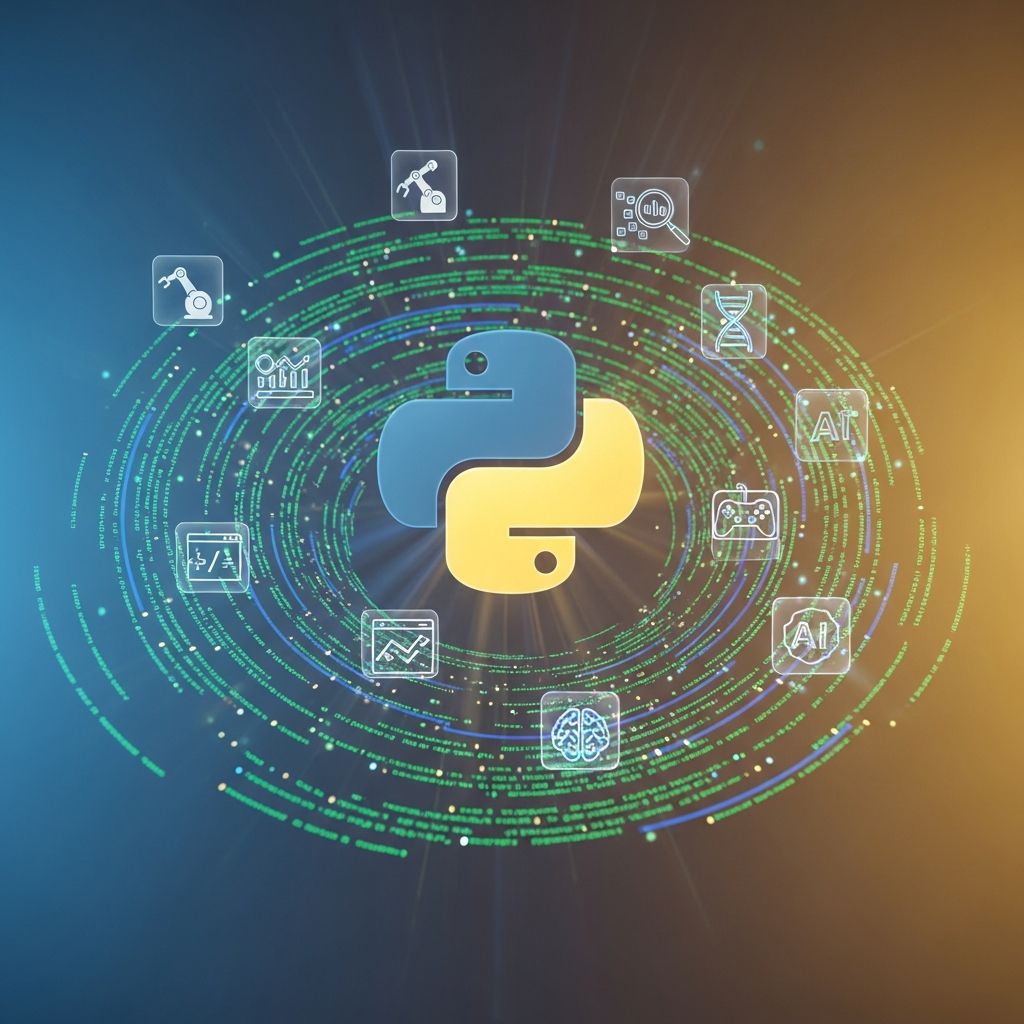
Python stands out as one of the most popular programming languages today, prized for its simplicity, flexibility, and broad applicability across industries. Created by Guido van Rossum and first released in 1991, Python emphasizes code readability and efficiency, making it accessible to novices while powerful enough for complex enterprise solutions.
Origins and Evolution of Python
Python’s journey began in the late 1980s when Guido van Rossum sought a language that combined the power of C with the usability of ABC, a lesser-known teaching language. Officially launched in 1991, it drew inspiration from Monty Python’s Flying Circus, reflecting its creator’s humorous side. Over decades, Python evolved through community contributions, transitioning from Python 2 to the now-dominant Python 3, which introduced significant improvements in syntax and performance.
Today, maintained by the Python Software Foundation, it benefits from a vibrant open-source community. This collective effort has expanded its ecosystem, with thousands of libraries available via the Python Package Index (PyPI), fueling its growth in fields like artificial intelligence and big data processing.
Core Features That Make Python Unique
Python’s design prioritizes developer productivity. As an interpreted language, it executes code line-by-line without compilation, enabling rapid testing and prototyping. Its dynamic typing means variables don’t require explicit type declarations, reducing boilerplate code.
- Readable Syntax: Python uses indentation for code blocks instead of braces, mimicking English structure for easier understanding.
- Object-Oriented and Multi-Paradigm: Supports procedural, functional, and object-oriented programming, offering flexibility for diverse projects.
- Cross-Platform Compatibility: Runs seamlessly on Windows, macOS, Linux, and even embedded systems like Raspberry Pi.
- Extensive Standard Library: Includes modules for file handling, networking, and math, often described as ‘batteries included’.
These traits lower the learning curve; beginners grasp concepts quickly, while experts leverage its scalability for production systems.
Real-World Applications of Python
Python’s versatility shines in numerous domains. It’s a staple in web development, data science, automation, and beyond, powering tools used by giants like Netflix, Google, and NASA.
Web Development and Backend Services
Frameworks like Django and Flask enable robust web applications. Python handles server-side logic, database interactions, and API creation efficiently, making it ideal for scalable sites.
Data Science and Analytics
Libraries such as NumPy, Pandas, and Matplotlib facilitate data manipulation and visualization. Python processes big data, generates insights, and supports machine learning workflows with TensorFlow and scikit-learn.
Automation and Scripting
Python excels at automating repetitive tasks: file management, system administration, and testing. Scripts rename files, analyze logs, or deploy applications, saving hours of manual work.
Artificial Intelligence and Machine Learning
With tools like PyTorch and Keras, Python dominates AI development. It trains models for image recognition, natural language processing, and predictive analytics.
| Domain | Key Libraries/Frameworks | Example Applications |
|---|---|---|
| Web Dev | Django, Flask | E-commerce sites, APIs |
| Data Science | Pandas, NumPy | Data visualization, analytics |
| AI/ML | TensorFlow, scikit-learn | Recommendation systems, chatbots |
| Automation | Selenium, subprocess | Testing, file processing |
Why Choose Python Over Other Languages?
Compared to Java or C++, Python requires fewer lines of code for the same task, boosting productivity. Its community-driven libraries reduce development time, and garbage collection automates memory management, minimizing errors.
For instance, a simple web server in Python might take 10 lines versus 50 in Java. This efficiency appeals to startups and enterprises alike, with surveys ranking it #1 for overall satisfaction.
Getting Started with Python: A Beginner’s Roadmap
- Install Python: Download from python.org; use Anaconda for data science setups.
- Choose an IDE: VS Code, PyCharm, or Jupyter Notebooks for interactive coding.
- Learn Basics: Variables, loops, functions via free resources like Codecademy or official docs.
- Build Projects: Start with calculators, then web scrapers or data dashboards.
- Explore Libraries: Dive into pip for installing packages like requests or BeautifulSoup.
Practice yields proficiency; within weeks, you’ll automate tasks or analyze datasets.
Python’s Ecosystem: Libraries and Community
PyPI hosts over 400,000 packages, from Flask for microservices to OpenCV for computer vision. The community fosters collaboration via forums like Stack Overflow and events like PyCon.
This ecosystem accelerates innovation; developers reuse code, focusing on unique solutions rather than reinventing basics.
Challenges and Future of Python
Despite strengths, Python’s interpreted nature can slow performance for CPU-intensive tasks, often mitigated by C extensions or tools like Cython. The shift to Python 3 resolved legacy issues, ensuring forward momentum.
Looking ahead, Python 3.12+ enhances speed and typing, solidifying its role in quantum computing and edge AI.
Frequently Asked Questions (FAQs)
What makes Python beginner-friendly?
Its English-like syntax, dynamic typing, and vast tutorials lower barriers, allowing focus on logic over syntax.
Is Python suitable for large-scale applications?
Yes, companies like Instagram and Spotify use it at scale, thanks to frameworks and async features.
How does Python handle errors?
Via exceptions and try-except blocks, providing clear debugging with tracebacks during interpretation.
Can Python integrate with other languages?
Absolutely; it calls C/C++ code and supports extensions for performance-critical parts.
What’s the difference between Python 2 and 3?
Python 3 is the modern standard with Unicode support and better syntax; Python 2 is deprecated.
References
- What is Python? — Teradata. 2023. https://www.teradata.com/glossary/what-is-python
- What is Python? — Opensource.com. 2023. https://opensource.com/resources/python
- Python (programming language) — Wikipedia (primary sources referenced). 2026-04-01. https://en.wikipedia.org/wiki/Python_(programming_language)
- What Is Python Used For? A Beginner’s Guide — Coursera. 2024. https://www.coursera.org/articles/what-is-python-used-for-a-beginners-guide-to-using-python
- What is Python? — Codecademy. 2023. https://www.codecademy.com/article/what-is-python
- What is Python? Executive Summary — Python Software Foundation. 2023. https://www.python.org/doc/essays/blurb/
- Introduction to Python — W3Schools. 2026. https://www.w3schools.com/python/python_intro.asp

- Integrated M.A. in Applied Linguistics, University of Hyderabad
- 5+ years in editorial, instructional, SEO, and research-based writing
Sneha is a relationships and lifestyle writer with a strong foundation in applied linguistics and certified training in relationship coaching. She brings over five years of writing experience to theskillvault, crafting thoughtful, research-driven content that empowers readers to build healthier relationships, boost emotional well-being, and embrace holistic living. Her writing and insights reflect the belief that beauty, happiness, and wellness…